How to Store Sneakers Properly in NZ’s Humid Weather
New Zealand is a brilliant place to wear good sneakers, but it is not always kind to store them. Coastal air, damp winters, warm indoor spaces and sudden temperature changes can create the perfect conditions for yellowing, odours, mould, sole separation and warped materials if your kicks are left in the wrong spot.
The good news: you do not need a museum-grade setup to keep your sneakers looking fresh. With the right storage habits, humidity control and material-specific care, you can protect everyday pairs, limited edition sneakers and grails from unnecessary damage.
This guide breaks down how to store sneakers properly in NZ’s humid weather, whether you are keeping Jordans in their boxes, rotating Yeezys through the week, or displaying rare pairs as part of a streetwear collection.
Why NZ Humidity Is Tough on Sneakers
New Zealand’s climate is strongly influenced by the ocean. NIWA describes New Zealand’s climate as maritime, with many areas experiencing changeable weather, regular rainfall and mild temperatures. For sneaker storage, that often means moisture in the air is a bigger issue than people expect.
Humidity matters because sneakers are made from layered materials: leather, suede, nubuck, mesh, knit fabric, foam midsoles, rubber outsoles, glue, stitching and printed details. Each part reacts differently to moisture.
High humidity can lead to:
- Mould or mildew on leather, suede, insoles and cardboard boxes
- Musty smells inside sneakers
- Yellowing on icy soles, white midsoles and translucent rubber
- Glue weakening over time, especially on older pairs
- Shape collapse if shoes are stored while damp
- Colour transfer or staining when pairs are packed too tightly
The risk is higher if your sneakers are stored in garages, wardrobes against exterior walls, under beds, laundry rooms, sleepouts or any area with poor airflow. A pair can look completely dry on the outside while moisture is still trapped inside the lining or insole.
The Golden Rule: Clean and Dry Before Storage
Never store sneakers straight after wearing them in rain, on damp grass or through a humid day. Even a light wear can leave sweat and moisture inside the shoe. If you put the pair back into a closed box too soon, you trap that moisture with the materials.
Before storage, remove loose dirt with a soft brush. Wipe smooth leather and rubber with a lightly damp microfibre cloth, then dry with another cloth. For suede and nubuck, avoid soaking the material. Use a suede brush and let the pair air dry naturally.
Take the insoles out if they are removable. This helps airflow and reduces odour. Loosen the laces so the tongue can open slightly. Then leave the sneakers in a shaded, ventilated place for at least 24 hours before putting them away.
Do not use a hair dryer, heater or direct sunlight to speed things up. Heat can dry leather too aggressively, warp synthetic materials and weaken adhesives.
Choose the Right Storage Location
The best sneaker storage spot in NZ is cool, dry, shaded and ventilated. A bedroom wardrobe can work well if it has airflow and does not smell damp. A hallway cupboard may also work if it stays stable year-round.
Avoid storing sneakers in places where humidity and temperature swing dramatically. Garages and garden sheds are common problem areas because they can be cold and damp in winter, then hot in summer. That repeated expansion and contraction can stress glue, leather and rubber.
If you live near the coast, be extra cautious. Salt in the air can make moisture-related issues worse, especially on metal lace hardware, zips, eyelets and decorative details.
| Storage location | Risk level in humid NZ weather | Best use |
|---|---|---|
| Bedroom wardrobe with airflow | Low to medium | Regular rotation and boxed pairs |
| Display cabinet away from windows | Low to medium | Collectible pairs and favourites |
| Under the bed | Medium | Only if dry, clean and not against a cold wall |
| Garage or shed | High | Avoid for valuable sneakers |
| Laundry or bathroom cupboard | High | Avoid due to moisture spikes |
| Direct sunlight near windows | High | Avoid due to heat, fading and yellowing |
A simple test: if the area smells musty, feels cold and damp, or has condensation nearby, it is not the right place for authentic sneakers you care about.
Boxes, Clear Containers or Open Shelves?
There is no single perfect storage method. The best option depends on how often you wear the pair, how valuable it is and how humid your home gets.
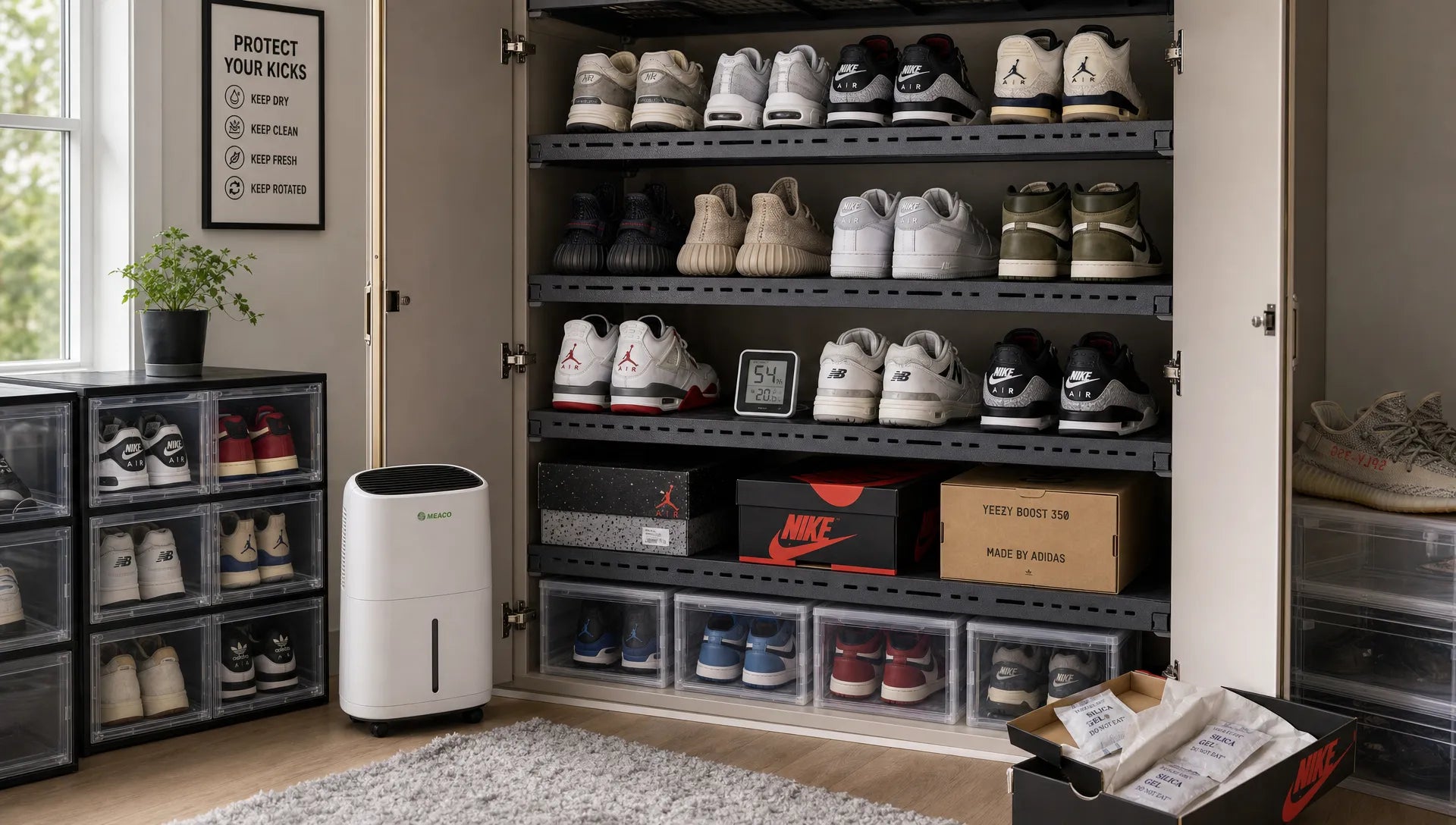
Original boxes are great for collectors because they keep pairs organised and preserve resale presentation. However, cardboard absorbs moisture. In a damp room, boxes can become part of the problem. If you use original boxes, keep them off the floor and away from exterior walls. Add silica gel packs inside the box, but do not let them sit directly against delicate materials.
Clear plastic sneaker boxes are popular because they protect against dust and make pairs easy to see. In NZ humidity, they work best when they have ventilation holes or when you open them occasionally to air out the pair. Fully sealed containers can trap moisture if the sneakers were not completely dry first.
Open shelving gives excellent airflow and is ideal for pairs you wear often. The downside is dust and light exposure. If you display sneakers on shelves, keep them out of direct sun and clean them regularly.
For high-value pairs like an Air Jordan 1 Retro High Off-White Chicago, it is worth being extra careful with light, moisture and pressure. Store them clean, dry and supported, and avoid stacking anything heavy on top of the box.
Use Silica Gel, Not Guesswork
Silica gel packs are one of the easiest ways to reduce moisture inside boxes and containers. They do not replace a dry storage environment, but they help buffer small humidity changes.
Place one or two packs in each sneaker box, depending on the size of the box and how humid your home is. If you use clear plastic containers, add a pack inside each container. Replace or recharge them according to the pack instructions. Some reusable silica gel products change colour when saturated, which makes them easier to manage.
Avoid loose moisture-absorbing crystals that can spill onto shoes. Also avoid scented moisture absorbers inside sneaker boxes, as fragrances can cling to materials and may not age well.
For larger wardrobes, a small wardrobe dehumidifier or moisture absorber can help. If the room itself is consistently damp, consider a proper dehumidifier for the space rather than relying only on silica gel.

Support the Shape of Your Sneakers
Humidity can soften materials slightly, especially if the shoe has been worn and is not fully dry. Without support, toe boxes can crease, collars can collapse and tongues can fold into awkward positions.
Use shoe trees for leather sneakers if they fit properly and do not stretch the shoe. Cedar shoe trees can help absorb some moisture and odour, but make sure they are not too tight. For more delicate sneakers, acid-free tissue paper or clean sneaker inserts can hold shape without adding pressure.
Do not stuff sneakers with newspaper for long-term storage. Ink can transfer, and paper can absorb moisture then hold it inside the shoe. If you need a budget option, use plain, clean, unprinted paper and replace it regularly.
Shape support is especially helpful for structured sneakers such as Jordan 1s and Dunk Highs. If you own pairs with premium leather or suede panels, like the Nike SB Dunk High Diamond Supply Co, gentle support and breathable storage will help keep the upper looking sharper for longer.
Store Different Materials Differently
Not all sneakers need the same treatment. A leather Jordan, suede Dunk and knit Yeezy will each react differently to moisture, pressure and cleaning.
| Sneaker material | Humidity concern | Storage tip |
|---|---|---|
| Smooth leather | Mould, creasing, drying after damp exposure | Clean gently, dry fully, use light shape support |
| Suede and nubuck | Water marks, flattened nap, mildew | Brush dry, avoid sealed damp boxes, use silica gel |
| Knit and mesh | Odour, trapped sweat, shape collapse | Air out thoroughly, remove insoles, avoid compression |
| Patent leather | Cloudiness, sticking, colour transfer | Store separately, avoid heat and plastic contact |
| Icy or translucent soles | Yellowing and oxidation | Keep away from sunlight, heat and moisture |
Knit sneakers, including styles like the adidas Yeezy Boost 350 V2 Black Red, need time to breathe after wear. The upper can hold moisture from rain and sweat, so do not compress them in a box immediately after taking them off.
Suede and nubuck need a gentler approach. If they get wet, let them dry naturally before brushing. Storing damp suede in a closed box is one of the quickest ways to invite mildew.
Patent leather should not be pressed against coloured tissue, plastic bags or other shoes. In warm, humid conditions, surfaces can stick or pick up colour transfer.
Rotate Your Sneakers Instead of Wearing One Pair Daily
A sneaker rotation is not just about style. It is one of the best ways to extend the life of your shoes in humid weather.
When you wear the same pair every day, sweat and moisture do not have enough time to evaporate. The midsole, lining and insole stay damp for longer, which increases odour and can speed up material breakdown. Giving each pair at least a day to rest makes a noticeable difference.
If you have a small rotation, aim for two to four pairs that cover different uses: daily wear, wet-weather errands, cleaner casual outfits and special pairs. Keep your rarest sneakers away from rough weather, especially during wet winter weeks.
This is also where buying the right pair for the right purpose matters. A collectible Jordan might be best saved for dry days, while a more durable daily sneaker can handle regular use.
Protect Sneakers From Sunlight and Heat
Humidity is the main concern, but sunlight and heat can be just as damaging. UV exposure can fade uppers, yellow midsoles and make clear soles age faster. Heat can also affect glue and foam.
Do not display prized sneakers in a sunny window, even if the setup looks great. Over time, one side may fade more than the other. If you use a display cabinet, place it away from direct sunlight and avoid heat sources such as heaters, heat pumps blowing directly at the shelf, or hot upstairs rooms in summer.
For long-term storage, stable conditions are better than extreme dryness or heat. You want moisture controlled, not baked out of the materials.
What to Do If You Find Mould
Finding mould on sneakers is frustrating, but acting quickly can reduce damage. First, take the pair outside or to a well-ventilated area. Do not brush mould indoors where spores can spread around your wardrobe.
Wear a mask if you are sensitive to mould. Use a soft brush to remove surface growth gently. For smooth leather, a lightly damp cloth with a small amount of suitable sneaker cleaner may help, followed by thorough drying. For suede, avoid wet scrubbing unless you know the material can handle it. Serious mould on suede or rare pairs may need professional cleaning.
Throw away mouldy tissue paper and replace silica gel packs. Check nearby boxes and sneakers because mould often spreads when several pairs share the same damp storage area.
Most importantly, fix the environment. If the same wardrobe remains humid, mould can return even after cleaning.
A Simple NZ Sneaker Storage Routine
You do not need to overcomplicate sneaker care. A consistent routine will protect most collections.
- After each wear, loosen laces and let sneakers air out before storing them.
- After wet wear, remove insoles if possible and dry the pair in shade for at least 24 hours.
- Once a month, check boxes for musty smells, damp cardboard or early mould.
- Replace or recharge silica gel packs regularly.
- Keep valuable pairs away from garages, laundry cupboards and direct sunlight.
- Rotate pairs so no sneaker stays damp from daily wear.
For collectors, add a seasonal check before winter and again before summer. NZ winters can bring damp indoor conditions, while summer heat can affect pairs stored in sun-facing rooms.
Frequently Asked Questions
Should I keep my sneakers in their original boxes in NZ? Yes, original boxes are fine if the room is dry and ventilated. Keep boxes off cold floors, away from exterior walls and add silica gel packs to help manage moisture.
Are plastic sneaker boxes good for humid weather? They can be, especially for dust protection and display. Choose ventilated boxes or open them occasionally, and only store sneakers once they are fully dry.
Can I store sneakers in the garage? It is not recommended for valuable pairs. Garages in NZ often have temperature swings, poor insulation and higher dampness, which can encourage mould and glue breakdown.
How do I stop sneakers smelling musty? Dry them fully after wear, remove insoles when needed, use silica gel in storage and avoid sealed boxes in damp spaces. A musty smell usually means the storage area needs better airflow or humidity control.
Should I use a dehumidifier for my sneaker collection? If your room or wardrobe feels damp, a dehumidifier can help. For smaller collections in a dry room, silica gel packs and good airflow may be enough.
Keep Your Collection Fresh in NZ Conditions
Proper sneaker storage is about consistency. Clean pairs before boxing them, let them dry properly, control humidity and keep them away from sunlight, garages and damp cupboards. These small habits protect the look, structure and long-term value of your sneakers.
If you are building your rotation or hunting for authentic sneakers, limited editions, streetwear or collectibles, explore the latest drops at BigBoiSneakers. A great collection deserves great care, especially in NZ weather.