What Affects the Price of One Piece TCG Booster Boxes?
A search for “tcg one piece price” can bring up booster boxes with very different price tags, even when the packaging looks similar. The difference usually comes down to the exact set, language, available supply, demand for its cards and the condition of the sealed box. For New Zealand buyers, shipping, currency conversion and any applicable import costs also affect the final comparison.
The cheapest listing is not necessarily the best-value box. Before comparing prices, establish that you are looking at the same product, then compare what it will cost to get that box delivered to you. Here is how each pricing factor works and what to check before buying.
What a “tcg one piece price” comparison should include
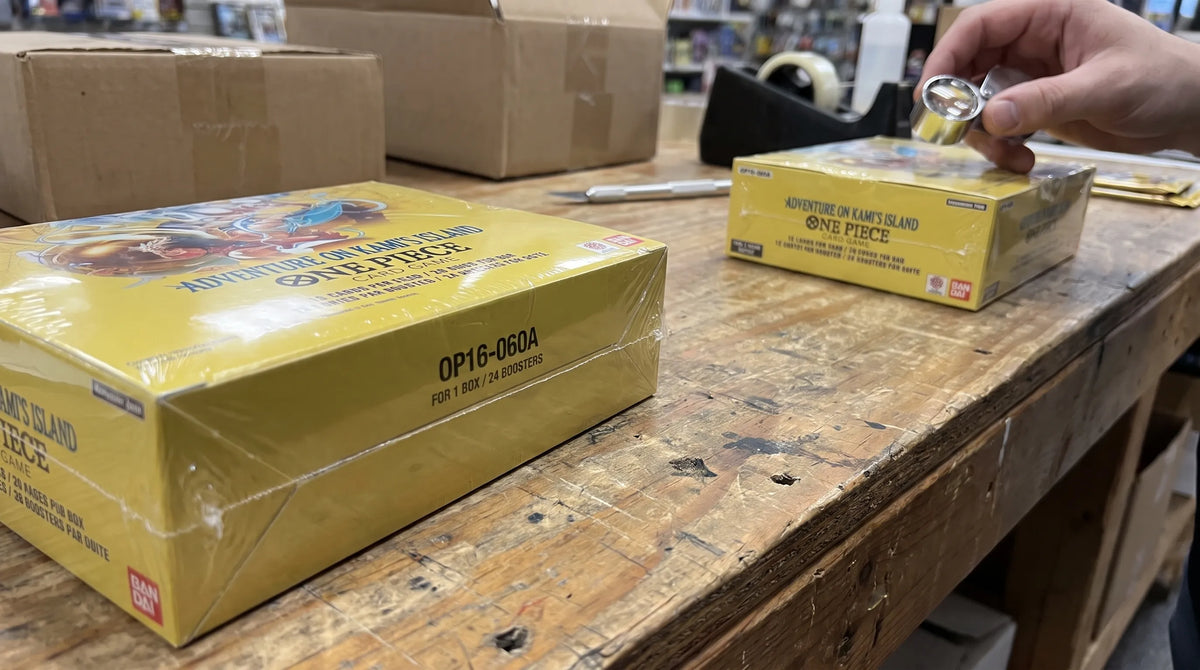
A booster box is not a standardised quantity across every One Piece release and market. Similar artwork or a familiar character on the packaging does not prove that two listings contain equivalent products.
Start with these details:
| Detail | What to check | Why it affects the comparison |
|---|---|---|
| Set identity | Full set name and product code | Different releases have different cards and demand |
| Language | The actual language of the cards | Language editions can have separate supply and pricing |
| Box contents | Packs per box and cards per pack | A lower box price may buy a different quantity |
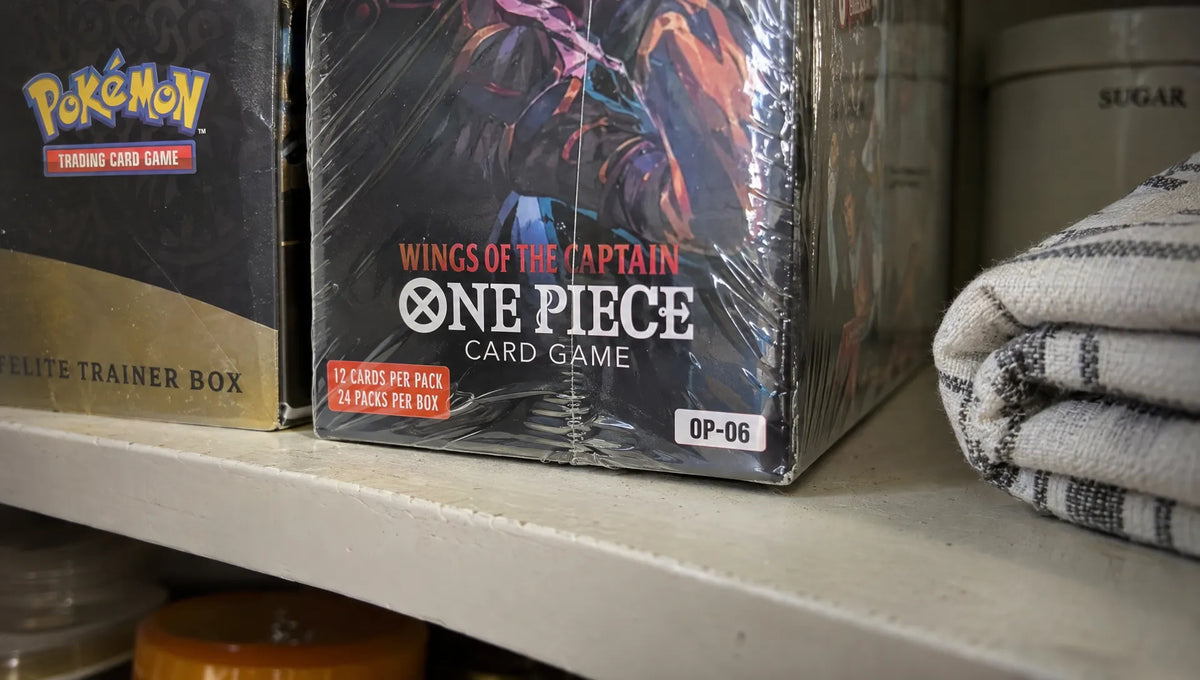
| Sealed condition | Original packaging and any disclosed damage | Collectors may value clean, intact packaging differently |
| Availability | In stock, preorder or awaiting restock | Delivery certainty and timing can influence the asking price |
| Delivered total | Currency, shipping and applicable charges | The advertised price may not be your final cost |
Use Bandai’s official One Piece Card Game product information to help verify the relevant release. Match the correct language and regional product rather than assuming that a listing from another market is directly comparable.
Set, language and box format establish the baseline
The set code is a more reliable starting point than the artwork alone. It helps distinguish products that share characters, themes or similar-looking packaging.
For example, the Bandai One Piece The Azure Sea's Seven OP14EB04 Booster Box Expansion For One Piece Card Game and the 2026 Bandai One Piece The Time Of Battle Card Game Booster Box are separate releases. A price difference between them is not, by itself, evidence that one retailer is charging too much. Their contents, availability and buyer demand need to be assessed separately.
English and Japanese boxes also need separate comparisons. They can differ in pack configuration, release timing and market demand. Converting a Japanese box price into NZ dollars does not turn it into an equivalent English-box valuation.
A useful One Piece TCG price comparison therefore starts with the same set, language and box format. If those details are missing from a product page, ask the seller before treating it as a bargain.
Print runs, restocks and release timing affect supply
Availability is one of the biggest reasons a sealed box becomes more or less expensive.
Around a release, demand may exceed the stock retailers can obtain. Preorder allocations, delivery delays or a small initial shipment can leave buyers competing for limited local supply. That does not necessarily mean the box will remain scarce.
A later restock or reprint can put more boxes into circulation and reduce pressure on prices. Equally, an older release may become harder to find as collectors open boxes and remaining stock changes hands. Neither outcome guarantees a particular price movement.
Distinguish between temporarily unavailable and confirmed no longer being produced. An out-of-stock message on one website does not establish that a set is out of print, and a seller’s claim of “limited stock” says little about supply across the wider market.
Before paying a scarcity premium, compare availability across several sellers. Check whether cheaper listings are genuine in-stock offers or preorders with uncertain fulfilment dates. A lower advertised price is less useful if the seller cannot confirm when the box will ship.
Chase cards and competitive demand influence the premium
Some boxes attract attention because collectors want particular characters, alternate-art cards or high-rarity treatments. Others gain interest because their cards support popular competitive decks. A release can benefit from both kinds of demand.
However, a valuable headline card does not make every box valuable to open. You are buying a random selection of cards, not the most expensive card shown in promotional material.
When assessing a One Piece TCG price premium, check whether demand is concentrated in one exceptional pull or spread across several desirable cards. Then look at recent completed sales for those exact printings, rather than relying on ambitious asking prices.
Our guide to assessing whether a One Piece card price is fair explains how to separate matching sales evidence from misleading comparisons.
Competitive demand can also change as deck preferences, new releases and card restrictions evolve. Collector demand may be less tied to tournament results, but character popularity alone does not guarantee lasting price growth. Avoid treating either source of interest as a promise of future value.
Sealed condition and seller confidence matter
Two listings for the same release can still deserve different prices if the boxes are in different condition.
A collector planning to display or retain a sealed box may care about crushed corners, tears, sun fading or stickers. Someone planning to open it may accept cosmetic damage, provided the product is genuine and the contents have not been compromised.
Packaging condition and authenticity are separate questions. A pristine-looking box is not proof of authenticity, while a minor dent does not automatically indicate tampering. Sealing methods can vary between products, so compare against the correct release rather than applying one universal packaging rule.
For any One Piece TCG price comparison involving a private seller, consider the quality of the evidence. Clear photographs of the actual box, a credible sales history, disclosed damage and suitable payment protection can justify choosing a slightly higher-priced offer over an uncertain one.
Be cautious about claims of guaranteed valuable pulls from an ordinary sealed box. Do not assign extra value to unverified assurances about what remains inside a box or the case it supposedly came from.
NZ shipping, exchange rates and import costs change the total
An overseas listing can look cheaper until you calculate the amount payable in New Zealand dollars.
The relevant figure is the delivered cost, not the number displayed beside the product photograph. Include shipping, any payment or currency-conversion fees and applicable taxes or border charges. Check which costs are already included so you do not count them twice.
For example, these hypothetical offers have different sticker prices but similar totals:
| Cost component | NZ-based offer | Overseas offer converted to NZD |
|---|---|---|
| Box price | NZ$320 | NZ$270 |
| Shipping | NZ$0 | NZ$35 |
| Payment or conversion fee | NZ$0 | NZ$8 |
| Subtotal before any additional applicable charges | NZ$320 | NZ$313 |
These figures illustrate the calculation only. They are not current product prices or a statement of any retailer’s shipping policy.
In this example, the apparent NZ$50 saving falls to NZ$7 before any additional applicable charges. Delivery time, return postage and the difficulty of resolving a damaged shipment may matter more than that remaining difference.
Consult New Zealand Customs’ guidance on online shopping when checking import costs. Tax treatment depends on the purchase circumstances, so do not assume every overseas order receives the same charges.

Completed sales are stronger evidence than asking prices
A seller can list a box at almost any amount. That does not establish that buyers are paying it.
To judge the market, look for recent completed sales of matching sealed boxes. Keep the language, set code, condition and quantity consistent. Exclude empty display boxes, loose packs, opened products and multi-box lots unless you can make a meaningful adjustment.
The most useful One Piece TCG price evidence comes from several comparable transactions, not one unusually high sale. Check whether shipping was included and whether the marketplace shows the actual accepted amount. A completed listing may not always reveal the final negotiated price.
Thin sales history creates uncertainty. If only one matching sale is available, treat it as a reference point rather than a definitive valuation. Current retailer stock can provide another practical comparison, especially when the box is available for immediate purchase.
Record the date and currency of each comparison. A foreign sale from months ago may explain price history without telling you what a fair NZ purchase looks like today.
Your reason for buying changes what counts as good value
For someone opening packs for enjoyment, value includes the experience and the appeal of the set. Set a spending limit that still feels reasonable if the pulls are ordinary. The most expensive possible card should not determine your budget.
For a player seeking specific cards, compare the cost of buying those singles with buying a box. Opening packs can be enjoyable, but it is not a reliable way to obtain a precise deck list.
For a sealed collector, packaging condition, storage space and confidence in the seller become more important. If you might sell later, allow for marketplace fees, protective packaging and shipping. A higher future selling price does not necessarily produce a profit.
Before accepting a One Piece TCG price, make this final check:
- Match the exact set code, language and box configuration.
- Confirm whether the product is in stock or a preorder.
- Compare recent matching sales and available retail offers.
- Calculate the delivered NZD total, including applicable charges.
- Check photographs, condition disclosures and return terms.
If a listing fails one of those checks, resolve the uncertainty before paying rather than treating the low price as compensation for missing information.
Frequently asked questions
Why are Japanese One Piece booster boxes sometimes cheaper than English boxes? They can have different pack configurations, release schedules, supply and demand. Compare the exact contents and language edition before deciding which is better value. Currency conversion alone is not enough.
Does an older One Piece booster box always cost more? No. Age can reduce available sealed supply, but demand still matters. An older release with limited buyer interest may cost less than a more readily available set with highly sought-after cards.
Will a reprint make booster box prices fall? Additional supply can reduce scarcity premiums, but the effect depends on how much stock reaches buyers and how strong demand remains. A reprint announcement does not guarantee a particular discount.
Is opening a booster box a reliable way to make money? No. Pulls are random, card values change and selling brings costs. Buy with a budget you are comfortable spending without recovering it through card sales.
Compare the exact box before you buy
A fair booster box price is supported by a matching product comparison, credible sales evidence and a clear delivered total. When browsing One Piece releases at BigBoiSneakers, check the individual listing for its current price, language, contents and availability. Those details are more useful than a broad market average or the value of one chase card.