How to Break In New Jordans Without Ruining Them
New Jordans are exciting straight out of the box, but the first wear can be a reality check. Stiff leather, snug collars, firm toe boxes and fresh midsoles can make even the cleanest pair feel less comfortable than expected.
The goal is not to force them to feel like beaters in one day. The goal is to break in new Jordans gradually while protecting the shape, materials and resale-friendly freshness that made you buy them in the first place.
Whether you wear your Jordans daily, save them for special fits, or keep a rotation of limited edition sneakers, the safest approach is the same: check the fit, soften the flex points slowly, avoid moisture and heat, and clean them after each early wear.
First, make sure the fit is actually right
Breaking in can soften a shoe, but it cannot fix the wrong size. If your toes are jammed against the front, your foot spills over the midsole, or your heel is crushed, the shoe is too small. Wearing it longer will not magically create enough space, and forcing it can damage both your feet and the sneaker.
A good fit should feel secure without sharp pressure. Your toes should have a little room to move, your heel should not slide aggressively, and the widest part of your foot should sit comfortably inside the upper. Some Jordans, especially high-top models, can feel snug around the collar at first, but that is different from genuine pain or numbness.
Before buying, always check the size options carefully. For example, if you are looking at a Jordan 1 silhouette such as the Jordan 1 Retro High OG Light Fusion Red, choosing the correct size from the start will make the break-in process much easier and safer.
Pay attention to your socks too. Thin socks can make a shoe feel larger, while thick socks can make a snug pair feel tight. When testing new Jordans at home, wear the type of socks you plan to use most often.
What not to do when breaking in Jordans
A lot of common sneaker “hacks” can cause permanent damage. Jordans are not hiking boots, and many pairs use leather, suede, nubuck, patent leather, mesh or delicate overlays that do not respond well to aggressive stretching.
Avoid these shortcuts if you want to keep your sneakers looking fresh:
- Do not soak them in water to soften the upper.
- Do not use a hair dryer or heater to warm and stretch the materials.
- Do not put Jordans in the washing machine or dryer.
- Do not bend the toe box backwards by force.
- Do not wear them for a full day of walking on the first outing.
- Do not break them in during heavy rain, especially if the pair has suede or nubuck.
Heat and water are the biggest risks. They can weaken glue, warp shape, stain materials, dry out leather and create odours inside the shoe. A slow break-in may feel less dramatic, but it is the method that keeps the pair wearable for years.
A safe break-in schedule for new Jordans
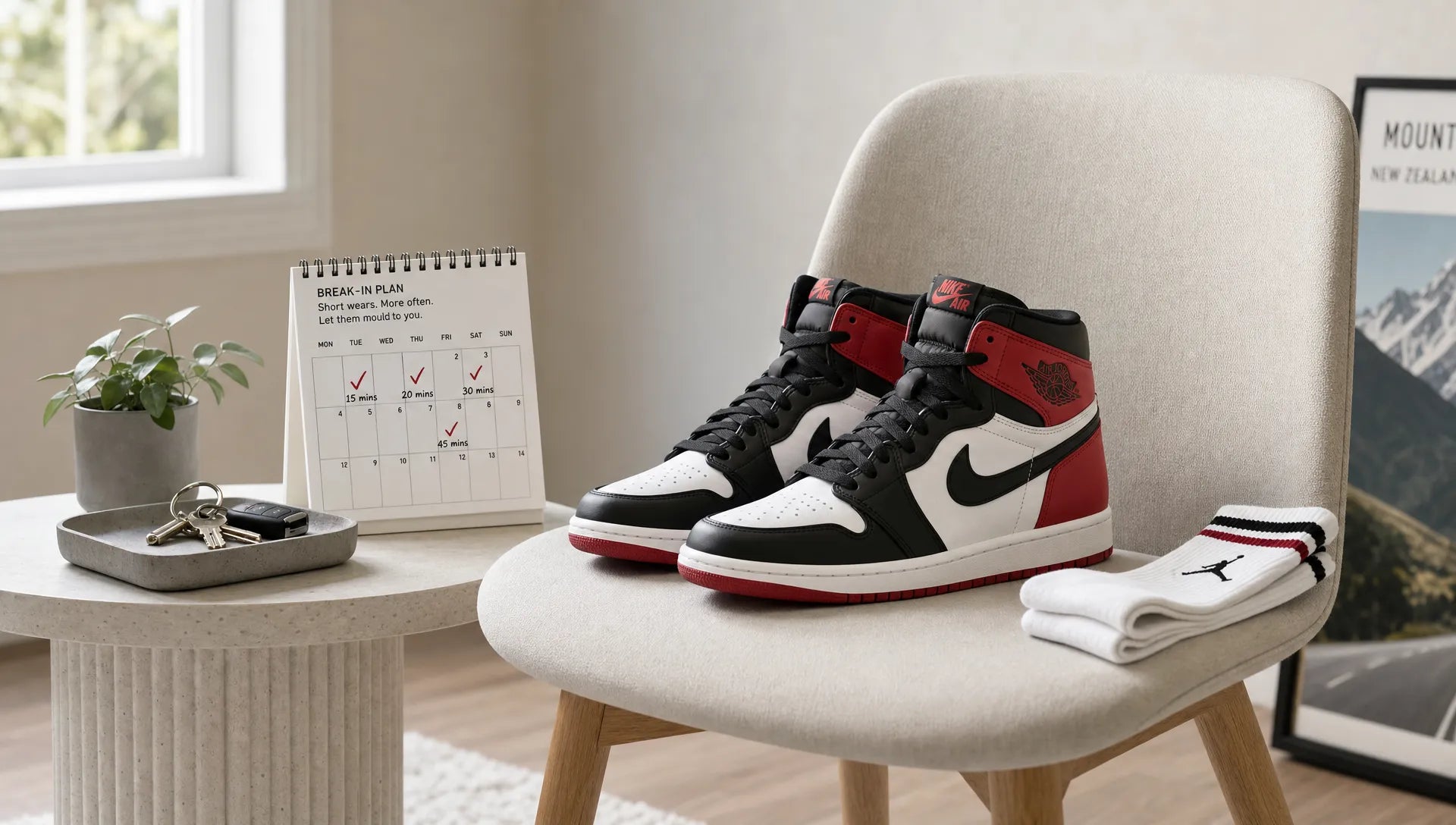
The best way to break in new Jordans is to treat the first week like a controlled test. You are teaching the shoe where to flex without overloading the materials.
| Stage | Wear time | Best location | Goal |
|---|---|---|---|
| Day 1 | 20 to 30 minutes | Indoors on clean floors | Check fit and identify pressure points |
| Day 2 | 30 to 45 minutes | Indoors or a short dry walk | Start softening the collar and toe flex |
| Day 3 to 5 | 1 to 2 hours | Light errands or casual wear | Build comfort without heavy creasing |
| Week 2 | Half-day wear | Normal daily use | Let the midsole and upper settle naturally |
| After week 2 | Full-day wear if comfortable | Regular rotation | Maintain shape with care between wears |
This schedule is flexible. If a pair feels great by day three, you can increase wear time. If you feel rubbing, numbness or sharp pressure, slow down. Discomfort is normal with some new sneakers, but pain is a sign to stop.
Step-by-step: break them in without ruining the shape
A careful break-in routine does not need special gear. You only need time, clean socks, a little patience and the discipline not to overdo the first few wears.
- Start indoors on clean floors: Wear your Jordans around the house for 20 to 30 minutes so you can test comfort without exposing the outsole, upper or midsole to dirt and weather.
- Loosen the laces properly: Unlace the top eyelets if needed, then tighten from the bottom upward so pressure is spread evenly across the foot instead of pulling hard at one point.
- Wear slightly thicker socks at first: A thicker sock can reduce rubbing and gently help the upper relax, but do not use socks so thick that they make the shoe painfully tight.
- Flex only where the shoe naturally bends: Hold the shoe gently and flex it at the ball of the foot a few times, never fold the toe box in half or crush the panels.
- Take short dry walks: For the first outdoor wear, choose a dry day and avoid long walks, wet grass, gravel and crowded events where your sneakers may get stepped on.
- Let them rest between wears: Give the materials time to dry and settle, especially if your feet sweat or you have worn them for a few hours.
If you are breaking in a special pair, take it even slower. A premium release like the Air Jordan 1 Retro High OG A Ma Maniére is the kind of sneaker many collectors prefer to ease into rotation rather than wear hard on day one.
Match the method to the material
Not all Jordans break in the same way. A leather Jordan 1 will behave differently from a patent leather Jordan 11 or a pair with suede panels. The upper material should guide how cautious you are.
| Material | What to expect | Safest break-in approach | What to avoid |
|---|---|---|---|
| Smooth leather | Usually softens with repeated wear | Short indoor sessions, gradual lacing adjustments and normal walking | Direct heat, soaking and aggressive bending |
| Suede or nubuck | Can stain or mark easily | Dry indoor wear first, then short outdoor use in good weather | Rain, liquid sprays without testing and rough brushing |
| Patent leather | Less flexible and more prone to visible creasing | Very short wears at first and careful storage | Forceful flexing and tight crease guards |
| Mesh or textile | Often comfortable sooner but can collect dirt | Gentle wear and regular light cleaning | Mud, heavy rain and harsh scrubbing |
| Mixed materials | Different panels may soften at different speeds | Follow the most delicate material on the shoe | Treating the whole shoe like plain leather |
The safest rule is simple: if the sneaker has delicate materials, slow down. NZ weather can change quickly, so check the forecast before taking a fresh pair outside for the first time.

How to reduce creasing while breaking them in
Creasing is normal. Every wearable sneaker bends at the toe box, and Jordans are no exception. The aim is not to prevent every crease forever, but to avoid deep, uneven creases caused by poor fit or rough handling.
Start with proper lacing. If the shoe is too loose, your foot may slide forward and create extra pressure across the toe box. If it is too tight, the upper may pull unnaturally and crease in awkward spots. Aim for a secure fit that still allows your foot to flex naturally.
Shoe trees can help after wear. They do not erase all creases, but they can support the shape while the upper cools and dries. If you do not have shoe trees, clean acid-free paper or the original stuffing can work for light support. Avoid overstuffing, because too much pressure can stretch the upper.
Crease protectors can be useful for some people, but they are not for everyone. They sit inside the toe box, which can make a snug shoe feel tighter. If they cause discomfort or change your walking pattern, skip them. Walking unnaturally to avoid creases can create more problems than it solves.
Prevent blisters during the first few wears
Blisters usually come from friction, moisture or pressure. New Jordans can cause rubbing around the heel, collar, toe box or side of the foot before the materials soften.
The American Academy of Dermatology recommends reducing friction and keeping feet dry to help prevent blisters. For sneaker wearers, that means choosing comfortable socks, avoiding long first wears and protecting hot spots early.
If you feel rubbing, stop before it becomes a blister. A small pressure point is easy to manage. A raw heel can put your new pair out of rotation for a week.
Simple blister prevention habits include wearing moisture-wicking socks, applying blister pads to known hot spots and increasing wear time gradually. If a shoe keeps causing pain after several short wears, the fit may be wrong for your foot shape.
Clean them after early wears
The first few wears are when fresh sneakers pick up dust, outsole grime and small marks. Cleaning them lightly after each wear helps keep them looking new while the materials break in.
Nike’s own shoe-cleaning guidance recommends cleaning shoes by hand and letting them air dry. That advice matters for Jordans, because washing machines, dryers and heaters can be too harsh for many sneaker materials.
After a short wear, use a soft brush to remove dry dirt from the outsole and midsole. For smooth leather, a lightly damp microfibre cloth can lift small marks. For suede and nubuck, use a proper suede brush and avoid adding water unless you know the material can handle it.
Always let Jordans air dry at room temperature. Do not put them in direct sun, next to a heater or in a hot car. Heat can warp shape and affect adhesives.
Storage matters more than most people think
How you store Jordans between wears affects how they age. Tossing them in a pile by the door can flatten collars, scratch leather and trap moisture. If you want your pair to stay clean, give it space.
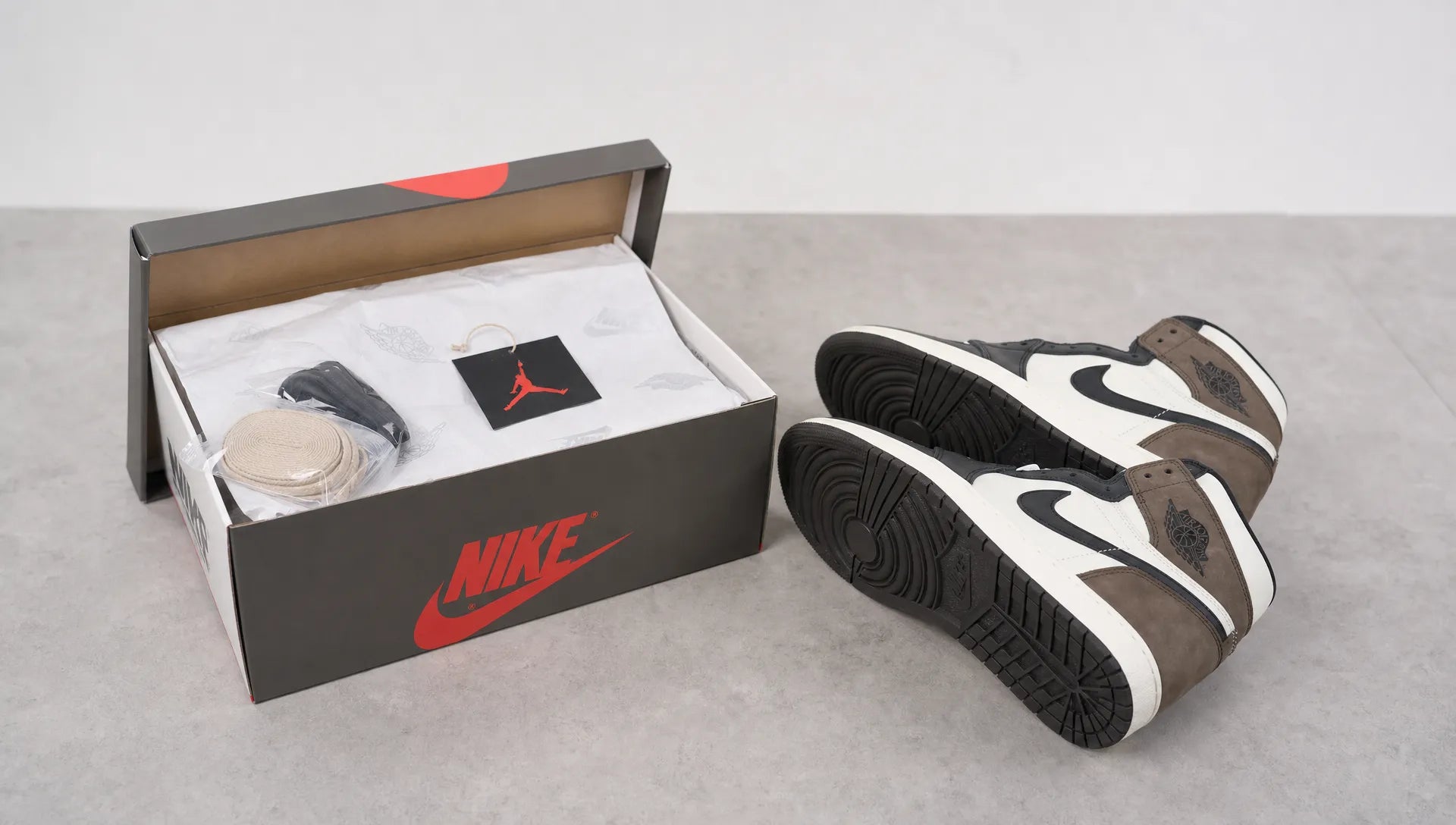
Store sneakers in a cool, dry area away from direct sunlight. Keep them away from damp garages, hot wardrobes and places where they may be crushed by other shoes. If the pair is part of a collection, return it to the box once it is dry, or use a display setup that protects it from dust.
For high-tops, make sure the collar is not folded or compressed. For special colourways, keep them away from items that may transfer dye, such as dark denim, wet bags or printed packaging.
Should you use stretching tools on Jordans?
A shoe stretcher can help with very mild tightness, especially in the width, but it should be used carefully. Stretching too aggressively can distort panels, stress stitching and change the silhouette. It is also risky on patent leather, suede, nubuck and mixed-material pairs.
If the shoe is only slightly snug, wear it indoors with thicker socks for short sessions before trying a stretcher. If it is painfully tight, a stretcher is unlikely to solve the problem without affecting the shoe. In that case, it is better to reassess sizing than risk damaging an expensive pair.
Collectors should be especially cautious. The more limited or valuable the sneaker, the less sense it makes to force the material. If you are buying Jordans to keep fresh, prioritise the correct size and a slow break-in from day one.
Quick break-in checklist
Use this before your first real outing:
- Confirm the size feels secure, not painful.
- Wear the same socks you plan to wear outside.
- Test the pair indoors for at least 20 minutes.
- Adjust the laces from bottom to top.
- Avoid rain, mud and long walks on the first wear.
- Clean and air dry the sneakers after wearing.
- Store them with light support in the toe box.
If your Jordans pass this checklist, they are ready for a short trip outside. If not, keep testing indoors until you know what needs adjusting.
Frequently Asked Questions
How long does it take to break in new Jordans? Most Jordans start feeling more comfortable after a few short wears, but the full break-in can take one to two weeks depending on the model, material, fit and how often you wear them.
Can I break in Jordans by wearing them all day? You can, but it is not the best idea. A full first day can cause blisters, heavy creasing and avoidable discomfort. Short sessions are safer for your feet and better for the sneakers.
Do Jordan 1s crease easily? Jordan 1s can crease at the toe box because that is where your foot naturally bends. Correct sizing, balanced lacing and shoe trees after wear can help reduce deep or uneven creases.
Should Jordans feel tight at first? They may feel firm or structured, especially around the toe box or collar, but they should not feel painfully tight. If your toes are crushed or your foot goes numb, the size or shape may be wrong.
Can I use heat to stretch new Jordans? It is better to avoid heat. Hair dryers, heaters and dryers can damage materials, weaken glue and alter the shape of the shoe. Gradual wear is the safer method.
Keep your Jordans fresh from the first wear
Breaking in new Jordans is all about patience. Start indoors, wear them in short sessions, avoid rain and heat, clean them gently, and store them properly between wears. You will get a more comfortable fit without sacrificing the clean shape and finish that make Jordans worth collecting.
If you are building your rotation, explore authentic sneakers, streetwear and collectibles at BigBoiSneakers. You can also browse standout Jordan colourways like the Air Jordan 1 Retro High OG White Black Volt Uni Gold when you are ready for your next fresh pair.