How to Buy Air Jordan 1 Retro High OG Without Overpaying
Buying an Air Jordan 1 Retro High OG can feel simple until you start comparing prices. One seller has your size at a “steal”, another has the same colourway for hundreds more, and an overseas marketplace looks cheaper until shipping, GST and fees appear at checkout.
That is where most buyers overpay. Not because they like Jordans too much, but because they compare the wrong number.
If you are shopping from New Zealand, the smart move is to judge every pair by its exact release, condition, size, authenticity risk and real landed cost. This guide breaks down how to buy Air Jordan 1 Retro High OG sneakers without paying hype tax, panic pricing or hidden overseas costs.
First, know what “overpaying” really means
Overpaying does not always mean paying above retail. Many Air Jordan 1 Retro High OG colourways sell out, then move into the resale market where retail is no longer the realistic benchmark. A fair price is the current market value for the exact pair you want, in your size, in the condition advertised, from a seller you can trust.
You are overpaying when you pay:
- Deadstock collector pricing for a worn or incomplete pair
- A rare-size premium when your size is actually common
- Overseas pricing without counting shipping, GST, conversion and return risk
- Extra for a colourway just because the listing title says “rare”
- A bargain price that becomes expensive because the pair is fake or misrepresented
The goal is not always to find the cheapest listing. The goal is to find the best all-in value.

Step 1: Confirm the exact Air Jordan 1 Retro High OG you want
Before comparing prices, confirm exactly what you are buying. Air Jordan 1 names can be confusing, especially when sellers use loose titles like “Chicago style”, “Bred colourway” or “Jordan 1 High”.
An Air Jordan 1 Retro High OG is not the same as an Air Jordan 1 Mid, a non-OG Retro High, a Zoom CMFT version or a women’s release listed in converted sizing. Those differences can change value, fit and collectability.
If you need a refresher on the model itself, start with the BigBoiSneakers Jordan Air Jordan 1 Retro High OG buying guide, then come back to pricing.
| Detail to confirm | Why it affects price | What to check |
|---|---|---|
| SKU or style code | Separates similar-looking releases | Box label, size tag and product listing |
| Release year | Retros can vary in materials and demand | Seller description and trusted release databases |
| Size | Some sizes carry premiums | Men’s, women’s, GS and converted sizing |
| Condition | Deadstock and used pairs should not be priced the same | Creasing, heel drag, outsole wear, stains and odour |
| Completeness | Collectors pay more for full sets | Original box, spare laces, hangtags, receipts and accessories |
| Region or version | Packaging and sizing labels may differ | Box label, tag format and seller notes |
This first step prevents one of the most common mistakes: comparing a clean deadstock pair with a used pair, then thinking the cheaper one is automatically a deal.
Step 2: Use sold prices, not asking prices
Asking prices show what sellers hope to get. Sold prices show what buyers have actually paid.
When checking the market, look for completed sales of the same SKU, size and condition. If possible, compare several recent sales rather than trusting one unusually high or low number. Sneaker prices can move quickly after restocks, influencer attention, anniversaries or major Jordan Brand releases.
Good places to check price context include marketplace sold filters, major resale platforms and local NZ listings. StockX and GOAT-style platforms can be useful for broad market direction, while local sales help you understand what New Zealand buyers are actually willing to pay after shipping and convenience are factored in.
A simple approach works best. Ignore the highest outlier, ignore the suspiciously low outlier, then focus on the middle of recent confirmed sales. That middle range is usually closer to fair value than the loudest listing on your feed.
Step 3: Calculate the real NZ cost before you buy
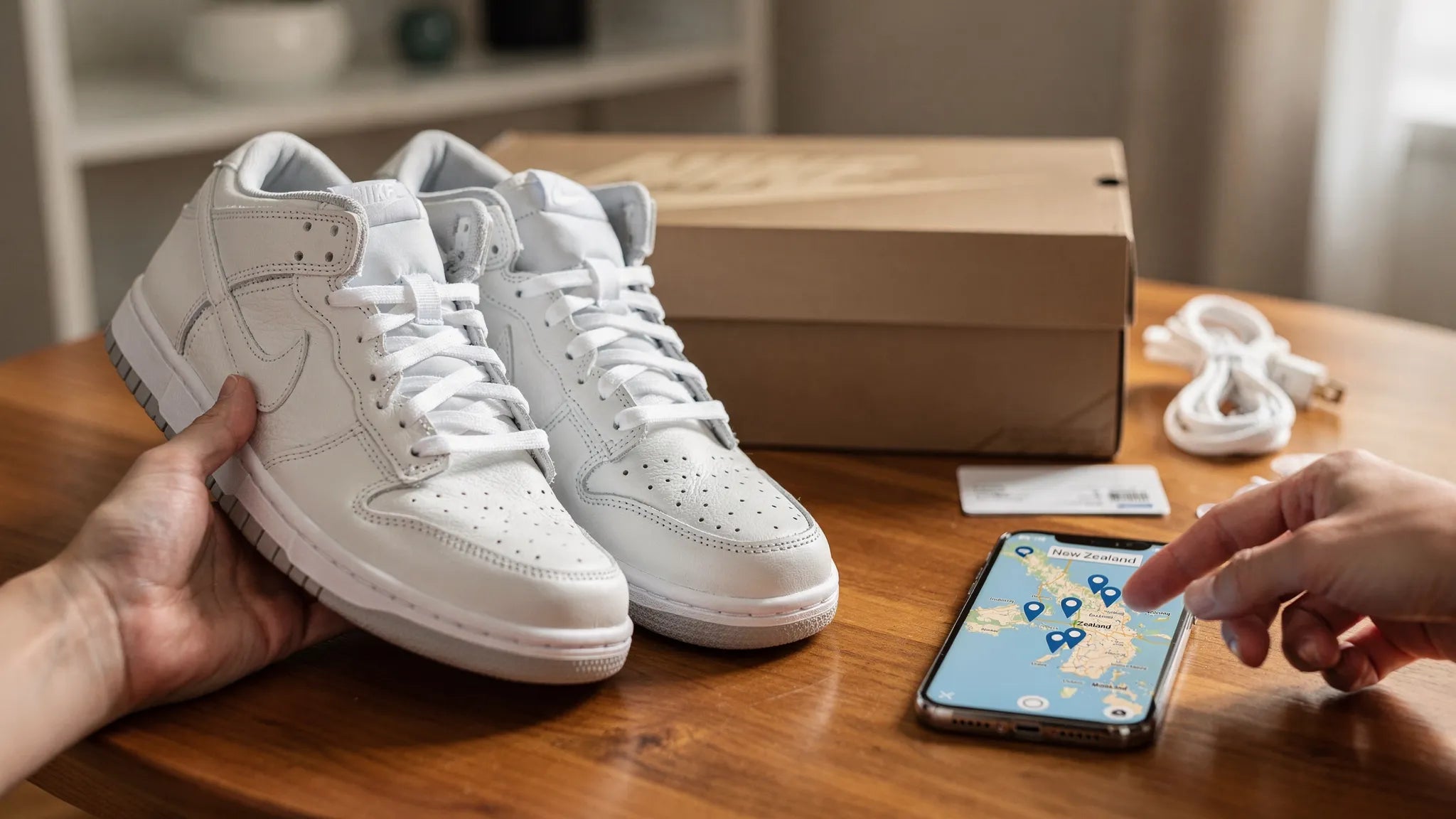
For New Zealand buyers, the cheapest sticker price is often not the cheapest final price. Overseas listings can look attractive until the checkout adds international shipping, currency conversion, GST and platform fees.
New Zealand GST is 15%. For overseas purchases, GST treatment can depend on the seller, platform, item value and import process. If you are unsure, check official guidance from New Zealand Customs before committing to a high-value purchase.
Use this table before deciding whether a pair is genuinely a deal.
| Cost line | Question to ask before buying |
|---|---|
| Item price | Is this the price for my exact size and condition? |
| Currency conversion | What is the NZD amount after bank or payment provider conversion? |
| Shipping | Is international shipping included, tracked and insured? |
| GST or import charges | Has GST already been collected, or could more be due? |
| Platform fees | Are buyer fees, processing fees or service fees added at checkout? |
| Return cost | If there is a problem, who pays to send it back? |
| Authentication risk | Is the lower price worth the extra uncertainty? |
This is where local buying can make sense. A local sneaker store NZ shoppers can verify more easily may not always have the lowest sticker price, but the final cost can be clearer, especially when shipping, returns and support matter.
Step 4: Set your maximum price before you start browsing
The easiest way to overpay is to decide emotionally while the pair is in your cart. Set a ceiling before you browse.
A useful formula is:
Fair price ceiling = average recent sold price for your exact pair + NZ delivery and fees + your acceptable convenience premium.
That convenience premium is personal. Some buyers will pay a little more to buy from a trusted local retailer, receive the pair faster, avoid international return headaches and reduce fake risk. Others prefer to wait months for the lowest possible price. Neither approach is wrong, but you should know which buyer you are before checkout.
| Buyer type | Where to spend | Where to save |
|---|---|---|
| Daily wearer | Authenticity, comfort and wearable condition | Avoid paying extra for perfect boxes or collector extras |
| Collector | Deadstock condition, complete packaging and iconic colourways | Do not chase every minor release at peak hype |
| Gift buyer | Trusted seller, clear sizing and simple delivery | Avoid risky private listings just to save a little |
| Value hunter | Recently dipped colourways and clean used pairs | Skip first-week resale panic unless supply is tiny |
| Long-term holder | Historic relevance and strong demand | Avoid pairs with inflated hype but weak cultural staying power |
Once you set a ceiling, stick to it. If the pair disappears, another deal will usually come around, especially for non-collaboration releases.
Step 5: Time your purchase around hype cycles
Air Jordan 1 Retro High OG prices often move in waves. Right after release, prices can spike because buyers missed retail and sellers test the market. A few weeks later, more pairs arrive in hand, undercutting begins and prices may soften.
That does not happen with every release. Some collaborations, OG colourways or very limited pairs can move up quickly. But for many general releases, patience is a real money-saver.
The best buying windows often include the period after pairs have landed with local sellers, restock periods, sale events and quieter months when attention shifts to other models. If you are not chasing a grail, waiting can remove the FOMO premium.
For more context on which AJ1 High OG pairs still make sense in the current market, read Air Jordan 1 Retro High OG Shoes Worth Buying in 2026.
Step 6: Be realistic about condition
Deadstock pairs cost more because they are unworn, complete and easier to resell. But if you plan to wear your Air Jordan 1 Retro High OG regularly, a clean pre-owned pair can be better value.
The key is knowing what condition issues are acceptable. Light toe-box creasing is normal on worn Jordan 1s. Minor outsole dirt is expected. Heavy heel drag, deep cuts, cracked collars, water damage, missing insoles or strong odour should reduce the price significantly.
Condition matters even more if resale value is part of your thinking. A worn pair with no original box might still be great for daily wear, but it should not be priced like a deadstock full-set pair.
If you do buy a wearable pair, protect your value from day one. The BigBoiSneakers guide on how to clean and care for your sneakers covers simple habits that help keep leather, suede, midsoles and boxes in better shape.
Step 7: Do not let “cheap” override authenticity
A fake pair is never a bargain. It is just an expensive mistake with a lower upfront price.
Air Jordan 1 Retro High OGs are heavily replicated because the silhouette is iconic, easy to recognise and constantly in demand. That means any suspiciously cheap listing deserves extra scrutiny.
Look for seller signals that reduce risk: clear business identity, secure checkout, specific product details, multiple photos, sensible pricing, transparent shipping and responsive support. If the seller avoids questions, uses only stock photos or pressures you to pay off-platform, walk away.
For a deeper authentication workflow, use the BigBoiSneakers guide to buying authentic Jordans online in NZ. It explains how to check photos, box labels, size tags, materials and seller behaviour before you commit.
Step 8: Choose the right buying channel for your risk level
There is no single best place to buy every Air Jordan 1 Retro High OG. The right channel depends on whether you care most about retail price, rare access, authenticity support, fast delivery or negotiation room.
| Buying channel | Best for | Overpay risk | Watch out for |
|---|---|---|---|
| Nike and official releases | Retail attempts and new drops | Low if you hit retail | Limited stock and raffle losses |
| Authorised retailers | Retail pricing and standard releases | Low to moderate | Fast sell-outs on popular sizes |
| Specialist NZ sneaker retailers | Authentic sneakers, clearer local costs and easier support | Moderate | Compare final price, not just sticker price |
| Major resale platforms | Wide size range and market data | Moderate to high after fees | Shipping, GST, buyer fees and return complexity |
| Private marketplaces | Potential bargains | High | Fakes, misdescribed condition and unsafe payments |
BigBoiSneakers fits the specialist retailer lane for NZ buyers looking for authentic sneakers, streetwear and collectables with secure payment options and shipping clarity. If you are comparing options, browse current Air Jordan 1 Retro High OG listings and compare the all-in cost against other channels.
Step 9: Compare colourways by wearability, not just hype
Some buyers overpay because they chase the loudest colourway, then realise it does not fit their wardrobe. The most valuable pair for you is the one you will actually wear or genuinely want to keep.
Neutral colourways, black-and-white pairs, grey tones, university blues, red-and-black classics and aged sail palettes tend to be easier to style. Extremely bright or niche releases can still be great, but they should match your taste rather than social media pressure.
If you are buying your first pair, pick a colourway that works with denim, cargos, sweats, hoodies and outerwear you already own. A wearable AJ1 that gets regular rotation is often better value than a hyped pair that stays boxed because it is hard to style.
Step 10: Negotiate with evidence, not emotion
If you are buying through a marketplace or private seller, negotiation can save money, but only if you are reasonable. Sellers are more likely to respond when your offer is based on recent sold comps, condition issues or local pickup savings.
A good message is short and specific. Mention the exact size, the condition detail you noticed and your all-in offer. Avoid insulting the seller or sending extreme lowballs. The sneaker community is smaller in New Zealand than many buyers realise, and reputation matters.
Also remember that the lowest accepted offer is not always the best outcome. Paying slightly more for tracked shipping, proper packaging and a responsive seller can be smarter than shaving off a small amount and taking on extra risk.
A quick pre-checkout checklist
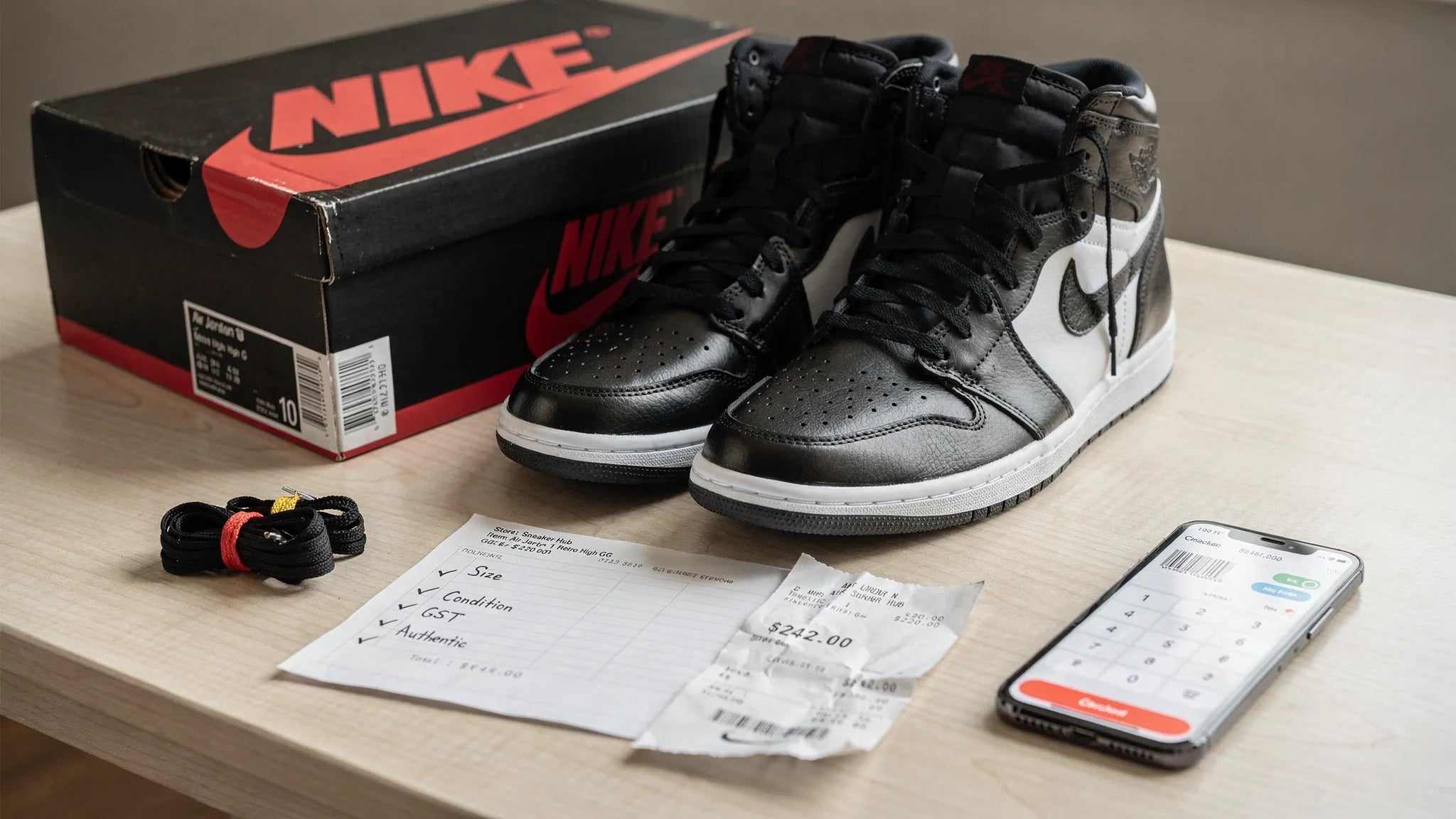
Before you pay for an Air Jordan 1 Retro High OG, pause for two minutes and run through this checklist.
- Have I confirmed the SKU, size, release year and condition?
- Have I checked recent sold prices, not just active listings?
- Have I calculated the real NZD cost including shipping, GST and fees?
- Is the seller trustworthy and easy to contact?
- Are there clear photos of the actual pair, box label and size tag?
- Is the price sensible for the condition and completeness?
- Do I understand the return, exchange or dispute process?
- Am I buying because it fits my wardrobe or collection, not because of FOMO?
If you cannot answer yes to most of these, slow down. The pair may still be worth buying, but you need more information before paying.
Frequently Asked Questions
What is a fair price for an Air Jordan 1 Retro High OG? A fair price depends on the exact SKU, size, release year, condition, completeness and seller trust. Use recent sold prices for the same pair, then add NZ shipping, GST, fees and any convenience premium you are comfortable paying.
Should I buy Air Jordan 1 Retro High OG sneakers new or used? Buy new if you are collecting, gifting or protecting resale value. Buy clean used pairs if you want better value for everyday wear. Just make sure the used price reflects creasing, outsole wear, box condition and missing accessories.
Do Air Jordan 1 Retro High OGs fit true to size? Many buyers go true to size, but wide feet, thick socks or personal comfort preferences can change that. Check the seller’s size guide and compare with other Nike or Jordan pairs you already own.
When is the best time to buy without overpaying? For many general releases, prices can soften after pairs arrive in hand and early hype cools. Restocks, sale events and quieter buying periods can also help. Very limited collaborations and iconic OG colourways may not follow this pattern.
How do I avoid fake Air Jordan 1 Retro High OGs? Buy from trusted sellers, check the SKU and box label, inspect photos carefully, compare materials and shape, and use secure payment methods. Be cautious with prices far below market value, especially on private marketplaces.
Is it worth paying more from a local NZ retailer? Sometimes, yes. A local retailer can offer clearer delivery costs, easier communication and less uncertainty around returns. Compare the all-in price, not just the sticker price, before deciding.
Buy smarter, not faster
The Air Jordan 1 Retro High OG is one of the most important sneakers in Jordan history, but that does not mean every listing is worth the asking price. The buyers who win are the ones who slow down, compare real sold prices, calculate NZ landed costs and choose trusted sellers over risky bargains.
Ready to compare authentic pairs? Explore current Air Jordan 1 Retro High OG options at BigBoiSneakers, or browse more guides on buying authentic Jordans before you check out.