How to Preorder Pokémon Cards Without Getting Burned
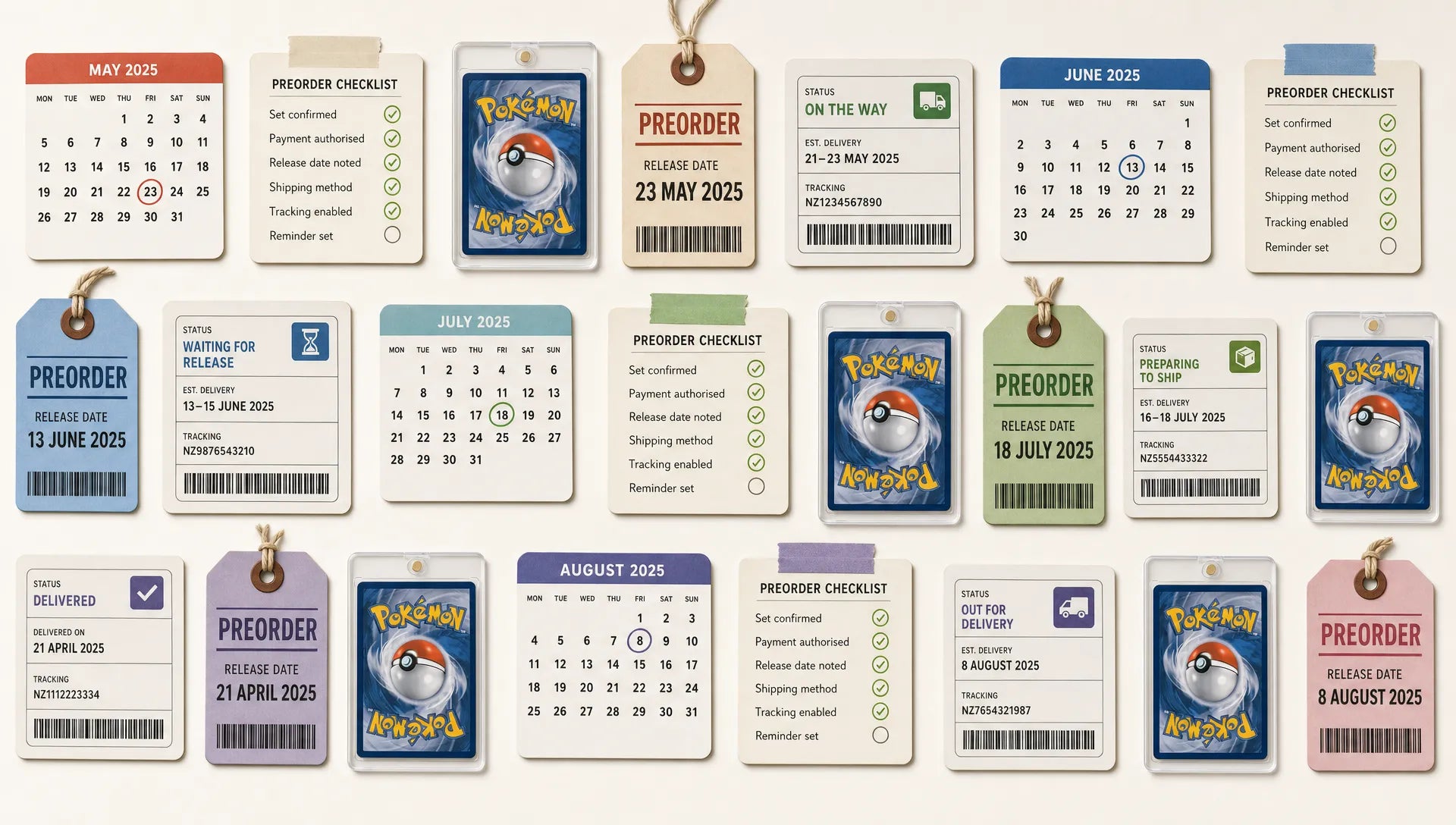
Preordering Pokémon cards can be a smart move when a new set looks likely to sell out, especially in New Zealand where popular sealed products can disappear quickly and restocks are not always predictable. It can also be a frustrating way to lose time, money, or buying opportunities if the listing is vague, the seller overpromises allocation, or the product turns out to be different from what you thought you ordered.
The goal is not to avoid every preorder. It is to know which preorders are worth trusting, which ones need more questions, and which ones should be skipped no matter how tempting the chase cards look.
Why Pokémon card preorders carry extra risk
A normal order is simple: the store has stock, you pay, and the item ships. A preorder is different because you are paying before the seller has the product in hand, or before the final allocation has arrived. That gap creates risk.
For Pokémon TCG releases, demand can move fast. A new set reveal, a popular Charizard, Eeveelution, Pikachu, trainer card, alternate art style, or special illustration rare can push collectors into FOMO mode. Some sellers then list products very early, sometimes before official product details are complete. Others may accept more orders than they can actually fulfil.
Getting burned usually means one of these outcomes:
- You paid for a preorder that was later cancelled after prices increased elsewhere.
- You ordered the wrong language, product type, or regional version.
- The seller delayed shipping with weak communication.
- The store had no clear refund process if allocation was reduced.
- You paid through a method that left you with little protection.
- The product arrived with condition issues, damaged seals, or missing contents.
A safe preorder is mostly about removing uncertainty before you pay.
Confirm the exact Pokémon product before you preorder
The first mistake collectors make is preordering based on hype instead of product specifics. Pokémon releases often include multiple product types for the same set, and they are not interchangeable.
A booster box, elite trainer box, booster bundle, blister pack, collection box, build and battle box, mini tin, display, and case all offer different quantities, packaging, promos, and collecting value. Japanese and English releases may also differ in set structure, card numbering, pack count, and pull expectations.
Before you pay, check the listing against official or highly reliable product information. The official Pokémon TCG news section is a useful starting point for release announcements, product names, and featured cards.
| What to verify | Why it matters before preordering |
|---|---|
| Set name | Similar fan names, Japanese names, and English names can be confused. |
| Product type | A booster box and booster bundle are very different purchases. |
| Language | English, Japanese, Korean, Chinese, and other releases can vary in demand and price. |
| Quantity | Confirm packs per box, cards per pack, boxes per case, and whether the listing is for one item or a display. |
| Promo cards | Some products include promos, but not every regional version includes the same extras. |
| Release timing | A preorder date is not always the same as the day the item ships to you. |
| Condition expectation | Sealed collectors should confirm the item is factory sealed and not opened for pack removal or display. |
If a listing uses vague wording like “new Pokémon set booster” or “upcoming special box” without naming the exact product, wait. A legitimate seller should be able to tell you what you are buying, even if final artwork is not yet available.
Treat very early preorders with caution
There is a difference between an early expression of interest and a confirmed preorder. Some retailers open registrations before final allocations are known. That can be normal if they are transparent. The problem starts when a seller presents uncertain stock as guaranteed.
If a preorder appears before official product details are widely available, ask what the order actually secures. Are you buying a confirmed unit, joining a waitlist, paying a refundable deposit, or simply reserving priority if stock arrives?
Clear language matters. A good preorder page should explain whether stock is confirmed, when payment is taken, what happens if allocation is cut, and how refunds are handled. If the seller avoids those questions or gives different answers in comments, messages, and the product listing, that is a warning sign.
Check the seller before you check out
A preorder is a trust decision. You are paying now for a product that may not arrive for weeks or months, so the store itself matters as much as the set.
Before placing an order with a new retailer, look for visible contact details, consistent branding, secure checkout, clear shipping information, and real policies. Reviews are useful, but read them carefully. A store with many reviews for unrelated products may not have much experience handling high-demand Pokémon TCG preorders.
If you are not sure what to look for, this guide to choosing a Pokémon TCG online shop you can trust covers the broader trust signals that matter for sealed products, singles, graded cards, and preorders.
For a quick safety check, ask yourself these questions before paying:
- Does the store have a real website, not just a social media account or marketplace listing?
- Can you identify who you are buying from and how to contact them?
- Are the preorder terms written on the product page or policy page?
- Does checkout use a secure payment method?
- Are shipping timeframes realistic for New Zealand buyers?
- Does the store explain what happens if supply is reduced?
A professional store will not be offended by reasonable questions. If a seller pressures you to pay immediately or says “don’t ask too many questions, these will sell out,” take that as useful information.
Read the preorder policy like a contract
Most preorder problems come from assumptions. The buyer assumes their order is guaranteed. The seller assumes allocation risk was obvious. The listing disappears, the release date moves, or the product arrives later than expected, and no one agrees on what was promised.
Before you place a preorder, read the store’s policy and save a copy. In New Zealand, traders must avoid misleading customers, and buyers have protections under consumer law. Consumer Protection NZ provides helpful online shopping guidance on keeping records, understanding seller obligations, and handling problems with online purchases.
For Pokémon card preorders, pay attention to these policy details:
| Policy point | What a safer preorder should make clear |
|---|---|
| Payment timing | Whether you pay in full now, pay a deposit, or pay when stock arrives. |
| Allocation risk | What happens if the store receives less stock than expected. |
| Refund process | Whether refunds are automatic, how they are paid, and how long they take. |
| Cancellation rights | Whether you can cancel before release and whether fees apply. |
| Release date changes | Whether estimated dates can move and how customers are notified. |
| Combined shipping | Whether preorder items hold back in-stock items in the same order. |
| Price changes | Whether the listed preorder price is locked in once paid. |
One important point: be careful with stores that reserve the right to cancel your preorder for any reason but do not give you a clear refund path. Allocation issues can happen, but the policy should not leave all the risk with the buyer.
Do a price sanity check before FOMO takes over
Not every high price is a scam. New Zealand buyers often face local supply constraints, exchange rates, freight costs, GST, and smaller market availability. Limited edition sneakers and trading cards have something in common: scarcity can create real premiums.
Still, preorder pricing should make sense. If a store is far below everyone else on a hyped Pokémon product, ask why. It may be a legitimate early price, but it could also indicate an inaccurate listing, a bait price, or a seller taking payments before they know their true cost.
The opposite can also be risky. Some sellers list extremely high preorder prices before demand is proven, hoping buyers panic. If you are buying for your personal collection, ask whether locking in now is worth it. If you are buying to invest or resell, be even more disciplined, because preorder hype can fade quickly after release.
A practical method is to compare several New Zealand and international sellers, then calculate the real landed cost. Include product price, shipping, currency conversion, payment fees, possible import costs, and the risk of delays. The cheapest option is not always the best if it has weak buyer protection or unclear stock status.

Choose payment methods that protect you
Payment method matters more for preorders than for normal purchases because time passes between payment and delivery. The longer the wait, the more important it is to have a dispute path if something goes wrong.
For online preorders, a credit card, debit card, or trusted payment platform usually gives you more options than bank transfer, cryptocurrency, or informal “friends and family” payments. Chargeback rules and time limits vary, so do not assume you can wait forever. If a release date slips or a seller stops responding, contact your bank or payment provider early and ask what evidence they need.
Keep a record of everything:
- Product page screenshots showing the exact item, price, release estimate, and preorder terms.
- Order confirmation emails and payment receipts.
- Any messages about allocation, delays, cancellations, or substitutions.
- Shipping confirmation and tracking details.
- Photos of the parcel and sealed product when it arrives.
This may feel excessive, but it is much easier to resolve a dispute when you can show exactly what was promised at the time you paid.
Be careful with deposits, bundles, and substitutions
Some preorder formats are perfectly legitimate but need extra attention.
A deposit can reduce your upfront cost, but you need to know whether it is refundable and when the balance is due. If the balance payment window is short and you miss the email, you could lose your spot.
Bundles can be useful when demand is high, but check whether you actually want every item included. A bundle that pairs a chase product with slow-moving stock may still be fine for collectors, but it changes the true price of the item you wanted.
Substitutions need very clear consent. If you preorder one Pokémon product, the seller should not quietly replace it with another product because stock changed. If a substitution is offered, compare the retail value, collectability, language, and sealed condition before accepting.
Understand allocation and cancellation risk
Allocation is one of the biggest preorder issues in the Pokémon TCG world. A retailer may order a certain amount from a distributor but receive less than expected. This can happen with high-demand products, special sets, or releases with tight supply.
Allocation cuts are not automatically proof that a store is dishonest. The question is how the store handles them. A trustworthy retailer will communicate early, fulfil orders in a fair and consistent way, and refund customers they cannot supply.
Red flags include cancelling paid preorders without explanation, relisting the same product at a higher price, asking customers to accept store credit only when they paid cash, or refusing to provide a timeline for refunds.
If you are preordering a booster box specifically, it is worth understanding sealed product details before release day. This New Zealand-focused guide on how to buy a Pokémon booster box online safely explains what to check around product type, seller reliability, shipping, and sealed condition.
Inspect your order as soon as it arrives
A preorder is not finished when the courier drops it off. Open the shipping carton carefully and inspect the product immediately, especially if you collect sealed items.
For sealed Pokémon products, check for crushed corners, torn shrink wrap, broken seals, suspicious resealing, missing promos, incorrect language, or a different product from the listing. Take photos before removing any outer packaging if something looks wrong.
If there is an issue, contact the seller promptly with your order number, photos, and a clear description of the problem. Do not open packs if your concern is about sealed condition or the wrong item being supplied. Opening the product can make the issue harder to resolve.
Common preorder red flags
Use this table as a quick filter when deciding whether to preorder or walk away.
| Red flag | Why it is risky |
|---|---|
| The product is listed before official details exist | The seller may be guessing or using hype to collect early payments. |
| The listing has no exact product type | You may receive a smaller or different product than expected. |
| Payment is bank transfer only | You may have fewer options if the order is not fulfilled. |
| The seller promises impossible discounts | Prices far below the market can indicate bait listings or unrealistic stock claims. |
| No written refund policy | You may struggle to recover money if allocation is cut. |
| “Guaranteed hits” or “better pull rates” claims | Pulls are random, and sellers cannot guarantee chase cards in sealed packs. |
| Pressure to order through private messages | It can remove you from safer checkout and dispute processes. |
| Cancellation terms favour only the seller | The store can back out, while you carry all timing and price risk. |
| Poor communication before payment | Communication rarely improves after the seller already has your money. |
A simple preorder decision framework
If you are unsure, slow the decision down. Ask three questions.
First, do I know exactly what I am buying? If the answer is no, do not preorder yet. Wait for official product details or ask the seller to clarify in writing.
Second, do I trust the seller to handle delays, allocation cuts, and refunds fairly? If you would not trust the store with a normal order, you should not trust it with a preorder.
Third, is the price worth the risk of paying early? For personal collection pieces, locking in can be worthwhile if the seller is reputable and the terms are clear. For speculative buys, remember that hype can shift once pull rates, card lists, and restocks become clearer.
A preorder should reduce stress, not create it. The best ones feel boring: clear listing, fair price, secure checkout, written policy, timely updates, and the correct product arriving in good condition.
Frequently Asked Questions
Is it safe to preorder Pokémon cards online? Yes, it can be safe if the product is clearly identified, the seller is reputable, the preorder policy is written, and you pay through a secure method. Avoid vague listings, private payment requests, and sellers that cannot explain allocation or refund terms.
How early should I preorder a new Pokémon set? It is usually safer to wait until official product details are available. If a store opens very early preorders, treat them cautiously and confirm whether your order is guaranteed or conditional on allocation.
Can a Pokémon card preorder be cancelled by the store? It can happen if the seller receives less stock than expected, but the policy should explain how cancellations are handled and how refunds are issued. A cancellation becomes concerning if the store gives no clear reason or relists the same product at a higher price.
Should I preorder from overseas or buy from a New Zealand store? Overseas preorders may offer more variety, but you need to factor in shipping, exchange rates, delivery time, possible import costs, and dispute difficulty. A New Zealand store can be simpler if the price is fair and the seller is trustworthy.
What should I do if my preorder is delayed? Check the original release estimate, then contact the seller politely for an updated timeline. Keep all messages. If the delay becomes unreasonable or the seller stops responding, contact your payment provider early to understand your dispute options.
Shop Pokémon cards with less guesswork
Preordering Pokémon cards is easiest when you stay focused on the basics: exact product details, trustworthy seller signals, clear policies, secure payment, and careful record keeping.
If you are building your collection in New Zealand, BigBoiSneakers offers authentic sneakers, streetwear, collectibles, and trading cards through a secure online store. You can browse the latest drops and collectible finds at BigBoiSneakers, and use these safety checks whenever you are deciding whether a preorder is worth it.