How to Choose a Pokémon TCG Online Shop You Can Trust
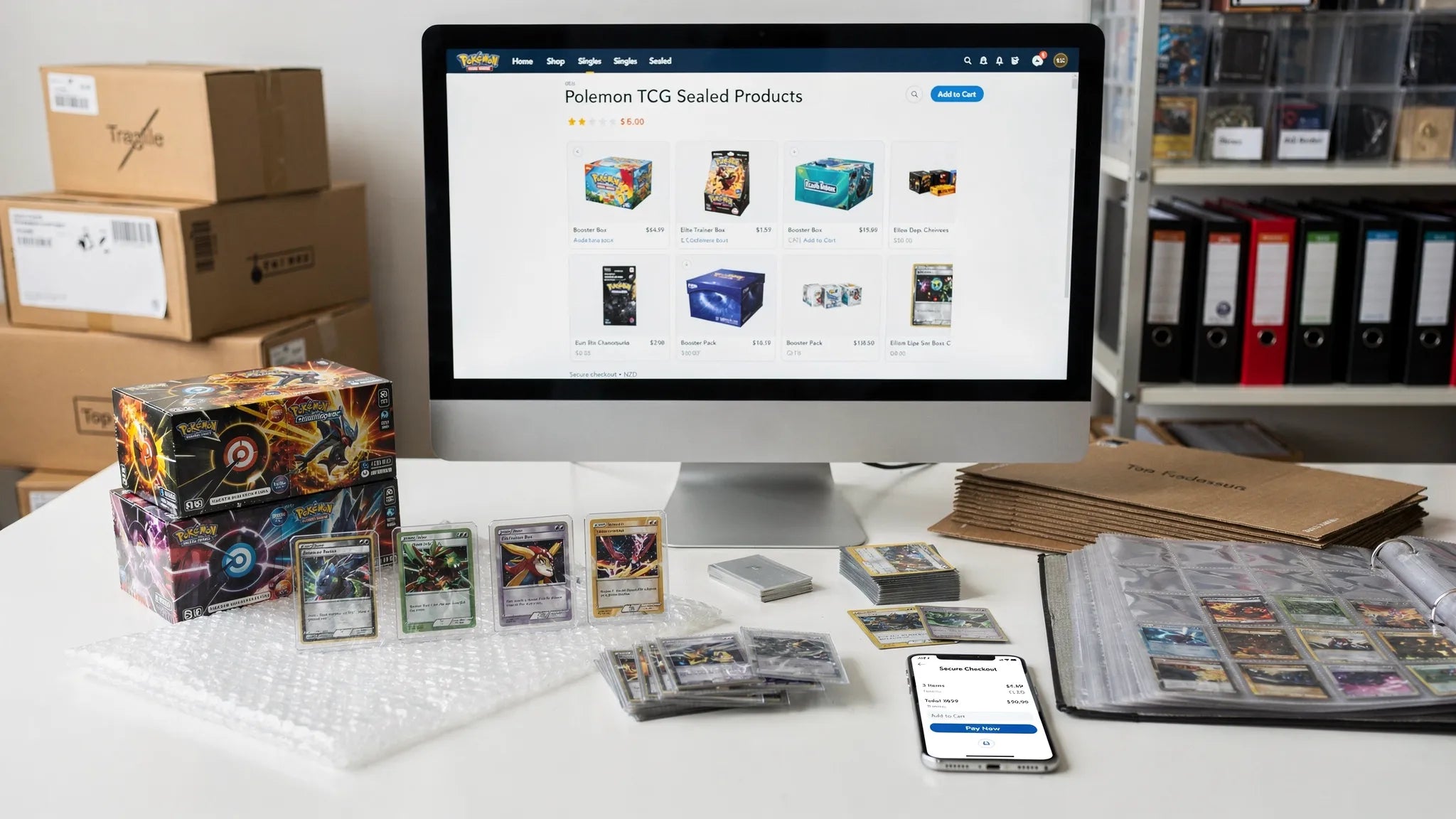
Buying Pokémon cards online should feel exciting, not risky. Whether you are chasing sealed booster boxes, a nostalgic single, a graded slab, or a gift for a young collector, the shop you choose matters just as much as the product you add to cart.
A trustworthy Pokémon TCG online shop does more than list popular sets. It gives you clear product information, safe payment options, transparent shipping, realistic pricing, and support if something goes wrong. This guide walks through the practical checks New Zealand buyers can use before ordering, so you can spend more time collecting and less time second-guessing.
Start by matching the shop to what you are buying
Not every online shop is equally strong for every type of Pokémon TCG purchase. A store that is fine for modern sealed products may not be the best place to buy high-value vintage singles. A marketplace seller with one rare card may not be the safest option for a preorder.
Before judging a shop, be clear about your buying goal:
- Sealed products: Booster boxes, Elite Trainer Boxes, booster bundles, collection boxes, tins, and special sets.
- Singles: Individual cards, usually condition-sensitive and often priced by rarity, character, set, and finish.
- Graded cards: Slabbed cards authenticated and graded by companies such as PSA, CGC, or Beckett.
- Accessories and gifts: Sleeves, binders, deck boxes, gift cards, and beginner-friendly products.
- Preorders: Upcoming releases where stock timing, allocation, and cancellation terms matter.
For sealed products, you want strong packaging, legitimate stock, and clear preorder handling. For singles, you need real photos and honest condition notes. For graded cards, certification checks become essential. For a deeper product-specific guide, read BigBoiSneakers’ breakdown on how to buy Pokémon booster boxes online without regret.

The trust triangle: product, payment, and fulfilment
A good Pokémon TCG online shop should be trustworthy in three areas at once. If one side is weak, the whole purchase becomes riskier.
| Trust area | What to check | Why it matters |
|---|---|---|
| Product accuracy | Exact set, language, condition, sealed status, photos, and product contents | Prevents surprise variants, reseals, misleading singles, and wrong-language purchases |
| Payment safety | Secure checkout, recognised payment methods, order confirmation, and no pressure to pay off-site | Protects you if the item never arrives or is not as described |
| Fulfilment quality | Tracked shipping, careful packaging, clear dispatch times, and support contact details | Reduces damage, lost parcels, and confusion after checkout |
A shop does not need to be the cheapest to be the best choice. In Pokémon TCG, the lowest price can become expensive if the product arrives damaged, turns out to be misdescribed, or gives you no realistic path to support.
Check that the business looks real, not temporary
A trustworthy online shop should have a clear identity. You should be able to tell who you are buying from, how to contact them, and what happens after you pay.
Look for a proper website with consistent branding, working navigation, and visible customer service information. Policies should be easy to find, especially shipping, returns, refunds, privacy, and terms of service. In New Zealand, buying from an established local business can also make communication, delivery expectations, and issue resolution simpler than dealing with an unknown overseas seller.
The shop should not feel like a one-page checkout funnel built around one too-good-to-be-true product. Be cautious if the store has no meaningful about page, no contact details beyond a social handle, copied product descriptions, broken links, or a checkout that appears before you can read basic policies.
For New Zealand shoppers, it is also worth understanding your general consumer rights. Consumer Protection NZ explains the Consumer Guarantees Act and how it applies when buying from businesses. It is not a substitute for checking a shop carefully, but it is useful background before spending serious money online.
Read product pages like a collector, not just a shopper
The product page is where many trustworthy shops separate themselves from risky ones. A good listing answers obvious questions before you have to ask.
For sealed Pokémon TCG products, check the product name, set name, language, region, pack count, included promos, and whether the item is factory sealed. For special sets, the page should make it clear what type of box or bundle you are buying. If a product is a preorder, the listing should explain that clearly rather than making it look like in-stock inventory.
For singles, the listing should identify the exact card, including set, card number, rarity, language, and finish. This matters because two cards with similar artwork can have very different values. A card might be holo, reverse holo, promo, alternate art, full art, special illustration rare, or a different language print.
For graded cards, the listing should show the grading company, grade, certification number, and clear photos of the slab. You can verify PSA certification through PSA’s certification lookup, while other grading companies have their own lookup tools.
If you are not sure whether a card or product exists in a specific set, cross-check with the official Pokémon TCG card database. It is especially helpful when a listing uses vague wording or mixes set names with character names.
Be careful with stock photos and vague condition terms
Stock photos are normal for mass-market sealed products, especially current releases. They are less acceptable for expensive singles, vintage cards, graded cards, or any item where condition determines most of the value.
A trustworthy shop should give enough detail to reduce ambiguity. “Near Mint” should not mean “looks good from far away”. “Sealed” should not mean “opened but packs untouched”. “Unweighed” should not be used as a magic trust signal for loose vintage packs.
Here is a practical way to judge listing quality:
| Product type | Acceptable listing standard | Extra caution needed when |
|---|---|---|
| Modern sealed box | Clear product name, pack count, set, language, and sealed status | Price is far below market or photos hide seals |
| Loose packs | Set name, source context, and honest limitations | Seller claims guaranteed hits or avoids pack origin questions |
| Singles | Exact card details and condition description | Only one blurry photo is provided for a valuable card |
| Graded cards | Front and back slab photos, grade, cert number | Cert number is hidden or does not match the card |
| Preorders | Expected release window and cancellation terms | Shop guarantees unlimited stock for a hyped product |
When buying singles, condition is not a small detail. Corners, edges, surface scratches, centring, dents, whitening, and print lines can all affect price. If you are buying a high-value single, check BigBoiSneakers’ safe checklist for buying Pokémon singles online in NZ before committing.
Compare prices using total cost, not sticker price
A shop can look cheap until you add shipping, payment fees, GST, currency conversion, and the cost of returns. For New Zealand buyers, landed cost matters.
For sealed products, calculate the cost per pack when comparing booster boxes, ETBs, bundles, tins, and special boxes. For singles, compare sold prices rather than only current asking prices. Asking prices show what sellers want. Sold prices show what buyers actually paid.
A fair price is not always the lowest price. You are also paying for product confidence, careful packing, customer support, and a lower chance of drama. That is especially true when shopping for limited edition Pokémon cards or older sealed products where tampering and resealing risks are higher.
Be cautious if a shop has every hyped item in stock at below-market prices, especially when larger retailers are sold out. It can happen during sales, but if the price is dramatically low and the site has weak trust signals, step back.
Check payment options before you check out
Secure payment is one of the easiest ways to filter online shops. A trustworthy Pokémon TCG online shop should offer recognised checkout methods and provide an order confirmation after payment.
Avoid paying unknown sellers by bank transfer, crypto, gift cards, or “friends and family” payment methods where you lose buyer protection. Be wary if a website shows normal payment logos on the homepage but only offers manual transfer at checkout.
Also check that the checkout page is secure. Modern browsers usually show a padlock icon and HTTPS connection. A secure page does not prove the shop is legitimate by itself, but an insecure or strange checkout is a serious red flag.
Look closely at shipping and packaging standards
Pokémon cards are condition-sensitive. A booster box with crushed corners, an ETB with torn wrap, or a raw card shipped loose in an envelope can turn a good buy into a frustrating one.
A reliable shop should explain dispatch timeframes, shipping options, tracking, and what happens if a parcel is delayed or damaged. For cards, packaging should suit the product. Singles should be protected with sleeves, top loaders or card savers, team bags, cardboard support, and water-resistant outer protection where appropriate. Sealed products should be packed to reduce movement inside the parcel.
For NZ buyers, local shipping can be a major advantage because delivery times are often easier to understand, support is more direct, and returns are less painful. International shipping may still be worth it for rare items, but you should factor in longer delivery windows, possible border delays, currency conversion, GST, and return complexity.
Judge reviews by detail, not just star rating
A high star rating is useful, but detailed reviews are better. Look for reviews that mention specific product types, packaging quality, delivery speed, communication, and how the shop handled problems.
Generic praise can be real, but it does not tell you much. A review saying “fast shipping and ETB arrived mint” is more useful than “great store”. A negative review is not automatically a deal-breaker either. What matters is whether the issue seems isolated and whether the shop responded professionally.
Look across more than one source where possible. Website reviews, Google reviews, social comments, collector groups, and marketplace feedback can all help build a picture. If the shop only has reviews on its own site and they all sound identical, keep checking.
Preorders need extra transparency
Preorders are common in Pokémon TCG, especially for new sets and high-demand products. They can be a good way to secure stock, but they require trust.
A good preorder listing should state that it is a preorder, give an estimated release or dispatch timeframe, explain payment timing, and outline what happens if allocations change. No store can control every supply delay, but a trustworthy shop communicates clearly rather than leaving buyers guessing.
Be careful with shops that promise unlimited quantities of a hyped set, demand full payment far in advance with unclear terms, or avoid answering questions about allocation. If the preorder is expensive, take screenshots of the listing and your order confirmation.
Use a quick scorecard before buying
If you are unsure, score the shop before checkout. You do not need a complicated system. Give one point for each trust signal you can verify.
| Trust signal | Point |
|---|---|
| Clear business identity and contact details | 1 |
| Shipping, returns, and refund policies are easy to find | 1 |
| Product page gives exact set, language, contents, and condition | 1 |
| Pricing is realistic compared with recent market data | 1 |
| Secure checkout with recognised payment methods | 1 |
| Reviews mention real orders, packaging, and customer service | 1 |
| Preorder terms are clear, if relevant | 1 |
| Shop provides tracking or clear delivery expectations | 1 |
| High-value items have real photos or certification details | 1 |
| Customer support responds clearly to a basic question | 1 |
A score of 8 to 10 suggests a lower-risk shop. A score of 5 to 7 means proceed carefully, perhaps with a small test order. Below 5, it is usually better to keep looking.
Red flags that should make you pause
Some warning signs are common across Pokémon TCG scams and poor-quality shops. One red flag may not prove anything, but several together should stop the purchase.
Watch out for prices that are far below normal market levels, especially on booster boxes, rare singles, vintage packs, and graded chase cards. Be cautious with websites that copy another retailer’s images, use countdown timers aggressively, or pressure you to complete payment outside the normal checkout.
Other concerns include no clear returns policy, no tracking information, inconsistent product names, fake-looking reviews, poor spelling across key policy pages, hidden shipping costs, and support that avoids direct questions. If a seller gets defensive when you ask for more photos or basic product details, that is not a good sign.
For a more seller-focused breakdown, see BigBoiSneakers’ guide to reputable Pokémon card sellers and their green flags and red flags.
When to choose a local NZ shop over an overseas shop
An overseas shop can be useful when you are chasing products that are hard to find locally. But for many buyers, a New Zealand-based store is the easier and safer starting point.
Local shops can offer simpler shipping expectations, easier communication, clearer pricing in NZD, and less hassle if something needs to be resolved. This is especially useful for gifts, sealed products you want in good display condition, and newer collectors who do not want to navigate international fees.
Overseas buying may make sense for rare singles, niche Japanese products, or graded cards that are not available locally. In those cases, be extra strict with photos, seller history, payment protection, and total landed cost.
BigBoiSneakers is best known in NZ for authentic sneakers, streetwear, collectibles, and trading cards, with online shopping and secure payment options. If you are already browsing limited edition sneakers, streetwear, or collectibles, it can be a convenient local place to check for current Pokémon TCG availability as part of your wider collecting habit.
Frequently Asked Questions
What makes a Pokémon TCG online shop trustworthy? A trustworthy shop has clear business information, accurate product listings, secure checkout, transparent shipping and returns, realistic pricing, and reviews that mention real customer experiences.
Is it safe to buy Pokémon cards from overseas? It can be safe if the seller is reputable, but NZ buyers should factor in shipping time, GST, currency conversion, return difficulty, and the risk of damage in transit.
Should I buy sealed Pokémon products or singles online? Buy sealed products if you want the opening experience or sealed collection value. Buy singles if you want a specific card and do not want to rely on pull rates.
Are stock photos a bad sign? Not always. Stock photos are common for modern sealed products, but high-value singles, vintage items, and graded cards should have real photos and detailed descriptions.
How do I avoid fake Pokémon cards online? Confirm the exact card, compare against official references, inspect photos carefully, verify graded certifications, avoid suspiciously cheap prices, and use protected payment methods.
What should I do if an order arrives damaged or wrong? Photograph the packaging and product immediately, keep all shipping materials, contact the shop with your order number, and refer to the store’s return or support process.
Shop with confidence, not guesswork
The best Pokémon TCG online shop is not just the one with the hottest product. It is the one that makes the purchase clear, protected, and easy to understand from product page to delivery.
If you are collecting in New Zealand, start with shops that give you transparent listings, secure checkout, sensible shipping, and real support. You can browse current releases, collectibles, and trading card products at BigBoiSneakers, or keep learning with the BigBoiSneakers guide to spotting legit Pokémon website stores.