How to Buy Pokémon Booster Boxes Online Without Regret
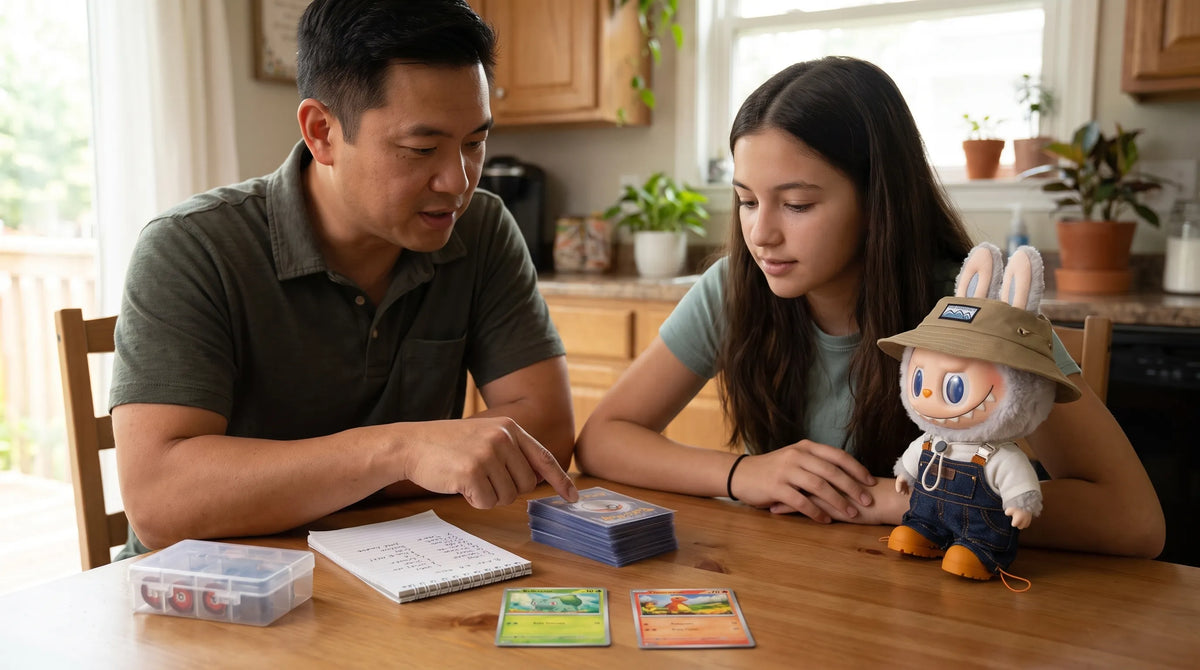
Buying a Pokémon booster box should feel exciting, not stressful. You are either chasing a big rip session, building a sealed collection, buying a gift, or trying to secure a set before it becomes harder to find. The regret usually comes later, when the box was overpriced, the seller looked sketchy in hindsight, the product was not the format you expected, or the pulls were never realistic for the money spent.
If you want to buy Pokémon booster boxes online in New Zealand, the safest approach is to slow the purchase down. The right box is not always the newest, rarest, or most hyped. It is the one that matches your goal, comes from a seller you can trust, and makes sense after shipping, GST, condition, and opportunity cost are included.
This guide walks through the practical checks that help you buy with confidence, whether you plan to rip packs or keep the box sealed.
Start by deciding what success looks like
Before comparing prices, decide why you want the booster box. A sealed collector and a pack opener are not shopping for the same thing, even if they are looking at the same product page.
If you are opening packs, the value is entertainment, set completion, trade fodder, and the chance of big hits. If you are collecting sealed, box condition, long-term set demand, and authenticity matter more than the opening experience. If you are buying for a player, sealed accessories or specific singles might be more useful than a full booster box.
| Buyer goal | Best approach | Main regret to avoid |
|---|---|---|
| Opening packs for fun | Choose a set you actually enjoy, not just the one with the biggest chase card | Expecting a booster box to guarantee profit |
| Building a sealed collection | Prioritise clean boxes, reputable sellers, and storage-friendly products | Buying damaged or questionable sealed product |
| Chasing one specific card | Compare the cost of singles before buying sealed | Spending more than the single costs |
| Gifting | Choose current or recognisable sets from a reliable retailer | Buying an obscure or tampered product |
| Long-term collecting | Focus on demand, condition, and product authenticity | Overpaying during peak hype |
The simplest rule is this: if you would be disappointed opening the box and not pulling the chase card, you may be treating a gamble like a guaranteed purchase. In that case, check single card prices first.
Know exactly which type of booster box you are buying
Not every sealed Pokémon product is a booster box. This matters because pack counts, pull expectations, and value-per-pack can vary a lot across product types.
A standard English booster box for a main expansion usually contains 36 booster packs. Japanese booster boxes often have different pack counts and card counts depending on the set. Special English sets often do not release as traditional booster boxes, instead appearing in Elite Trainer Boxes, booster bundles, tins, premium collections, or other sealed formats.
Use the official Pokémon TCG expansion pages to confirm set names, product types, and release context before buying. This is especially useful when listings use vague titles or mix up similar set names.
| Product type | What it usually means | What to check before buying |
|---|---|---|
| English booster box | Factory-sealed display box, commonly 36 packs for main sets | Set name, language, seal condition, seller reputation |
| Japanese booster box | Sealed Japanese product with set-specific pack counts | Pack count, cards per pack, shrink wrap expectations, language |
| Booster bundle | Smaller sealed pack bundle, often used for modern English products | Number of packs and whether it suits your cost-per-pack goal |
| Elite Trainer Box | Sealed box with packs and accessories | Pack count, promo inclusion, accessory value |
| Loose packs | Individual packs sold separately | Higher trust requirement, especially for older or high-value sets |
| Sealed case | Multiple sealed boxes in an outer carton | Case seal, shipping protection, seller transparency |

Do the real cost-per-pack calculation
The sticker price is only part of the cost. For New Zealand buyers, the real number can include shipping, payment fees, currency conversion, insurance, and possible import costs. If you are importing from overseas, check the NZ Customs duty and GST estimator before assuming the checkout total is the final total.
Use this simple formula:
Real cost per pack = total landed cost ÷ number of packs
Total landed cost means the product price plus shipping, insurance, fees, and any likely import charges. Once you know the real cost per pack, compare it against other sealed products from the same set. A booster box may still be the best value, but not always.
This is especially important for high-demand sets. Sometimes an Elite Trainer Box, booster bundle, or local listing can beat an overseas booster box once landed costs are included. Other times, a booster box is the cleanest option because it gives you more packs in one factory-sealed product.
For card-specific buying decisions, use sold prices rather than asking prices. Listed prices can be ambitious. Sold prices show what buyers are actually paying. If you need a deeper pricing workflow, BigBoiSneakers has a practical Pokémon card price checklist covering condition, rarity, and demand.
Be realistic about pull rates
One of the biggest reasons buyers regret booster boxes is unrealistic pull expectations. Pokémon does not publish official pull rates for most modern sets, and online pull-rate discussions are usually based on community data, store openings, or personal sample sizes.
That does not make the data useless, but it does mean you should treat it as guidance rather than a promise. A booster box can be a great opening experience and still miss the exact card you wanted.
Before buying, ask yourself three questions:
- Would I still enjoy opening this set if I missed the top chase card?
- Are there enough mid-tier cards, playable cards, or artworks I like?
- Is the sealed price fair compared with buying the singles I want?
If the answer is no, buying singles may be the smarter move. If the answer is yes, a booster box can be a fun way to experience the set while building bulk, trade options, and binder progress.
For more on how to think about box openings, see BigBoiSneakers’ booster box pull-rate guide, which explains why expectations matter as much as the product itself.
Vet the seller before you fall in love with the price
A cheap booster box from the wrong seller can become the most expensive option. When you buy Pokémon booster boxes online, the seller matters as much as the set.
Look for a retailer or seller with clear business details, transparent product descriptions, secure payment methods, visible shipping and returns information, and specific customer reviews. Product pages should clearly state the set, language, condition, and whether the item is factory sealed.
Be extra careful with marketplace listings, social media deals, and sellers who only communicate through direct messages. Some are legitimate, but they require more checking because buyer protection can vary.
| Green flag | Red flag |
|---|---|
| Clear product title with set, language, and sealed condition | Vague title such as Pokémon box rare cheap |
| Secure checkout or protected payment method | Bank transfer only or pressure to pay off-platform |
| Real photos for older or premium sealed products | Stock photos only for expensive out-of-print boxes |
| Transparent shipping and returns information | No return policy or unclear delivery timeframe |
| Sensible pricing compared with market comps | Price far below market with urgency tactics |
| Seller answers specific questions confidently | Seller avoids questions about seal, source, or condition |
For a fuller seller-checking process, read BigBoiSneakers’ guide to reputable Pokémon card sellers and the separate guide on how to spot a legit Pokémon website store.
Treat preorders differently from in-stock purchases
Preorders can be useful for popular sets, especially when demand is high and local supply may be limited. They can also create frustration if the seller overpromises, allocations change, or the release date moves.
Before placing a preorder, check whether the seller explains what happens if allocation is reduced. Look for refund terms, expected shipping windows, and whether the product is guaranteed or subject to supplier delivery. Avoid listings that use vague language but take full payment without a clear plan.
In-stock purchases are simpler because the seller should already have the product or be able to dispatch it quickly. For older sealed boxes, in-stock is often preferable because you can ask for photos of the exact item, including the seal, box corners, and any visible damage.
Inspect sealed product like a collector, even if you plan to rip it
A booster box does not have to be flawless if you are opening it, but it should be legitimate and untampered. If you are keeping it sealed, condition becomes part of the value.
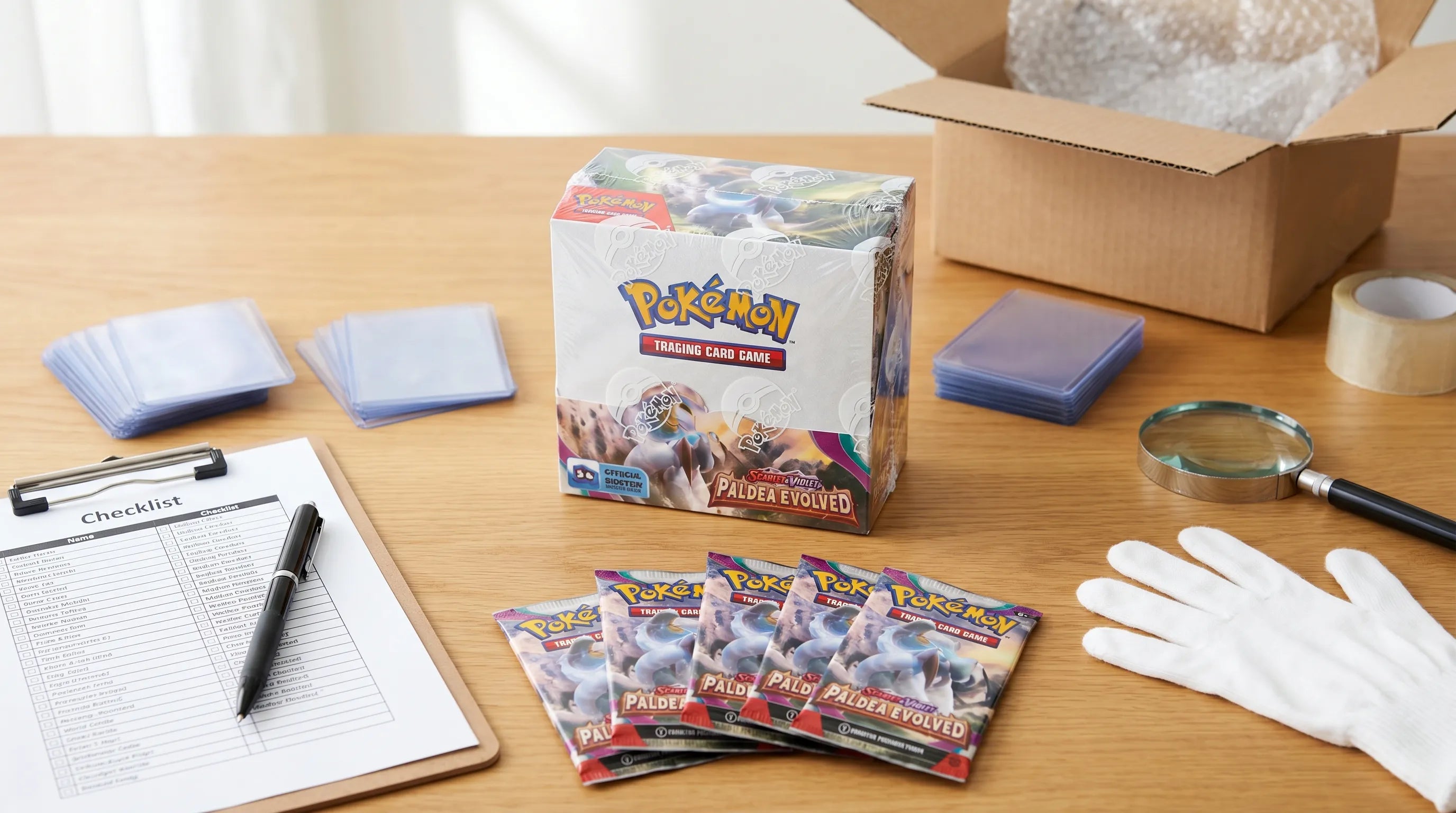
Before purchasing, check the listing for clear photos of the front, back, top, bottom, sides, barcode area, and shrink wrap. For older or higher-value boxes, ask for additional photos if the listing does not show enough detail. A trustworthy seller should not be offended by reasonable questions.
When the box arrives, take five minutes before ripping:
- Film the parcel before opening, especially for expensive orders.
- Check the shipping carton for crushing, water damage, or signs of tampering.
- Inspect the booster box wrap, seams, corners, and printed details.
- Compare the box to trusted product images from reliable sources.
- Contact the seller before opening if something looks wrong.
No single visual detail proves a box is fake or real. Seals can vary between print runs, regions, and product types. The goal is to spot obvious inconsistencies, document the condition, and avoid destroying your evidence if a dispute is needed.
Do not let chase-card hype decide everything
Chase cards drive attention, but they should not be your only reason for buying a booster box. When a set has one massive card and little else you want, the box price can become hard to justify.
A healthier way to evaluate a set is to look at the full card list. Are there multiple illustration rares, playable cards, trainer cards, or Pokémon you collect? Does the set connect to a generation, character, or era you care about? Would you want the sealed box as part of your collection even if the top chase falls in price?
This matters because TCG markets move. Prices can rise with scarcity, nostalgia, or competitive demand, but they can also cool when reprints arrive, hype shifts, or collectors move to the next release. Buying what you genuinely like is not just more enjoyable, it also reduces regret if the market changes.
Store sealed boxes properly if you are collecting long term
If you plan to keep a booster box sealed, storage is part of the purchase. New Zealand humidity, sunlight, and temperature swings can affect cardboard, shrink wrap, and display appeal over time.
Keep sealed boxes upright or neatly supported in a dry, dark place away from direct sun. Avoid garages, damp cupboards, and hot car storage. If the box is high value, consider an acrylic display case or protective storage container, but make sure it does not crush corners or trap moisture.
Also keep proof of purchase. Receipts, order confirmations, and delivery records can help later if you sell, insure, or authenticate the item. For sealed collectors, provenance is not everything, but it can add confidence for future buyers.
When a booster box is not the best buy
Sometimes the best way to avoid regret is to not buy the box at all. If you only want one or two cards, singles are usually more efficient. If the seller feels wrong, walk away. If the price only makes sense because you are imagining perfect pulls, pause.
A booster box may not be the best option when the set is heavily marked up, the product photos are poor, the seller refuses protected payment, or the box condition matters but is not clearly shown. It may also be the wrong choice if you are stretching your budget. Pokémon collecting is more fun when the purchase still feels comfortable after checkout.
A simple pre-checkout checklist
Before you complete the order, run through this quick checklist:
- I know the exact set, language, and product type.
- I know the pack count and real cost per pack.
- I have compared the price against local and international options.
- I understand that pull rates are not guaranteed.
- I trust the seller, payment method, shipping terms, and return process.
- I have checked whether singles or another sealed product would suit me better.
- I know whether I am buying to open, display, gift, or hold sealed.
If you can tick those boxes, you are much less likely to regret the purchase.
Frequently Asked Questions
Is it safe to buy Pokémon booster boxes online? Yes, it can be safe if you buy from reputable sellers, use secure payment methods, check product details carefully, and avoid prices that look too good to be true. The risk rises with older, out-of-print, or unusually cheap sealed boxes.
How many packs are in a Pokémon booster box? Many standard English main-set booster boxes contain 36 packs, but not every Pokémon product follows that format. Japanese boxes and special products can vary, so always check the listing and official product information.
Are Pokémon booster boxes a good investment? They can be collectible, but they are not guaranteed investments. Long-term value depends on set demand, print supply, condition, nostalgia, storage, and market timing. Buy with a clear plan and avoid spending money you cannot afford to lock away.
How can I tell if a booster box has been resealed? Look for unusual shrink wrap, messy seams, damaged corners, glue marks, inconsistent printing, or product details that do not match trusted references. Document the package before opening and contact the seller immediately if something looks wrong.
Should I buy a booster box or singles? Buy a booster box if you want the opening experience, sealed collectability, or broad set exposure. Buy singles if you mainly want specific cards and want to control your spend.
Where can NZ collectors buy Pokémon booster boxes online? Start with established retailers that provide clear product information, secure checkout, shipping details, and customer support. BigBoiSneakers stocks authentic collectibles and trading cards, making it a convenient place for New Zealand buyers to check current Pokémon TCG availability.
Buy with confidence, not FOMO
A good booster box purchase starts before checkout. Know your goal, check the product type, calculate the real cost, vet the seller, and inspect the box when it arrives. That process takes a few extra minutes, but it can save you from the most common regrets.
If you are ready to browse authentic sneakers, streetwear, collectibles, and Pokémon TCG products, visit BigBoiSneakers. You can also keep learning with the BigBoiSneakers guide to English Pokémon cards and TCG online in NZ.