Japanese vs English Pokémon Cards: Which to Buy?
Choosing between Japanese and English Pokémon cards is not really about which language is better. It is about what you want from the cards: playing, collecting, grading, gifting, opening packs or holding sealed product.
For most New Zealand buyers, English Pokémon cards are the easiest all-round choice because they are simpler to read, trade, gift and resell locally. Japanese Pokémon cards become more appealing when you care about artwork, earlier releases, Japanese-exclusive promos or a more specialised collecting lane.
This guide breaks down the real differences so you can buy with confidence, whether you are adding one chase card to your binder or choosing your next sealed product.
Quick answer: Japanese vs English Pokémon cards
| Buyer goal | Better choice | Why |
|---|---|---|
| Playing the Pokémon TCG in NZ | English | Easier to read, teach and use at local events |
| Buying a gift for a casual fan | English | The recipient can understand the card text and names |
| Collecting artwork or display cards | Japanese | Many collectors like the finish, original releases and Japanese-exclusive cards |
| Building full sets | English | Easier set tracking for most NZ collectors |
| Chasing early releases | Japanese | Japanese sets often come out before their English counterparts |
| Local resale and trading | English | A wider buyer base in New Zealand usually makes selling simpler |
| Niche collecting or promos | Japanese | Japan often gets unique promos, products and campaign cards |
If you are new, start with English. If you already know the card, artwork or sealed product you want, Japanese can be a smart and enjoyable buy.
What actually changes between Japanese and English Pokémon cards?
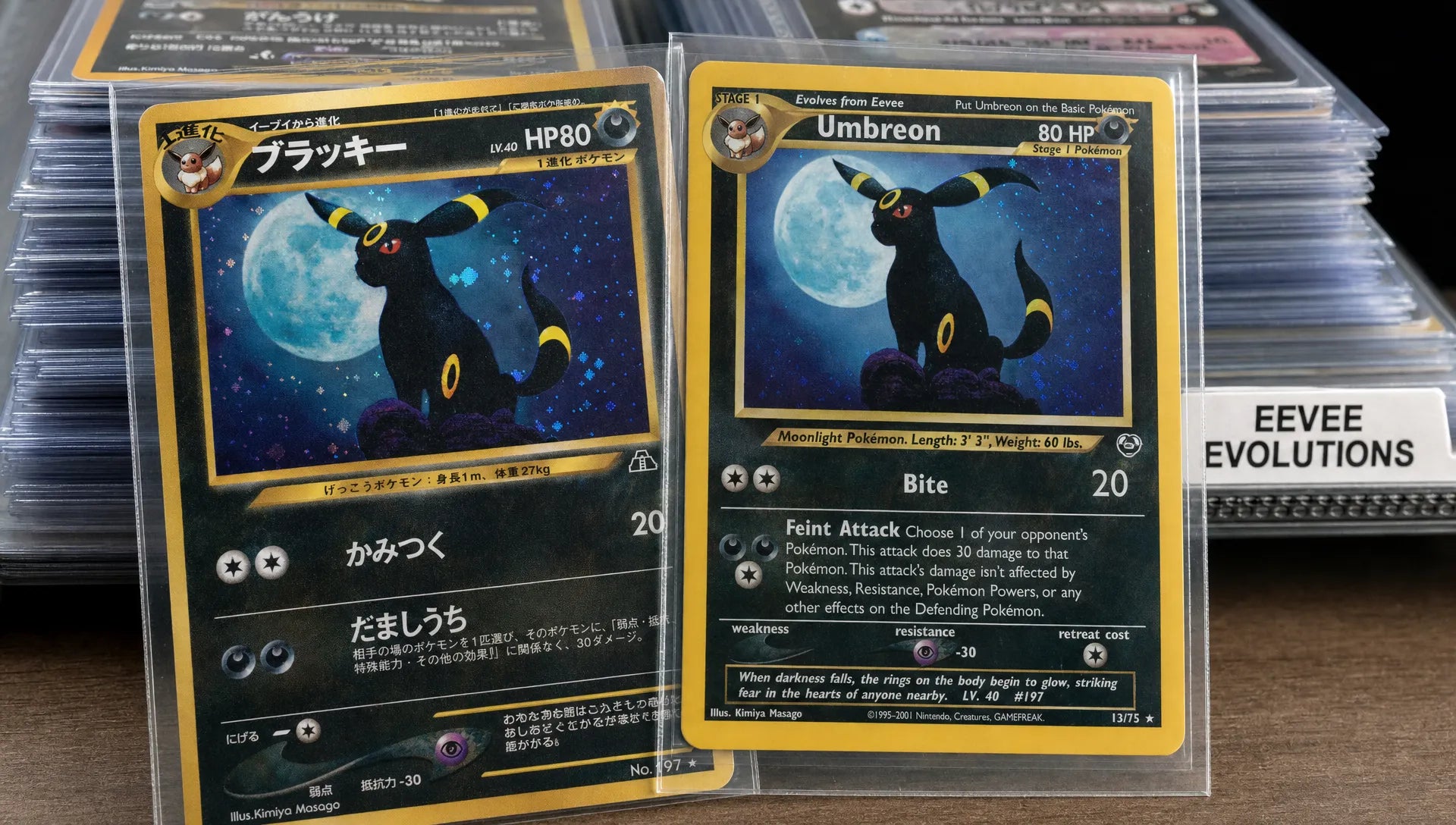
Japanese and English Pokémon cards can share the same artwork, Pokémon, attacks and collector appeal, but they are not identical products. Language is only one part of the comparison.
Language and playability
The most obvious difference is readability. English cards are practical if you want to build decks, teach a younger collector, play casually with friends or understand attack text without looking anything up. For NZ buyers, that matters more than some collectors expect.
Japanese cards can still be enjoyed casually, especially if everyone at the table knows what the card does. For official play, language rules can depend on the event and region. If you intend to enter sanctioned tournaments, check the latest Play! Pokémon tournament rules and resources before relying on Japanese-language cards. English is the safest default for New Zealand players.
Set structure and release timing
Japanese Pokémon sets often release before English expansions. English sets are frequently built from several Japanese releases, promos or special products, so the same artwork may appear later, under a different set name or with a different collector number.
That timing creates two different types of excitement. Japanese buyers often see new artwork earlier, which is great if you like following the hobby closely. English buyers usually get a more familiar product structure with set names and checklists that match what most local collectors are discussing.
This also affects prices. A Japanese chase card may spike when it first appears, then behave differently once an English version is announced or released. The reverse can happen too: some Japanese cards remain desirable because of exclusive artwork, limited distribution or strong demand from collectors who prefer the original Japanese release.
Card finish, texture and collector feel
Japanese Pokémon cards are often praised for their print consistency, texture and overall feel, especially on higher-rarity cards. That reputation is one reason many collectors enjoy opening Japanese packs or buying Japanese singles for display.
Still, language does not guarantee condition. A Japanese card can have whitening, surface marks, print lines or centring issues just like an English card can. English cards have also improved across different eras and releases, so it is better to judge the specific card in front of you rather than assume every Japanese copy is automatically superior.
For raw singles, photos matter. Look at corners, edges, centring, surface gloss and the back of the card. If a listing only shows the front, ask for more detail before paying collector prices.
Rarity labels and pull experience
Japanese and English products do not always use the same rarity labels, pack sizes or sealed formats. Modern Japanese cards may use categories such as AR, SAR, SR and UR, while English releases use their own equivalent terms and set structures.
Do not compare a Japanese booster box with an English booster box purely by pack count. Product contents vary by release, and English packs often contain a different number of cards than Japanese packs. Some Japanese boxes feel more focused because they are tied to smaller sets, while English products may feel broader and easier to understand for casual buyers.
Before buying sealed, check the exact product name, language, set, number of packs and whether the listing is for a full sealed box, booster bundle, loose packs or a retail display.
Price, availability and resale in New Zealand
English Pokémon cards usually have the broadest local market in New Zealand. More buyers recognise English set names, read the card text and feel comfortable comparing prices. That makes English a practical choice if you care about liquidity, trading or selling later.
Japanese cards can still sell strongly, but the buyer pool is often more specialised. The right Japanese promo, full art, special illustration rare or sealed box can attract serious collectors. The challenge is that you need to understand the exact version, because Japanese set names, card numbers and promo origins can be less familiar to casual NZ buyers.
For a wider look at choosing between singles, sealed products and gift options, the Pokémon NZ buying guide for cards, sealed and gifts is a useful companion to this language comparison.
When English Pokémon cards are the better buy
English is the better choice if you want the least complicated buying experience. It suits players, new collectors, parents buying gifts and anyone who wants easy local trading.
English cards also make more sense when you are building a set. Checklists are easier to follow, card names are easier to search and most NZ listings will be written around English product names. If you are filling binder gaps, that convenience saves time.
For gifts, English is usually safer. A younger Pokémon fan may love Japanese cards because they look cool, but they may also want to read the attacks, names and flavour text. If the recipient is not already a collector, choose English unless you know they specifically want Japanese.
English can also be the better resale play for general cards. That does not mean every English card is worth more. It means the market is easier to understand, especially for popular sets, playable cards and modern chase cards.

When Japanese Pokémon cards are the better buy
Japanese cards are a great choice when collecting is more about artwork, originality and hobby depth than pure convenience. Many collectors enjoy owning the first version of a card before it appears in English, especially for major chase artworks.
Japanese can also be the stronger path if you like promos. Japan receives many campaign, event, magazine, store and product-tie-in promo cards that may never get a direct English equivalent. These cards can become highly collectable because their appeal is tied to origin and distribution, not just the Pokémon on the front.
Japanese sealed products can be fun for experienced collectors because the set structure is often tighter. If you already know the Japanese set and the chase cards inside it, opening can feel more targeted. If you do not know the set well, research first so you are not buying based on cover art alone.
The main trade-off is liquidity. Japanese cards can be excellent buys, but they usually require more knowledge when it comes time to sell. You need to describe the card accurately, match the correct set and educate buyers who may only know English releases.
Sealed products: do not compare pack to pack
A common mistake is comparing English and Japanese sealed products as if every booster pack is equivalent. They are not. Pack sizes, box sizes, pull structures and set composition can all differ.
English sealed products such as Elite Trainer Boxes, booster bundles and booster boxes are often easier for NZ buyers to evaluate because product contents are familiar. Japanese booster boxes can be compact, collectible and set-specific, but you need to know exactly what is included.
When comparing sealed products, focus on these details:
- Product language and region
- Exact set name and release era
- Number of packs and cards per pack
- Whether the box is factory sealed
- Seller reputation and return policy
- Recent sold prices, not only asking prices
Loose packs deserve extra caution in any language. They can be legitimate, but sealed boxes or trusted retailers reduce the guesswork for buyers who are not experienced with weighing, resealing concerns or product tampering.
Singles and graded cards: compare the exact version
For singles, the best buy depends less on language and more on the exact card. A Japanese card and an English card with the same artwork can have very different market values because they come from different sets, have different population reports, appeal to different buyers and may be easier or harder to source in NZ.
Condition is just as important. A clean raw Japanese card may be more appealing than a damaged English copy, and a well-graded English card may be more liquid than a raw Japanese card of the same artwork. If you are weighing raw cards against slabs, this raw vs graded Pokémon cards guide explains the trade-offs around certainty, display appeal and resale.
Be extra careful with listings that use vague wording. A card being Japanese does not automatically make it rarer. A card being English does not automatically make it more valuable. The version, condition, demand and authenticity matter more.
Authenticity and buyer safety
Counterfeits, resealed products and mislabelled listings can appear in both English and Japanese markets. Japanese cards are not magically safe, and English cards are not inherently risky. Trust comes from the seller, product detail and evidence.
Before buying, check the card number, set symbol, language, rarity, condition photos and whether the listing matches known versions of the card. For sealed products, look at shrink wrap, box edges, product codes and whether the seller has a track record with Pokémon TCG items.
If a deal looks dramatically cheaper than comparable sold listings, slow down. It may still be real, but cheap listings are where mistakes, damaged cards, wrong languages and counterfeit products are easiest to miss.
Best choice by collector type
| Collector type | Best starting point | Buying advice |
|---|---|---|
| New collector | English | Learn sets, rarity and pricing before branching into Japanese |
| Player | English | Prioritise readable cards and event-friendly language |
| Artwork collector | Japanese or English | Compare both versions and choose the finish, price and availability you prefer |
| Gift buyer | English | It is easier for most recipients to enjoy immediately |
| Sealed collector | Both | Buy only sealed products you understand and can authenticate |
| Promo hunter | Japanese | Research distribution history and exact promo codes |
| Reseller or trader | English first | Local demand is usually broader and easier to price |
A balanced collection can include both. Many collectors keep English cards for play, set building and local trading, then add Japanese singles or sealed boxes for artwork, promos and display.
Frequently Asked Questions
Are Japanese Pokémon cards worth more than English cards? Sometimes, but not automatically. Japanese-exclusive promos, early releases and popular high-rarity cards can be valuable, while many regular Japanese cards are worth less than their English equivalents. Always compare the exact card, set and condition.
Can I use Japanese Pokémon cards in New Zealand tournaments? English is the safest choice for NZ play. Language rules can vary by event and may change, so check official Play! Pokémon rules or ask the tournament organiser before entering with Japanese cards.
Are Japanese Pokémon cards better quality? Many collectors prefer the look and feel of Japanese cards, especially textured rarities, but quality still varies by card. Check centring, edges, corners and surface condition before buying.
Should beginners buy Japanese or English Pokémon cards? Beginners should usually start with English because it is easier to read, price, trade and gift in New Zealand. Japanese cards are a great next step once you understand sets and card versions.
Is it safe to buy Japanese Pokémon cards online in NZ? Yes, if you buy from trusted sellers and verify the product carefully. Confirm the language, set, card number, sealed condition and seller reputation before purchasing.
Build your Pokémon collection with confidence
The best choice is simple: buy English Pokémon cards when you want convenience, playability and easy local resale. Buy Japanese Pokémon cards when you value artwork, earlier releases, exclusive promos and a more specialised collecting experience.
If you are ready to add to your collection, BigBoiSneakers offers authentic sneakers, streetwear, collectibles and Pokémon products for NZ buyers, with secure payment options and new arrivals to watch for your next chase.