How to Buy Trading Cards Online Without Overpaying
Buying trading cards online should feel fun, not like a race against a countdown timer. The problem is that online pricing can be messy. Two listings can look almost identical at first glance, yet one might be a first edition card, one might be a later reprint, one might be lightly played and one might be a graded copy with a premium baked in.
That is where collectors often overpay. They compare the wrong versions, forget shipping and currency conversion or assume the lowest visible price is the best deal. For New Zealand buyers, the gap between sticker price and real landed cost can be even wider.
This guide gives you a practical way to buy trading cards online without overpaying, whether you collect Pokémon, sports cards, Magic: The Gathering, Yu-Gi-Oh!, One Piece, Disney Lorcana or sealed TCG products.
Start with the kind of purchase you actually want
Before comparing prices, decide what job the card is doing in your collection. A card for a playable deck, a clean binder copy and a long-term graded card target should not be judged by the same standard.
If you are building a set, a raw near-mint single may be enough. If you want a display piece, condition and centering matter more. If you are buying sealed product, your concern shifts from card condition to seal integrity, product version and whether the box configuration matches what you think you are buying.
| Collecting goal | Better buying target | Price mistake to avoid |
|---|---|---|
| Complete a binder set | Raw singles in suitable condition | Paying graded-card premiums for binder cards |
| Play in events | Legal playable copies | Paying extra for cosmetics you do not need |
| Display a favourite character or player | Clean raw card or graded card | Ignoring centering, corners and surface issues |
| Chase sealed value | Sealed booster boxes, ETBs or hobby boxes | Buying loose packs without understanding the risk |
| Buy a gift | Trusted retailer with clear product details | Choosing the cheapest listing from an unknown seller |
A clear goal makes it easier to set a maximum price. It also protects you from impulse buying during hype cycles, especially around new releases, viral pulls or influencer-driven market spikes.
Identify the exact card or product before comparing prices
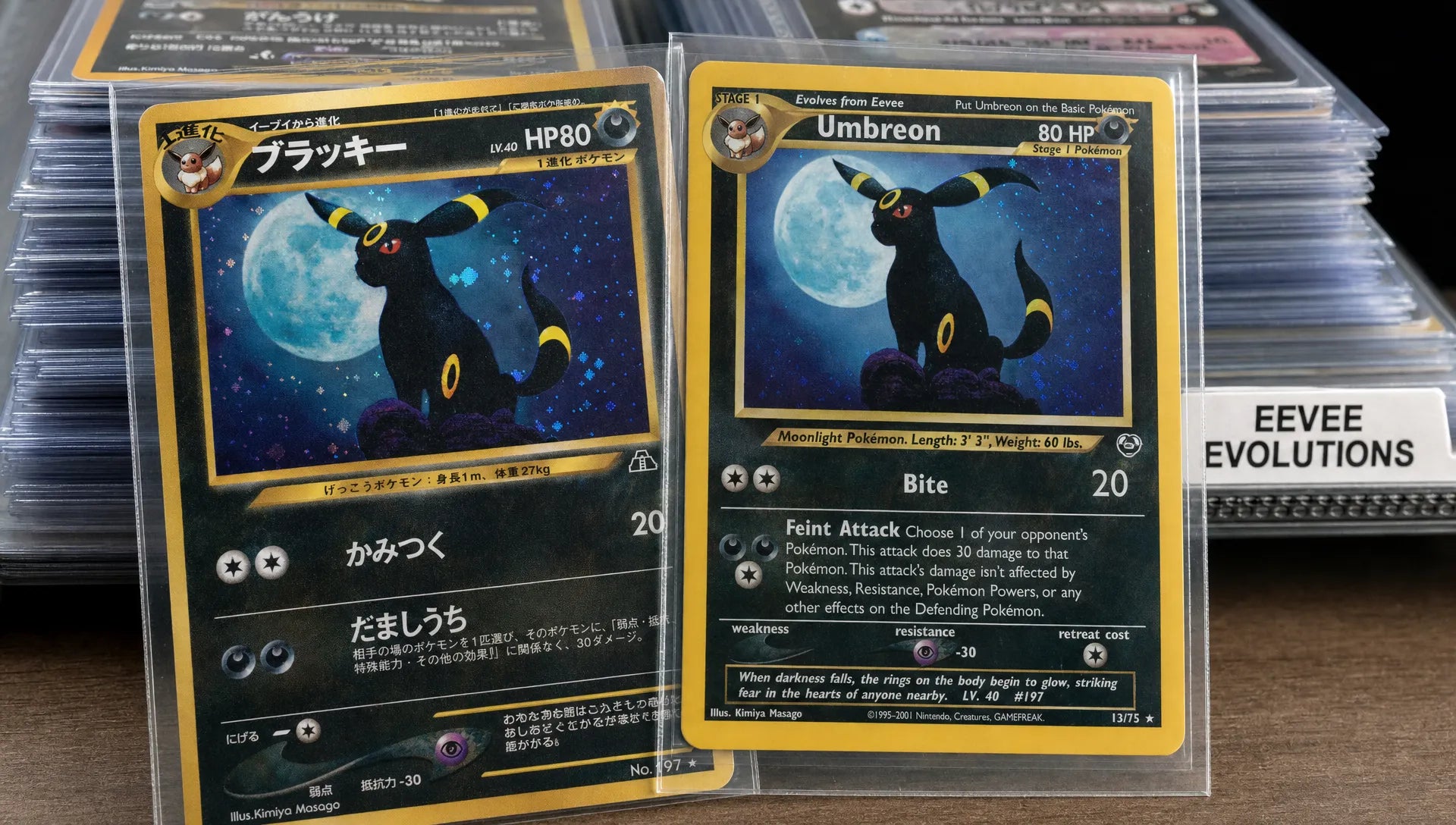
Trading card prices are version-specific. The same character, artwork or player can exist across several sets, languages, finishes, print runs and promotional releases. A fair price for one version can be wildly overpriced for another.
For single cards, confirm the card name, set, card number, rarity, language, finish, condition and whether it is raw or graded. For sports cards, add the year, brand, subset, parallel, serial number, autograph status and patch type if relevant. For sealed products, confirm the product type, language, release, configuration and whether it is factory sealed.
| Product type | Details to verify | Why it affects price |
|---|---|---|
| Pokémon single | Set name, card number, holo type, language, condition | Similar artwork can appear in multiple versions |
| Sports card | Year, brand, player, parallel, serial number, autograph | Parallels and rookie versions can change value sharply |
| Graded card | Grading company, grade, certification number, label details | Premiums depend on the exact grade and cert validity |
| Booster box | Set, language, seal, box configuration | Reprints, regional versions and seal issues affect value |
| Loose packs | Set, source, pack type, tamper risk | Loose packs can be harder to verify than sealed boxes |
If Pokémon is your main focus, the Pokémon TCG online buying guide for NZ collectors goes deeper on singles, sealed products and graded cards from a local buyer perspective.
Compare sold prices, not asking prices
An asking price only tells you what a seller hopes to get. A sold price tells you what someone actually paid. When you are trying not to overpay, sold listings are usually the better starting point.
Use recent sold data from marketplaces, auction results and pricing tools such as PriceCharting as reference points. TCGplayer market data can also be useful for many card games, although NZ collectors should still convert prices into NZD and account for local availability. One unusually high sale does not define the market. Look for a cluster of recent comparable sales.
A good comparison uses the same version and similar condition. Do not compare a PSA 10 to a raw copy. Do not compare an English card to a Japanese card unless that is genuinely the version you want. Do not compare a damaged bargain sale to a clean near-mint copy and expect the same price.
A simple pricing method works well:
- Find 5 to 10 recent sold listings for the exact version.
- Remove obvious outliers, including suspiciously cheap damaged copies and hype-driven high sales.
- Convert each sale into NZD.
- Add shipping, taxes, insurance and payment fees where relevant.
- Set your maximum price before you make an offer or bid.
This takes a few minutes, but it can save you from paying 20 percent more simply because one listing had better photos or more dramatic wording.
Calculate the real landed cost in New Zealand
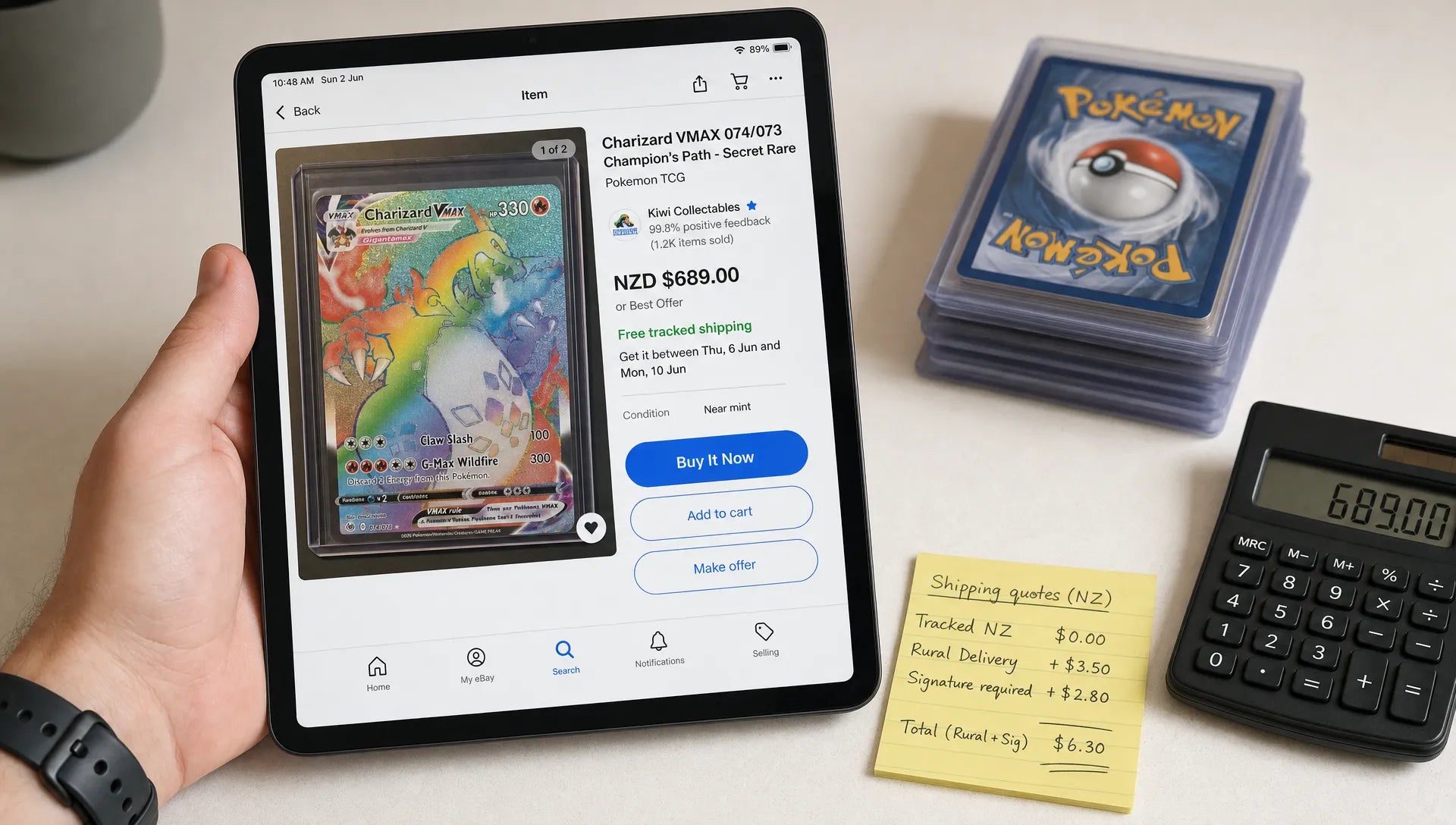
For NZ buyers, the cheapest visible listing is not always the cheapest deal. A card listed overseas may look affordable until you add shipping, insurance, currency conversion and possible import costs.
Check the full checkout total before committing. If the seller does not show final shipping costs upfront, ask. If the card is expensive, consider tracking and insurance as part of the real cost, not an optional extra.
| Cost item | What to check before buying |
|---|---|
| Item price | Convert into NZD using a realistic exchange rate |
| Shipping | Confirm tracked shipping, delivery estimate and packaging |
| Insurance | Consider it for higher-value cards or sealed products |
| Currency conversion | Check bank or payment provider conversion fees |
| GST and import costs | Review current NZ rules before placing large overseas orders |
| Returns | Factor in the cost and practicality of returning an item internationally |
New Zealand import rules can change, so use official guidance such as the New Zealand Customs duty and GST information when buying higher-value items from overseas. A local seller may have a higher sticker price but still be cheaper once delivery time, risk and total landed cost are included.
Check seller trust before chasing the lowest price
A cheap listing is not a good deal if the card arrives damaged, resealed, misdescribed or not at all. Seller trust matters most when buying high-value singles, sealed products and graded cards.
Look for clear photos, detailed descriptions, realistic pricing, secure payment options, visible store policies and a sales history that matches the type of product being sold. Reviews should show repeated successful transactions over time, not just a handful of generic comments.
For retailer websites, check whether the store provides contact details, shipping information, refund policies and product-specific details. If you are comparing Pokémon-focused sellers, this guide on choosing a Pokémon TCG online shop you can trust is useful even if your wider collection includes other card games.

Read condition like a buyer, not like a hopeful seller
Condition is one of the biggest reasons collectors overpay online. Sellers may use terms such as near mint or excellent loosely, and grading standards vary between communities. Photos matter more than adjectives.
For raw cards, inspect corners, edges, centering, surface scratches, dents, print lines, whitening and any signs of moisture damage. Ask for extra photos if the listing price depends heavily on condition. A front-only photo is not enough for an expensive card.
| Condition term | What it usually suggests | What to confirm in photos |
|---|---|---|
| Near mint | Minimal visible wear | Corners, centering, surface and back edges |
| Lightly played | Minor wear from handling | Whitening, small scratches and edge marks |
| Moderately played | Noticeable wear | Creases, dents, surface damage and border wear |
| Damaged | Major flaws | Bends, water damage, peeling or heavy creasing |
Never pay a near-mint price based only on a seller saying the card is minty. Raw cards are still raw, and a card that looks clean in a sleeve may reveal scratches or whitening once photographed under direct light.
Know when a graded card is worth the premium
Graded cards can make buying easier because the condition has been assessed by a third party, but grading does not automatically mean value. A graded common card in a low grade may be less desirable than a clean raw copy. A high grade from a well-known grading company can command a premium, but only if the market actually supports it.
When buying graded cards, compare the same grading company and the same grade. A PSA 10, CGC 10 and Beckett 10 should not be treated as interchangeable without checking recent sales. Always verify the certification number through the grading company where possible, then make sure the slab, label and card match the listing.
Be cautious with raw listings described as PSA 10 contender, likely gem mint or ready to grade. You are buying the current raw card, not the grade the seller hopes it might receive.
Be extra careful with sealed products
Sealed trading card products can be great for collectors, but they come with their own pricing traps. A booster box, elite trainer box, hobby box, blaster box and loose booster pack all have different risk profiles. Sealed cases are different again.
For sealed products, confirm the exact product configuration. Check whether the product is factory sealed, whether the shrink wrap looks correct for that item and whether the seller uses actual photos or stock images. With older products, box condition can affect value even when the seal is intact.
Loose packs need more caution. Some card products can be weighed, searched or separated from sealed boxes in ways buyers cannot easily verify. A loose pack is not automatically bad, but it should usually be priced with the added uncertainty in mind.
If you are specifically looking at Pokémon booster boxes, BigBoiSneakers has a focused guide on buying Pokémon booster boxes online without regret.
Avoid hype pricing around new releases
New trading card releases often go through a predictable pricing cycle. Before release, preorder prices can rise because supply is uncertain. During launch week, chase cards can sell high because demand is emotional and confirmed pull rates are still being discussed. After more stock reaches buyers, prices may settle.
That does not mean every card becomes cheaper later. Some cards stay strong because of genuine scarcity, tournament demand, character popularity or low supply in New Zealand. The point is to avoid treating launch-week prices as normal market value.
If you are not in a rush, use saved searches and watchlists. Let several sales happen before deciding your cap. For popular cards, patience often gives you a clearer view of the real market.
Use safer payment methods and keep records
Payment method affects your risk. Secure checkout, credit cards and recognised payment platforms usually provide more buyer protection than bank transfers or informal payment arrangements. If a seller pushes you away from a platform with buyer protection, ask why.
Keep screenshots of the listing, product photos, description, order confirmation, tracking and messages. If there is a dispute, those records can help prove what was advertised and what arrived.
For expensive purchases, ask the seller how the item will be packed. Cards should be protected from bending and moisture. Sealed products should not be shipped loose in thin mailers. Good packaging is part of the value you are paying for.
Set a maximum price before you make offers or bid
Auctions and limited stock alerts can make collectors spend more than planned. The fix is simple: set your maximum landed price before engaging.
Your maximum should include the item price, shipping, fees and a risk discount if the seller is unfamiliar or photos are weak. If bidding passes your cap, let it go. Another copy will usually appear, and if it does not, you can reassess with a clearer head.
When making an offer, reference recent sold prices politely. A seller is more likely to respond to a fair offer supported by market data than to a lowball message. If the seller refuses, move on rather than increasing your offer out of frustration.
Red flags that often lead to overpaying
Some listings are not outright scams, but they still push buyers toward bad value. Slow down if you notice any of these warning signs:
- The listing uses stock photos only for a high-value raw card.
- The description is vague about set, language, finish or condition.
- The price is based on asking prices rather than sold listings.
- The seller advertises a raw card mainly by suggesting a future grade.
- The product is much cheaper than market price with no clear reason.
- The seller avoids tracked shipping or secure payment methods.
- The return policy is unclear, especially for expensive items.
A good deal should still make sense after you check the details. If the only reason to buy is fear of missing out, pause.
Frequently Asked Questions
What is the best way to avoid overpaying for trading cards online? Compare recent sold prices for the exact same card or sealed product, then add shipping, currency conversion, insurance and any NZ import costs before setting your maximum price.
Should I buy raw or graded trading cards? Buy raw cards for binder sets, playable decks and lower-cost collecting. Consider graded cards when condition certainty, display value or long-term resale matters enough to justify the premium.
Are overseas trading card listings cheaper for NZ buyers? Sometimes, but not always. Overseas listings can become more expensive once you add shipping, conversion fees, delivery risk and possible import costs. Always compare the landed cost in NZD.
How many sold listings should I check before buying? For common cards, 5 to 10 recent sold listings usually gives a useful range. For rare cards, you may need to look further back, but make sure older sales still reflect the current market.
Is the cheapest trading card listing usually the best deal? Not necessarily. The cheapest listing may have poor photos, weaker condition, risky shipping or an unverified seller. A slightly higher price from a trusted seller can be better value.
Buy with patience, not pressure
The best online trading card buys usually come from a simple habit: slow down, verify the exact item, compare real sales and calculate the full cost before paying. That applies whether you are chasing a Pokémon grail, building a sports card collection or picking up sealed TCG products for display.
If you want to shop collectibles from a retailer that also serves sneaker and streetwear buyers, explore BigBoiSneakers for authentic sneakers, streetwear, collectibles, secure payment options and regular new arrivals.