Pokémon TCG Online Buy Cards Guide for NZ Collectors

Buying Pokémon TCG cards online in New Zealand should feel exciting, not like a gamble. The best approach is simple: know exactly what you want, compare the right prices, check the seller carefully, and understand the real delivered cost before you hit checkout.
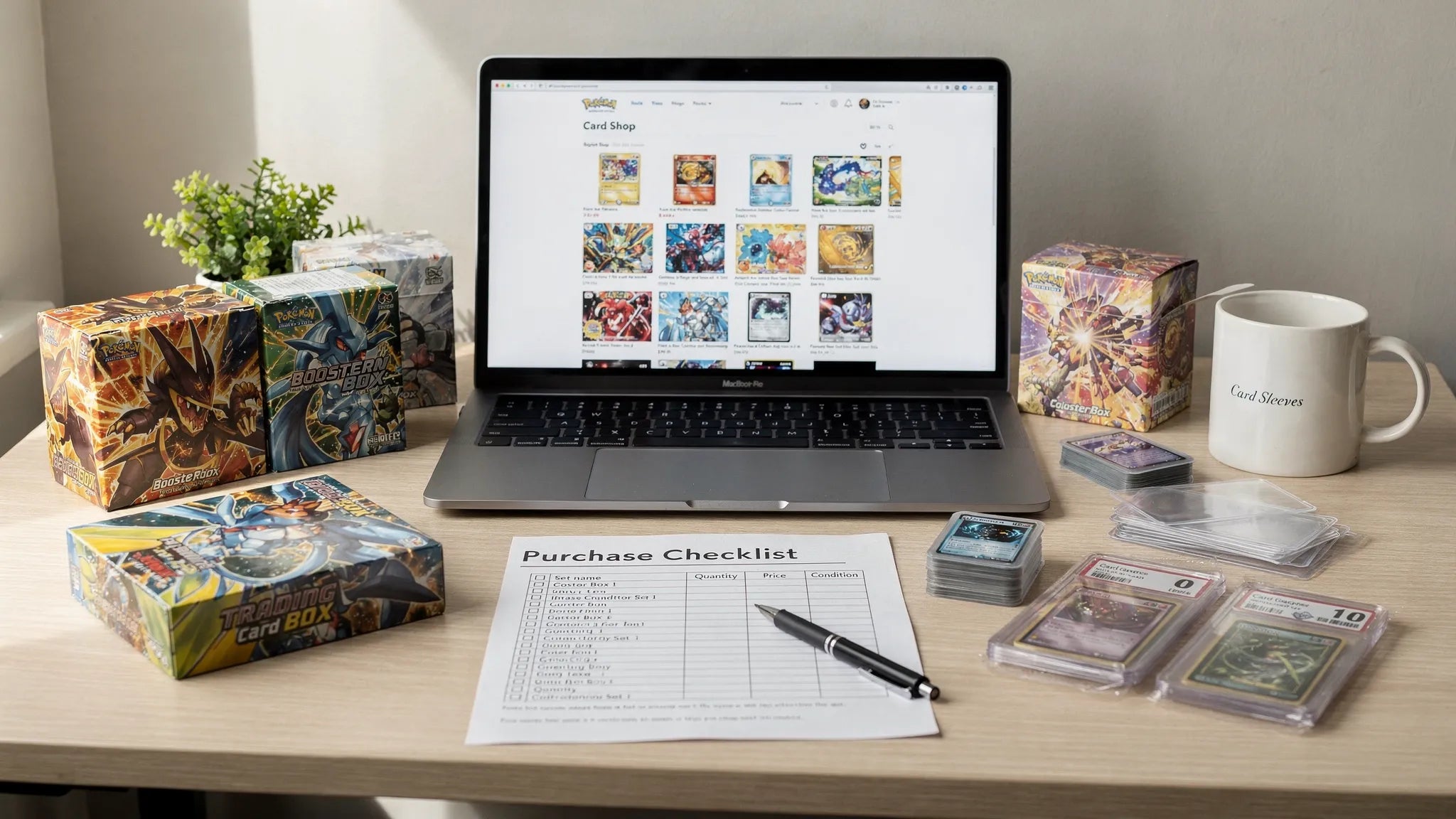
One quick clarification before we start: the older Pokémon TCG Online game has been replaced by Pokémon TCG Live. If you are looking for digital gameplay, start there. This guide is for NZ collectors who want to buy physical Pokémon cards online, including singles, sealed products, graded cards, booster boxes, ETBs, and collectible TCG releases.
Start with your collecting goal
The biggest mistake new collectors make is shopping before deciding why they are buying. A sealed collector, a player, a Charizard hunter, and someone opening packs for fun should not buy the same products.
Use this table as a quick starting point:
| Collector goal | Best online buy | Why it works | Watch out for |
|---|---|---|---|
| Complete a set | Raw singles | You avoid chasing random pulls | Condition differences and missing reverse holos |
| Open packs for fun | Booster bundles, ETBs, booster boxes | Better experience and more packs | Pulls are never guaranteed |
| Build a sealed display | ETBs, booster boxes, special collections | Looks good and can stay sealed | Reseals, damaged boxes, and storage issues |
| Collect a favourite Pokémon | Singles or graded cards | Targeted and predictable | Paying hype prices without sold comps |
| Buy a gift | ETB, collection box, or bundle | Easy to understand and presentable | Language, age rating, and damaged packaging |
| Invest long term | Sealed product or high-grade key cards | Easier to track and store | Market volatility and liquidity in NZ |
If your goal is specific, singles are often the cleanest path. If your goal is the pack-opening experience, sealed product makes more sense. If your goal is value preservation, condition and provenance matter more than hype.
Know what you are actually buying
Online listings can look similar but describe very different things. Before comparing prices, confirm whether the listing is for a single card, sealed pack, booster box, Elite Trainer Box, graded slab, code card, or mixed lot.
Singles are individual cards sold raw or graded. They are best when you want a specific card without relying on pack luck. For a deeper NZ-focused process, read our guide to the best place to buy Pokémon singles online in NZ.
Sealed products include booster packs, booster bundles, ETBs, tins, special collections, and booster boxes. They are great for opening, gifting, sealed displays, or long-term collecting. They also require careful inspection because tampered sealed product is one of the easiest ways to lose money online. If you are leaning toward sealed boxes, this guide on how to buy Pokémon booster boxes online without regret is worth reading next.
Graded cards are authenticated and assessed by a grading company such as PSA, CGC, or Beckett. They are useful for higher-value cards because the condition is easier to compare. Still, you should verify the certification number directly with the grading company, such as through PSA certification verification.
Code cards are not the same as physical cards. Some sellers list digital code cards from sealed Pokémon products. If a listing says code only, you are not buying a physical collectible.

Confirm the exact card before you compare prices
Two cards with the same Pokémon on them can have completely different values. A Pikachu promo, a standard set card, a reverse holo, an illustration rare, and a graded version may all appear in similar search results.
Before buying a single card, confirm the card name, set name, card number, language, rarity, finish, promo stamp, and whether the card is raw or graded. The official Pokémon card database is useful for checking set details and card numbers.
Language matters too. English cards are usually the simplest choice for NZ collectors who trade locally or play casually with friends. Japanese cards can be highly collectible, but they may have different set names, pack structures, and market pricing. If you play organised events, check local rules before assuming non-English cards are acceptable.
For vintage cards, be especially precise. Unlimited, First Edition, shadowless, promo, reverse holo, and error variants should never be priced as if they are interchangeable.
Price the card, not the hype
Asking prices are not market value. A seller can list a card for any number they want. Sold prices tell you what buyers actually paid.
When checking value, compare recent sold listings for the exact same card, in the same language and similar condition. For graded cards, compare the same grading company and grade where possible. A PSA 10 and PSA 9 can have very different values, and raw near mint does not automatically mean it will grade a 10.
For raw cards, condition is everything. Corners, whitening, scratches, surface dents, centring, print lines, and edge wear can all change the price. A card that looks clean in a front-facing photo may still have back whitening or surface marks that reduce value.
If you want a step-by-step valuation method, use our Pokémon card price checklist. For higher-end singles, our guide on how to buy rare Pokémon cards online without overpaying breaks down sold comps, condition adjustments, and buyer safety in more detail.
Calculate the real NZ delivered cost
For New Zealand collectors, the lowest sticker price is not always the cheapest final price. Overseas listings can look attractive until you add shipping, currency conversion, GST, insurance, and possible import costs.
A simple checkout formula is:
True cost = item price + shipping + payment fees + currency conversion + GST or import charges + protection or insurance
New Zealand has 15 percent GST, and imported goods can involve extra rules depending on the seller, platform, item value, and shipping method. Check NZ Customs duty and GST guidance if you are buying higher-value cards or sealed products from overseas.
Local NZ sellers can cost more upfront but may save you money through faster shipping, easier returns, clearer consumer protection, and less risk of damage in transit. That matters for sealed collectors, because crushed boxes and dented ETBs can reduce display value.
Check seller trust signals before paying
A good online Pokémon card seller should make the buying decision easier, not harder. You want transparency, clear photos, realistic pricing, and secure checkout.
| Seller signal | Why it matters |
|---|---|
| Clear business identity | You know who is taking payment and handling support |
| Real product photos | Helps confirm condition, packaging, and exact item |
| Specific condition notes | Reduces disputes over whitening, scratches, dents, or box damage |
| Secure payment methods | Gives you more protection than bank transfer or off-platform deals |
| Trackable shipping | Important for valuable singles and sealed product |
| Realistic pricing | Extreme discounts often signal fakes, reseals, or bait listings |
| Responsive support | Good sellers answer specific questions before purchase |
For a broader seller-vetting framework, read our guide to spotting the best Pokémon website store and legit sellers. If you are comparing marketplace sellers, our reputable Pokémon card sellers green flags and red flags guide is also useful.
Raw cards, graded cards, and sealed product: what to inspect
For raw singles, ask for front and back photos taken in clear lighting. For higher-value cards, angled photos can reveal surface scratches, dents, and print lines. A seller who only provides one blurry front photo is asking you to take on too much risk.
For graded cards, check the certification number on the grading company website and compare the slab label, card, and grade. Look for signs of slab tampering, label mismatch, or photos that appear copied from another listing.
For sealed product, inspect the shrink wrap, seams, box corners, set logo, barcode, and overall packaging. Loose booster packs are riskier than sealed boxes or retailer-sourced products because pack origin can be harder to verify. This does not mean every loose pack is bad, but it does mean you need more trust in the seller.
Pull-rate claims should be treated carefully. The Pokémon Company does not publish official pull rates for most modern sets, so online pull-rate charts are usually community estimates. Buy sealed product because you enjoy opening or collecting it, not because a listing suggests guaranteed hits.
A simple online buying workflow for NZ collectors
Use this process before buying anything valuable:
- Define the goal: Decide if you are buying to play, rip packs, complete a set, gift, display, or hold sealed.
- Identify the exact item: Confirm set, language, card number, product type, condition, and whether it is raw, sealed, or graded.
- Check sold prices: Compare recent sold listings, not just active listings.
- Add NZ costs: Include shipping, GST, currency conversion, and payment fees before deciding if the deal is good.
- Vet the seller: Look for identity, reviews, secure payment, return information, and specific product photos.
- Ask questions: Request extra photos or packaging details if anything is unclear.
- Inspect on arrival: Record the unboxing, check condition immediately, and store cards properly.
This process is slower than impulse buying, but it prevents most common regrets.
Red flags that should make you pause
Some listings are risky enough to skip completely. Be cautious if you see any of the following:
- A price far below recent sold comps with no explanation.
- A seller pushing bank transfer, friends-and-family payments, or off-platform payment.
- Stock photos used for expensive singles or sealed products.
- Vague condition terms such as good condition with no close-up photos.
- Unlimited supply of rare or out-of-print products from an unknown seller.
- Refusal to show the back of a card, box seals, or graded certification number.
- Pressure tactics such as buy in the next 10 minutes or I have many other buyers.
One red flag does not always prove a scam, but multiple red flags should be enough to walk away.
Protect your cards when they arrive
Your job is not finished at checkout. When the package arrives, record the opening before you remove anything. This gives you evidence if the item is damaged, missing, or not as described.
For singles, check the card against the listing photos, then sleeve it immediately. For valuable cards, use a penny sleeve and top loader, semi-rigid holder, or binder page designed for trading cards. Avoid forcing cards into tight sleeves, because corners can catch and whiten.
For sealed product, photograph the box from all sides before opening or storing. If you are keeping it sealed, store it away from direct sunlight, heat, garages, damp rooms, and heavy stacking. New Zealand humidity can be rough on cardboard, so a dry cupboard with stable temperature is usually better than a windowsill or storage shed.
Where BigBoiSneakers fits for collectors
BigBoiSneakers is best known in NZ for authentic sneakers and streetwear, but the store also serves collectors looking for trading cards, collectibles, new arrivals, and trending items. For Pokémon TCG buyers, the main advantage of shopping with an established retailer is reduced uncertainty: secure payment options, local shopping convenience, customer reviews, and clearer support than anonymous marketplace listings.
If you are building a collection across sneakers, streetwear, Pokémon cards, and other collectibles, BigBoiSneakers gives you one place to browse new drops and collector-focused products. Availability changes, so check current listings before planning a purchase.
Frequently Asked Questions
Is it safe to buy Pokémon TCG cards online in NZ? Yes, if you use reputable sellers, secure payment methods, clear product photos, and realistic pricing checks. Avoid off-platform payments and listings that do not show the exact item.
Should I buy singles or sealed Pokémon products? Buy singles if you want specific cards or set completion. Buy sealed products if you enjoy opening packs, gifting, or collecting sealed displays. Singles are usually more predictable, while sealed products are more experience-driven.
Are Japanese Pokémon cards worth buying in New Zealand? They can be, especially for collectors who like Japanese artwork, print style, promos, or set structure. Just make sure you compare Japanese sold prices, not English prices, and check playability rules if you want to use them in events.
How do I know if a Pokémon card is fake online? Start by checking the seller, photos, card number, font, holo pattern, back colour, and condition details. For expensive cards, consider graded copies or ask for extra photos in natural light before paying.
Do graded Pokémon cards always hold value better? Not always. Grading helps standardise condition and authenticity, but value still depends on demand, population, character popularity, set relevance, and market timing.
Where can NZ collectors buy Pokémon cards online? Start with established NZ retailers, reputable specialist stores, and trusted marketplaces with buyer protection. BigBoiSneakers is a strong option for collectors who want to browse trading cards and collectibles alongside sneakers and streetwear.
Build your Pokémon TCG collection with less guesswork
A good Pokémon collection is built one careful buy at a time. Know your goal, check the exact item, compare sold prices, use secure payments, and protect your cards once they arrive.
When you are ready to browse collectibles, new arrivals, and trading card options, visit BigBoiSneakers. For more buying support, explore our Pokémon guides on singles, sealed products, pricing, and reputable sellers before your next checkout.