How to Choose One Piece English TCG Promo Cards
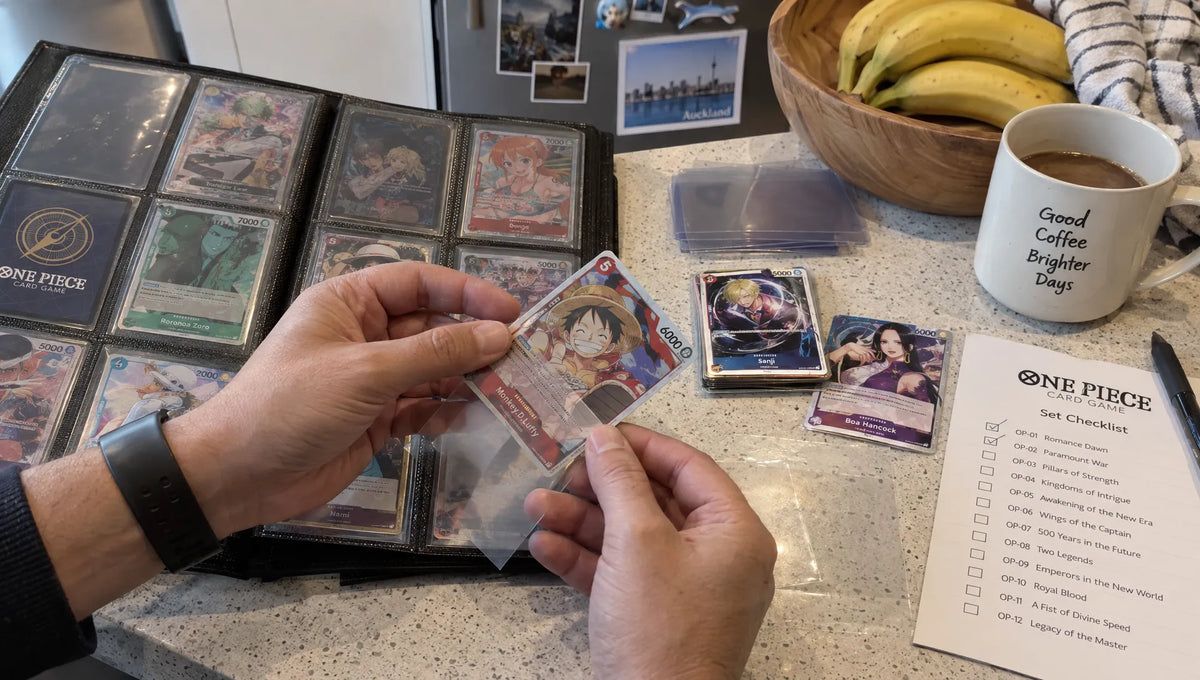
Choosing One Piece English TCG promo cards starts with identifying the exact printing, not chasing the biggest “exclusive” label. Two cards featuring the same character can differ in artwork, distribution, condition and usefulness in a deck. A winner stamp may matter to a tournament collector, while someone building a character binder might prefer an affordable participation version.
Before buying, establish what the card is, how it was distributed and whether the asking price matches that particular version. Those checks are especially useful for New Zealand buyers comparing local listings with overseas offers.
Decide what the promo needs to do
A good promo purchase should serve a clear purpose. For a character collection, prioritise artwork you enjoy and a condition standard that suits your binder. For a tournament collection, the event, stamp and distribution history may be the main attraction. For gameplay, card legality and the cost of an equivalent playable printing matter more than presentation.
Set your spending limit before browsing. Separate the amount you are comfortable paying for the card from delivery costs and any import charges that apply. A modestly priced overseas single can become less attractive once those extras are included.
Also decide whether packaging matters. An unopened promotional pack, a loose single and a professionally graded copy are different purchases. Buy sealed packaging because you want that format, not because it automatically proves the contents are flawless or more valuable.
How do you identify a One Piece English TCG promo?
Start with the card number, then narrow the search to the exact artwork and treatment. Bandai’s official card list is a useful reference for matching card details and illustrations. If a particular event treatment is not clear there, check the relevant official event or product announcement as well.
A P-prefixed card number can identify a promotional card, but it does not tell you its entire distribution history or market value. Promotional versions can also involve alternate artwork or stamps on cards with other numbering. A seller’s use of “promo” is therefore a starting point, not sufficient identification.
Match the printed language, card number, illustration, foil treatment and any event or winner markings. Compare the front and back with reliable references rather than relying on the listing title alone.
The distinction between card identity and printing identity is important. The same underlying card can have multiple collectible versions. Searching only by character name or card number may bring up cheaper versions that are not comparable with the one you are considering.
Check how the card was distributed
For One Piece English TCG promos, the distribution route helps explain what you are buying, but it does not establish scarcity by itself. Participation cards, prize cards and campaign bonuses can reach collectors in different ways.
| Description in a listing | What to verify | What not to assume |
|---|---|---|
| Participation promo | The event and exact card version distributed | Every participant received the same version across all events |
| Winner or prize promo | The official marking and qualifying event | Any stamped card is a winner prize |
| Campaign or purchase bonus | The qualifying product, region and campaign terms | Every purchase of that product included the bonus |
| Sealed promotional pack | The pack identity and stated possible contents | The pack guarantees your preferred card |
Use Bandai’s official event information to investigate a claimed tournament connection. Ask the seller which event, campaign or product the card came from if the description is vague.
Be cautious with “limited”, “rare” and “exclusive” when no supporting details are supplied. An exclusive distribution method is not the same as a published print run. Availability can also differ between regions, so an overseas promotion does not establish that the same offer ran in NZ.
Assess authenticity and condition separately
A One Piece English TCG listing needs both an authenticity check and a condition check. A genuine card can still be damaged, and an attractive photograph does not establish that a card is genuine.
Request clear photographs of the actual card’s front, back, corners and edges. Angled lighting can reveal surface scratches, dents or pressure marks that disappear in a straight-on image. For foil or textured versions, ask for photographs that show the surface rather than a reflection covering the artwork.
Compare the typography, card number, copyright details, layout and expected finish with the correct official version. Differences in lighting or camera settings can change how colour appears, so avoid declaring a card genuine or fake from colour alone. No single visual test is conclusive.
For higher-value purchases, favour sellers who provide detailed images, a clear description and a workable returns process if the item is not as described. An “authentic” label without supporting information is not enough.
Condition terms also need scrutiny. “Near mint” does not mean guaranteed perfect centring or a future top grading result. If a corner flaw would bother you, ask about it before paying rather than assuming the seller’s condition standard matches yours.
Compare prices for the exact version
Value a One Piece English TCG promo against recent completed sales of matching copies, not the highest active asking price. Match the language, artwork, stamp, condition and packaging as closely as possible.
A loose participation card is not a useful direct comparison for a sealed winner version. Likewise, a graded sale includes factors that do not apply to an ungraded copy, such as the grading company, assigned grade and holder condition.
When matching sales are scarce, widen the time window before widening the definition of “comparable”. A single unusual transaction is weak evidence of a stable market price. If you cannot find reliable comparisons, treat that uncertainty as a reason to limit your offer rather than accept an unsupported premium.
For NZ buyers, compare the total delivered cost in NZD. Include shipping, currency conversion fees and any applicable taxes or import charges. Consider the practical cost of returning a disputed card overseas as well.
BigBoiSneakers’ guide to checking whether a One Piece card price is fair explains the broader comparison process. For promos, the crucial extra step is matching the distribution treatment. A small stamp can make two otherwise similar-looking cards very different purchases.

Do not confuse booster boxes with promo products
Booster boxes and promotional cards serve different buying goals. Opening a main-set box can build a collection, but it is not a reliable substitute for buying a specific promo single. Any claimed bonus should be explicitly identified, including its language and the conditions for receiving it.
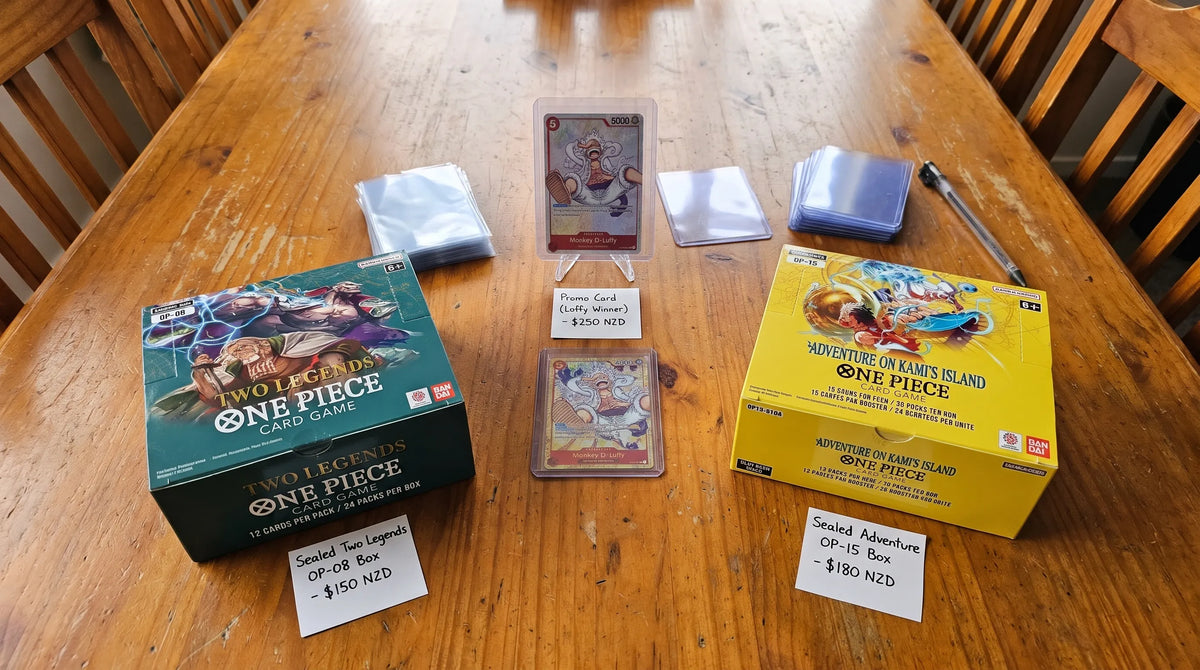
The Bandai One Piece Card Game Two Legends Booster Box (OP-08 English) is an English-language main-set product containing 24 sealed booster packs. It is relevant if you also want to collect Two Legends, but the booster-box listing alone should not be treated as a promise of a particular promotional card.
The 2026 Bandai One Piece Card Game Adventure on KAMI's Island OP-15 Booster Box is another sealed set product to distinguish from a promo listing. Its name does not establish that it includes an English promotional card. Confirm the product language, pack configuration and any separately advertised bonus before ordering.
This distinction matters when listings use similar character artwork across boxes, packs and singles. Check exactly what the seller is supplying. If your goal is one particular promo, buying that identified single gives you more certainty than opening unrelated sealed products in the hope of finding it.
Run a final check before paying
Before purchasing a One Piece English TCG promo, make sure the listing answers the questions that could change your decision. Save the description and photographs so you have a record of the advertised version and condition.
- Identity: Does the card number, artwork and promotional marking match the version you want?
- Language: Do photographs show English text on the actual card?
- Condition: Are visible flaws disclosed and acceptable at the price?
- Contents: Is the purchase a single, sealed pack or another clearly described format?
- Seller terms: Are shipping, returns and payment protections clear?
- Total cost: Does the delivered NZD price fit your budget?
If the seller cannot resolve a meaningful discrepancy, wait. There is little benefit in securing a seemingly cheap card if you later discover it has the wrong stamp, language or packaging. For gifts, confirm the recipient’s preferred character or exact card version before choosing a premium copy.
Frequently asked questions
Are all P-numbered cards expensive or rare? No. A promotional card number does not establish print quantity, demand or value. Check the exact artwork, distribution and condition, then compare matching completed sales. Different versions sharing a card number may sell for different amounts.
Can I use Japanese promos in a One Piece English TCG deck at an NZ tournament? Do not assume you can mix languages in organised play. For NZ events, choose English-language cards and check Bandai’s current rules and restrictions alongside the event requirements. A Japanese copy is not automatically permitted because an English equivalent exists.
Is a promo automatically legal for tournament play? No. A promotional origin does not override release timing, regional eligibility or banned and restricted card rules. Check the card number against the current requirements for your event. Artwork and collectible appeal are separate from play legality.
Should I buy a sealed promo or a loose single? Choose sealed if the unopened presentation is part of your collecting goal. Choose a loose single when inspecting the card itself matters more. Sealed packaging can conceal condition issues and does not guarantee a perfect card.
Choose the version, then choose where to buy
The strongest purchase is the exact English promo you want, in an acceptable condition, at a defensible delivered price. Keep that target separate from general sealed collecting. When you also want to explore booster products, browse BigBoiSneakers’ One Piece collection and check each listing’s language and contents before ordering.