How to Choose Which New One Piece TCG Sets to Collect
If you’re searching for “one piece new tcg”, the useful question is not simply which set is newest. It is which release fits the collection you actually want to build. Favourite characters, card artwork, language editions and the cost of finishing your goal matter more than a release number.
For New Zealand collectors, there is another layer: an overseas announcement does not confirm local availability. Before buying, separate the appeal of the cards from the details of the product being sold.
Start with a collecting goal, not a release date
A set can be a great choice for one collector and an expensive distraction for another. Decide what a satisfying collection would look like before comparing boxes.
| Collecting goal | What to check in a new set | Sensible buying approach |
|---|---|---|
| Favourite character collection | Which versions of your character appear, including alternate artwork | Prioritise specific cards rather than unrelated pulls |
| Standard set collection | The published checklist and your definition of completion | Track missing cards and use singles to fill gaps |
| Sealed display collection | Packaging, edition, language and box condition | Choose a sealed product you want to display |
| Playable collection | Cards supporting your deck and their current legality | Buy around a deck plan rather than a release number |
Define your stopping point early. “Every standard-numbered card” is a different commitment from “every artwork variation”. A character collection might need only a few cards from a release, while a sealed collection may not require opening anything.
If you already collect sneakers or Pokémon, the temptation is familiar: liking a new drop does not mean you need every version.
What to verify in “one piece new tcg” listings
Match the set code, product type and language
Product names alone are not enough. Record the set code shown on the listing, then match it against Bandai’s official product information.
Codes such as OP, EB and ST help distinguish booster releases, extra boosters and starter products. They are not a universal ranking of desirability. Read the product description to understand what that particular release contains and who it suits.
Check the language separately. Do not assume that two boxes with similar artwork have identical pack contents, card counts or release arrangements. Confirm those details for the exact edition being offered, especially when comparing prices between retailers.
Separate release dates from NZ dispatch dates
An announcement date, an official release date and a retailer’s expected dispatch date mean different things. A product can be announced without being available to send to your address.
For a New Zealand purchase, establish whether the listing is in stock or a preorder, where it dispatches from and whether its delivery estimate applies to NZ. If it is a preorder, read the cancellation and delay terms before paying.
Treat social media rumours as leads to investigate, not confirmation. Match a claimed release to an official announcement, then check the retailer’s fulfilment details independently.
Read the card list before choosing a chase card
The most useful research tool for choosing new One Piece TCG sets is the checklist, not a photo of the rarest pull.
Use Bandai’s official card list to see whether the release has enough cards you genuinely want. Look beyond the headline character: supporting characters, scene choices and alternate artwork may make one set much more appealing than another.
Try a simple test: would you still enjoy opening this set if you missed its most desirable card? If the answer is no, buying that specific card may fit your goal better than opening random packs.
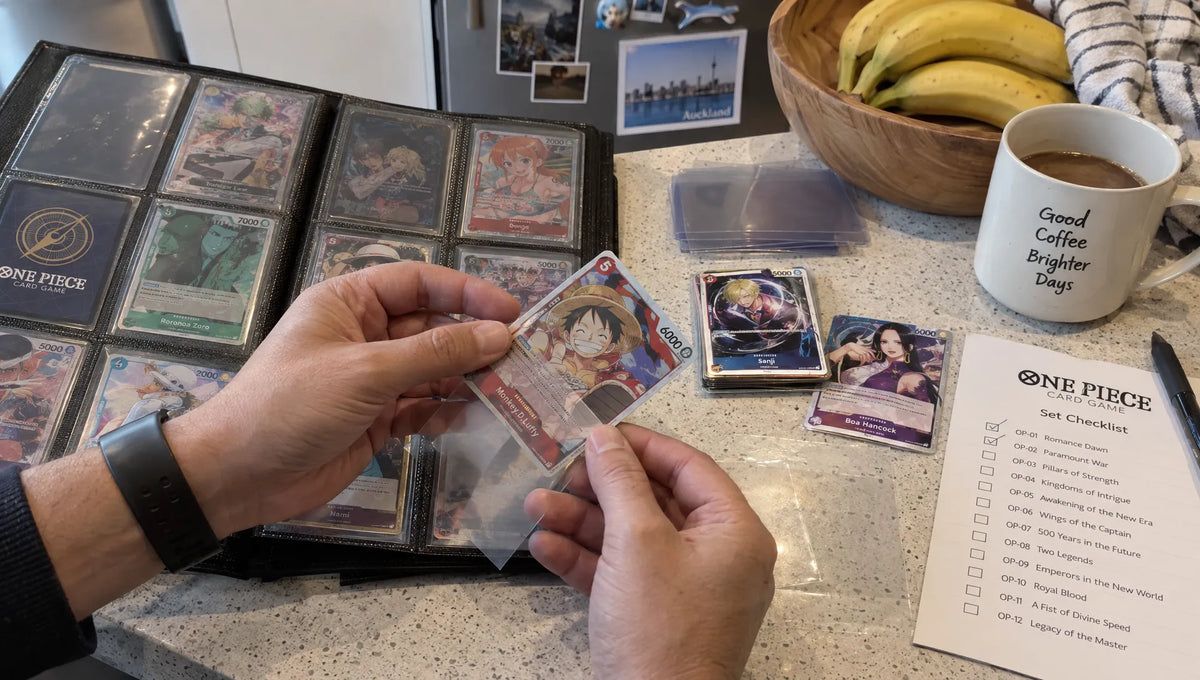
For a set-building project, write down whether alternate-art cards, promotional cards and other variants count towards completion. They should not become surprise obligations halfway through collecting. The One Piece TCG card list and price guide for set collectors explains how to track the correct versions and identify gaps.
A release with several affordable favourites can be more satisfying than one where your entire interest rests on a single difficult pull.
Compare new boxes by the role they will play
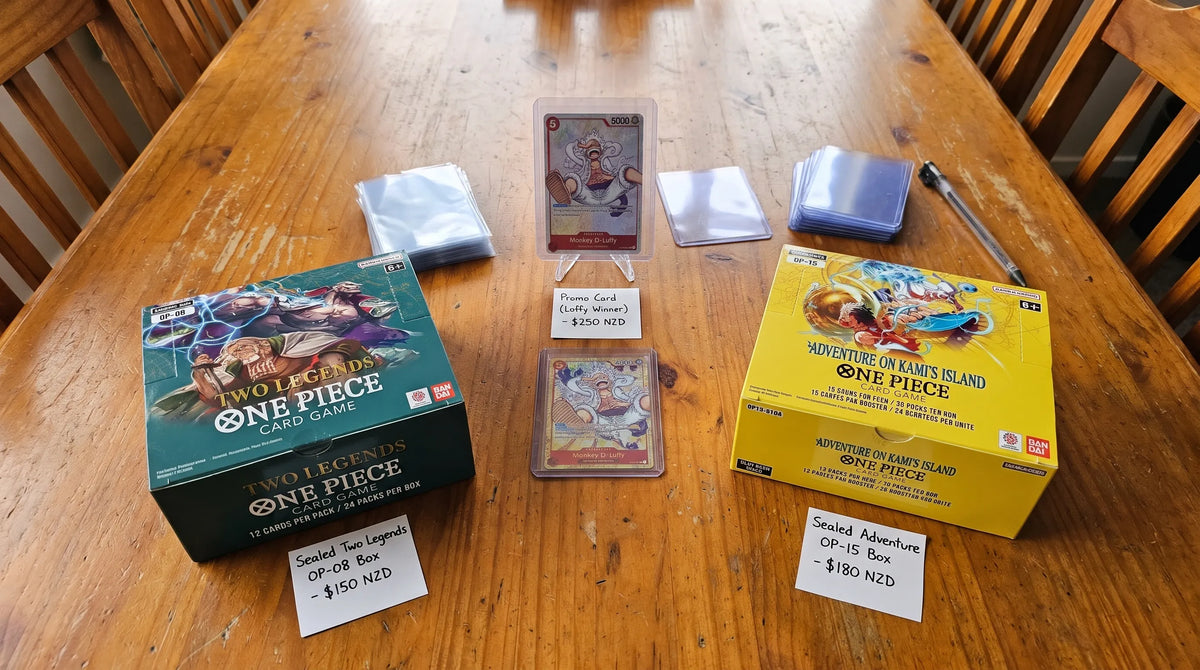
Two new One Piece TCG boxes can appeal for different reasons. Use the following products as shortlist examples, then confirm their current language, contents and availability before ordering.
The Azure Sea’s Seven: assess the collection fit
The Bandai One Piece The Azure Sea's Seven OP14EB04 Booster Box Expansion For One Piece Card Game is worth assessing if its theme interests you.
Start by matching the listed OP14-EB04 product to its official information and card checklist. Then identify the cards you would actually keep. If you want a broad selection from the release, opening packs may suit your collecting experience. If you only want one or two artworks, compare that plan with buying those cards individually.
The key distinction is between wanting to explore a set and wanting a specific outcome.
The Time of Battle: distinguish display appeal from card contents
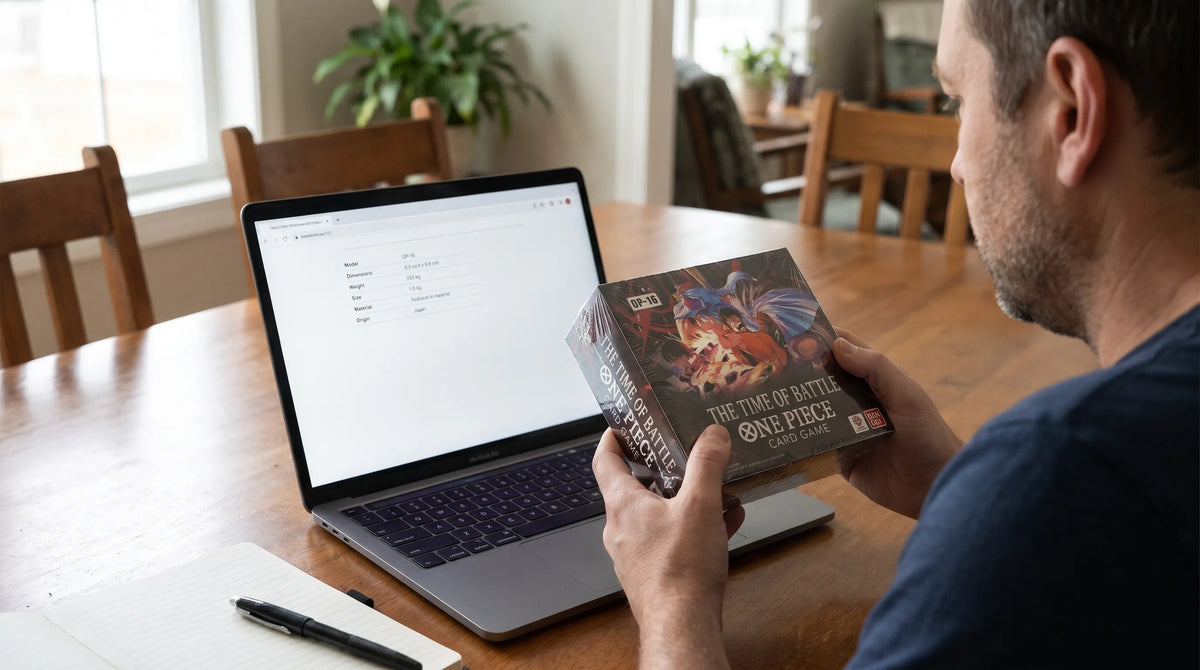
The 2026 Bandai One Piece The Time Of Battle Card Game Booster Box features Gear 5 Monkey D. Luffy artwork on its packaging. That gives sealed-display collectors something concrete to assess beyond the cards themselves.
Packaging artwork does not guarantee a matching card inside. If your goal is a binder collection, check the actual card list. If your goal is a sealed display, confirm the supplied product configuration and ask about box condition when that matters to you.
Set a complete NZD budget before ordering
Choosing new One Piece TCG sets becomes easier when you compare the cost of your collecting plan, rather than just the price of a box.
Your total may include shipping, sleeves, binder pages and any applicable import charges on an overseas order. Keep some money aside for missing cards if you intend to build a set. Random packs can produce duplicates, so another box is not necessarily the most efficient way to close the final gaps.
Illustrative budget only: with NZ$250 available, reserving NZ$30 for protection and delivery leaves NZ$220 for cards. These figures are not product prices or shipping quotes. They simply show why spending the full budget on the initial purchase can leave a collection unfinished or unprotected.
Choose your opening limit before you start. You might buy a fixed number of packs for enjoyment, record what you pulled and then switch to singles. Avoid extending the budget because the previous packs missed your target.
For sealed collecting, include storage in the plan. A box intended for display still needs protection from moisture, direct sunlight and crushing. Neither a new release nor sealed packaging guarantees future resale value.

Check tournament relevance if you also want to play
A collectible card and a useful tournament card are not necessarily the same thing. If you want your purchases to serve both purposes, check the current rules before paying a premium for playability.
Bandai’s official rules and regulations are the starting point for tournament rules and banned or restricted card information. Confirm which rules apply to the event you intend to enter, including card-language requirements and regional eligibility.
Do not assume that a rotation system from Pokémon or another game applies to One Piece. Likewise, a newer set number does not automatically establish that every card is legal for your event. Check the current format and ask the organiser when anything is unclear.
Restrictions can change a card’s usefulness in organised play without changing its artwork or its place in your binder. If you are collecting mainly for characters and illustration, keep that goal separate from short-term competitive demand.
A starter deck is generally a more direct route into learning the game than trying to assemble a playable deck from random boosters.
Use a shortlist to choose your next set
Before committing to a new One Piece TCG release, compare two or three candidates using the same criteria. This prevents the loudest launch campaign from making the decision for you.
- Personal appeal: Identify several cards or a sealed presentation you would enjoy owning without resale expectations.
- Verified product details: Confirm the code, language, configuration and release information for the exact listing.
- Achievable goal: Decide whether you are collecting selected cards, a standard set, artwork variants or a sealed box.
- Affordable total: Include delivery, protection and a realistic allowance for finishing your chosen goal.
- Clear fulfilment: Establish stock or preorder status, dispatch expectations and relevant purchase terms.
Drop any candidate with unresolved product details, even if the theme is appealing. For the remaining options, prioritise the one that fits your interests and budget most comfortably.
Finish this sentence before purchasing: “I am choosing this set because I want ___, and I will stop when ___.” A concrete answer is more useful than “it is the newest one”.
Keeping that note also helps at the next release. You can decide whether a new purchase adds something meaningful or simply interrupts a collection you still want to finish.
Frequently asked questions
Should I always collect the newest One Piece TCG set? No. New One Piece TCG releases give you more choices, but an earlier set may better match your favourite characters, artwork preferences or completion budget. Release order is a useful identifier, not a quality ranking.
Are Japanese and English boxes interchangeable for collecting? Not automatically. Confirm the language, product configuration and exact cards you want before comparing prices. For tournament use, check the applicable language and regional rules rather than assuming either edition is accepted.
Are booster boxes better than singles? Boxes suit the experience of opening packs or keeping a sealed product. Singles give you control over the exact cards you receive. A mixed approach can work: open within a fixed budget, then buy the remaining cards individually.
Does a preorder confirm when my box will arrive in NZ? No. Read the retailer’s expected dispatch information and delivery terms. An official release date is not a promise that your parcel will arrive that day.
Find a set that fits your collection
Browse the One Piece collection at BigBoiSneakers with your shortlist beside you. Compare the listed edition and product details, check current availability and choose the release that supports your goal. The right next set is the one you want to own, not simply the one announced most recently.