Pokémon Store Website Checklist for Safer Online Orders
Buying Pokémon cards online should feel exciting, not risky. The problem is that the same things collectors love, limited releases, chase cards, sealed boxes and fast-moving restocks, also make Pokémon products a target for fake websites, misleading listings and rushed checkout decisions.
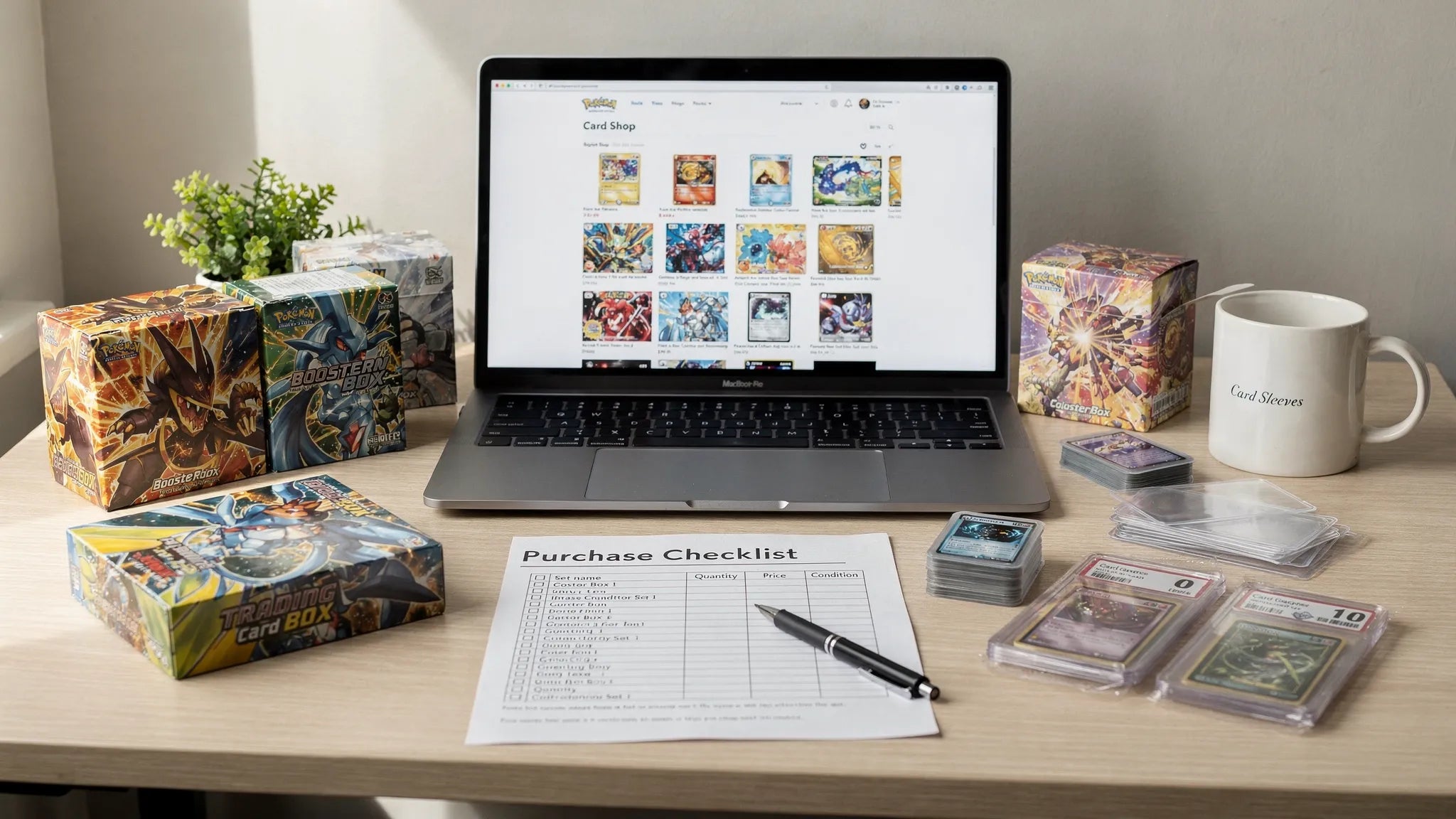
A safer order starts before you add anything to cart. Whether you are buying a booster box, Elite Trainer Box, singles, graded cards or a gift for a new collector, use this Pokémon store website checklist to slow the process down and spot problems early.

The quick Pokémon store website safety checklist
If you only have a minute, scan these points before placing an order. One red flag does not always mean a site is fake, but multiple red flags should make you pause.
| Check | Safer sign | Red flag |
|---|---|---|
| Website address | Domain is easy to read and matches the store name | Misspellings, odd extra words, fake copycat domains |
| Store identity | Clear business name, contact details and support options | No real contact page or only a social media DM |
| Product information | Exact set, language, format and condition are listed | Vague names like assorted rare packs with no details |
| Photos | Clear product images or accurate stock images for sealed retail items | Blurry images, stolen photos or no back photos for singles |
| Price | Discount makes sense compared with market pricing | Rare product is far cheaper than every other seller |
| Payment | Secure checkout with card or other protected methods | Bank transfer, crypto or pressure to pay off-platform |
| Shipping | Tracked delivery, packing expectations and timing are stated | No tracking, unclear courier or unrealistic delivery claims |
| Returns | Returns, cancellations and damaged parcel policies are easy to find | No policy, broken links or all sales final with no explanation |
| Reviews | Specific recent reviews across trusted platforms | Generic reviews, no history or repeated copied wording |
| Preorders | Release date, allocation risk and refund terms are clear | Guaranteed stock with no timeline or cancellation policy |
Start with the website itself, not the product
Scam stores often rely on excitement. A collector sees a sold-out booster box, a rare Charizard, a limited product or a price that looks too good, then checks out before looking closely at the website. Flip the order: check the site first, then judge the product.
Look carefully at the domain name. Copycat websites often use small spelling changes, extra hyphens, unusual endings or names that imitate a known retailer. If you reached the store through a social media ad, search for the store separately in your browser and compare the official result with the link you clicked.
HTTPS and a padlock are useful, but they are not proof that a store is trustworthy. They only show the connection is encrypted. A scam website can still have HTTPS, so treat it as one basic requirement, not a full safety guarantee.
It also helps to check whether the website has consistent branding across its homepage, product pages, policy pages and emails. If the logo changes, the store name appears in multiple formats, or policy pages mention a different business, take that seriously.
Confirm the store is identifiable and reachable
A safer Pokémon store website should not feel anonymous. You want to know who is taking your money, how to contact them and what happens if your order arrives damaged or not as described.
For New Zealand buyers, local transparency matters. A store does not need to be huge to be legitimate, but it should give you enough information to resolve a problem. Look for a contact page, a working email address, clear customer support details and policy pages that are written for real shoppers rather than copied from a template.
If a website only offers contact through Instagram, TikTok or a messaging app, be careful. Social media can be useful for updates, but it should not replace a proper checkout, order confirmation and support process.
You can also search the store name with terms like scam, review, refund, fake or delayed order. Do not rely on one angry comment or one perfect testimonial. Look for patterns. Repeated complaints about missing orders, ignored emails, damaged products or bait-and-switch listings are more important than a single isolated review.
Read the product page like a collector
A good Pokémon listing should answer the questions a careful buyer would ask. That does not mean every product needs a long essay, but it should clearly identify what you are buying.
For sealed products, check the set name, product type, language and pack count. For singles, check the exact card name, set number, rarity, finish, language and condition. For graded cards, check the grading company, grade, cert number and whether the slab shown is the actual slab being sold.
| Product type | What the website should make clear | Extra caution |
|---|---|---|
| Booster boxes | Set name, language, sealed condition and box type | Be cautious with out-of-print boxes that are heavily discounted |
| Elite Trainer Boxes | Set name, language, sealed status and contents | Check whether it is a normal, Pokémon Center or special version |
| Booster bundles | Pack count, set name and sealed condition | Compare cost per pack before assuming it is the best value |
| Loose booster packs | Set name, language and source if possible | Loose packs carry more tampering and weighing concerns |
| Singles | Front and back photos, condition, set number and finish | Avoid expensive raw cards with only one blurry photo |
| Graded cards | Clear slab photos, grade, cert number and grading company | Verify cert details before paying high prices |
| Preorders | Expected release date, allocation terms and cancellation policy | Avoid sites that promise unlimited stock of limited products |
One of the biggest mistakes is treating similar products as identical. An English booster box, Japanese booster box, Elite Trainer Box, booster bundle and special collection box can all have different pack counts and value profiles. If the product page is vague, you may not be getting the deal you think you are.
For more detailed sealed-product buying advice, read our guide on how to buy Pokémon booster boxes online without regret.
Check price and availability against reality
Good deals exist. Clearance sales, restocks, bundle discounts and local promotions can all be legitimate. The warning sign is not a discount by itself. The warning sign is a price that ignores market reality.
If every reputable store is sold out and one unknown website has unlimited stock at a steep discount, pause. If a rare single is listed as near mint but costs far less than damaged copies elsewhere, pause. If a sealed product from an older set is cheaper than current retail product, pause again.
The safest way to judge price is to compare sold prices, not asking prices. Asking prices show what sellers hope to get. Sold prices show what buyers actually paid. For higher-value cards, compare condition, grading, language and shipping cost before deciding whether the price is fair.
| Situation | Could be legitimate | Higher-risk version |
|---|---|---|
| New set discount | Small launch promo or bundle saving | Huge discount before release with no allocation details |
| Older sealed product | Slightly cheaper due to damaged box or sale | Far below market with no photos of the actual item |
| Raw rare card | Lower price due to whitening or surface marks | Listed as mint with no close-up photos |
| Graded card | Fair price based on grade and recent sales | Cert number hidden or slab photo looks reused |
| Loose packs | Clear source and sensible price | Claims of guaranteed hits or mystery jackpot packs |
Be especially careful with words designed to create urgency, such as last chance, guaranteed hit, secret stock or warehouse error. Real retailers may run sales, but they should still provide clear product information and safe checkout options.
Check the payment method before you pay
Payment safety is one of the most important parts of a safer online order. Use methods that give you a record of purchase and a possible dispute path if something goes wrong.
Credit cards and recognised online payment services usually offer more protection than direct bank transfer. Avoid sellers that pressure you to pay by crypto, wire transfer, gift cards or off-platform payment. Also be wary of any seller asking you to use a payment option meant for friends and family, especially for a commercial purchase.
Before entering card details, check that the checkout page still belongs to the same store and does not redirect to a strange or unrelated domain. If the checkout looks broken, asks for unnecessary personal information or shows pricing that changes unexpectedly, stop and review the order.
For NZ consumers, Consumer Protection New Zealand offers useful guidance on buying online and understanding your rights. Netsafe also has practical advice for recognising online scams and reporting suspicious activity through its online safety resources.
Read shipping, packaging and returns before checkout
Collectors often focus on the product price and forget the delivery experience. For Pokémon cards, shipping and packaging can be the difference between a clean order and a damaged one.
A safer Pokémon store website should explain delivery timeframes, shipping costs, tracking options and what happens if a parcel is delayed, damaged or missing. For higher-value orders, tracked shipping is strongly recommended. Signature delivery can also make sense for expensive sealed product or graded cards.
Packaging matters too. Booster boxes and ETBs should be protected from crushing. Singles should be sleeved, supported and packed to reduce bending and moisture risk. Graded slabs need padding so they do not crack in transit.
If you are buying from overseas, calculate the full landed cost. Currency conversion, international shipping, GST, potential import charges and return shipping can turn an apparent bargain into a poor deal. Returns are also harder when the seller is overseas, especially if the product arrives damaged or the listing was unclear.
Treat preorders with extra care
Preorders can be useful for popular Pokémon releases, but they require more trust than in-stock items. The store is taking payment before stock is physically ready to ship, so the terms need to be clear.
Before preordering, check the expected release date, whether dates can change, how allocation shortages are handled, whether partial refunds are possible and when cancellations are allowed. A good preorder page should not pretend there is zero risk if allocation depends on suppliers.
Be cautious with websites claiming guaranteed access to heavily limited products while every established retailer is warning about low allocation. Also avoid preorders that do not identify the exact product, set, language or format.
If you are buying as a gift, leave extra time. Pokémon release dates and delivery windows can shift, and last-minute ordering increases the chance you will pay more or choose a less reliable seller.
Save evidence and inspect the order when it arrives
Safer ordering does not end at checkout. Keep records until you have inspected the product and are satisfied.
Save the order confirmation, payment receipt, product page screenshots, tracking number and any messages with the store. If the product is expensive, record a simple unboxing video that shows the parcel label, sealed package and item condition as you open it. This can help if you need to raise a damage or misdescription issue.
When the order arrives, inspect it before ripping packs. For sealed product, check shrink wrap, seams, box shape, dents and signs of resealing. For singles, compare the card to the listing photos and check corners, edges, surface and centring. For graded cards, verify the cert number with the grading company’s database where available.
If something looks wrong, contact the seller promptly and clearly. Send photos, order details and a concise explanation. Do not open sealed product if the issue is with the seal or box condition, because opening it can make the dispute harder.
A simple risk scorecard before you order
Use this scorecard when you are unsure. Give the website one point for each green flag it passes.
| Green flag | Point |
|---|---|
| Domain and store name look consistent | 1 |
| Contact details and support page are easy to find | 1 |
| Product page clearly identifies the exact item | 1 |
| Photos or stock images match the product type | 1 |
| Price is realistic compared with recent sales | 1 |
| Secure checkout offers protected payment options | 1 |
| Shipping costs and timeframes are clear | 1 |
| Returns and damaged-order policies are available | 1 |
| Reviews are specific, recent and believable | 1 |
| Preorder terms are clear if applicable | 1 |
A score of 8 to 10 is a stronger sign, though you should still use common sense. A score of 5 to 7 means slow down and ask questions before buying. A score below 5 is a strong reason to avoid the order, especially for high-value cards or sealed product.
Where BigBoiSneakers fits for NZ collectors
BigBoiSneakers is best known as a New Zealand online destination for authentic sneakers, streetwear and collectables, and Pokémon products are part of that wider collector culture. If you are shopping from NZ, buying through an established local retailer can make payment, shipping and support simpler than dealing with unknown overseas sellers or anonymous marketplace listings.
Before you buy any Pokémon product, still apply the same checklist: read the product page, confirm the format, understand shipping and keep your order records. Smart collectors build good habits no matter where they shop.
You can also keep learning with our related guides on spotting legit Pokémon website stores, checking reputable Pokémon card sellers and buying Pokémon singles online in NZ.
Frequently Asked Questions
What is the safest way to order from a Pokémon store website? Buy from an identifiable store with clear product pages, protected payment methods, tracked shipping and visible returns policies. Avoid anonymous sellers, off-platform payments and prices that are far below the market.
Are loose Pokémon booster packs safe to buy online? They can be safe from a reputable seller, but they carry more risk than sealed boxes or sealed retail products. Check the source, price, set, language and whether the seller makes unrealistic claims about guaranteed hits.
How do I know if a Pokémon website price is too good to be true? Compare recent sold prices for the exact product, not just current asking prices. If a rare card or out-of-print sealed product is dramatically cheaper than every trusted seller, treat it as a warning sign.
What should NZ buyers check before ordering from overseas? Check currency conversion, shipping cost, tracking, GST or import costs, delivery timeframes and return shipping. Overseas bargains can become expensive if the product is damaged, delayed or not as described.
What should I do if my Pokémon order arrives damaged or wrong? Photograph the parcel and product, keep all packaging, avoid opening sealed items if the seal is part of the issue, and contact the seller quickly with your order number and clear evidence. If needed, contact your payment provider for dispute options.
Do official-looking photos prove a Pokémon store is legitimate? No. Scammers can copy official images or steal photos from other sellers. Photos help, but you should also check the store identity, payment method, policies, reviews and product details.
Shop smarter, collect with confidence
A safer Pokémon order is about stacking small checks: a real store, a clear product page, a fair price, protected payment and reliable shipping. Take a few minutes before checkout and you can avoid many of the mistakes that catch rushed buyers.
Ready to browse collectables from a NZ-based retailer? Visit BigBoiSneakers for Pokémon products, sneakers, streetwear and new arrivals, and use this checklist every time you order online.