Pokémon NZ Buying Guide for Cards, Sealed and Gifts
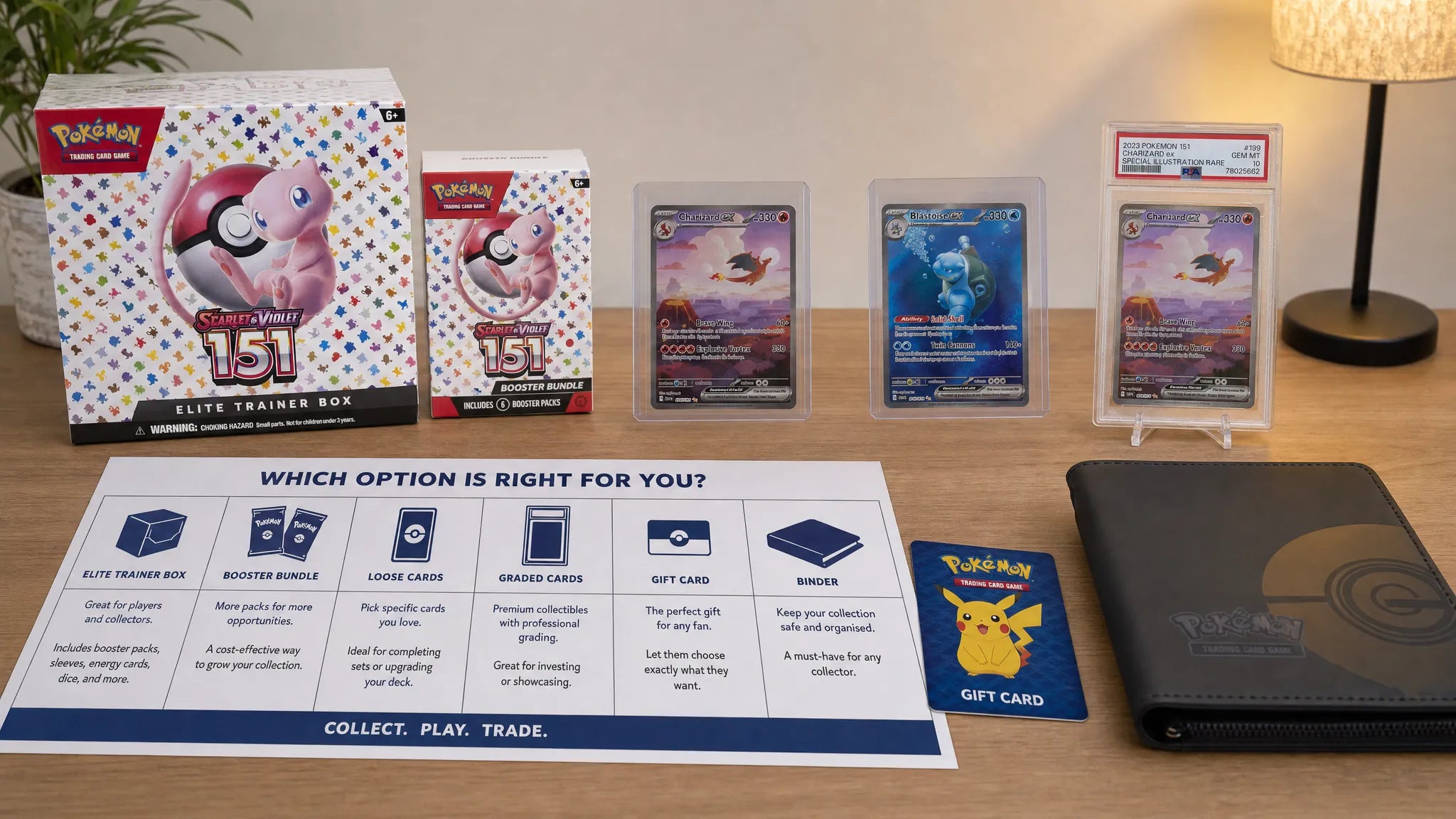
Buying Pokémon in NZ can feel simple until you hit the product page. Do you buy a single chase card, an Elite Trainer Box, a booster bundle, a sealed display piece, or a gift that looks exciting even if the recipient already owns half the set?
The smart answer depends on the buyer, not just the product. A player wants usable cards. A collector may care about condition, set completion, sealed value, or display appeal. A gift buyer usually needs something fun, authentic, and easy to wrap. This guide breaks down the main Pokémon TCG buying options for New Zealand shoppers so you can spend with more confidence and avoid the common traps.
Start with the goal, then choose the product
Before comparing prices, decide why you are buying. This one step prevents most regret purchases. A sealed booster box might be exciting, but it is not always the best value if you only want one specific card. A graded single might be perfect for a collector, but not much fun for a kid who wants to open packs.
| Buyer goal | Best starting point | Why it makes sense |
|---|---|---|
| Opening packs for fun | Booster bundles, ETBs, collection boxes | Good experience, easy to gift, no need to know exact card targets |
| Building a deck | Singles, league battle decks, trainer toolkits | You get specific playable cards instead of relying on pulls |
| Completing a set | Singles plus selective sealed | Singles fill gaps, sealed keeps the hobby fun |
| Keeping items sealed | ETBs, booster boxes, premium boxes | Stronger display appeal and easier long-term storage |
| Buying a gift | ETBs, tins, collection boxes, accessories, gift cards | Looks substantial and suits many experience levels |
| Buying a display card | Graded cards or clean raw singles | Easier to show, protect, and value than random pulls |
A simple Pokémon NZ buying rule: if the purchase is for entertainment, sealed is fine. If the purchase is for one specific card, buy the single.
Singles, sealed, graded: what is the difference?
Pokémon TCG products generally fall into three buying categories: singles, sealed products, and graded cards. Each has its own value logic.
Singles are best when you know what you want
A single is an individual card sold on its own. Singles are usually the most efficient way to get a specific Pikachu, Charizard, Eeveelution, trainer card, illustration rare, or deck staple.
When buying singles, check the exact card name, set name, card number, language, rarity, and condition. Small details matter. A regular ex, full art, special illustration rare, promo, reverse holo, and alternate version can have completely different prices even if the Pokémon is the same.
Use the official Pokémon TCG Card Database to confirm names, artwork, set symbols, and card numbers before you compare prices. For NZ-specific buying steps, BigBoiSneakers also has a deeper guide on the best place to buy Pokémon singles online in NZ.
Sealed products are best for experience, gifts, and display
Sealed means the packs or boxes have not been opened. This includes booster packs, booster bundles, booster boxes, Elite Trainer Boxes, tins, collection boxes, premium boxes, and advent calendars.
Sealed is fun because it gives you the pull chase. It is also popular with collectors who like untouched products, clean boxes, and display-friendly packaging. The trade-off is uncertainty. Pulls are never guaranteed, and for most modern products, the expected value of opening packs is usually less predictable than buying the card you want directly.

Graded cards are best for display and confidence
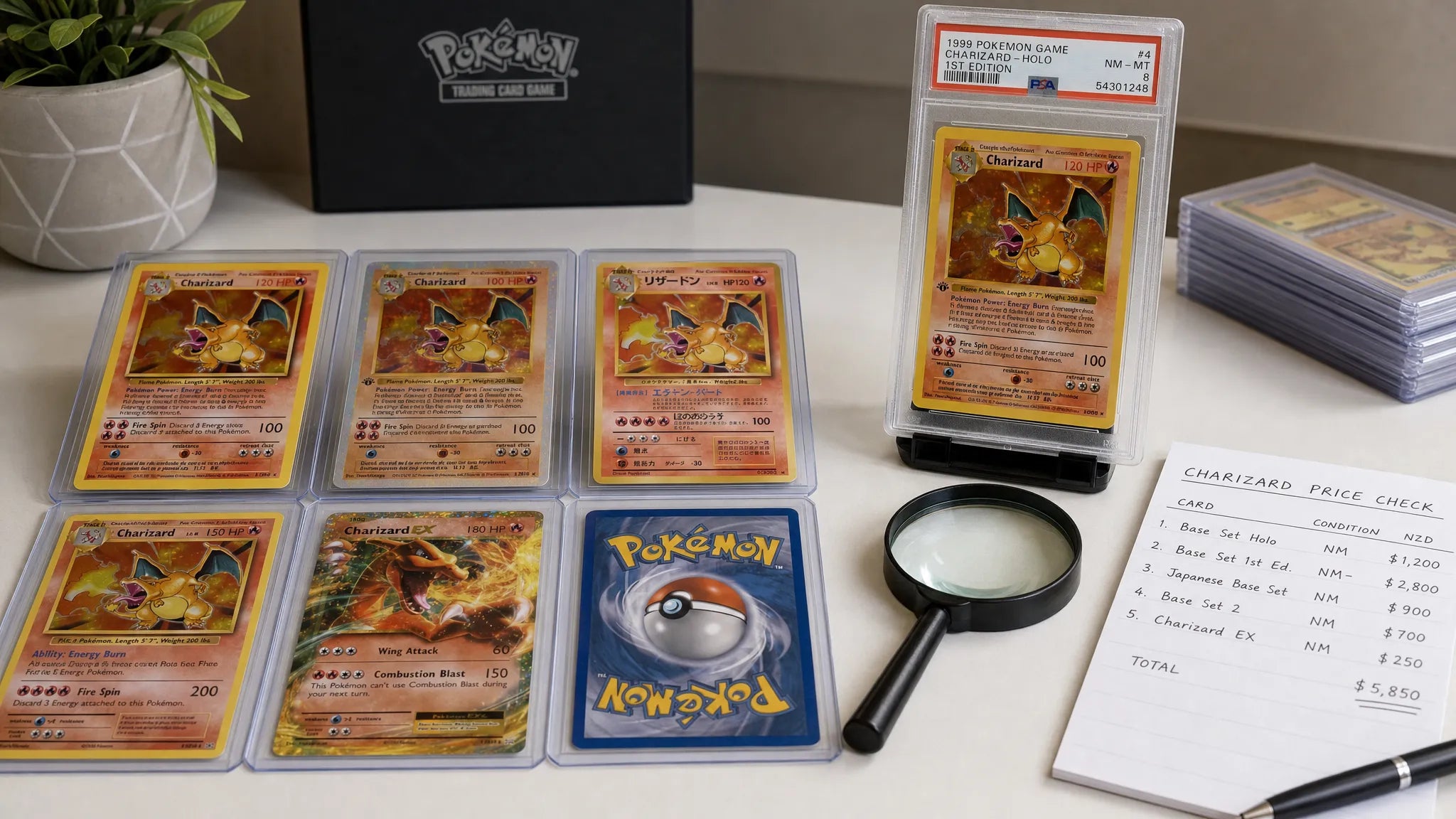
A graded card is sealed in a protective slab by a grading company such as PSA, CGC, or Beckett. Grading gives a condition score and a certification number. For higher-value cards, grading can make the card easier to compare, insure, display, and resell.
Still, grading does not remove every risk. Always verify the cert number on the grading company’s own website, inspect slab photos, and compare recent sold prices for the same grade. A PSA 10 price should not be used to judge a raw card, and a low-grade vintage card should not be priced like a mint copy.
The main sealed Pokémon products NZ buyers should understand
Sealed Pokémon products can look similar online, but they serve different buyers. The best option depends on whether you want the lowest cost per pack, the best gift presentation, or the most collectable sealed item.
| Product type | Best for | What to check before buying |
|---|---|---|
| Booster pack | Small gifts, casual openings | Set name, language, source, whether loose packs came from a trusted seller |
| Booster bundle | Pack opening without many extras | Pack count, set, seal condition, cost per pack |
| Booster box | Bigger openings or sealed collecting | Standard English main set boxes usually contain 36 packs, but special sets may not have booster boxes |
| Elite Trainer Box | Gifts, beginners, storage, display | Pack count varies, check accessories, seal, and whether it is a Pokémon Center or standard version |
| Collection box | Gift appeal and promo cards | Promo condition, box window damage, included pack selection |
| Tin | Compact gifts and casual collecting | Print wave, pack contents if shown, dents, seal quality |
| Premium box | Display collectors and special occasions | Box condition, promo cards, seals, and whether the premium price matches the contents |
| Advent calendar | Seasonal gifting | Year, contents, sealed condition, and whether the recipient prefers cards, figures, or mixed items |
If you want a more detailed sealed-only breakdown, start with BigBoiSneakers’ guide on how to buy Pokémon booster boxes online without regret or compare ETB options in the Pokémon Elite Trainer Box NZ guide.
How to judge value before you checkout
Price is only useful when you know what you are comparing. A cheap listing can become expensive once shipping, currency conversion, and import costs are included. A local NZ listing can be better value even if the sticker price is slightly higher, especially when delivery is faster and support is easier.
Use this quick value formula for sealed products:
Total delivered price ÷ number of packs = real cost per pack.
This does not capture promos, accessories, display appeal, or sealed collectability, but it gives you a clean baseline. An ETB may have a higher cost per pack than a booster bundle because it includes sleeves, dice, a storage box, and a better gift experience. That does not make it bad value, it just means you are paying for more than packs.
For singles, compare sold prices rather than asking prices. Asking prices show what sellers want. Sold prices show what buyers actually paid. Adjust for condition, centring, whitening, scratches, print lines, grading, shipping, and NZ availability.
Authenticity checks for cards and sealed boxes
Counterfeits and tampered products are a real risk in the Pokémon market, especially when hype spikes around popular sets or characters. You do not need to become a professional grader, but you should slow down before buying from an unknown seller.
For raw cards, watch for wrong fonts, incorrect colours, dull holo effects, missing texture on cards that should be textured, blurry printing, odd card thickness, and backs that look too light or too dark. Compare the card against known authentic examples and the official card database.
For sealed products, check the wrap, seams, box shape, barcode area, pack alignment, and any signs of glue, heat damage, or re-sealing. Loose packs require extra caution because buyers cannot always know whether packs came from a searched or mapped source. Buying loose packs from reputable retailers is usually safer than buying random loose packs from anonymous marketplace sellers.
For graded cards, verify the certification number directly with the grading company. Look closely at the slab, label, font, barcode, card position, and whether the card in the slab matches the cert details.
Here are the biggest red flags to avoid:
- The price is far below normal market value with no clear reason.
- The seller uses only stock images for a high-value card or sealed product.
- The seller refuses to provide extra photos of seals, corners, or the card surface.
- The listing uses vague terms such as “mystery hit guaranteed” without explaining odds or contents.
- The seller pushes bank transfer, crypto, or off-platform payment for a risky purchase.
- The product title does not match the photos, set, language, or card number.
- The seller has unlimited stock of a scarce item but little history or feedback.
For a broader safety process, read how to buy authentic Pokémon cards without getting burned.
Choosing Pokémon gifts in NZ
Pokémon gifts are easier when you match the gift to the recipient’s style of collecting. Do they rip packs, display sealed boxes, play the game, collect Pikachu, love Eeveelutions, or just enjoy the nostalgia?
If you do not know their favourite set or character, choose something flexible. ETBs, collection boxes, tins, binders, sleeves, and gift cards are safer than buying a random expensive single. A gift card is especially useful for collectors who are picky about condition or already have many cards.
| Recipient | Gift ideas that usually work | Avoid unless you know their taste |
|---|---|---|
| New collector | ETB, binder, sleeves, booster bundle | Expensive graded cards or niche vintage singles |
| Kid or casual fan | Tins, collection boxes, plush-style gifts, easy pack products | High-value sealed items that should stay unopened |
| Competitive player | Singles, deck-focused products, sleeves, playmat | Random packs as the main gift if they need specific cards |
| Sealed collector | Clean ETBs, booster boxes, premium boxes | Damaged boxes or loose packs |
| Display collector | Graded card, favourite Pokémon single, premium collection box | Raw cards with unclear condition |
| Sneaker or streetwear collector | Display-friendly sealed items, rare character cards, collectables | Products with poor packaging or weak shelf appeal |
A good gift does not have to be the most expensive product in the store. It should feel intentional. A clean ETB from a set they like, a binder plus sleeves, or a card featuring their favourite Pokémon can land better than a random high-price item.
Local NZ vs overseas: which is better?
NZ buyers usually compare four channels: local retailers, specialist collectable stores, marketplaces, and overseas platforms. Each can work, but the risk profile changes.
Local NZ retailers are often the most convenient choice for gifts and sealed products because shipping is clearer, support is easier, and returns are simpler to discuss. Overseas stores may offer wider selection, especially for older products or Japanese releases, but you need to calculate currency conversion, international shipping, GST collection, possible import processing, and return difficulty.
Marketplaces can be useful for singles and older products, but they require more buyer responsibility. Always review seller history, photos, payment protection, and listing accuracy. If the purchase is expensive, do not rush just because a seller says other buyers are waiting.
BigBoiSneakers is known in NZ for authentic sneakers, streetwear, collectables, and trading cards, with secure payment options and NZ shipping. If you want a local starting point, browse current availability at BigBoiSneakers and compare products against your goal before checkout.
For checking stores more carefully, use this guide on how to choose a Pokémon TCG online shop you can trust.
A simple 5-minute buying workflow
When you are about to buy, use the same process every time. It keeps emotion out of the decision and helps you spot bad listings early.
- Identify the exact product: Confirm the set, language, card number, product type, and whether it is standard, promo, graded, or sealed.
- Check the real total cost: Add shipping, currency conversion, GST or import-related costs, and any payment fees.
- Compare like with like: Do not compare a raw near-mint card to a graded gem mint card or a damaged ETB to a mint sealed one.
- Vet the seller: Look for clear business details, reviews, product photos, secure checkout, and realistic policies.
- Save proof: Keep screenshots, order confirmations, tracking, photos, and messages until the item arrives and checks out.
This workflow is especially useful during hype periods when products sell fast and buyers feel pressure to act before thinking.
Storage tips after your Pokémon order arrives
Good storage protects both enjoyment and value. For singles, use penny sleeves and top loaders or semi-rigid holders. For binders, choose side-loading pages where possible and avoid overstuffing pockets. Keep cards away from direct sunlight, damp rooms, and heat.
For sealed products, protect corners, keep boxes upright where appropriate, and store them in a dry space with stable temperature. New Zealand homes can get humid, so moisture control matters. If you are keeping sealed products long term, avoid stacking heavy boxes on top of display packaging because dents and crushed corners can reduce collectability.
If you open packs, sleeve your hits immediately. Even pack-fresh cards can pick up scratches, whitening, or corner wear if they sit loose on a table.
Frequently Asked Questions
What is the best Pokémon product to buy in NZ as a gift? For most gift buyers, an Elite Trainer Box, collection box, tin, booster bundle, binder, sleeves, or gift card is safer than a specific single. ETBs are especially gift-friendly because they combine packs, accessories, and a displayable storage box.
Is it better to buy Pokémon singles or sealed products? Buy singles when you want a specific card. Buy sealed products when you want the opening experience, a display item, or a gift. Sealed is more fun, but singles are usually more efficient for targeted collecting.
How do I avoid fake Pokémon cards online? Check the exact card details, compare against official references, inspect photos, avoid suspiciously cheap listings, use secure payments, and buy from reputable sellers. For graded cards, verify the certification number with the grading company.
Are loose booster packs risky? Loose packs can be fine from reputable retailers, but they carry more risk from unknown sellers because you cannot always verify their source. For higher confidence, consider sealed bundles, ETBs, booster boxes, or trusted stores.
Do Pokémon cards hold value? Some cards and sealed products can hold or increase in value, but many do not. Value depends on character demand, set popularity, condition, rarity, grading, supply, and market timing. Buy first because you enjoy the hobby.
Where should NZ buyers start? Start with a trusted local retailer if you want convenience, clearer shipping, and easier support. Use marketplaces and overseas sellers only after checking total landed cost, seller reputation, photos, and payment protection.
Ready to choose your next Pokémon pick?
Whether you are buying your first booster bundle, a sealed ETB for display, a gift for a collector, or a single card to finish a binder page, the safest purchase starts with a clear goal and a reputable seller.
Explore authentic collectables, trading cards, sneakers, and streetwear at BigBoiSneakers, and check current Pokémon availability before your next rip, display pickup, or gift order.