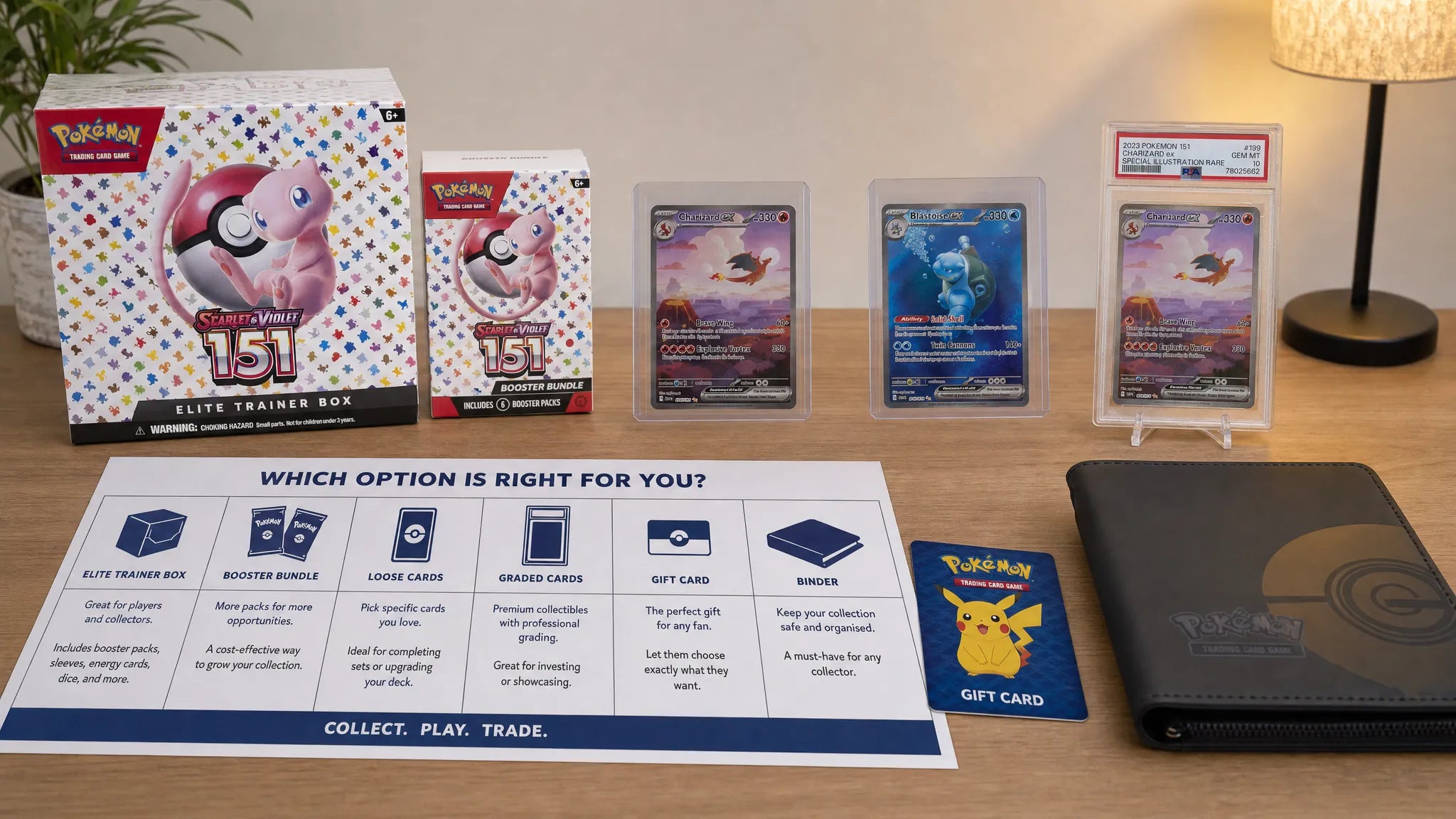
Buy Charizard Smarter With This NZ Price Checklist
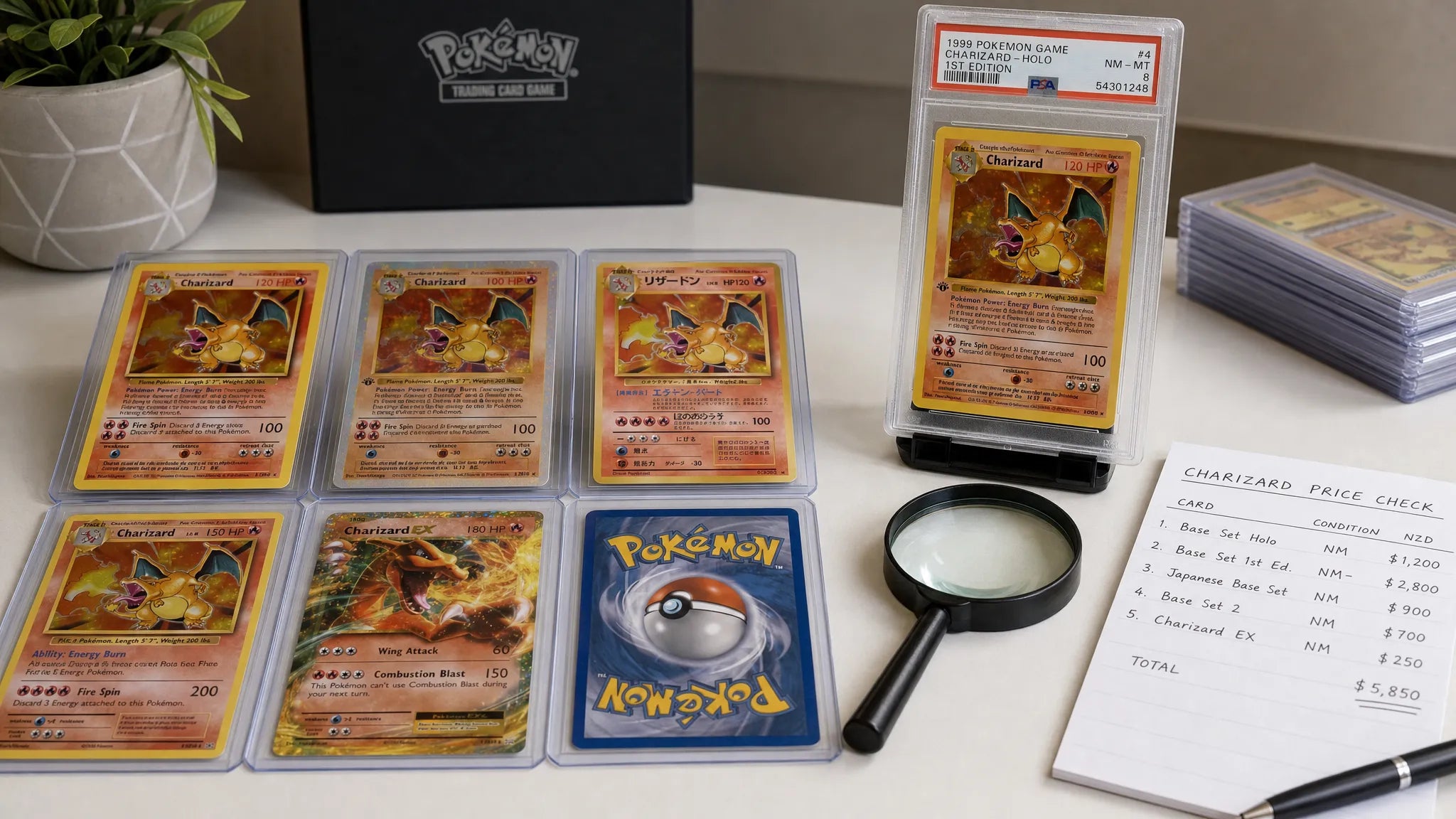
Charizard is the Pokémon card many collectors never stop chasing. It is nostalgic, instantly recognisable, and available in everything from modern ex cards to vintage holos worth serious money. That popularity is exactly why NZ buyers need a price checklist before they buy Charizard cards online.
The goal is not to find the cheapest listing. The goal is to know whether the exact card, in that exact condition, from that exact seller, is worth the all-in price you will actually pay in New Zealand.
Why Charizard Prices Are Easy to Misread
“Charizard” is not one card. It is a whole category of cards across different eras, languages, rarities, finishes, sets, promos, and grading outcomes. A modern Charizard ex, a Base Set reprint, a Japanese promo, a rainbow rare, and a PSA 10 vintage holo can all appear in search results, but they are completely different purchases.
That creates three common problems for buyers:
- Sellers sometimes use the Charizard name to attract clicks even when the card is a lower-value version.
- Buyers compare asking prices instead of confirmed sold prices.
- NZ shoppers forget shipping, currency conversion, GST considerations, return costs, and seller risk.
If you are buying for a personal binder, the right price is the one that feels fair for your collecting goal. If you are buying as an investment or long-term hold, you need a stricter process because small differences in condition, print quality, and authenticity can move the value dramatically.
For a broader framework on card pricing, BigBoiSneakers also has a detailed Pokémon card price checklist covering condition, rarity, and demand across the wider market.
Step 1: Identify the Exact Charizard Before You Compare Prices
Before you look at price, confirm the card. This is the step that prevents most overpays.
A correct Charizard identification should include the card name, set, card number, language, rarity, finish, year or era, and whether it is raw or graded. If one of those details is missing, your price comparison will be weak.
| Detail to confirm | Why it matters | What to ask for |
|---|---|---|
| Set name | Different sets can have very different values | Clear photo of the set symbol and card number |
| Card number | Confirms the exact printing | Bottom corner photo, not just the front artwork |
| Language | English, Japanese, and other languages can price differently | Front and back photos in good lighting |
| Finish | Holo, reverse holo, textured, promo, or non-holo affects value | Angled photo showing the foil surface |
| Condition | Raw near mint and played copies are not comparable | Close-ups of corners, edges, surface, and back |
| Grade | PSA, BGS, CGC, and other slabs trade differently | Certification number and slab photos |
The official Pokémon TCG Card Database can help confirm modern English card details. For older cards, promos, Japanese releases, and graded slabs, cross-check multiple reputable sources and sold listings before deciding.
Step 2: Use Sold Prices, Not Asking Prices
A listed price only tells you what a seller wants. A sold price tells you what a buyer actually paid.
When checking Charizard comps, filter for completed or sold listings where possible. Compare like for like: same card, same language, same condition, same grade, and similar timing. A sale from two years ago may not reflect the current 2026 market, especially if supply, grading populations, or hype have shifted.
| Price signal | How useful it is | How to use it |
|---|---|---|
| Recent sold listings | High | Best starting point for market value |
| Auction results | High | Useful when there are multiple bidders and clear photos |
| Fixed asking prices | Medium | Helpful for supply context, but often inflated |
| Social media claims | Low | Treat as unverified unless there is proof of sale |
| “Last one sold for...” statements | Low | Ask for evidence or ignore the claim |
For Charizard cards with lots of recent sales, use a range rather than a single number. If three similar raw near mint copies sold around the same level, that gives you a stronger guide than one unusually high sale.
For rare Charizard cards with limited sales, widen your research carefully. Look at similar grades, nearby conditions, and relevant international sales, then adjust for NZ costs and liquidity.
Step 3: Adjust for Raw Condition Properly
Raw Charizard cards can be great buys, but condition is where many buyers get caught. A listing might say “near mint” while the photos show whitening, holo scratches, dents, print lines, or edge wear.
Pay extra attention to the holo surface on older Charizard cards. Scratches can hide in straight-on photos, so ask for angled lighting. On modern textured cards, check for corner dings, print defects, centring, and surface marks.
Here is a simple raw-card condition filter:
| Condition factor | Good sign | Warning sign |
|---|---|---|
| Corners | Sharp and clean | Whitening, bends, lifted layers |
| Edges | Minimal wear | Chipping, silvering, fraying |
| Surface | Clean under light | Scratches, dents, pressure marks |
| Centreing | Balanced borders | Obviously off-centre front or back |
| Holo or texture | Clean shine | Heavy scratching, clouding, print lines |
| Back | Strong colour and clean edges | Whitening, dirt, stains, creases |
Do not pay near mint pricing for a card that is lightly played. Do not pay grading-candidate pricing for a card that has visible flaws. A card can still look great in a binder and be worth owning, but the price should match the true condition.
If you are specifically hunting high-value rare cards, read this guide on how to buy rare Pokémon cards online without overpaying before committing.
Step 4: Treat Graded Charizard Cards as Their Own Market
A graded Charizard is not automatically a safer buy. It is safer only if the slab is genuine, the certification checks out, the card matches the cert, and the grade is priced sensibly.
For graded cards, verify the certification number through the grading company’s own lookup tool. Check that the card name, grade, label, and images match. Inspect the slab for cracks, tampering, label issues, and suspicious casing.
Also remember that grade premiums are not linear. The jump from PSA 8 to PSA 9 can be meaningful, while the jump from PSA 9 to PSA 10 can be massive on certain Charizards. That does not mean every PSA 10 is automatically a good buy. You still need sold comps and population context.
A smart graded-card question is: “If I had to resell this in NZ within 30 to 60 days, would the buyer pool support this price?” If the answer is no, you may be paying a global hype premium without local liquidity.
Step 5: Calculate the True NZ Landed Cost
NZ buyers should never compare a local NZD listing against an overseas listing by sticker price alone. The all-in cost is what matters.
Use this formula before checkout:
| Cost item | Why to include it |
|---|---|
| Card price | The base listing or auction price |
| Shipping | Especially important for insured international parcels |
| Currency conversion | Bank or payment provider rates can differ from headline exchange rates |
| Platform fees | Some marketplaces add buyer fees or processing fees |
| GST and import considerations | High-value imports may require extra checks before purchase |
| Insurance | Worth considering for expensive Charizard cards |
| Return cost | Overseas returns can make a “deal” less attractive |
A Charizard that looks cheaper overseas may become more expensive once you add shipping, conversion, and risk. A local NZ seller can sometimes be better value even if the sticker price is higher, especially if the item ships faster, has clearer support, and is easier to resolve if something goes wrong.
Step 6: Check Seller Trust Before You Chase the Deal
Charizard is one of the most counterfeited and misrepresented Pokémon card targets. Seller trust matters as much as the card itself.
A trustworthy seller should provide clear photos, accurate descriptions, realistic pricing, secure payment options, transparent shipping, and responsive communication. Be careful with sellers who rush you, avoid questions, use only stock images, or ask for risky payment methods with no buyer protection.
This principle applies across eCommerce, not just Pokémon cards. Whether you are checking collectibles in New Zealand or comparing broader online marketplaces such as Sandhai’s online shopping marketplace, the same basics matter: product clarity, secure checkout, delivery confidence, and support if something goes wrong.
For Pokémon specifically, use BigBoiSneakers’ guide to reputable Pokémon card sellers if you want a deeper green-flag and red-flag process.
The NZ Charizard Price Checklist
Use this table before you buy Charizard from any NZ seller, overseas platform, auction, marketplace, or social listing.
| Checklist item | Pass if... | Be careful if... |
|---|---|---|
| Exact card confirmed | Set, number, language, and finish are clear | Listing only says “Charizard rare” |
| Photos are strong | Front, back, corners, edges, and surface are shown | Only one front photo is provided |
| Condition matches price | Flaws are disclosed and priced in | “Near mint” is claimed without proof |
| Sold comps checked | Recent comparable sales support the price | Seller only references asking prices |
| NZ landed cost calculated | Shipping, FX, fees, and import considerations are included | Overseas price is compared without extras |
| Seller is credible | Reviews, policies, and communication are solid | Pressure tactics or off-platform payment requests appear |
| Payment is protected | Card, trusted checkout, or platform protection is available | Bank transfer or friends-and-family payment is pushed |
| Graded cert verified | Cert lookup matches the slab and card | Cert is hidden or photos are blurry |
| Packaging is suitable | Seller will sleeve, top load, team bag, and protect the card | Shipping method is vague |
| Exit value makes sense | You understand likely resale demand | You are relying only on hype |
If a listing fails multiple rows, skip it. Another Charizard will appear. Patience is often cheaper than fixing a bad purchase.
Which Charizard Should You Buy?
The best Charizard depends on your goal. A binder collector, sealed collector, investor, player, and gift buyer should not all chase the same card.
| Buyer type | Better target | Why it makes sense |
|---|---|---|
| First-time collector | Modern raw Charizard or lower-grade slab | Easier entry point and lower risk |
| Binder collector | Clean raw copy with good eye appeal | You can enjoy the artwork without paying grade premiums |
| Graded collector | Iconic Charizard in a verified slab | Easier to store, display, and compare |
| Investment-focused buyer | High-demand card with strong sales history | Better liquidity than obscure variants |
| Gift buyer | Recognisable Charizard product or protected single | Easier to understand and present |
| Player | Legal, playable version if relevant | Utility matters more than collectability |
If your goal is investment, be honest about risk. Pokémon cards can rise, fall, or go flat. Charizard demand is strong historically, but individual card performance depends on supply, condition, set popularity, grading population, and broader collector sentiment.
Common Charizard Overpay Traps
Some listings look tempting because they are written to trigger FOMO. Slow down when you see phrases like “PSA 10 potential,” “investment guaranteed,” “rare Charizard must sell today,” or “cheapest online” without proof.
The biggest traps are mislabelled reprints, damaged raw cards priced as near mint, fake slabs, poor photos, and sellers comparing their card to a higher-grade sale. Another common issue is paying a premium for a card simply because it features Charizard, even when that specific version has plenty of supply.
If authenticity is your main concern, start with this guide on how to buy authentic Pokémon cards without getting burned. It covers counterfeit cards, resealed products, fake slabs, and safer buying habits.
When Paying More Can Be the Smart Move
The lowest price is not always the best deal. Paying slightly more can make sense when the seller is trusted, the photos are excellent, the card has stronger eye appeal, the grade is verified, shipping is insured, and the return process is clear.
This is especially true in New Zealand, where the pool of local Charizard listings can be smaller than in the US or Japan. A clean local copy from a reputable seller may beat a cheaper overseas listing once you account for delays, customs uncertainty, damage risk, and dispute difficulty.
Think in terms of value, not discount. A fair price on the right Charizard is better than a bargain price on the wrong one.
Frequently Asked Questions
What is the best way to buy Charizard cards in NZ? The safest approach is to identify the exact card first, compare recent sold prices, check condition or grading carefully, calculate the full NZ landed cost, and buy from a seller with clear photos, protected payment, and reliable shipping.
Are raw Charizard cards better than graded Charizard cards? Raw cards are often better for binder collectors and buyers with smaller budgets. Graded cards can be better for display, storage, and value comparison, but only if the slab is genuine and the price is supported by sold comps.
How do I know if a Charizard card is overpriced? A Charizard is likely overpriced if recent sold listings for the same card, condition, language, and grade are noticeably lower, or if the seller is using higher-grade sales to justify a lower-condition card.
Should I buy a damaged Charizard card? A damaged Charizard can be worth buying if you want an affordable binder copy and the price reflects the flaws. Avoid paying collector-grade prices for cards with creases, dents, heavy whitening, or major surface damage.
Is it safer to buy Charizard locally in New Zealand? Local buying can reduce shipping time, currency surprises, and return difficulty. Overseas listings can still be worthwhile, but only after you calculate the full landed cost and check seller protection carefully.
Buy Charizard With Confidence
A smart Charizard purchase starts before checkout. Confirm the exact card, compare real sold prices, inspect condition, calculate NZ costs, and only buy from sellers who make the process transparent.
If you are building a Pokémon collection in New Zealand, keep an eye on current collectibles, trading cards, and new arrivals at BigBoiSneakers. The right Charizard is worth waiting for, and the right checklist helps you avoid paying the wrong price.