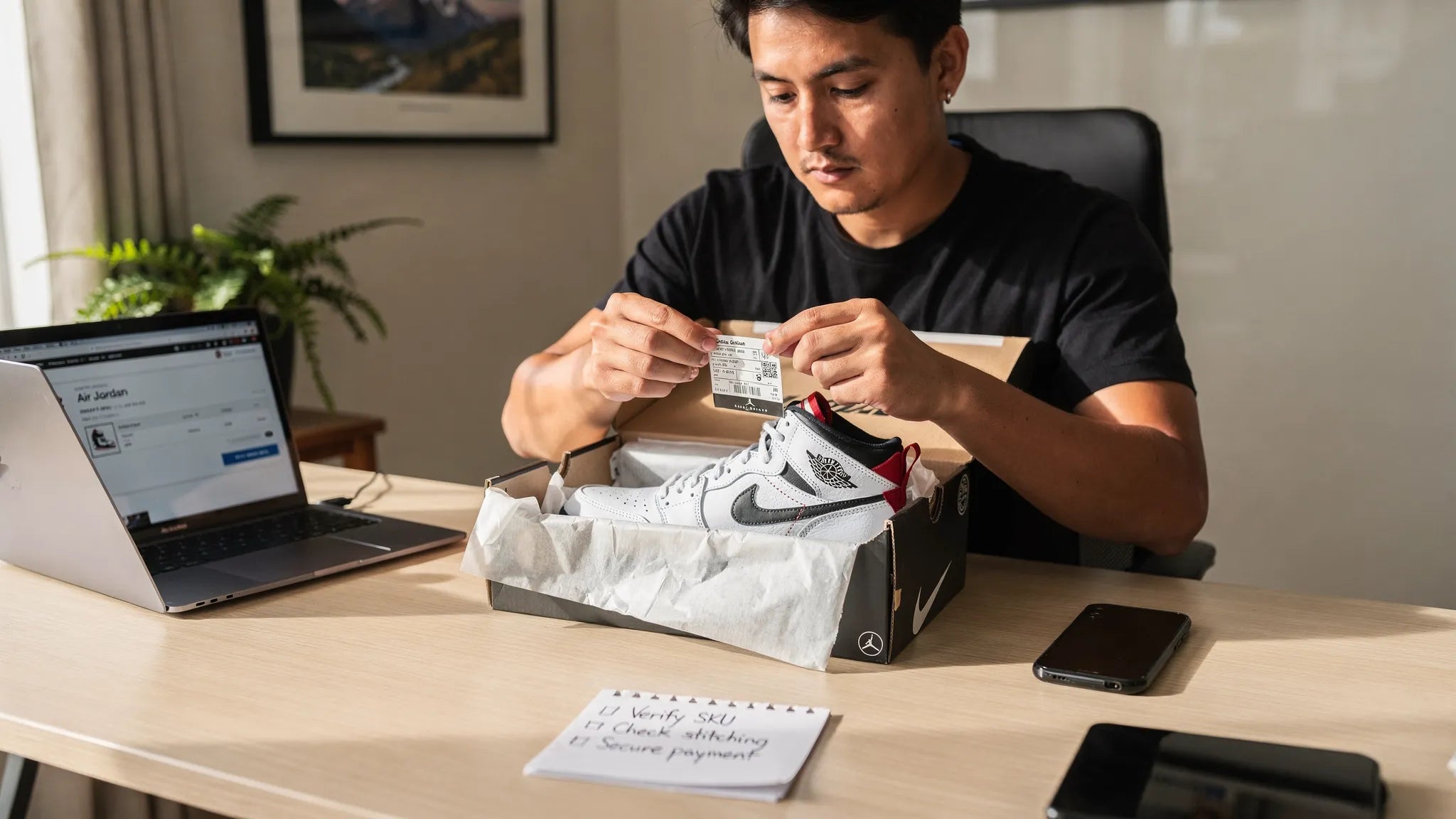
Legit Jordan Sites: How to Check Before You Buy

Buying Air Jordans online can feel like a minefield. The demand is high, the fakes are getting better, and a “too good to be true” deal can be one checkout away from turning into an expensive lesson.
If you’re searching for legit Jordan sites, you’re already doing the smartest thing: vetting the seller before you buy. This guide gives you a practical, NZ-friendly checklist to verify a Jordan website, avoid common scam patterns, and confidently choose where to spend your money.
What “legit Jordan sites” actually means
A legit Jordan site is not only a place that sells real shoes. It also behaves like a real business.
That includes:
- Clear ownership and contact details
- Secure checkout and reputable payment methods
- Realistic pricing and honest product info
- Transparent shipping, returns, and customer support
In practice, you’ll be choosing between four main channels:
- Official brand channels (Jordan/Nike where available)
- Authorised retailers (stores with a direct supply relationship)
- Specialist sneaker retailers/resellers (curated pairs, often harder-to-find stock)
- Marketplaces and social sellers (highest risk, varies massively by seller)
This article focuses on how to check legitimacy regardless of channel.
The 12-point check to verify legit Jordan sites
1) Start with the URL, then check the site age
Scam sites often copy real stores and use lookalike domains.
Do a quick scan for:
- Misspellings (extra letters, swapped words)
- Odd endings (not automatically bad, but a flag if everything else looks off)
- A domain that doesn’t match the brand name in the footer, policies, and emails
If you want to go one step further, check when the domain was created using a public WHOIS lookup tool. A brand-new domain selling “every grail in every size” is rarely a good sign.
2) Confirm the business is identifiable
A legit store should make it easy to answer: “Who am I buying from?”
Look for:
- Company name (not just a vague store name)
- Physical address (even if online-only, there should be a registered address)
- Email and phone number
- NZBN (for NZ businesses) if listed
If a site only offers a contact form and DMs, treat it like a high-risk purchase.
3) Read the returns policy like you’re already unhappy
Most people only read returns after something goes wrong. Flip that.
A trustworthy returns page typically includes:
- A clear returns window
- Condition requirements (unworn, tags, box condition)
- Return shipping responsibility
- Refund timing and method
If the policy is missing, copy-pasted, contradictory, or says “all sales final” on everything (including general releases), slow down.
NZ note: Your rights can depend on where the business is based. For NZ-based sellers, you can learn the basics at the government’s Consumer Protection site.
4) Check for secure checkout (and not just a padlock)
HTTPS is necessary, but it’s not the whole story.
Green flags:
- Recognisable payment options (credit card, PayPal, Shop Pay)
- A checkout that stays on the same legitimate domain
- Clear order confirmation emails with an order number
Red flags:
- Bank transfer as the “best” or only option
- Requests to pay off-platform (especially via WhatsApp/DM)
- Cryptocurrency payments for standard retail purchases
5) Pricing sanity check: compare to the real market
One of the fastest ways to spot fake Jordan websites is pricing.
Be suspicious when you see:
- Heavy “discounts” on hyped pairs that never sit
- Full size runs on rare releases at below-market prices
- Constant sitewide sales that look permanent
Even legit retailers run promotions, but Jordan pricing has gravity. Scarce pairs rarely become cheap for no reason.
6) Product pages should look like the seller touched the shoes
A legit Jordan site usually has product pages that feel operational, not generic.
Look for:
- Clear naming (model + colourway)
- Multiple high-quality photos (not just one stock shot)
- Size availability that makes sense (not infinite stock of everything)
- Solid descriptions without obvious template errors
If every product page uses the same generic copy and the same 3 stock images, you’re not looking at a careful sneaker business.

7) Verify the SKU/style code and basic release details
For Air Jordans, listings should match known product identifiers.
What to do:
- Find the style code (SKU) on the product page if provided
- Search the SKU on Google and compare images, colour blocking, and the official name used across reputable sources
You don’t need to be a pro authenticator. You’re just checking that the product being sold exists in the way it’s described.
Helpful reference sites for cross-checking release details include StockX’s release pages and GOAT’s editorial/release content. (Use them as references, not as proof of authenticity.)
8) Look for real reviews, not just star widgets
A five-star badge means nothing if you can’t verify the reviews.
Better signals:
- Reviews that mention specific models, sizing, shipping speed, packaging
- Recent reviews spread across months (not all posted in a single week)
- A presence outside the website (Google Business Profile, community mentions)
If the site has reviews, also search the store name + “scam” + “review” and see if there’s a consistent pattern.
9) Check shipping promises against NZ reality
For New Zealand buyers, shipping claims can reveal a lot.
Be cautious if a site promises:
- Ultra-fast delivery internationally with no premium shipping cost
- No mention of duties, GST, or landed costs for overseas shipping
- Vague timelines like “arrives in 3 to 5 days worldwide” with no carrier details
Legit stores usually explain processing time, carrier options, tracking, and what happens if a parcel is delayed.
10) Confirm the store has a clear authenticity stance
You want explicit language about authenticity, not vague hype.
Look for:
- “Authentic” or “genuine” claims paired with clear policies
- A consistent stance across product pages and FAQs
- A process for handling authenticity disputes
Avoid sites that rely purely on “trust us” energy.
11) Test customer support before you buy
This is underrated and surprisingly effective.
Send a simple question:
- “Can you confirm this pair includes the original box and accessories?”
- “What’s your returns process for sizing exchanges?”
A legit business replies with specifics, not pressure.
12) Watch for the most common scam patterns
These patterns show up repeatedly in fake Jordan websites:
- Countdown timers and “Only 2 left” on every single product
- Pressure to pay via bank transfer or “friends and family” payments
- A site that looks like a clone of another retailer
- Social accounts with stolen photos, comments disabled, or no real engagement
If you see multiple patterns at once, move on.
A quick scorecard: rate any Jordan website in 2 minutes
Use this table to make a fast decision. The goal is not perfection, it’s risk reduction.
| Check | Green flag | Red flag |
|---|---|---|
| Business identity | Company name, address, real contact options | No address, only DMs/contact form |
| Payments | Credit card, PayPal, reputable checkout | Bank transfer, crypto, off-platform payments |
| Pricing | Matches typical resale/retail reality | Rare pairs heavily discounted |
| Product pages | Multiple photos, specific details, sensible stock | Stock photos only, infinite sizes |
| Policies | Clear shipping and returns pages | Missing, vague, or copy-pasted policies |
| Reputation | Independent mentions and detailed reviews | No footprint outside the website |
If you hit two or more red flags, treat the site as high-risk.
NZ-specific tips for buying Jordans safely
Know what protection you actually have
- If you buy from an NZ-based business, you may have stronger practical recourse. The Consumer Guarantees Act overview is worth understanding at a basic level.
- If you buy from an overseas site, your best protection is usually your payment method (credit card chargeback, PayPal dispute), not local consumer law.
Always use a protected payment method
If a seller pushes you away from credit card or PayPal, ask yourself why.
Track landed cost so you don’t get “price scammed”
A deal can stop being a deal once you add:
- Shipping
- Currency conversion
- Potential duties and GST (depending on how the order is handled)
A legit seller won’t hide this. They’ll at least be clear about what they charge and what you might owe on arrival.
Where to buy: the safest route for most people
If your goal is to minimise risk, prioritise these options in order:
Official and authorised first (when possible)
Buying from official channels or authorised retailers is the simplest path, especially for new releases.
Specialist sneaker retailers for curated and harder-to-find pairs
For limited colourways and older releases, specialist sneaker stores can be a safer alternative to peer-to-peer marketplaces because you’re dealing with a business, not a random seller.
BigBoiSneakers is a NZ-based online retailer offering authentic sneakers plus practical buyer support like size guides, secure payments, and shipping options. If you want to vet the store specifically, start here: Is bigboisneakers.com legit? everything you need to know.
You can also use these site resources to shop and cross-check your decision-making:
- Shop Air Jordans & Jordan Brand
- How to tell if your sneakers are real or fake (Australia & NZ guide)
- Nike sneaker shop NZ: how to buy authentic pairs online
Be extra cautious with marketplaces and social sellers
People do score legit pairs on marketplaces, but you need stronger verification habits and better dispute protection.
If you’re not confident authenticating, don’t make marketplaces your first stop.
What to do if you think a Jordan site is fake (before and after buying)
If you haven’t bought yet, the best move is simple: do not “test your luck.” Walk away.
If you already bought:
- Save everything (order confirmation, emails, screenshots of the listing)
- Contact the seller in writing and request a refund
- Open a dispute with your payment provider (PayPal or card issuer) as early as possible
- Report scam activity through NZ channels if relevant, including guidance from the Commerce Commission scam page
Time matters with disputes, so don’t wait.

Frequently Asked Questions
What are the most reliable signs of legit Jordan sites? The strongest signals are identifiable business details, protected payments (credit card/PayPal), clear returns, realistic pricing, and a real reputation outside the website.
Are cheap Jordans online always fake? Not always, but heavy discounts on hyped Jordans are a major red flag. Compare the price to typical retail and current resale, then check the seller’s policies and reputation.
Is it safe to buy Jordans from Instagram or Facebook sellers? It can be, but it’s higher risk. Only use protected payments, verify the seller’s history, and avoid off-platform payments or pressure tactics.
How can I check a Jordan listing’s SKU? Look for the style code on the listing and search it online to confirm the colourway, model name, and images match reputable sources.
What payment method is safest in New Zealand for sneakers? Credit cards and PayPal generally offer the best dispute pathways. Avoid bank transfers for high-risk purchases.
Shop with confidence
If your goal is to avoid scams and stick with a retailer that focuses on authentic sneakers, you can browse Jordans at BigBoiSneakers and use the legit-check resources above before you commit. When in doubt, choose transparency over a “steal” price. It’s almost always cheaper in the long run.