Legit Sites to Buy Jordans for NZ Shoppers in 2026
If you’re searching for legit sites to buy Jordans in New Zealand, you’re probably trying to avoid two painful outcomes: paying resale prices for a fake pair, or paying “cheap” prices and receiving nothing at all.
The tricky part in 2026 is that scams look more professional than ever. Fake sites copy real retailers, marketplace sellers use stolen photos, and “too good to be true” ads get pushed hard through Instagram and TikTok.
This guide breaks down the buying channels that are most reliable for NZ shoppers, what to expect from each (pricing, shipping, returns, authenticity), and a practical checklist you can use to vet any store in about 10 minutes.
The safest places to start (NZ-friendly)
Not every legit option is “best” for every buyer. Your safest starting point depends on whether you’re buying at retail (new drops) or resale (sold-out pairs).
In general, NZ shoppers have the lowest risk when they buy through:
- Brand-owned channels (Nike and SNKRS) for retail releases
- Authorised retailers for retail releases
- Established specialist sneaker retailers/resellers with clear authentication standards and local support
- Major resale platforms with authentication programs, if you understand the trade-offs (fees, processing, overseas shipping)
Local peer-to-peer marketplaces can be fine, but only if you know how to authenticate, insist on secure payment, and avoid risky meetups.
Before you choose a site: retail vs resale (and why it matters)
Most Jordan buying mistakes happen because people treat retail and resale as the same experience.
Retail (new releases)
Retail means you’re trying to buy near the official release price. The big downside is availability: popular pairs sell out quickly, and NZ stock can feel limited.
Best for:
- New releases
- General releases that restock
- Buyers who do not want to pay resale
Resale (sold out, older colourways, collabs)
Resale means you’re paying market price after the drop. The upside is selection, you can buy what you want when you want. The downside is higher prices and more counterfeit risk.
Best for:
- Sold-out Jordans
- Older retros
- Rare collaborations
NZ-specific cost reality (the “landed cost” problem)
When you buy from an overseas site, your final total can change significantly after currency conversion, shipping, and taxes. New Zealand applies 15% GST, and overseas retailers may collect it at checkout (especially for lower-value imports). For higher-value shipments, GST and border processing may be handled when the parcel enters NZ.
For the most current guidance, check the official information from New Zealand Customs.
The practical takeaway is simple: always compare sellers using the final landed cost, not just the product price.
Legit sites to buy Jordans: the main options for NZ shoppers
Instead of throwing a giant list of store names at you, it’s more useful to understand the types of legit sites and what each one is best at.

Official Nike and SNKRS channels
Buying direct from the brand is the cleanest authenticity story you can get.
What to expect:
- Authenticity risk: Very low
- Price: Retail
- Selection: Limited to current releases and whatever is in stock
- Returns/support: Clear policies, but read the local terms
Start here:
NZ tip: For hyped Jordans, you’re not just competing with other Kiwis. You’re competing with global demand and automation. If you miss a drop, that does not mean the pair is “gone forever”, but it does mean you should shift your plan to authorised retailers and resale.
Authorised retailers and sneaker boutiques
Authorised retailers are stores that are approved to sell genuine Nike/Jordan product through normal distribution.
What to expect:
- Authenticity risk: Low
- Price: Retail
- Selection: Depends on allocations (often smaller than global markets)
- Best for: General releases, raffles, in-season retros
How to verify authorisation (quickly):
- Use Nike’s own store/retailer information where possible
- Look for consistent retail pricing and normal release timing
- Avoid stores that only ever have “limited grails” at suspiciously low prices
Specialist sneaker retailers/resellers (NZ-focused)
This is often the most practical option for NZ shoppers who want hard-to-find Jordans without playing the global shipping roulette.
A good specialist sneaker retailer/reseller should make it easy to verify legitimacy with:
- A real business presence and clear contact information
- Transparent product photos and condition notes (especially for resale pairs)
- Secure payment options
- A clear shipping and returns/exchange process
If you want an NZ-based option to start with, BigBoiSneakers is a specialist store selling authentic sneakers and streetwear online, with detailed size guides, secure payment methods, and NZ shipping options. You can also read their own legitimacy overview here: Is bigboisneakers.com legit? everything you need to know.
Global resale platforms with authentication programs
These platforms can be legitimate ways to buy Jordans, especially if the pair is sold out everywhere else. The main “NZ catch” is that you can pay more once you factor in fees, international shipping, GST handling, and return complexity.
Common examples shoppers compare:
What to expect:
- Authenticity risk: Lower than random marketplace sellers, but not zero
- Price: Market-driven (often above retail)
- Returns: Can be limited or more complex than a local retailer
- Shipping: Often slower than buying in NZ
NZ tip: Always screenshot the full checkout summary and keep your order confirmation. If something goes wrong (wrong item, missing item, customs issues), documentation matters.
Local marketplaces (Trade Me, Facebook Marketplace): legit sometimes, risky often
Peer-to-peer marketplaces can have real bargains, but they also have the highest concentration of:
- High-quality fakes
- Stolen photos
- Bait-and-switch listings
- Pressure to pay off-platform
If you buy here, treat it like a negotiation plus a legit check, not a normal online purchase.
Quick comparison: which buying channel suits your Jordan hunt?
Use this table to match your situation to a channel.
| Channel type | Best for | Pros | Watch-outs for NZ shoppers |
|---|---|---|---|
| Nike and SNKRS (official) | Retail drops, in-season pairs | Lowest authenticity risk, retail pricing | Sell-outs, limited size runs, time pressure |
| Authorised retailers | Retail drops, raffles, general releases | Retail pricing, genuine stock | NZ allocations can be small, raffle rules vary |
| Specialist sneaker retailers/resellers (NZ) | Sold-out pairs, popular colourways, easier local support | Local buying experience, clearer consumer expectations | Price may reflect scarcity, inventory varies |
| Global resale platforms (with authentication) | Rare pairs, older retros, hype collabs | Large selection, structured checkout | Fees, shipping time, GST handling, returns complexity |
| Local marketplaces | Occasional deals, last-minute local pickup | Potentially cheapest | Highest fake/scam risk, weak buyer protection |
The 10-minute checklist to spot legit sites (works for any Jordan listing)
If you only do one thing before you buy, do this. It catches most scam sites and most shady marketplace listings.
1) Confirm the business is real
Look for:
- A physical address (or at least a registered business footprint)
- A working customer support channel (email plus at least one other method)
- Policies you can actually read (shipping, returns, refunds)
Red flag: a site that only offers a contact form, or only communicates via DMs.
2) Check pricing against reality
Jordans do go on sale, but the market has boundaries.
Red flags include:
- A hyped collab at below retail
- “Full size run” availability on an older, sold-out release
- Permanent discount banners that never end
3) Inspect product photos like an authenticator
For resale pairs, you want:
- Multiple angles of the exact shoe (not stock images)
- Clear shots of the size tag and box label
- Consistent lighting and background across photos
If every photo looks like it came from Nike’s marketing shoot, you’re not seeing the actual pair.
4) Use protected payment methods
Prefer payment options with dispute pathways (credit card, PayPal, reputable buy-now-pay-later services).
Red flag: being pushed toward bank transfer, crypto, or “PayPal friends and family”.
5) Look for independent reputation, not just testimonials
On-site reviews can be real, but they can also be curated.
Do a quick search for the store name plus:
- “review”
- “scam”
- “legit”
Also look for consistent discussion in sneaker communities, not only influencer posts.
Green flags vs red flags (fast scan)
| Green flags | Red flags |
|---|---|
| Clear business details, contact methods, and policies | No real contact info, vague policies, copied text |
| Real photos of the actual pair (angles, tags, box label) | Only stock photos, blurry photos, mismatched details |
| Secure checkout and normal payment options | Bank transfer only, pressure to pay off-platform |
| Pricing matches market reality | Unrealistic discounts on hype Jordans |
| Returns process is explained in plain language | “All sales final” everywhere, or no returns info at all |
What to do when your Jordans arrive (your best protection window)
Even when you buy from a legit site, you should check the pair immediately. If something is wrong, most payment providers and stores are more helpful when you act fast.
A simple arrival routine:
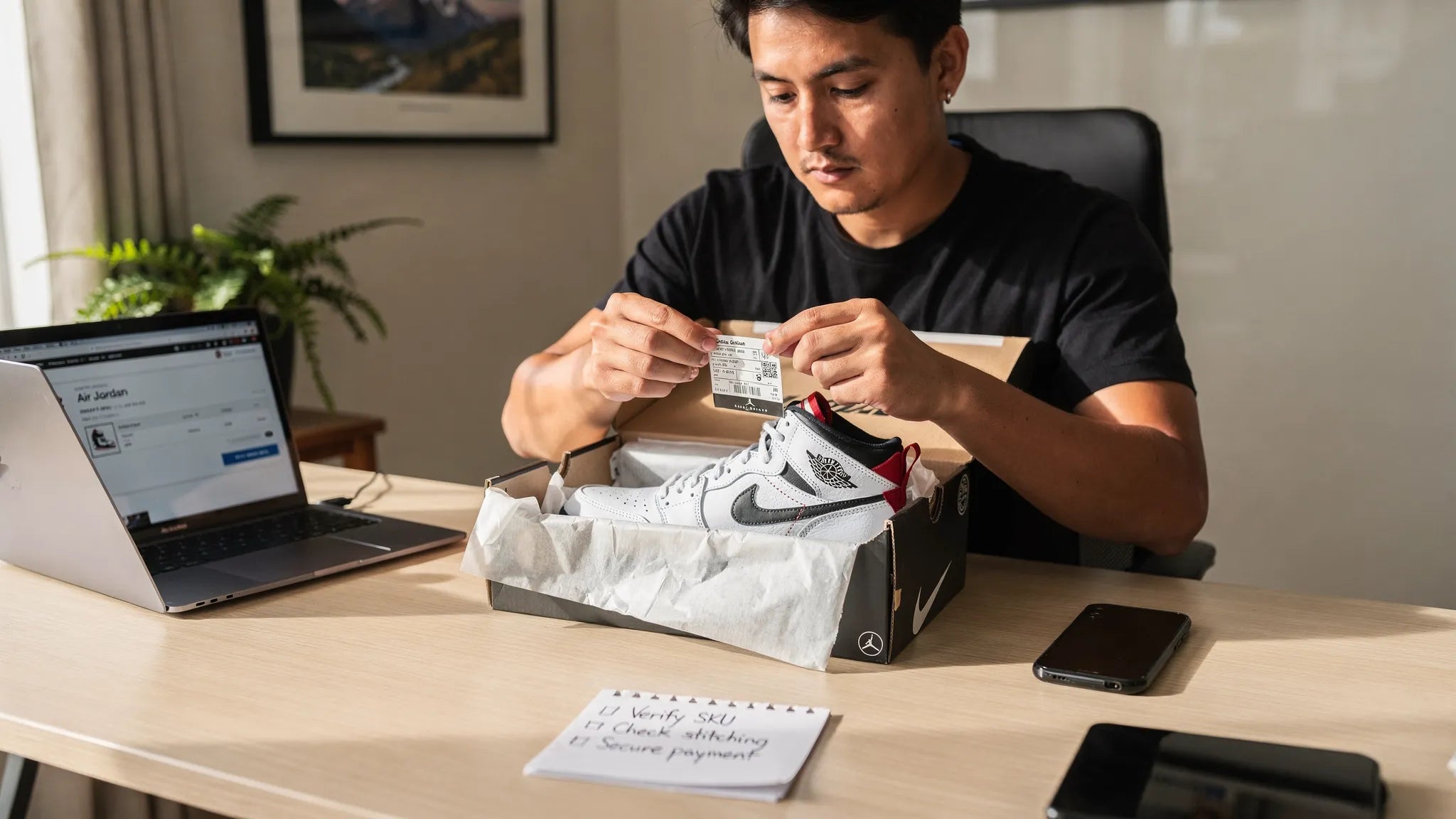
- Film a quick unboxing video (one take, show the shipping label)
- Check the box label details (size, SKU/style code) match your order
- Inspect build quality (stitching consistency, materials, logo placement)
- Compare key details to trusted references for that exact release
For a deeper walkthrough, use BigBoiSneakers’ guide: How to Tell if Your Sneakers Are Real or Fake (Australia & NZ Guide).
Common NZ buying scenarios (and the smartest legit option)
“I just want the new drop for retail”
Start with Nike and authorised retailers. If you miss, set a ceiling price for resale and avoid panic buying. Resale dips do happen after release hype cools.
“I want a classic that’s always sold out in my size”
This is where established specialist sneaker retailers/resellers and authenticated resale platforms usually win. Your priority should be authenticity and clear condition info, not chasing the absolute cheapest listing.
“I’m buying a grail collab and I’m scared of fakes”
Don’t compromise on seller quality. Choose channels where you get:
- Strong documentation
- An authentication process
- A straightforward way to dispute the purchase if needed
Also, pay attention to completeness. Extra laces, special packaging, and receipts can matter for both value and confidence.
“It’s a gift, I might need to swap sizes”
NZ-based retailers often have simpler shipping times and easier communication, which matters if you’re racing a birthday or a trip. Before you buy, confirm you understand the exchange path and timelines.
If you think you’ve been scammed in NZ: what to do next
Move quickly and stay organised.
- Contact the seller in writing, keep everything documented
- If you paid by card, contact your bank about a chargeback
- If you used PayPal, open a dispute inside PayPal
- Report scams and get advice through Netsafe
Also keep the listing screenshots, the payment receipt, tracking info, and any messages. This improves your odds of recovering funds.
Frequently Asked Questions
What are the most legit sites to buy Jordans in NZ? Start with Nike (official) and authorised retailers for retail drops. For sold-out pairs, use established specialist sneaker retailers/resellers in NZ or major resale platforms with authentication programs.
Is it safe to buy Jordans from StockX or GOAT in New Zealand? They can be safe, but factor in fees, shipping time, GST handling, and the reality that returns can be harder than buying locally. Always check the full landed cost before you commit.
How can I tell if an online Jordan store is fake? The biggest red flags are unrealistic prices, full size runs of hyped releases, only stock photos, vague policies, and requests to pay via bank transfer or off-platform methods.
Do I pay GST when buying Jordans from overseas to NZ? Often yes. New Zealand applies 15% GST, and it may be collected at checkout by the overseas seller or handled when the parcel arrives, depending on the order value and seller setup. Check NZ Customs.
What should I check first when my Jordans arrive? Verify the box label details match your order, inspect the size tag and SKU/style code, check stitching and materials, and film your unboxing so you have proof if there’s a dispute.

Want a safer way to buy Jordans in NZ?
If you’d rather skip the guesswork of marketplaces and overseas checkout surprises, shop through an established sneaker retailer that focuses on authentic pairs.
Explore BigBoiSneakers for authentic sneakers, streetwear, and collectibles with secure payments, size guides, and NZ shipping options: bigboisneakers.com. If you’re still comparing sellers, this NZ-specific guide also helps: Nike sneaker shop NZ: how to buy authentic pairs online.