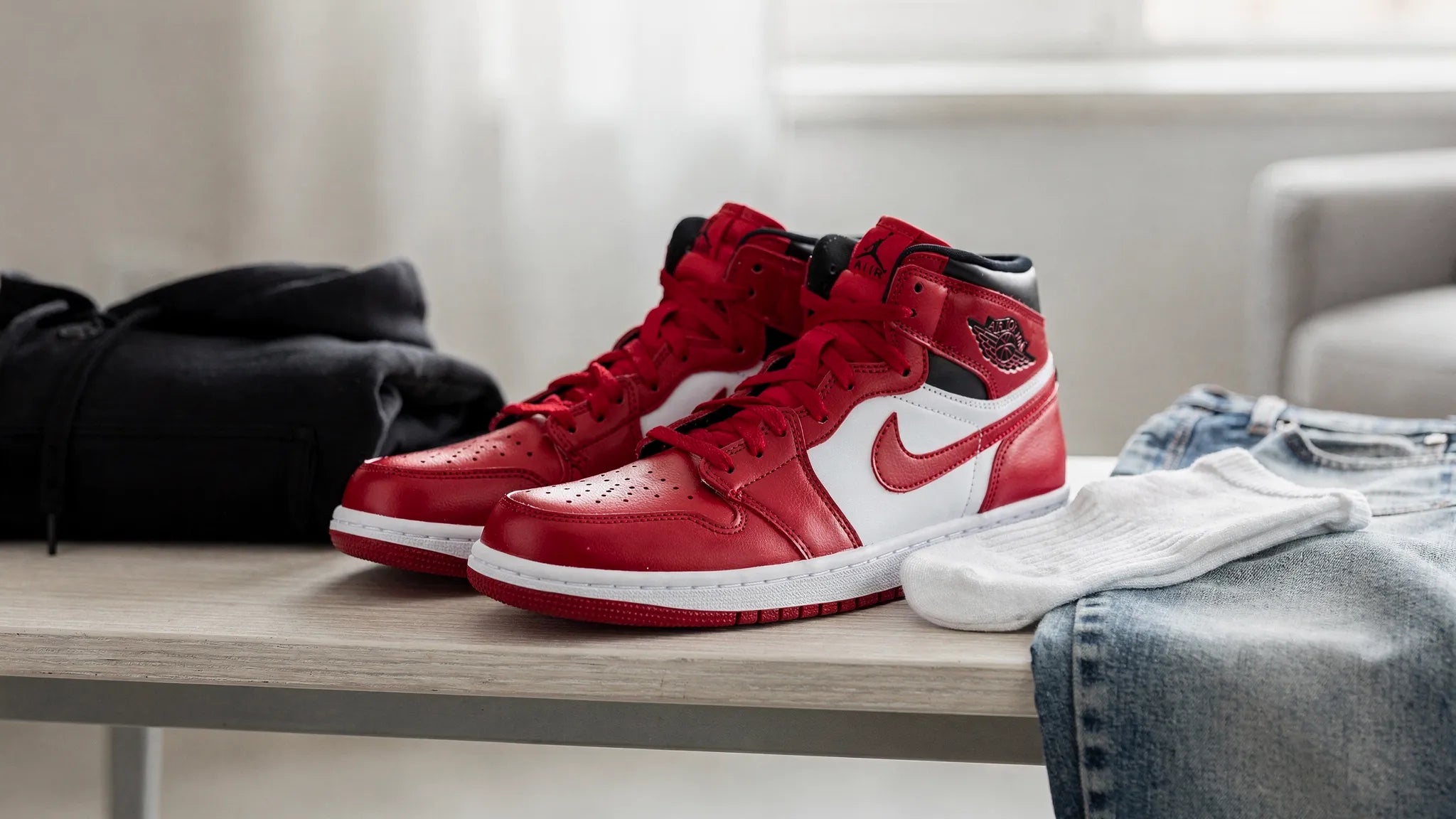
Nike Air Jordan series: every line explained in plain English

If you’ve ever searched “nike air jordan series” and ended up staring at names like “Retro High OG,” “SE,” “Reimagined,” “Craft,” or “6 Rings,” you’re not alone. The Jordan universe has a few different “lines” that look similar on a product page, but mean very different things in real life.
This guide breaks down every major Air Jordan and Jordan Brand line in plain English, so you can buy the right pair for your style, comfort needs, and budget (especially if you’re shopping from New Zealand).
First: “Air Jordan” vs “Jordan” vs “Jumpman” (the 10-second explanation)
People use “Jordans” to mean a lot of things. Here’s the clean breakdown:
- Air Jordan usually means the numbered signature sneakers originally made for Michael Jordan (Air Jordan 1, 2, 3 …).
- Jordan Brand is the wider brand under Nike that also makes non-numbered lifestyle shoes, hybrids, and performance basketball models for today’s athletes.
- Jumpman is the logo (the silhouette dunk). You’ll see it across many Jordan Brand products, not only Air Jordans.
So when someone says “Air Jordan series,” they might mean:
- The numbered Air Jordan line (AJ1, AJ4, AJ11, etc.)
- The wider Jordan Brand lineup sold alongside it
Line 1: The numbered Air Jordan signature series (AJ1, AJ2, AJ3 …)
This is the “main storyline.” The numbered Air Jordans started in 1985 with the Air Jordan 1 and continue today with modern performance models.
In plain English: AJ1 to AJ14 are the heritage icons, and many later numbers are more performance-focused (and less commonly worn as everyday streetwear).
If you want the full chronological list, BigBoiSneakers also has a dedicated timeline guide: All Jordan shoes in order: timeline from AJ1 to now.
What each era feels like (streetwear vs performance)
| Era (roughly) | Models people talk about most | Plain-English vibe | Best for |
|---|---|---|---|
| Heritage icons | AJ1, AJ3, AJ4, AJ5, AJ6, AJ11, AJ12 | The pairs you see in fits, collections, and “grail” lists | Everyday wear, collecting, resale interest |
| Retro staples | AJ7 to AJ14 | Classic 90s shapes, slightly louder design language | Collectors, statement outfits |
| Modern performance | AJ28 and up (especially 34+) | Built more like a current basketball shoe than a retro | On-court, comfort-first buyers |
Practical takeaway: if you’re buying your first “real Jordans” for lifestyle wear, most people start with AJ1, AJ3, AJ4, AJ11, or AJ12.
Line 2: Air Jordan “Retros” (the same numbers, re-released)
When you see a shoe like “Air Jordan 4 Retro,” it’s still an Air Jordan 4, but it’s a modern re-release of an older model.
In plain English: Retro = Nike/Jordan brought back an old Jordan number again.
This matters because retros can vary by:
- Materials (leather quality, suede/nubuck changes)
- Shape (closer to the original on some years)
- Branding (Nike Air heel vs Jumpman on certain AJ3/AJ4/AJ5 releases)
If you’re shopping AJ4 specifically, this guide goes deeper: Air Jordan 4 Retro NZ: shop Jordan 4 sneakers.
Line 3: The Air Jordan 1 family (High OG vs Retro High vs Mid vs Low)
The AJ1 is its own universe, and it’s the #1 place people get confused. Here’s what the common versions mean.
Air Jordan 1 cuts explained
| Name you’ll see | Plain-English meaning | Who it’s for |
|---|---|---|
| Air Jordan 1 High OG | The most “true to the original” retro style (details and shape aimed at OG accuracy) | Collectors, purists, resale-focused buyers |
| Air Jordan 1 Retro High | High-top AJ1, but not always “OG spec” | People who want the high look without chasing OG details |
| Air Jordan 1 Mid | Mid-height collar, often easier to buy | Everyday wearers who want AJ1 style with more availability |
| Air Jordan 1 Low | Low-cut AJ1 lifestyle staple | Daily wear, warmer weather, easy styling |
| Air Jordan 1 Low OG | Low-cut but tuned closer to OG details | Low-top fans who still care about OG accuracy |
Sizing note: AJ1s are often worn true-to-size, but feet and preferences vary. For a NZ-specific fit guide, see Men’s Air Jordan 1 High: sizing and top picks for NZ.
If you want the bigger AJ1 overview (history, collabs, and why it matters), see Jordan 1 sneakers.
Line 4: “OG” vs “SE” vs “Craft” vs “Reimagined” (the tags you see in product names)
These terms aren’t random, they’re Nike/Jordan’s way of telling you what kind of release it is.
OG
In plain English: OG usually signals closer-to-original details (shape cues, branding choices, materials, colourblocking intent). It’s not always identical to an 80s pair, but it’s positioned as the “heritage” version.
SE (Special Edition)
In plain English: SE means a remix. Often different materials, added textures, alternate colourblocking, or small design tweaks.
Craft
In plain English: Craft usually means “materials-forward.” Think suede swaps, textured panels, earth tones, and a more lifestyle, fashion-led feel.
Reimagined
In plain English: Reimagined means “classic, but with an intentional twist.” Often aged/vintage cues, different materials, or story-driven changes.
These labels don’t automatically mean “better,” they just tell you what flavour you’re buying.

Line 5: Collaborations (the “x ____” pairs)
Collaborations are the releases tied to a designer, artist, boutique, or celebrity, for example Travis Scott, Union LA, Off-White, A Ma Maniére, fragment design.
In plain English: a collab is a standard silhouette with someone else’s creative direction and branding.
Why collabs cost more (at retail or resale) usually comes down to:
- Smaller supply
- Bigger cultural moment
- Distinctive design details that are hard to replicate
If you’re specifically buying for long-term collectability, BigBoiSneakers has a dedicated guide: Designer Jordans: collabs worth buying and why they hold value.
Line 6: Hybrids and mashups (Spizike, 6 Rings, Legacy 312, Dub Zero)
Hybrids are real Jordan Brand products, but they’re not part of the numbered Air Jordan story. They combine design elements from multiple classic Jordans.
In plain English: hybrids are “greatest hits” sneakers.
Common hybrids, explained
| Hybrid name | What it means in plain English | Buy it if… |
|---|---|---|
| Jordan Spizike | Mix of AJ3, AJ4, AJ5, AJ6 elements (tied to Spike Lee connection) | You love loud retro details and want one shoe that references multiple icons |
| Jordan 6 Rings | References the six championship years (design cues pulled from multiple models) | You want a heritage look with a more “all-in-one” feel |
| Jordan Legacy 312 | A mashup (AJ1 + AJ3 + Air Alpha Force vibe) | You want an AJ1-adjacent silhouette that feels chunkier |
| Jordan Dub Zero | Lifestyle Jordan with big text and AJ4-inspired shape cues | You want bold branding and a throwback 2000s look |
Collector reality check: hybrids can be awesome daily wearers, but they usually do not carry the same “must-have retro” status as AJ1/AJ3/AJ4/AJ11.
Line 7: Team Jordans and budget-friendly Jordan Brand models
These are often the pairs you’ll see in general footwear stores: Jordan Brand shoes that borrow Jordan styling but are not numbered retros.
In plain English: they’re Jordans for everyday use and accessibility, not necessarily for “retro accuracy” or collector status.
They can be a smart choice if you:
- Want the Jordan look without chasing limited releases
- Prefer comfort and durability over “OG shape” details
- Need a daily pair you won’t stress about in NZ winter weather
Line 8: Modern Jordan Brand performance lines (Luka, Zion, Tatum, Why Not, etc.)
Jordan Brand also produces signature basketball models for current athletes (separate from Air Jordan 1-39).
In plain English: these are performance shoes first, built for today’s game, and they just happen to carry Jordan Brand DNA.
If your goal is playing basketball, these can be better value than chasing a retro that was designed decades ago.
If your goal is streetwear, the classics (AJ1, AJ3, AJ4, AJ11) still dominate because the silhouettes are culturally “locked in.”
How to decode an Air Jordan name (real examples)
A Jordan product name is usually a stack of clues. Here’s how to read it.
| Example name | What each part is telling you |
|---|---|
| Air Jordan 1 Retro High OG | Model number (1), it’s a retro re-release, high-cut, and positioned as OG-spec |
| Air Jordan 4 Retro SE | Model number (4), retro release, special edition materials or design tweaks |
| Air Jordan 1 Low OG | Low-cut AJ1 with OG-oriented details |
| Air Jordan 4 “Black Cat” | Nickname for the colourway/theme (not a separate model) |
If you’re comparing versions of a single theme (like black and red AJ1s), this buyer guide helps: Air Jordan 1 High black and red: which version to buy.
Choosing the right Jordan line for your lifestyle in NZ
If you want the safest “first Jordan”
Start with something that’s easy to style and easy to wear:
- AJ1 Low for daily wear
- AJ1 High OG if you want the iconic high-top look
- AJ4 if you want presence and a classic retro runner-up vibe
If you care about collectability
Look toward:
- OG-leaning releases (often High OG, and iconic AJ3/AJ4/AJ11 colourways)
- Strong collaborations you genuinely like (value follows culture, but taste matters)
- Easy-to-wear colourways you will actually put on foot (unworn pairs are not automatically “better” if you’re not a collector)
If you just want comfort and low stress
Consider:
- Non-numbered Jordan Brand lifestyle models
- Hybrids (you get Jordan DNA without worrying about “is this the right year shape?”)
Authenticity: the line doesn’t matter if the pair isn’t real
Because the Air Jordan series is heavily counterfeited, “which line” and “which seller” go together.
If you want a practical inspection checklist for AU/NZ shoppers, use: How to tell if your sneakers are real or fake (Australia & NZ guide).
And if you’re specifically evaluating the store experience, see: Is bigboisneakers.com legit? everything you need to know.
Frequently Asked Questions
What is the Nike Air Jordan series? The Nike Air Jordan series usually refers to the numbered Air Jordan signature line (AJ1, AJ2, AJ3, etc.), plus the retro releases that bring older models back.
What’s the difference between Air Jordan and Jordan Brand? Air Jordan is the iconic numbered signature line tied to Michael Jordan. Jordan Brand is the bigger brand that also makes hybrids, lifestyle pairs, and performance signature shoes for today’s athletes.
What does “Retro” mean on Jordans? “Retro” means it’s a re-release of an older Air Jordan model, produced again in a modern year (sometimes with updated materials or shape).
What does “High OG” mean on Air Jordan 1s? “High OG” is a version of the AJ1 High that’s generally positioned closer to original design details and is often the most sought-after AJ1 cut for collectors.
Are Jordan hybrids real Jordans? Yes, hybrids like Spizike or 6 Rings are official Jordan Brand products, but they are mashups and not part of the numbered Air Jordan storyline.
Shop the Jordan line with confidence (NZ)
If you’re ready to choose your pair, shop with a simple rule: pick the line that matches your goal (daily wear, collecting, or on-court), then buy from a source that prioritises authenticity.
You can explore authentic sneakers and new drops at BigBoiSneakers (NZ shipping available, with sizing resources and secure checkout). For deeper model-specific help, start with the Air Jordan timeline guide and the AU/NZ real vs fake checklist.