Sneaker Outlet NZ Guide to Better Deals and Fewer Risks
If you are searching for a sneaker outlet NZ shoppers can trust, you are probably trying to do two things at once: save money and avoid getting burned. That is a smart goal, because the sneaker market is full of genuine markdowns, but also full of listings that use outlet-style language to make risky deals look safer than they are.
In New Zealand, outlet sneaker shopping is not always a physical factory store. It can mean clearance stock from a retailer, a sale section on a specialist sneaker site, a private seller dropping their price, or an overseas site advertising heavy discounts. Some of those deals are great. Others become expensive once you add shipping, GST, currency conversion, poor sizing, or the risk of counterfeits.
This guide breaks down how to find better sneaker deals in NZ without ignoring the details that protect your money.
What sneaker outlet shopping means in NZ
Outlet shopping usually means discounted stock, but in sneakers the reason for the discount matters. A pair can be cheaper because it is an older release, an unpopular size, a less-hyped colourway, a returned item, or simply because a retailer is clearing space for new arrivals. None of that is a problem if the seller is transparent.
The issue starts when outlet pricing is used as a trust shortcut. A low price does not automatically mean a good buy, and a sale badge does not prove authenticity.
| Buying channel | Why the deal might be real | Main risk | Safer move |
|---|---|---|---|
| Official brand sale or outlet | End-of-season stock, older colourways, limited sizes | Low stock, restrictive returns, few hyped pairs | Check size availability and return terms before rushing |
| NZ sneaker retailer sale section | Clearance, promotions, slow-moving sizes, new stock arriving | Popular sizes sell fast, discounts vary by release | Compare the final price and buy from stores with clear policies |
| Marketplace or private seller | Seller wants cash quickly, worn pair, price drop after hype fades | Fakes, hidden wear, no returns, payment risk | Ask for proof, detailed photos, and use safer payment methods |
| Overseas discount site | Large inventory, exchange-rate opportunities, regional markdowns | Import costs, long shipping, hard returns, authenticity uncertainty | Calculate the landed cost and check seller reputation carefully |
A trustworthy outlet-style deal should answer the basic questions quickly: what is the exact pair, what condition is it in, what size system is being used, what is the total cost, and what happens if something goes wrong?
Why sneaker deals can be cheaper without being suspicious
Not every cheap pair is a red flag. Sneaker prices move because demand changes. A colourway that was hot at release can settle after a few months. A size run might be left with only very small or very large sizes. A store may discount stock before new drops arrive. A private seller may price below market because they need a fast sale.
Common legitimate reasons for lower prices include:
- The pair is no longer the newest release.
- The colourway has less resale demand than expected.
- Only selected sizes are left.
- The box is damaged but the shoes are unworn.
- The item is part of a seasonal promotion.
- The seller is clearing inventory or moving funds into another pair.
These are all normal. The key is whether the discount matches the explanation. A modest markdown on an older Dunk or Jordan colourway can make sense. A brand-new hyped pair at a fraction of market value needs much more scrutiny.
For a broader view of safe buying channels, BigBoiSneakers has a helpful guide on where NZ shoppers find authentic sneakers online. Use that kind of channel thinking before comparing prices.
The real cost of an outlet sneaker deal
A cheap sticker price can become average, or even expensive, once the full cost is added. This is especially true when comparing a NZ retailer with an overseas site or a private seller in another region.
Before deciding that one pair is cheaper, compare the all-in price.
| Cost factor | Why it matters | What to check |
|---|---|---|
| Sneaker price | The obvious starting point, but not the full deal | Compare against current NZ pricing and realistic resale value |
| Shipping | Can erase the discount, especially from overseas | Check whether shipping is included, tracked, and insured |
| GST and import costs | International orders can change in final cost | Use the NZ Customs duty and GST estimator for higher-value imports |
| Currency conversion | Overseas prices can look better before bank fees | Convert to NZD and allow for card or payment provider fees |
| Return cost | A wrong size can be expensive to send back | Read who pays return shipping and whether sale items are final |
| Payment protection | Risk rises when payment cannot be disputed | Prefer secure checkout options over direct bank transfers to strangers |
New Zealand shoppers should also be aware of general online shopping protections. The official Consumer Protection NZ online shopping guidance is a useful reminder to check who you are buying from, how you are paying, and what rights or return options may apply.

How to judge whether a sneaker outlet price is actually good
The best deal is not always the lowest number. A better way to judge value is to compare price against proof, condition, and convenience.
Start with the exact model. Sneakers often have similar names, but different releases can vary widely in value. Check the colourway, SKU or style code, release year, size, and whether the pair is mens, womens, GS, PS, or TD sizing. A cheap grade-school pair is not the same as an adult pair, even if the colourway looks similar in photos.
Next, compare realistic market pricing. Do not rely only on the original retail price or one inflated resale listing. Look at current prices across multiple reputable sellers and note whether the pair is new, used, with box, replacement box, or missing accessories.
Then consider the safety premium. Paying slightly more through a trusted NZ retailer can be better value than saving a small amount through a risky seller with no returns, vague photos, or slow overseas shipping. The extra cost may buy faster delivery, clearer policies, and less stress.
A simple rule works well: a good outlet deal should still feel good after you have checked authenticity signals, condition, sizing, shipping, and return terms. If the deal only looks good before those checks, it is not really a deal.
Red flags that should make you pause
Outlet shopping rewards patience. If a listing pressures you to act before checking details, step back. Scammers often rely on urgency, hype, and the fear of missing out.
| Red flag | Why it matters | What to do |
|---|---|---|
| Price is far below every other seller | Counterfeits often rely on unrealistic discounts | Compare against several trusted sources before buying |
| Only stock photos are shown | You cannot verify condition or details | Ask for current photos of the exact pair |
| Seller refuses extra photos | Genuine sellers should be able to show tags, soles, box label, and angles | Walk away if answers are evasive |
| Payment is bank transfer only | Harder to dispute if something goes wrong | Use secure payment options where possible |
| Listing says UA, replica, mirror, or 1:1 | These terms usually signal non-authentic products | Avoid if you want authentic sneakers |
| No return or issue process is explained | Sale items can be risky if sizing or condition is wrong | Read policies before paying |
If you want a deeper authenticity process, use the steps in How to Buy Authentic Sneakers in NZ With Confidence before committing to a pair that looks unusually cheap.
Best times to find better sneaker deals in NZ
Good sneaker outlet deals appear throughout the year, but certain windows are especially useful for NZ buyers.
End-of-season sales can be strong because retailers are clearing space. Summer and winter transitions often bring markdowns on apparel, streetwear, and selected sneaker ranges. You may not see the most hyped sizes, but patient shoppers can find wearable pairs at fair prices.
Post-release price drops are another opportunity. Not every launch sells out forever. Some pairs dip after the first wave of hype fades, especially if supply was larger than expected. Waiting a few weeks can be smarter than paying release-week resale prices.
Major shopping events can also help, but they require preparation. Black Friday, Cyber Monday, Boxing Day, and mid-year sales can bring strong deals, yet they also attract fake stores and rushed buying decisions. If you shop during peak sale periods, build your wishlist early and know your size before the sale starts. For event-specific advice, see BigBoiSneakers guide to Black Friday in NZ sneaker shopping.
Finally, watch size-based markdowns. If you wear a less common size, outlet-style buying can work in your favour. If you wear a high-demand size, the best deals may disappear quickly, so it is worth knowing your target price before stock drops.
Outlet buying tips by sneaker category
Different sneaker categories carry different risks. A smart outlet strategy changes depending on what you are buying.
For Jordans, check the exact model and colourway carefully. Air Jordan 1 High, Mid, Low, Retro, SE, GS, and womens releases can have very different values. Cheap Jordan listings are not automatically bad, but they need accurate naming, clear photos, and realistic condition notes.
For Dunks, pay attention to sizing and material quality. Some colourways release in large numbers and later become easier to find discounted. Others remain hard to buy near retail. Do not assume every Dunk should command a premium.
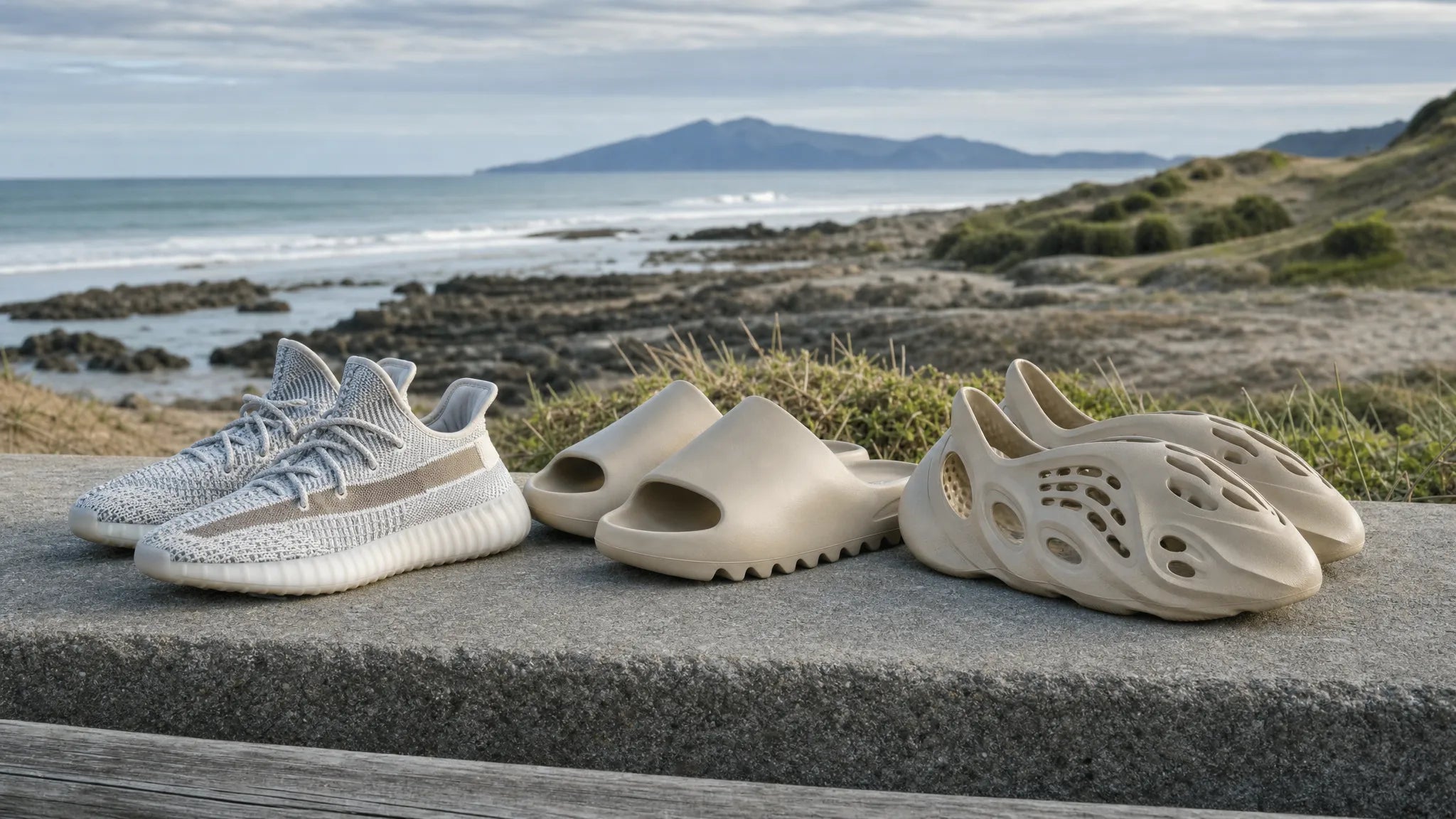
For Yeezys, check the specific model and fit reputation. Many Yeezy silhouettes fit differently from standard Nike or Jordan sizing, so a discounted pair can become a bad buy if you guess wrong. Look for size guide information and compare with pairs you already own.
For New Balance, adidas, ASICS, and other lifestyle runners, outlet deals can be excellent because trends move quickly and colourways rotate often. These pairs are often bought for daily wear rather than hype, so comfort, materials, and sizing should matter as much as discount size.
For streetwear and collectibles, condition details are everything. With apparel, confirm measurements, not just tagged size. With collectibles or trading cards, check sealed condition, edition, language, packaging, and seller reputation before treating a discount as a bargain.
How to reduce sizing risk when buying discounted sneakers
Sizing is one of the most common ways an outlet bargain turns into wasted money. Sale items may have stricter return rules, and private sellers usually will not accept returns just because the fit is wrong.
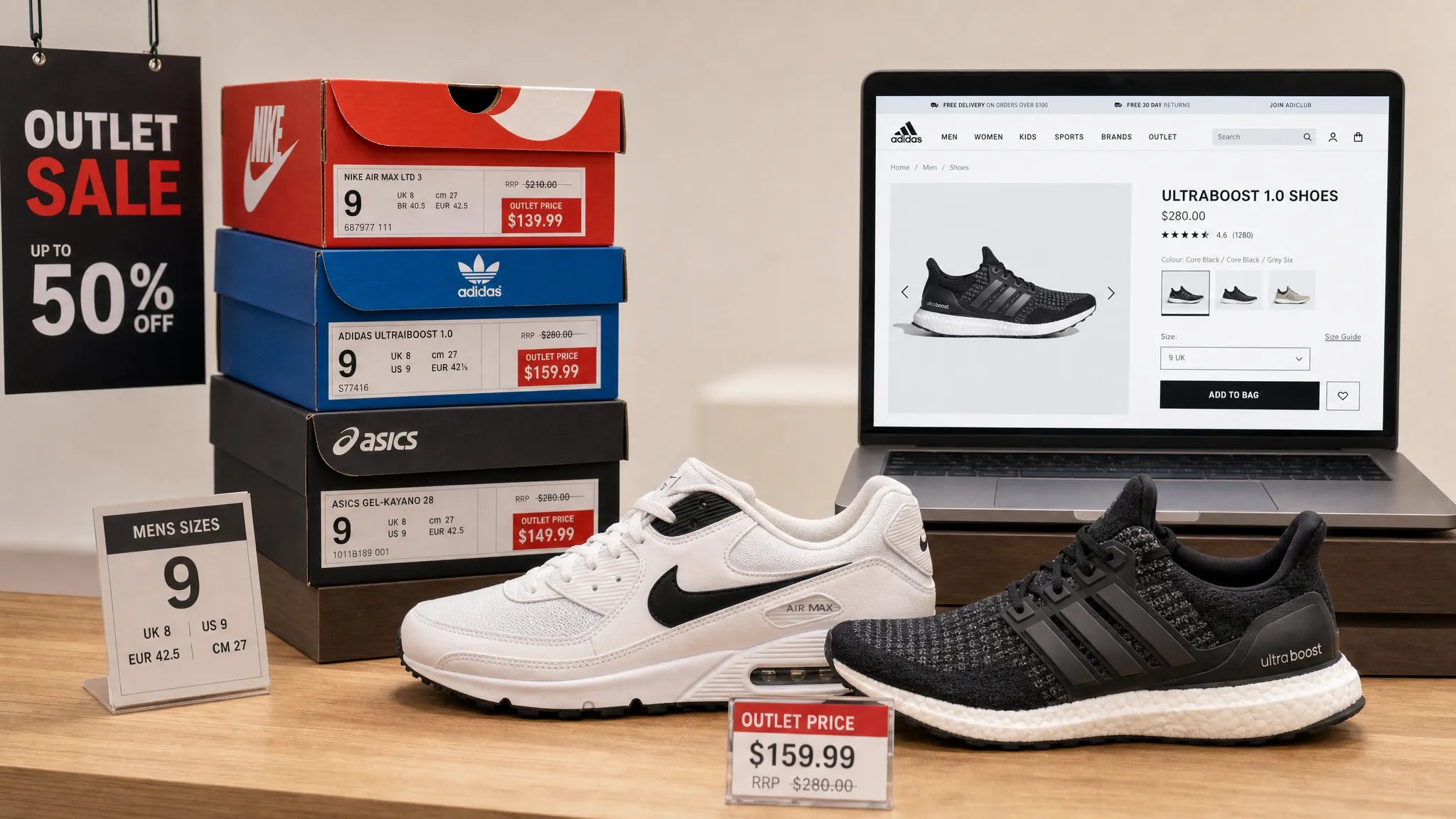
Before buying, compare the size system. NZ shoppers often see US, UK, EU, and CM sizing across different brands. Nike, adidas, New Balance, and Yeezy sizing can all feel different, even when the label looks similar.
Check fit notes from multiple sources, then compare them with your own sneakers. If you know your best-fitting pair, use it as a reference. For used pairs or private listings, ask for insole measurements if possible. This is especially useful when buying older releases, womens sizing, or grade-school pairs.
Also consider how you plan to wear the shoe. A snug performance-style fit might be fine for one silhouette but annoying for daily wear. If you are buying a pair for regular rotation, comfort should outrank a small discount.
When paying a little more is the smarter deal
Outlet shopping is about value, not just price. Sometimes the smarter move is paying a little more to reduce risk.
That is especially true when the pair is expensive, commonly faked, needed for a specific date, or hard to replace in your size. If the difference between a risky seller and a trusted retailer is small, the safer option often wins.
A good retailer should make it easy to understand what you are buying. Look for clear product pages, size information, secure payment options, shipping details, and a consistent reputation. For private sellers, expect more due diligence because you are taking on more of the risk yourself.
The best sneaker outlet mindset is simple: chase the deal, but do not ignore the evidence.
Frequently Asked Questions
Are sneaker outlets in NZ always cheaper? Not always. Some sale sections offer genuine discounts, while other listings only look cheap before shipping, GST, fees, or return costs are included. Always compare the final all-in price.
How can I tell if an outlet sneaker deal is fake? Be careful with prices far below market value, stock photos only, vague seller details, bank-transfer-only payments, and terms like replica or 1:1. Ask for detailed photos and verify the exact model before buying.
Is it safer to buy discounted sneakers from a NZ retailer or overseas? A NZ retailer can reduce risks around delivery time, returns, and landed cost. Overseas deals can still be worthwhile, but you need to account for currency conversion, GST, import costs, and harder returns.
Should I buy sneakers on sale if I am unsure about size? Be cautious. Discounted or clearance items may have stricter return rules. Check size guides, fit notes, and your best-fitting current sneakers before buying.
What is the biggest mistake NZ shoppers make with outlet sneaker deals? The biggest mistake is focusing only on the sale price. Authenticity, condition, shipping, payment safety, and sizing all affect whether the deal is actually worth it.
Shop discounted sneakers with more confidence
A good sneaker outlet deal should feel clear, not stressful. If you can verify the pair, understand the total price, trust the seller, and choose the right size, you are far more likely to end up with a win.
BigBoiSneakers is built for NZ sneaker buyers who want authentic sneakers, streetwear, and collectibles from a retailer with clear product information, secure payment options, size guidance, and new arrivals. Start by browsing authentic sneakers, streetwear, and collectibles at BigBoiSneakers, then compare deals with the checklist above before you buy.