Streetwear Sizing Guide for NZ Online Shoppers
Buying streetwear online in New Zealand should feel exciting, not like a sizing gamble. The challenge is that streetwear does not follow one universal fit system. A size medium hoodie from one brand can feel like a large, a relaxed tee can look intentionally boxy and a pair of cargos might fit the waist but sit completely differently through the thigh.
This guide is built for NZ online shoppers who want fewer sizing mistakes when buying hoodies, T-shirts, jackets, pants, shorts and full outfits online. Instead of relying only on the size you normally wear, the goal is to understand measurements, silhouettes and brand fit language before you check out.
Why streetwear sizing is different from standard clothing sizing
Streetwear is as much about shape as it is about size. A classic menswear shirt is usually designed to sit neatly on the shoulder and follow the body. A streetwear hoodie may be designed with dropped shoulders, a cropped body, oversized sleeves or a wider chest. Both items might say “large”, but they are not trying to create the same look.
NZ shoppers also deal with a mix of international sizing systems. Local everyday clothing often follows AU, UK or generic small to extra large sizing, while many sneakers and streetwear brands use US sizing, EU sizing, Japanese measurements or centimetre-based charts. That makes the label less useful than the actual garment measurements.
Another factor is resale and limited edition culture. When a streetwear piece sells out, exchanging for another size may not be realistic. If you are buying a hard-to-find hoodie, rare sneaker drop or limited edition sneakers to match a fit, getting the sizing right before purchase matters more than it would with a basic item that is always in stock.
Start with your actual measurements
The biggest sizing upgrade you can make is simple: stop guessing from your usual size and build a quick measurement profile. You only need a soft measuring tape, a flat surface and one or two pieces you already like wearing.
Measure your body, then measure a favourite garment. Body measurements tell you what you need for comfort. Garment measurements tell you the fit you actually enjoy. For streetwear, garment measurements are often more useful because the intended silhouette can be relaxed, cropped or oversized.
| Measurement | How to measure it | Why it matters for streetwear |
|---|---|---|
| Chest | Around the fullest part of your chest | Helps with tees, hoodies, jackets and overshirts |
| Shoulder width | Across the back from shoulder point to shoulder point | Important for regular fits and structured jackets |
| Body length | From high shoulder point to hem on a garment | Decides whether a tee or hoodie looks cropped, regular or long |
| Sleeve length | From shoulder seam to cuff, or neck to cuff for raglan sleeves | Helps avoid sleeves that bunch or sit too short |
| Waist | Around where the waistband sits | Key for pants, shorts and cargos |
| Inseam | From crotch seam to hem on pants | Helps judge stacking, cropping and sneaker visibility |
| Thigh width | Across the widest part of the thigh on a flat garment | Useful for cargos, denim and relaxed pants |
When measuring clothing, lay the item flat and smooth it without stretching it. For chest width, measure from pit to pit and double it if the size chart lists full chest circumference. For waist width on pants, measure across the waistband and double it.
Understand the fit you actually want
A correct size is not always the smallest size you can wear. In streetwear, the right size is the one that creates the intended look while still feeling comfortable. Before choosing small, medium, large or extra large, decide what silhouette you are aiming for.
| Fit style | What it looks like | Best for | Sizing approach |
|---|---|---|---|
| Slim | Close to the body with less extra fabric | Clean layering, fitted tees, neat jackets | Stay true to size or size down only if the brand runs large |
| Regular | Comfortable without looking oversized | Everyday wear, easy styling, safer online buys | Usually true to size |
| Relaxed | More room through chest, waist or leg | Streetwear basics, cargos, hoodies and casual fits | True to size if the brand is already relaxed |
| Oversized | Wider body, dropped shoulders or longer sleeves | Statement hoodies, graphic tees and layered outfits | Often true to size, not always one size up |
Oversized does not automatically mean “buy a bigger size”. Many streetwear pieces are already cut oversized. If you size up again, you might end up with sleeves that are too long, a neckline that sits poorly or a hoodie that looks bulky instead of intentional.
How hoodies and sweatshirts should fit
Hoodies are one of the trickiest online buys because the fit depends on chest width, shoulder drop, sleeve volume, body length and hem tension. A hoodie can be wide but cropped, long but narrow or roomy through the body with tight cuffs.
For a classic streetwear fit, look for enough room through the chest to layer a tee underneath without pulling at the front pocket or armpits. The shoulder seam may sit slightly below your natural shoulder if the hoodie is designed with a relaxed or oversized shape. That is normal, but the sleeve should still finish close to your wrist rather than swallowing your hands completely.
Body length changes the whole outfit. A shorter hoodie works well with wider pants because it keeps the proportions balanced. A longer hoodie can look good with slim pants or shorts, but it may bunch under a jacket. If you are comparing popular oversized silhouettes, the Fear of God Essentials fit guide for NZ buyers is a useful reference because it explains how tees, hoodies, sweatpants and layering pieces differ across the range.
How T-shirts and long sleeves should fit
Streetwear tees often use heavier cotton, boxier cuts and wider sleeves than standard basics. The size label matters less than the pit-to-pit width, shoulder shape and body length.
A regular tee should sit close to the shoulder, skim the body and finish around the upper hip. A boxy streetwear tee usually has more width through the chest and a slightly shorter or straighter body. An oversized graphic tee may extend past the hip and have sleeves that sit closer to the elbow.
If you are between sizes, think about how you will wear it. For layering under a hoodie or jacket, the smaller of two workable sizes may sit better. For a standalone graphic tee with cargos or baggy denim, the larger size may look more balanced. Always check whether the size chart uses body measurements or garment measurements, since that can completely change your choice.
How jackets and overshirts should fit
Jackets need more room than tees because they sit over other layers. The key is to choose enough chest and shoulder space without making the jacket look shapeless. If you plan to wear a hoodie underneath, measure your favourite hoodie and compare that to the jacket size chart. A jacket that only fits over a thin tee may feel restrictive through the arms once you add a fleece or heavyweight sweatshirt.
Sleeve length is also important. A streetwear jacket can have a relaxed shoulder, but the cuff should still land around the wrist. If the jacket has elastic cuffs, a little extra sleeve length is usually manageable. If it has open cuffs or a structured sleeve, too much length will be obvious.
For NZ weather, layering matters. In Auckland or Wellington, a light jacket over a tee might be enough for many days. In colder parts of the South Island, you may want extra room for a hoodie or crewneck underneath. Your best size can change depending on how you intend to wear the piece.

How pants, cargos, sweatpants and shorts should fit
Pants are where online sizing mistakes often happen because waist size alone does not tell the full story. Rise, thigh width, inseam and leg opening all change how pants sit with sneakers.
For cargos and relaxed pants, check the thigh and rise carefully. A higher rise can make pants sit more comfortably at the waist and stack better over sneakers. A low rise may feel tighter when seated, even if the waist measurement is technically correct. If the leg opening is wide, the pants will sit over your sneakers. If it is narrow, they may stack above the shoe or bunch at the ankle.
Sweatpants are usually more forgiving because of elastic waistbands, but that does not mean every size works. Check inseam and overall length, especially if you are shorter or taller than average. A relaxed pair of sweatpants should have room through the thigh without sagging excessively at the seat.
Shorts depend heavily on length. A 5 inch inseam creates a very different look from a 9 inch inseam. Streetwear shorts often sit around the knee or slightly above it, but personal preference matters. If you like a baggier look, check leg opening as well as waist.
NZ size conversion basics for online streetwear
There is no single global conversion chart that works across every streetwear brand. The safest approach is to use the brand's own chart when available, then compare it to your measurements. Still, NZ shoppers can use a few general rules when reading overseas product pages.
| Label you see online | What it usually refers to | What NZ shoppers should check |
|---|---|---|
| US size | Common for American streetwear, sneakers and some pants | Confirm whether the chart is men's, women's or unisex |
| UK or AU size | Often closer to NZ everyday clothing references | Still compare measurements because brand cuts vary |
| EU size | Common for some apparel and footwear | Use the product chart rather than guessing from another brand |
| CM | Measurement in centimetres | Usually the most practical reference if accurate garment measurements are provided |
| S, M, L, XL | General alpha sizing | Treat as a starting point, not a guarantee |
For sneakers, do not assume your clothing size logic carries over. Footwear sizing has its own quirks across Nike, Jordan, Adidas and other brands. If you are putting together a full fit, use dedicated sneaker resources such as the Jordan 1 Low sizing guide for NZ buyers rather than guessing from your streetwear size.
How to read a streetwear size chart properly
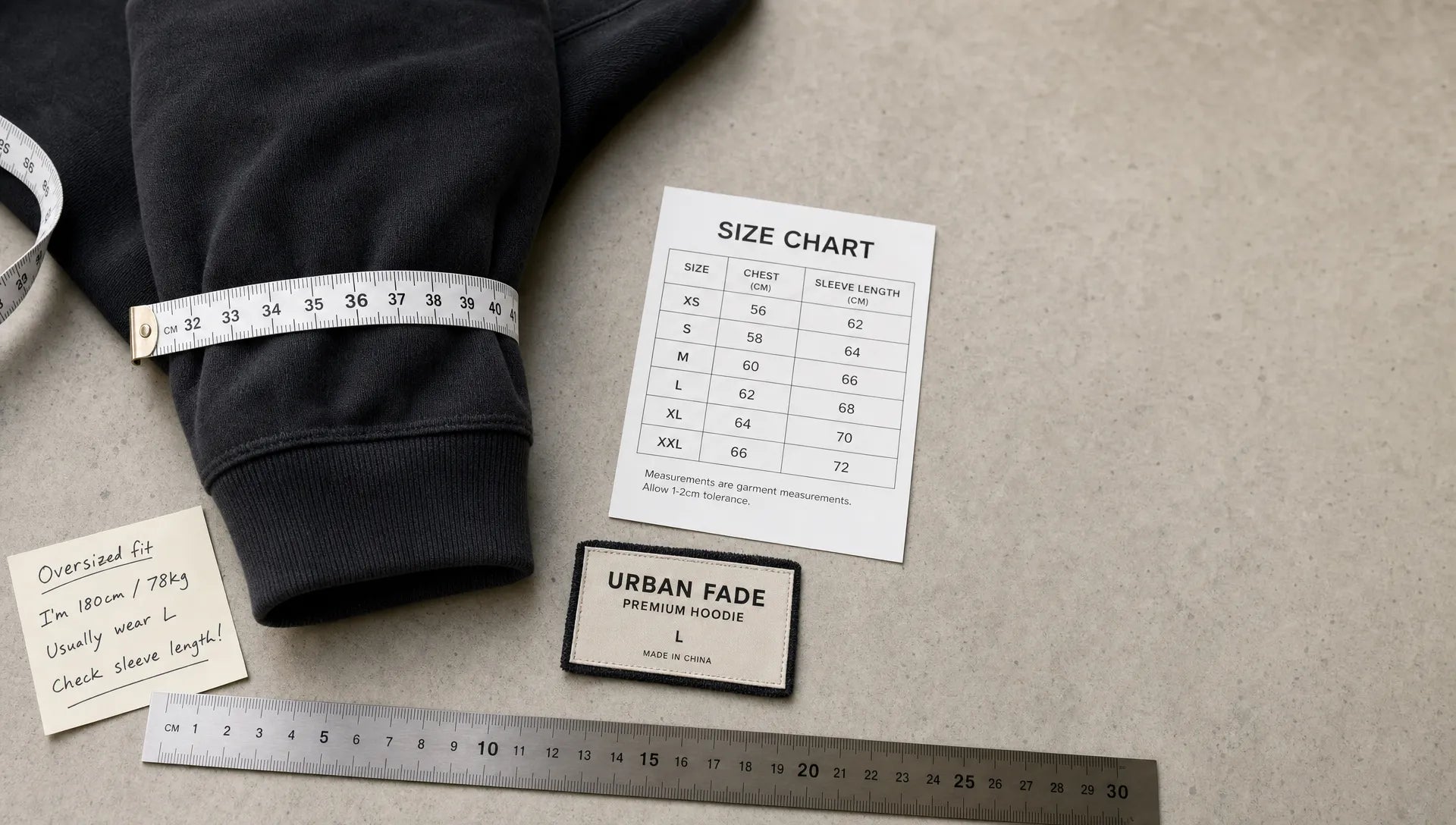
Most sizing issues come from reading the chart too quickly. First, check whether the numbers are body measurements or garment measurements. Body measurements tell you the body size the garment is designed to fit. Garment measurements tell you the actual dimensions of the item. A hoodie with a 120 cm chest garment measurement is not made only for someone with a 120 cm chest, because the extra room creates the fit.
Next, compare the same measurement type. If your favourite tee measures 58 cm pit to pit, compare it with pit-to-pit width on the new tee. Do not compare that number with a full chest circumference unless you double it first.
Also look for measurement tolerance. Clothing production can vary slightly from piece to piece. A difference of 1 cm to 2 cm is usually normal, especially with cotton, fleece and washed garments. That small difference rarely matters if the fit is relaxed, but it can matter for slim pants or fitted jackets.
When to size up or size down
Sizing up can make sense if you have broad shoulders, prefer a relaxed look, plan to layer heavily or are buying a piece that is known to run small. It can also help with heavyweight cotton pieces if you want to avoid a snug fit after washing, although you should always follow the care label to reduce shrinkage.
Sizing down can make sense if the brand is known for oversized cuts, you are shorter and often find tops too long or you want a cleaner fit under jackets. Be careful with sizing down in pants, especially if the waist fits but the thigh or rise is already close.
If you are between sizes, choose based on the hardest measurement to alter visually. For hoodies and tees, body length and sleeve length are often more noticeable than a little extra chest room. For pants, thigh room and rise usually matter more than a waistband that can be adjusted with a belt.
Common online sizing mistakes to avoid
Even experienced streetwear buyers get sizing wrong when they rush. Before buying, slow down and check the details that affect real-world fit.
| Mistake | Why it causes problems | Better approach |
|---|---|---|
| Buying only by usual size | Medium can vary widely across brands | Compare measurements with a garment you own |
| Assuming oversized means size up | Many pieces are already cut oversized | Check chest, length and shoulder design first |
| Ignoring model height | A piece may look shorter or longer on you | Compare model info with your own height when available |
| Only checking waist on pants | Rise, thigh and inseam affect comfort | Measure pants you already like |
| Forgetting layering | Jackets and overshirts need extra room | Measure over the layers you plan to wear |
One more mistake is buying the wrong size just because a piece is rare. Limited edition streetwear is tempting, but if the fit is clearly wrong it will probably sit in your wardrobe. A slightly different piece in the right size is usually a better buy than a grail you never wear.
Build your personal streetwear size profile
Once you have measured a few favourite pieces, save the numbers in your phone. This gives you a quick reference every time you shop online. You do not need a complicated spreadsheet, just your preferred measurements for tees, hoodies, jackets and pants.
A simple profile might include your preferred hoodie pit-to-pit, hoodie length, tee length, relaxed pants waist, inseam and thigh width. Over time, you will learn which fits you like best. This makes it easier to shop new arrivals, compare brands and move faster when limited pieces drop.
If you are new to online shopping for sneakers, streetwear and collectables, it also helps to buy from stores that clearly present product details and stock authentic products. BigBoiSneakers focuses on authentic sneakers, streetwear and collectibles, with new arrivals and trending items across major brands. You can also browse the broader BigBoiSneakers online store when you are ready to build a full outfit.
Frequently Asked Questions
Should I size up for streetwear? Not always. Many streetwear pieces are already designed with a relaxed or oversized fit, so sizing up can make them too long or bulky. Check the size chart and compare garment measurements with clothing you already like.
Are NZ and US clothing sizes the same? Not reliably. Some NZ shoppers may wear a similar alpha size, such as medium or large, across local and US brands, but the actual cut can be very different. Measurements are safer than assuming a direct conversion.
How should an oversized hoodie fit? An oversized hoodie should feel roomy through the chest and shoulders without making the sleeves unusably long or the body length awkward. The hem should still sit in a way that works with your pants and jacket.
What measurement matters most for T-shirts? Pit-to-pit width and body length are usually the most useful measurements. Shoulder width also matters if you prefer a regular fit rather than a dropped-shoulder streetwear shape.
How do I choose pants online if I am between sizes? Check waist, rise, thigh width and inseam. If the waistband is adjustable, thigh and rise may be more important for comfort. If the pants are rigid denim or cargos, avoid sizing down too aggressively.
Shop streetwear online with fewer sizing regrets
Good streetwear sizing starts with knowing your measurements, understanding the intended fit and checking the chart before the item sells out. Once you have your personal size profile, buying sneakers, streetwear and collectibles online becomes much easier.
BigBoiSneakers helps NZ shoppers explore authentic sneakers, streetwear, limited releases and collectibles online, with product details, secure payment options and fresh drops to browse. Measure first, choose the fit you actually want and shop with more confidence.