All Jordan Shoes Ever Made? A practical collector list

If you’ve ever typed “all Jordan shoes ever made” into Google, you’ve probably noticed two things fast: the Jordan universe is huge, and most “complete lists” are either impossible to verify or so long they aren’t useful.
Jordan Brand has been releasing footwear since 1985, across signature Air Jordans, team models, hybrids, lifestyle runners, golf, slides, kids-only drops, and countless collabs. So instead of pretending a single page can name every single SKU ever produced, this guide gives you a practical collector list that helps you:
- Understand the major Jordan “families” worth tracking
- Build your own checklist (with the right fields, like SKU and year)
- Decide what matters for your collection (wear, history, value, rarity)
- Buy smarter in New Zealand, where supply and shipping can change the math
First, what counts as a “Jordan shoe”?
Collectors usually mean one of these:
- Air Jordan signature line (AJ1, AJ2, AJ3, etc.)
- Jordan Brand releases with Jumpman branding (non-numbered models)
- Hybrids (mashups of signature designs)
- Team / performance Jordans (built for hooping, training, or lifestyle)
If your goal is a true museum-style “everything,” you’ll need to track all of them. But for most buyers, the signature line plus a handful of key hybrids and collabs is the sweet spot.

The practical collector list (by Jordan family)
Use this as your master framework. Under each family, you can track individual releases (colourways) without losing your mind.
| Jordan family | What it includes | Why collectors track it | “Completion” realistic? |
|---|---|---|---|
| Air Jordan signature line | Numbered Air Jordans starting in 1985 | The core MJ story, the most retro’d models, the biggest collabs | Yes (model-level), no (every colourway) |
| Signature retros and variants | Retro, OG, Reimagined, Low/Mid versions | Most of the pairs people actually buy and wear | Mostly |
| Hybrids | Spizike, 6 Rings, Dub Zero, etc. | Fun mashups, some are very wearable daily | Yes |
| Jordan Brand lifestyle/performance | Non-numbered Jumpman models, trainers, runners, slides | Broader Jordan ecosystem, often cheaper and easier to wear | Yes (if you define scope) |
| Player Exclusives (PEs) and Friends & Family | Unreleased pairs, team-only, ultra-limited | True “grail” tier | No (by definition) |
If you want the cleanest starting point for the numbered line, BigBoiSneakers already has a dedicated timeline guide you can use as your backbone: All Jordan Shoes in Order: Timeline from AJ1 to Now.
1) Air Jordan signature line: your “core set”
The signature line is what most people mean when they say they collect Jordans. It starts with the Air Jordan 1 (1985) and continues through the modern era (the latest model is typically in the high 30s as of the mid-2020s).
How collectors approach the signature line
There are two sane ways to collect the numbered series:
- Silhouette-first (model-level): one AJ1, one AJ3, one AJ4, one AJ11, etc. This builds a historically meaningful rotation fast.
- Story-first (moment-level): target models tied to major on-court moments and cultural spikes (for example, AJ1, AJ3, AJ4, AJ6, AJ11), then expand.
If you’re in NZ and buying to wear, the silhouette-first approach usually wins because it keeps you from overpaying for hype colourways early.
The collector “spine” models
Some models have unusually deep cultural gravity and retro frequency. If you’re building a practical list, make sure these are clearly tracked:
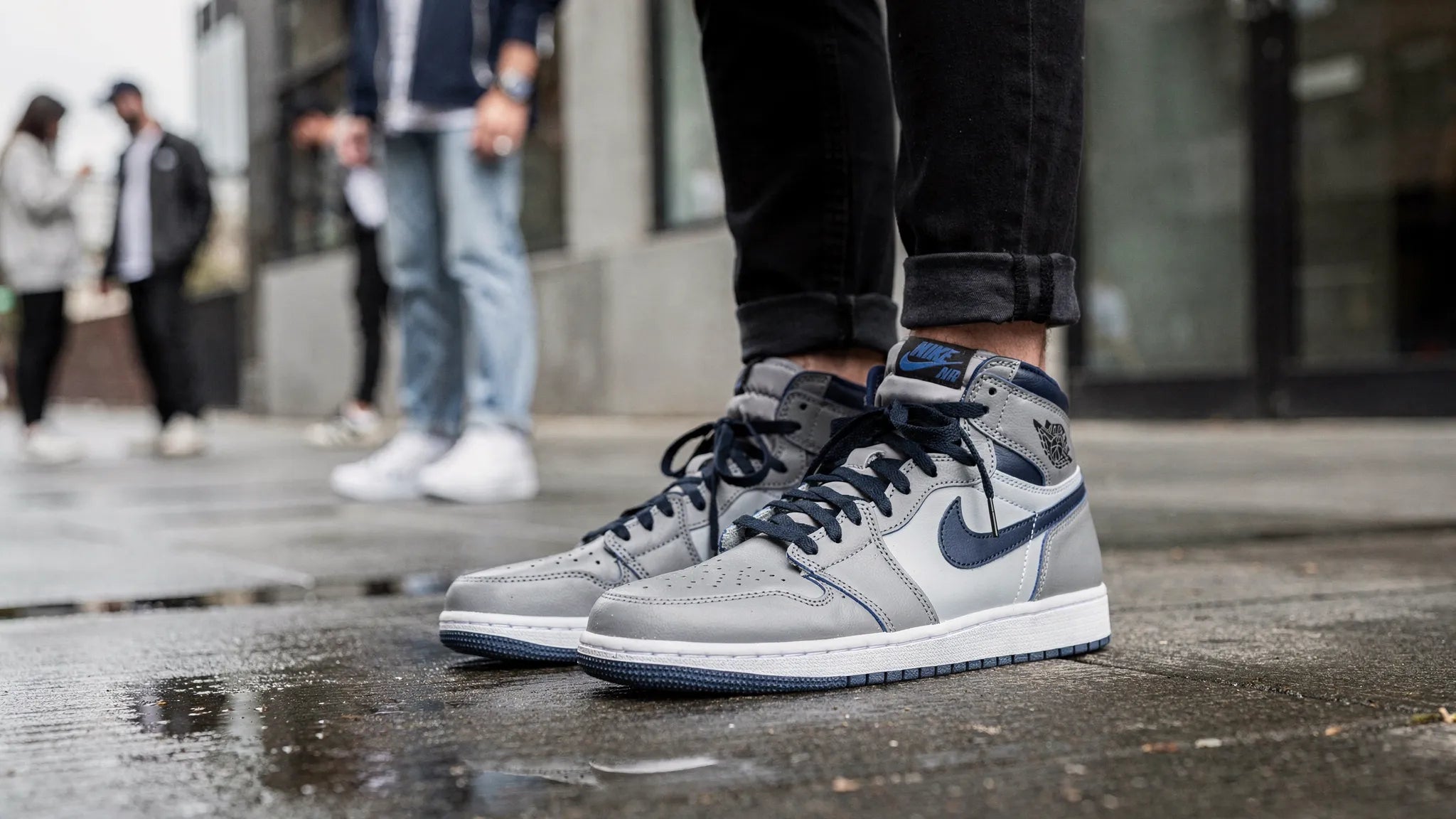
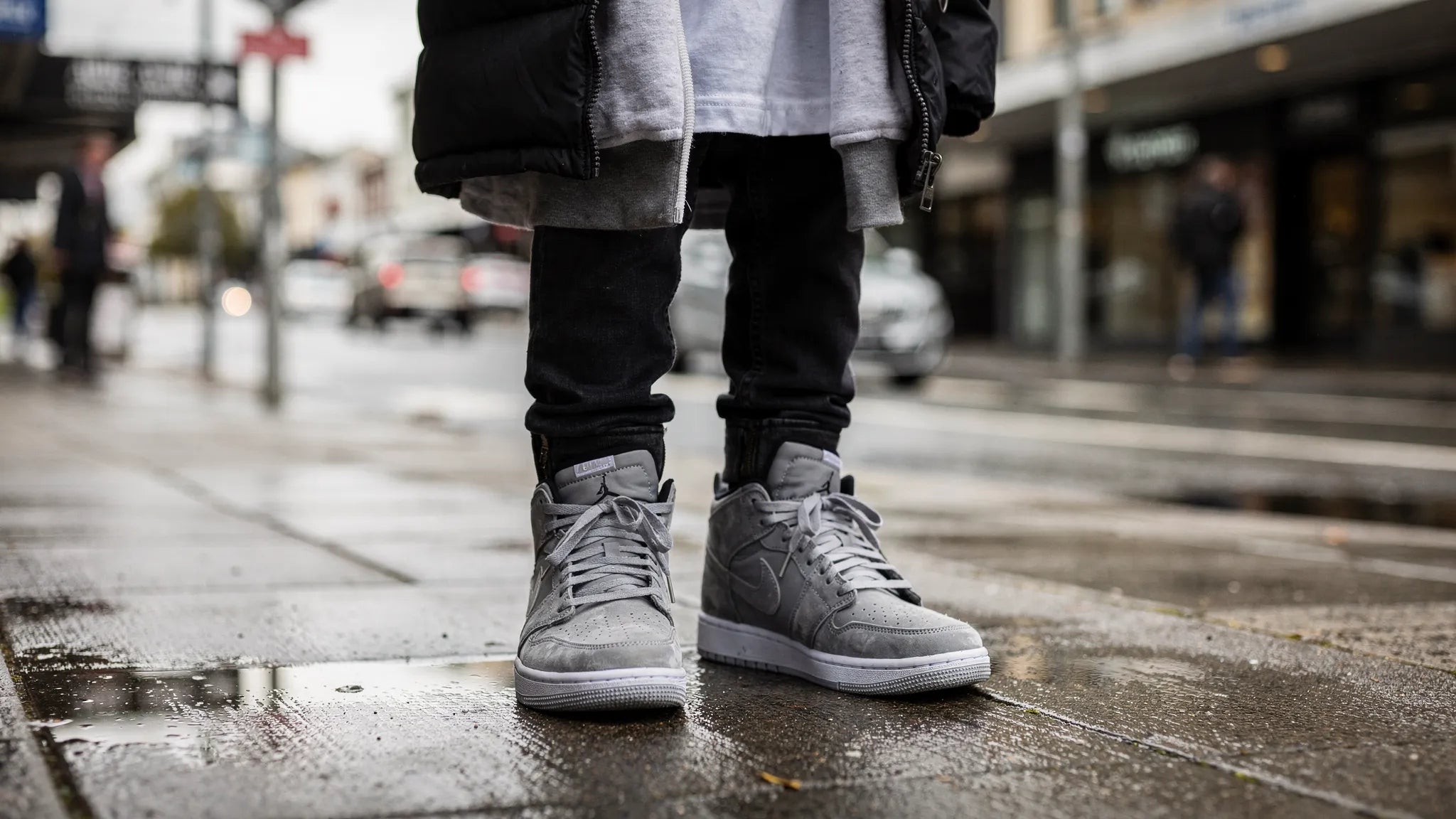
- AJ1 (endless variants, collabs, and retro waves)
- AJ3 (Jumpman era begins, elephant print legacy)
- AJ4 (massive demand and frequent modern collabs)
- AJ5 (reflective details, strong retro runs)
- AJ6 (title era energy, strong OG identity)
- AJ11 (holiday staple, patent leather icon)
You don’t need to own all of these to be a “real collector,” but if your goal is a meaningful Jordan archive, these are the ones people reference constantly.
2) Retros, OGs, “Reimagined,” and the naming traps
A huge chunk of the Jordan market is not “new models,” it’s retro releases and format variants. Your list needs to distinguish them, or you’ll end up with messy duplicates.
Fields to add to your list (so it stays useful)
Track releases with consistent fields. These four alone will save you hours:
- Model and cut (example: AJ1 High, AJ1 Low OG, AJ4)
- Release year (not just the original year, but the retro year)
- SKU / style code (the most important identifier)
- Colourway name (often changes slightly by region or era)
If you like spreadsheets, add: box version, materials, and whether it’s men’s, women’s, or GS sizing.
Quick note on AJ1 naming (because it’s the worst offender)
For AJ1s especially, “OG,” “Retro,” “High,” “High OG,” “Mid,” and “Low OG” all matter. If you want a clean breakdown that’s written for NZ buyers, use: Jordan Air Jordan 1 Retro High OG: Buying Guide.
3) Hybrids: the easiest way to expand without chasing hype
Hybrids are Jordan Brand’s remix lane. They’re often more available than signature retros and can be surprisingly wearable.
Common examples collectors track:
- Jordan Spizike (AJ3, AJ4, AJ5, AJ6 elements)
- Jordan 6 Rings (references multiple championship-era models)
- Jordan Dub Zero
Hybrids usually don’t have the same resale peaks as the big retros, which can be a pro if you’re collecting for personal wear.
4) Jordan Brand non-numbered models (Jumpman line)
If your mission is closer to “Jordan Brand history,” you’ll eventually run into tons of non-numbered footwear: lifestyle shoes, training models, budget lines, and performance basketball shoes that are not part of the Air Jordan signature series.
Here’s the trick: define your scope.
A practical approach is to pick one:
- Basketball-only Jumpman models
- Lifestyle-only Jumpman models
- Everything Jumpman (only if you enjoy cataloguing)
Otherwise your “all Jordans” list becomes endless.
5) Collaborations and special projects: the collector multiplier
Collabs are where Jordan collecting gets expensive quickly. They also create the most confusion because the same collaborator may touch multiple silhouettes.
Instead of listing “every collab,” track them in two layers:
- Collaboration label (example: Off-White, Travis Scott, A Ma Maniére)
- Silhouette + SKU (the actual identity of the shoe)
This helps you avoid collector mistakes like thinking “I’ve got the Travis pair” when there are multiple releases across AJ1 High, AJ1 Low, AJ4, AJ6, Jumpman Jack, and more.
6) Player Exclusives (PEs) and Friends & Family: why “all” is not attainable
PEs and Friends & Family pairs are the reason “all Jordan shoes ever made” is not a finishable mission.
- Some PEs are made for a single athlete or a single college program.
- Many never hit retail.
- Public information can be incomplete or unverified.
So a practical collector list usually handles these as a separate tab: Known PEs (unconfirmed), with photo references and notes, not as a “must own.”
How to build your own “All Jordans” checklist (that stays accurate)
Most lists fall apart because they’re built around names people remember, not identifiers that stay stable.
Use SKUs as your source of truth
Colourway names change, nicknames get invented, and marketplaces sometimes mislabel pairs. SKUs are what keep your list clean.
Good places to cross-check SKU, release dates, and official naming:
- Nike and SNKRS product pages (when still live)
- Established sneaker media release calendars like Sneaker News
- Major marketplace catalogues (useful, but always cross-check)
A simple template you can copy
| Field | Example value | Why it matters |
|---|---|---|
| Model | Air Jordan 4 | Avoids confusion across lines |
| Cut | Retro / OG / Low | Changes shape, fit, and collectability |
| Colourway | “Black Cat” | Human-readable identifier |
| SKU | (style code) | True unique ID |
| Release year | 2025 | Anchors the exact retro run |
| Size run | Men’s / Women’s / GS | Impacts fit and resale |
| Condition | DS / VNDS / Used | Value driver |
| Completeness | Box, laces, hangtags | Collectability driver |
NZ collector notes: buying smart, not just buying fast
New Zealand collectors deal with different realities than the US: fewer local retail chances, more shipping risk, and higher landed costs when importing.
Prioritise authentication and seller quality
If you’re chasing popular retros or collabs, fakes are part of the landscape. Make authentication a non-negotiable habit, especially with AJ1s and AJ4s.
If you want a practical set of checks written for AU and NZ buyers, use: How to Tell if Your Sneakers Are Real or Fake (Australia & NZ Guide).
Treat collecting like a portfolio (even if it’s just for fun)
The best collectors keep notes, compare releases, and make decisions with context, not just hype. Interestingly, that same “portfolio mindset” is also how people build careers in fashion, streetwear, and ecommerce roles, where organised decision-making matters. If you ever explore senior commercial roles in that world, an executive search firm like Optima Search Europe is an example of where companies go to hire leaders in sales, marketing, and growth.
Where BigBoiSneakers fits (and how to use this list)
Once you’ve built your collector framework, shopping gets easier because you know exactly what you’re looking at: model, cut, year, and whether it’s a priority for your collection.
BigBoiSneakers focuses on authentic sneakers for NZ shoppers, with free NZ shipping and frequent new drops. Use your list to shop with intention:
- If you’re building the “spine,” target versatile retros first.
- If you’re collecting stories, chase the models tied to your favourite eras.
- If you’re expanding breadth, hybrids and non-numbered Jumpman pairs can add variety without constant resale premiums.

The bottom line
A literal, verified list of every Jordan shoe ever made is not realistic for most people, and that’s okay. What is realistic is building an “all Jordans” collector list that is:
- Complete enough to guide your collecting
- Accurate enough to avoid duplicates and mislabels
- Flexible enough to grow with new drops
Start with the signature line, organise by SKU, then decide how far into hybrids, Jumpman models, and ultra-limited pairs you actually want to go.