Authentic Jordans Online: Green Flags Smart Buyers Check
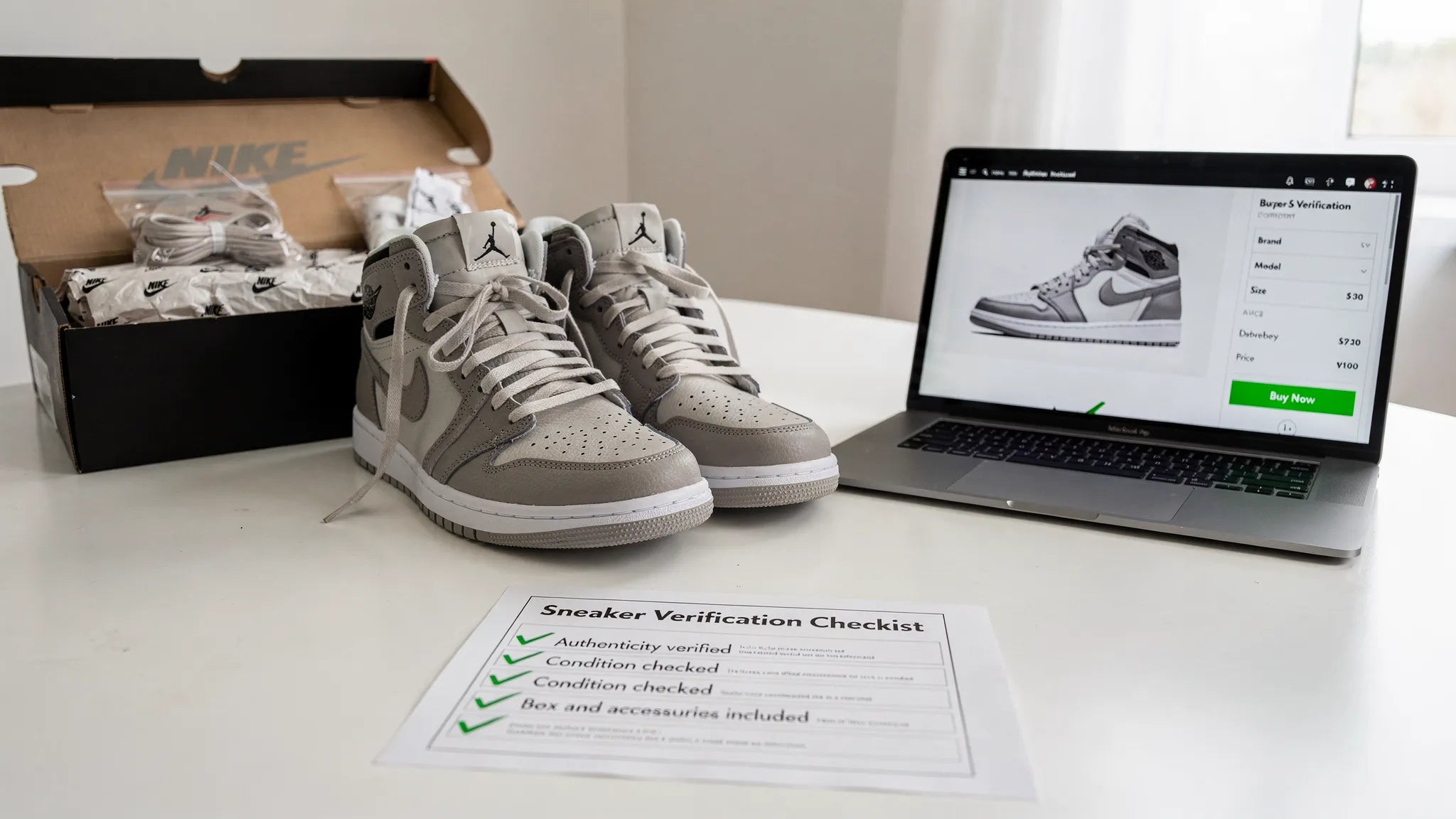
Buying authentic Jordans online should feel exciting, not stressful. The problem is that the better the release, the more likely it is to attract fake listings, vague sellers and “too good to be true” prices. Smart buyers do not rely on one promise or one nice photo. They look for a pattern of green flags before they check out.
This guide focuses on the positive signals that make a Jordan seller easier to trust. It is written for New Zealand shoppers who want the convenience of buying online without gambling on authenticity, sizing, shipping or after-sale support.
What a green flag actually means
A green flag is a trust signal. It does not prove a pair is authentic by itself, but it reduces risk when it appears alongside other strong signals. A clean product page, clear model details, realistic pricing, protected checkout and responsive support all work together.
This matters because counterfeit sneakers have become more convincing. A fake pair may have a similar colourway, box and label at first glance. The buyer’s advantage is process. If you slow down and check the evidence, you are far less likely to buy the wrong pair.
For NZ shoppers, green flags also go beyond the shoe. You want to know the final price, shipping method, return options, sizing guidance and whether the seller is easy to contact if something goes wrong. CERT NZ warns buyers to be cautious with online shopping scams, especially when sellers pressure you to pay outside normal checkout channels.
Quick green flag scorecard for buying Jordans online
Use this table before checkout. The strongest sellers usually tick most of these boxes, not just one or two.
| Green flag | What to look for | Why it matters |
|---|---|---|
| Clear seller identity | Business name, contact options, store policies | Makes the seller accountable |
| Exact product details | Model name, colourway, SKU or style code, size | Helps you verify the pair you are buying |
| Strong photo evidence | Multiple angles, box label, size tag, close-ups | Reduces the chance of bait-and-switch listings |
| Realistic pricing | Price matches demand, size and condition | Extreme bargains are often risky |
| Secure payment | Card, trusted checkout, recognised payment options | Gives you a clearer dispute path |
| Transparent shipping | Delivery costs, tracking, timeframes, packing details | Prevents surprise costs and damaged arrivals |
| Clear returns policy | Written returns, exchanges or issue process | Helps if the wrong size or condition arrives |
| Specific reviews | Reviews mention products, shipping and service | More useful than generic five-star comments |
A seller does not need to be perfect, but missing basics should make you pause. The bigger the purchase, the more green flags you should expect.
Green flag 1: The seller is easy to identify
A legitimate sneaker seller should not feel anonymous. Before buying, check whether the website clearly explains who is behind the store, how to contact them and what policies apply to your order. A professional site should make this information easy to find, not hide it in vague social media messages.
For New Zealand buyers, local presence can be helpful because shipping expectations, returns and communication are often simpler. Buying from a New Zealand sneaker store can also reduce the uncertainty that comes with overseas currency conversion, long shipping windows and import surprises.
Look for contact details, policy pages and consistent branding across the website and social channels. A seller that has built a real business usually has more to lose by misrepresenting products than a throwaway account on a marketplace.
Green flag 2: The listing names the exact Jordan, not just the hype
A strong product listing should tell you exactly what you are buying. “Jordan 1 red black rare” is weak. “Air Jordan 1 Retro High OG Patent Bred” with size, condition, box status and style code is much stronger.
The style code, sometimes called the SKU, is especially useful. It helps you compare the product title against official references, resale databases and other listings. You should also see the correct size system, such as US men’s, US women’s, GS or youth sizing, because Jordan sizing mistakes can be expensive.
A good listing usually includes:
- Full model name and silhouette, such as Air Jordan 1 High OG, Air Jordan 4 Retro or Air Jordan 11 Retro
- Colourway name or colour description that matches known release information
- Size and sizing category, such as men’s, women’s or GS
- Condition, including new, used, new without box or tried on
- Box and accessories, including spare laces, hangtags or special packaging where relevant
- SKU or style code where available
This level of detail signals that the seller understands the product. It also gives you a fairer basis for comparing prices.
Green flag 3: The photos answer questions before you ask
Photos are one of the strongest trust signals when buying authentic Jordans online. For common general-release pairs, a retailer may use professional product images. For rare, used or resale pairs, you should expect actual photos of the pair being sold.
The best listings show the shoe from multiple angles and include close-ups of the areas that counterfeit pairs often get wrong. You are not just checking whether the shoe looks good. You are checking whether the listing gives you enough evidence to make a confident decision.
| Photo detail | What it helps you check |
|---|---|
| Box label | Model, size, SKU and barcode consistency |
| Inside size tag | SKU, sizing and production label details |
| Side profile | Overall shape, panel proportions and Swoosh or netting placement |
| Heel view | Symmetry, height, branding and heel shape |
| Toe box | Perforations, shape and material texture |
| Stitching close-ups | Clean lines, spacing and construction quality |
| Outsole and insole | Wear level, logos and condition accuracy |
| Accessories | Spare laces, hangtags, tissue paper or special packaging |

Photos should also match the condition description. If a pair is listed as “new”, the outsole, insole print and toe box should support that claim. If the pair is used, honest wear photos are a green flag, not a negative. A seller showing scuffs, creasing or outsole wear is giving you the information you need to price the pair fairly.
Green flag 4: The price makes sense for the release
Smart buyers do not just ask, “Is this cheap?” They ask, “Does this price make sense?” The right price depends on model, size, condition, release age, demand, box status and whether the pair is local or overseas.
A popular Jordan collaboration sitting far below typical market value should trigger caution. So should a seller who claims every size is available at the same low price, especially for limited edition sneakers. On the other hand, a fair price from a trusted local retailer may be worth paying because it reduces the hassle of authentication risk, shipping delays and support issues.
For NZ buyers, always think in landed cost. A pair that looks cheaper overseas can become less attractive once you add shipping, currency conversion, possible GST or duties, platform fees and return difficulty. The listed price is only the start.
A healthy price check looks like this:
| Price signal | What it usually suggests |
|---|---|
| Close to recent sold prices | Normal market behaviour |
| Slightly higher from a trusted local seller | Convenience and lower buying friction may justify it |
| Far below market with no explanation | High risk, especially for hyped pairs |
| Same price across every size | Worth checking, since sizes often trade differently |
| Cheap but missing box or accessories | Could be fair if condition is clearly disclosed |
The goal is not to overpay. The goal is to avoid being attracted by a fake bargain.
Green flag 5: Checkout feels secure and professional
A secure checkout is not glamorous, but it matters. Reputable online stores usually offer recognised payment methods, clear order confirmation and a normal checkout flow. They do not push you into bank transfers, crypto, friends-and-family payments or urgent off-platform deals.
Look for secure payment options and written order records. If you ever need to dispute a charge, prove what you bought or follow up on shipping, those records matter. A social media DM with a screenshot and a bank account number gives you much less protection.
Also remember that a padlock icon alone is not proof of authenticity. It only means the connection is encrypted. You still need to judge the seller, product page, policies and payment method together.
Green flag 6: Shipping, returns and sizing are clear before checkout
Good sneaker sellers reduce uncertainty. They explain how shipping works, what happens after payment and what your options are if there is an issue. For NZ buyers, this is especially important because international shipping can introduce delays, customs questions and harder returns.
Sizing guidance is another strong green flag. Jordans can vary by model. Air Jordan 1s are often considered true to size for many wearers, while some buyers size differently depending on foot width, sock thickness and personal fit preference. A seller that provides size guides or fit notes is helping you avoid a preventable mistake.
Before checkout, check whether the seller explains shipping timeframes, tracking, delivery regions, returns, exchanges and condition disputes. A clear policy does not guarantee you will never have a problem, but it shows the seller has thought about the buyer experience.
If sizing is your main concern, use the store’s size guide and compare your best-fitting sneakers at home. Measure in centimetres where possible, because US, UK and EU conversions can vary between brands and models.
Green flag 7: Reviews are specific, not suspiciously generic
Reviews are useful when they sound like real customer experiences. “Great service, fast shipping, shoes were legit” is more helpful than twenty identical comments saying “amazing product”. The best reviews mention specific products, delivery speed, packaging, sizing support, customer service or repeat purchases.
Do not look only at star ratings. Read the language. A real sneaker buyer may mention a model, size, condition, release, or how the pair looked on arrival. If a retailer has a mix of product reviews and store reviews, that can help you understand both the sneakers and the buying experience.
Reviews are not perfect because they can be manipulated, but they become powerful when they match other green flags. If the website has clear policies, realistic pricing, detailed listings and specific reviews, your confidence should increase.
Green flag 8: The seller answers reasonable questions clearly
If you are buying a high-value pair, asking one or two reasonable questions is normal. A trustworthy seller should be able to answer without becoming defensive or pressuring you to pay immediately.
Good questions include:
- Can you confirm the SKU or style code for this pair?
- Does it come with the original box and accessories?
- Are the photos of the exact pair being sold?
- Are there any marks, flaws, creases or signs of wear?
- What happens if the size does not work or the item arrives with an issue?
The green flag is not just the answer. It is the consistency of the answer. If the product page says new with box but the seller says the box is missing, pause. If the seller avoids direct questions or changes details, keep looking.
The 60-second product page check
Before buying, run through a quick scan. This is useful when you are browsing new arrivals, comparing sellers or trying to decide whether a pair deserves a deeper look.
Check the product title first. It should identify the model clearly enough that you can search the release elsewhere. Then check the size and condition. Make sure you know whether you are buying men’s, women’s or GS sizing, and whether the pair is new, used or missing anything.
Next, review the photos. Look for the box label, side profile, heel, toe box, outsole and any special accessories. If the pair is expensive and the photos are limited, ask for more before paying.
Finally, compare the price against recent market behaviour and the total cost to your door. If the seller is overseas, factor in shipping, currency conversion and return difficulty. If the seller is local, weigh the value of faster delivery and easier communication.
A good product page should make this process easy. If you have to guess at every step, that is not a buyer-friendly listing.
Where BigBoiSneakers fits for NZ Jordan buyers
BigBoiSneakers is built for shoppers who want authentic sneakers, streetwear and collectibles from recognised brands without hunting across risky listings. For Jordan buyers in New Zealand, the biggest benefit is being able to shop through an established online sneaker store with product pages, size guidance, secure payment options, customer reviews and shipping options.
If you are comparing buying channels, it can help to read more detailed checks in the BigBoiSneakers guide to buying authentic Jordans online in NZ or the guide on how to check legit Jordan sites before you buy. If you already own pairs, the sneaker care guide on cleaning and protecting sneakers without ruining resale value is also worth saving.
The smarter approach is simple: buy the pair you actually want, but make the seller earn your trust first.
Frequently Asked Questions
What is the biggest green flag when buying authentic Jordans online? The biggest green flag is a complete, consistent listing from an identifiable seller. Look for exact model details, clear photos, realistic pricing, secure checkout and written shipping or returns policies.
Are stock photos a bad sign for Jordans? Not always. Retailers often use professional product images for new products. For rare, resale or used Jordans, actual photos of the pair are much more important because condition, box details and accessories affect value.
How do I know if a Jordan price is too good to be true? Compare the price with recent sold prices, not just asking prices. If a hyped pair is far below normal value with no clear reason, such as used condition or missing box, treat it as high risk.
Is it safer to buy Jordans from a New Zealand sneaker store? It can be, especially for shipping clarity, local communication and easier issue resolution. You should still check product details, policies, reviews and payment options before buying.
Should I ask for extra photos before buying? Yes, if the pair is expensive, used, rare or listed by an individual seller. Ask for box label, size tag, outsole, heel, toe box and any flaws. A good seller should understand why you are asking.
Ready to buy with more confidence?
If you are shopping for authentic Jordans online in NZ, start with the green flags: clear product details, realistic pricing, secure checkout and a seller that stands behind what it sells. Browse authentic sneakers, Jordans, streetwear and collectibles at BigBoiSneakers, and use this checklist whenever you compare your next pair.