Authentic Jordans for Sale: Smart Checks Before You Buy

When you search for authentic Jordans for sale, the goal is usually simple: find the pair you want, pay a fair price, and avoid getting stung by fakes, misleading listings or surprise costs. The tricky part is that Jordans sit right in the middle of sneaker hype. Popular colourways, retro releases and limited collaborations attract genuine collectors, but they also attract replicas and rushed listings that leave buyers guessing.
The good news is you do not need to be a professional authenticator to reduce your risk. You need a repeatable process. Before you buy, check the seller, the exact model, the SKU, the photos, the price, the payment method and the return path. If two or three of those checks feel off, pause.
This guide is written for New Zealand buyers shopping online, whether you are chasing your first Air Jordan 1, a clean Jordan 4, a wearable Jordan 11, or a harder-to-find collaboration.
Start with the seller, not the sneaker
A convincing product photo can make almost any listing look safe. The seller behind it matters more. A genuine pair sold through a careless, anonymous or unprotected channel can still become a bad purchase if the size is wrong, condition is misdescribed, or the parcel never arrives.
Before analysing the shoe, ask whether the seller gives you enough confidence to pay.
| Seller check | Green flag | Red flag |
|---|---|---|
| Business identity | Clear store name, contact details, policies and visible history | No address, no clear contact path, recently created account |
| Product detail | Specific model name, size, condition, SKU and real photos | Vague title like “Jordan shoes” with stock photos only |
| Payment | Secure checkout, card payment, PayPal or other protected options | Bank transfer only, crypto, “friends and family” payment requests |
| Reviews | Consistent reviews that mention delivery, condition and authenticity | Generic comments, no history, or sudden bursts of suspicious reviews |
| Policies | Returns, shipping timeframes and size guidance are easy to find | “No refunds ever” or policy pages copied from another site |
For general online shopping safety in New Zealand, Consumer Protection NZ recommends checking seller details, keeping records and using safer payment methods. That advice applies perfectly to high-demand sneakers.
If you are comparing unfamiliar websites, it is worth reading BigBoiSneakers’ guide to legit Jordan sites and how to check before you buy for a deeper site-level checklist.

Confirm the exact Jordan model and SKU
“Jordan” is not enough information. A listing should identify the exact silhouette, colourway, size category and ideally the SKU. The SKU, sometimes called the style code, is a key cross-check because it links the shoe to a specific release.
For many Nike and Jordan shoes, the style code follows a format similar to six characters, a hyphen, then three digits. You will often find it on the box label and the shoe’s internal size tag. The code should match between the shoe and box, and it should correspond to the colourway being advertised.
This is especially important with Jordans because similar names can hide very different products. An Air Jordan 1 High OG is not the same buying decision as an Air Jordan 1 Mid. A men’s release, women’s release and GS release can look close but differ in sizing, shape, materials and resale demand.
Before paying, search the SKU and compare it with trusted references such as Nike’s official Jordan pages, reputable retailers, established resale databases, or detailed release articles. Do not rely on one image search result. Fakes can copy real SKU numbers, so the SKU is only one part of the check, not a guarantee.
Run a price sanity check
Everyone wants a deal. The problem is that “cheap” and “authentic” do not always line up, especially for sold-out Jordans. A low price can be legitimate if the pair is used, missing the box, unpopular in that size, or on sale from a trusted retailer. But a price far below the normal market with no clear reason should make you cautious.
Think about price in context:
| Price situation | What it may mean | Buyer action |
|---|---|---|
| Around current retail | Normal for available or recent GR pairs | Check seller, size and returns |
| Below retail from a trusted store | Possible sale, clearance or slower-moving size | Confirm policies and product condition |
| Below market on a sold-out pair | Could be used, damaged, fake or a rushed sale | Ask for extra photos and proof of purchase |
| Far below every comparable listing | High risk | Avoid unless seller proof is extremely strong |
| Higher than market | Possible overpricing or rare size premium | Compare sold prices, not asking prices |
For NZ buyers, also compare the real total cost. Overseas listings can look cheaper until you add shipping, currency conversion, GST, import fees and longer return timeframes. A local pair with clear policies may be better value than a slightly cheaper overseas listing with higher risk.
If your search is specifically price-driven, read Jordan shoes for sale cheap: how to avoid bad buys before you checkout.
Demand photos of the exact pair
For authentic Jordans, photos matter because details vary between releases. A seller using only stock images is asking you to trust a shoe you have not actually seen. That might be acceptable for a well-known retailer selling new stock through a secure checkout, but it is not enough for marketplace, social media or private resale purchases.
Ask for clear photos in natural light. They should show the actual pair, not a borrowed image from a retailer or another seller.
Useful photos include:
- Outer side and inner side of both shoes
- Front toe box view and rear heel view
- Tongue tags, Jumpman or Nike Air branding, and size tags
- Box label, tissue paper, spare laces and accessories if included
- Outsoles, midsoles, insoles and any visible wear
- Close-ups of flaws, creases, stains or repairs
If a seller refuses simple photo requests for an expensive pair, that is a warning sign. Genuine sellers usually understand that buyers need confidence, especially for limited edition sneakers.
Check the box and labels, but do not stop there
A real box is useful, but it is not proof by itself. Replica sellers can source convincing boxes, and authentic shoes can sometimes be sold without their original box. Treat packaging as supporting evidence.
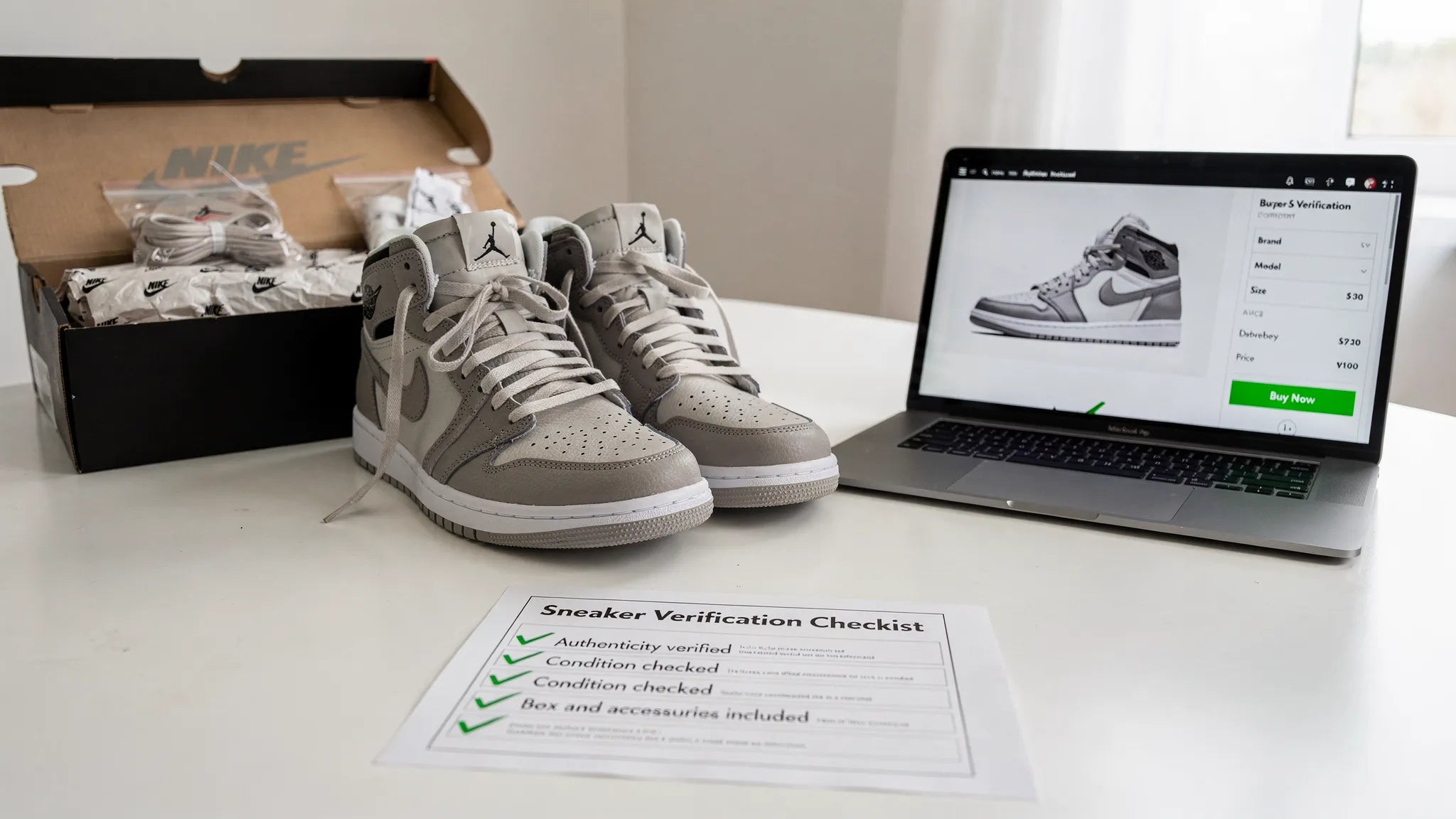
Start with the box label. The model name, size, colour code and SKU should match the shoes. Look for printing quality, alignment and spelling. Then inspect the internal size tag inside each shoe. The size, SKU and manufacturing information should look consistent, cleanly printed and aligned.
Be careful with blanket rules like “the QR code must scan” or “the font must look exactly like this.” Nike and Jordan production details can vary by factory, release year and region. A single odd detail does not automatically mean fake. Multiple mismatches across the box, tag, shape and materials are far more concerning.
Inspect shape, materials and construction
The most reliable visual checks come from comparing the pair against trusted photos of the same release. Not a similar colourway. Not a different year. The same model, same colourway and ideally the same size category.
Here are common areas to inspect on popular Jordan silhouettes:
| Jordan model | Areas to check | What to watch for |
|---|---|---|
| Air Jordan 1 | Toe box, Swoosh shape, Wings logo, collar height, hourglass heel shape | Bulky toe, misplaced Wings logo, uneven Swoosh, overly puffy collar |
| Air Jordan 3 | Elephant print, heel tab, tongue shape, midsole paint, leather texture | Print that looks too flat or too thick, crooked rear branding |
| Air Jordan 4 | Side netting, cage angle, heel tab, wings, toe shape, midsole paint | Incorrect netting direction, soft heel tab, poor cage placement |
| Air Jordan 5 | Reflective tongue, lace lock, side mesh, shark teeth, collar padding | Wrong tongue shape, dull reflective panels, messy paint lines |
| Air Jordan 11 | Patent leather cut, carbon fibre plate, outsole tint, Jumpman placement | Patent cut too high or low, fake-looking carbon fibre, cloudy soles on “new” pairs |
Remember that authentic pairs can have minor quality control flaws. Slight glue marks, tiny paint imperfections or uneven stitching can happen on real shoes. The question is whether the full picture makes sense. If the shape is off, the materials feel cheap, the label does not match and the price is suspicious, walk away.
For a broader legit-check method, see BigBoiSneakers’ Australia and NZ guide to telling real vs fake sneakers.
Understand condition terms before you pay
Condition affects price heavily. Two authentic pairs can be worth very different amounts depending on wear, accessories and box condition.
Common terms include deadstock, near deadstock, very near deadstock, pre-owned and used. These terms are not always applied consistently. One seller’s “worn once” might mean clean outsoles and perfect shape. Another seller’s “worn once” might mean heel drag, creasing and stains.
Look for evidence, not labels. Check outsole wear, sockliner lint, insole logo fading, heel drag, collar staining, creasing, suede nap and midsole paint cracking. For older Jordans, ask whether the pair is wearable. Some vintage or older retro pairs may look clean but have brittle midsoles or separation risk.
Also check completeness. Original box, spare laces, hangtags, special packaging, receipts and collaboration accessories can all affect value. Missing accessories are not always a dealbreaker, but the price should reflect that.
Check sizing before chasing hype
A real pair in the wrong size is still a bad buy. Jordan sizing can vary by silhouette and by foot shape. Many buyers go true to size in Air Jordan 1s, but some prefer a half size up for wider feet or thicker socks. Jordan 4s can feel snug around the toe box for some wearers. Jordan 11s have a different feel again because of the patent leather and internal structure.
Before buying online, compare the pair with sneakers you already own. Check whether the listing uses US men’s, US women’s, UK or GS sizing. Do not assume a women’s 8 is the same as a men’s 8. If the store offers a size guide, use it.
For a model-specific fit breakdown, BigBoiSneakers has guides such as Men’s Air Jordan 1 High: sizing and top picks for NZ and Nike Air Jordan trainers explained for everyday buyers.
Use safer payment and shipping options
Payment protection is part of buying authentic Jordans safely. If a seller pressures you to pay by bank transfer, crypto or a no-protection option because “someone else is ready to buy,” slow down. High-pressure tactics are common in scam listings.
For online purchases, favour secure checkout, card payment, PayPal goods and services, or other buyer-protected methods. Keep screenshots of the listing, messages, order confirmation and tracking number. If you are buying locally through a marketplace, meet in a safe public place and do not rush the inspection.
Shipping matters too. Ask for tracked delivery and adequate packaging. Sneakers should not be shipped loose in a satchel with the box exposed. For collectable Jordans, double boxing is preferable because the original box can affect resale value.
Inspect the pair as soon as it arrives
Do not wait weeks to open the parcel. Inspect the shoes while your return or dispute window is still active. A simple unboxing video can help if there is a problem with condition, missing items or the wrong pair.
When the package arrives, check the box condition, SKU match, shoe size, included accessories, odour, materials, shape and any flaws not shown in the listing. Try the shoes on indoors on clean flooring if returns allow it. Avoid wearing them outside until you are satisfied.
If something looks wrong, contact the seller quickly and politely with photos. Clear evidence is stronger than emotion. If the seller refuses to help and you used a protected payment method, follow the dispute process promptly.
Quick red flags when buying authentic Jordans for sale
Some red flags are obvious, but others are easy to miss when you are excited about a pair. Be extra careful if you see:
- A sold-out Jordan listed far below every normal market price
- Stock photos only for a private or marketplace sale
- Seller refuses to show box labels, size tags or extra angles
- “Authentic UA,” “1:1,” “replica quality,” or “same factory” language
- Pressure to pay immediately through an unprotected method
- Inconsistent size information across title, box and shoe tag
- No return path, no tracking, or unclear shipping location
- A seller with many rare pairs but no credible sales history
The safest buying decisions usually feel boring. Clear listing, clear seller, clear price, clear checkout, clear delivery.
Where BigBoiSneakers fits for NZ buyers
If you want a simpler buying path, shopping through an established sneaker store can remove a lot of the guesswork. BigBoiSneakers offers authentic sneakers, streetwear and collectibles, with new arrivals, secure payment options, customer reviews, size guides and shipping options for local and international buyers.
You can browse Jordan sneakers at BigBoiSneakers and compare pairs by size, colourway and price before deciding. If you are still researching, the blog also has guides on Jordan sizing, legit checks, sneaker care and how to avoid risky listings.
Frequently Asked Questions
How can I tell if Jordans for sale are authentic? Start by checking the seller, SKU, box label, size tag, photos, shape, materials and price. No single check proves authenticity, but consistent details across all areas give you more confidence.
Are cheap authentic Jordans possible? Yes, but there should be a clear reason, such as a sale, used condition, missing box, less popular size or wider availability. If a sold-out pair is far below market with no explanation, treat it as high risk.
Should the SKU on the box and shoe tag match? In most normal purchases, yes. The box label and internal shoe tag should match the model being sold. However, fakes can copy real SKUs, so you should also check shape, materials and seller credibility.
Is it safe to buy Jordans from overseas in New Zealand? It can be, but calculate the total landed cost including shipping, currency conversion, GST and possible import fees. Also consider returns, delivery time and dispute options if the pair is not as described.
What photos should I ask for before buying pre-owned Jordans? Ask for both shoes from every angle, box label, size tags, tongues, heels, toe boxes, outsoles, insoles and close-ups of flaws. For expensive pairs, ask for a timestamped photo too.
Do authentic Jordans always have perfect stitching and no glue marks? No. Real Jordans can have minor quality control issues. Focus on the overall pattern of evidence rather than one tiny flaw. Multiple incorrect details are a stronger warning sign.
Buy with confidence, not just hype
Authentic Jordans are worth buying when the pair, price and seller all make sense. Take ten minutes to verify the basics before you pay, and you will avoid most bad buys.
Ready to find your next pair? Explore authentic Jordans and other limited edition sneakers at BigBoiSneakers, with secure checkout, size guidance and fresh drops for sneaker buyers across New Zealand.