Nike Air Jordan Trainers Explained for Everyday Buyers
If you are shopping for Nike Air Jordan trainers for the first time, the range can feel confusing fast. One pair looks like a clean everyday sneaker, another looks like a basketball shoe from the 90s, and another costs more because of a rare colourway or collaboration.
The good news is that you do not need to know every Jordan release ever made to buy a great pair. You just need to understand the main types, how they fit, what they are comfortable for, and how to avoid bad buys.
This guide explains Air Jordans in plain English for everyday buyers in New Zealand, whether you want your first pair, a daily rotation sneaker, a gift, or a wearable collector’s piece.
What are Nike Air Jordan trainers?
Air Jordans began as Michael Jordan’s signature basketball line with Nike in the 1980s. The original Air Jordan 1 released in 1985 and helped turn basketball shoes into cultural icons, not just sports gear. Today, Jordan Brand sits under Nike and includes retro basketball models, lifestyle sneakers, performance basketball shoes, collaborations, apparel, and accessories.
In New Zealand, people often use “trainers” and “sneakers” interchangeably. With Jordans, though, it helps to know the difference between a true training shoe and a lifestyle sneaker. Most retro Air Jordans are inspired by basketball performance, but everyday buyers usually wear them for style, casual comfort, collecting, or streetwear outfits.
For official brand context, Nike’s Jordan page is a useful starting point. For practical buying, sizing, authenticity, and NZ shipping considerations, a local sneaker retailer can often be easier to deal with than overseas marketplaces.

Why Air Jordans stay popular with everyday buyers
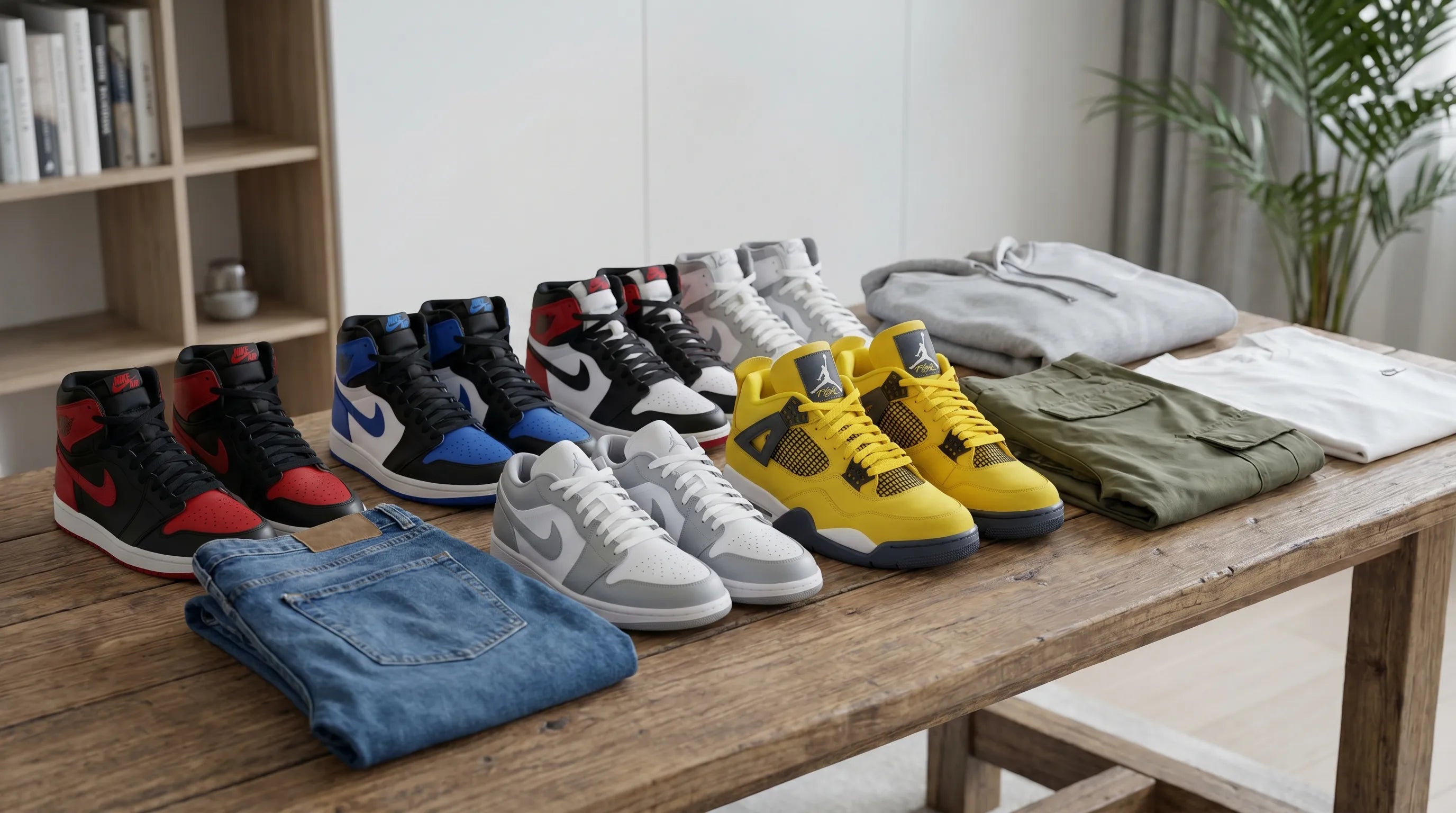
Air Jordans are popular because they sit in a rare space between sport, fashion, nostalgia, and collectability. A simple white, black, grey, or red Jordan can work like a wardrobe staple, while limited editions can feel like a collectible.
For everyday buyers, the appeal usually comes down to four things.
First, the silhouettes are recognisable. Even people who are not deep into sneaker culture know the shape of an Air Jordan 1, Air Jordan 3, Air Jordan 4, or Air Jordan 11.
Second, the colourways are easy to style. Neutral pairs can be worn with denim, cargos, shorts, sweats, or relaxed tailoring. Bolder colours can become the statement piece in an otherwise simple outfit.
Third, Jordans feel connected to history. Many retro models originally appeared during major basketball eras, and that story gives the shoe more depth than a generic casual sneaker.
Finally, some pairs hold demand well. Not every Jordan is an “investment”, but desirable models, clean colourways, and limited collaborations can remain sought after when kept in good condition.
The main types of Air Jordans you will see
When you browse Nike Air Jordan trainers online, most pairs fall into a few broad categories. Understanding these categories makes shopping much easier.
| Jordan type | What it means | Best for | Buyer note |
|---|---|---|---|
| Retro Jordans | Re-releases or updated versions of older Air Jordan models | Everyday wear, collecting, streetwear | Most popular with casual buyers |
| Air Jordan 1 High, Mid and Low | Different collar heights of the AJ1 family | First Jordans, simple outfits, daily wear | Easy to style, fit varies slightly by cut |
| Numbered signature models | Main Air Jordan line, such as AJ3, AJ4, AJ5, AJ11 | Buyers who want a classic silhouette | Each model feels different on foot |
| Collaborations | Special releases with artists, designers, shops, or brands | Collectors and hype buyers | Higher prices and higher fake risk |
| Modern performance Jordans | Current basketball-focused shoes | On-court use | Better suited to hoops than retro models |
| Lifestyle and hybrid Jordans | Jordan-inspired casual models or mixed designs | Budget-conscious or casual buyers | Usually less collectible than major retros |
For most everyday buyers, the safest starting point is a wearable retro or an Air Jordan 1. They are familiar, versatile, and easier to pair with common wardrobes.
Which Air Jordan model should you buy first?
There is no single “best” Jordan for everyone. The right pair depends on whether you care most about comfort, styling, heritage, price, or collectability.
| Model family | Why everyday buyers like it | Things to consider |
|---|---|---|
| Air Jordan 1 Low | Easy to wear, less bulky, works with shorts or jeans | Less ankle coverage than Highs |
| Air Jordan 1 High | Iconic shape, strong streetwear presence | Can feel stiff at first, high collar changes styling |
| Air Jordan 1 Mid | Often more accessible than High OG pairs | Some collectors prefer High OG or Low OG models |
| Air Jordan 3 | More cushioning feel, strong retro look, versatile | Bulkier than AJ1, but still easy to wear |
| Air Jordan 4 | One of the most popular Jordan silhouettes | Can feel snug around the forefoot for some buyers |
| Air Jordan 5 | Statement look with a padded feel | Larger shape, not as minimal |
| Air Jordan 11 | Dressier patent leather look, strong heritage | Patent leather can crease and show wear |
| Air Jordan 12 | Durable, structured and supportive | Heavier feel than some lifestyle sneakers |
If you want one pair to wear often, start with a neutral Air Jordan 1 Low, Air Jordan 1 High, Air Jordan 3, or Air Jordan 4. If you want something more collectible, look at OG-inspired colourways, limited collaborations, or models with clear historical importance.
Are Air Jordans comfortable for everyday wear?
Yes, many Air Jordans are comfortable enough for daily wear, but they are not all built like modern running shoes. Retro Jordans are based on older basketball designs, so they can feel more structured, heavier, or firmer than newer foam-based sneakers.
An Air Jordan 1, for example, is loved for its look, but it is relatively flat and can feel firm during long walking days. An Air Jordan 3 or 5 may feel more padded. An Air Jordan 4 is popular, but some buyers find the toe box or side area snug depending on foot shape.
For everyday use, think about your actual routine. If you mainly wear them to work, uni, town, events, or casual weekends, most retro Jordans can do the job. If you need a shoe for running, gym training, long-distance walking, or serious sport, choose a shoe built for that purpose instead.
Air Jordan sizing explained
Most Air Jordans fit true to size for average-width feet, but there are important exceptions. Foot shape matters as much as the number on the box.
| Model | General fit feel | Sizing tip |
|---|---|---|
| Air Jordan 1 | Usually true to size, slightly firm at first | Go true to size for most feet, consider half size up for wide feet |
| Air Jordan 3 | Often true to size with a more cushioned feel | True to size works for many buyers |
| Air Jordan 4 | Can feel snug around the forefoot | Wide-foot buyers may prefer half size up |
| Air Jordan 5 | Roomier padded upper for many buyers | True to size is common, but check model-specific notes |
| Air Jordan 11 | Structured with patent leather panels | True to size for most, but snug fits can happen |
| Air Jordan 12 | Supportive and structured | True to size for most average-width feet |
A quick at-home fit check can help before you buy. Measure both feet at the end of the day, when your feet are slightly larger. Wear the type of socks you plan to use with the shoes. Check whether your current best-fitting sneakers are US, UK, or EU sizing, since conversion can create confusion.
If you are between sizes, think about how you will wear the shoe. Thin socks and a snug lifestyle fit may suit true to size. Thick socks, wide feet, or long daily wear may justify going up half a size, especially in models known to fit narrow.
How to style Air Jordans without overthinking it
Air Jordans are statement shoes, but they are easiest to wear when the rest of the outfit is simple. Let the colourway guide the clothing.
Neutral Jordans, such as white, black, grey, sail, cream, navy, or brown pairs, work with almost anything. Wear them with straight-leg denim, cargos, relaxed trousers, hoodies, overshirts, plain tees, or a clean jacket.
Bold Jordans, such as red, blue, green, yellow, pink, or multi-colour pairs, look best when one colour from the shoe is repeated subtly in the outfit. That might be a cap, hoodie graphic, overshirt, or sock detail. You do not need to match every colour exactly.
High-top Jordans usually look best with pants that sit over the collar, stack slightly, or crop just above the shoe. Low-top Jordans are easier with shorts, relaxed denim, and warmer weather outfits. Bulkier retro models like the AJ4, AJ5, and AJ12 pair well with wider pants because the proportions feel balanced.
For NZ wardrobes, a practical rotation might include one clean neutral pair, one darker pair for wet days and nights out, and one statement pair for when you want the shoes to lead the outfit.
What affects the price of Air Jordans?
Jordan prices can vary dramatically. Two shoes may look similar to a new buyer, but one might cost more because of release history, limited stock, collaboration status, condition, or size demand.
The biggest price drivers are:
- Model popularity, especially AJ1, AJ3, AJ4, AJ5 and AJ11 retros
- Colourway demand, including OG-inspired and easy-to-wear palettes
- Collaboration status, such as artist, designer, boutique, or brand partnerships
- Condition, including deadstock, worn once, used, or damaged pairs
- Completeness, including original box, spare laces, tags, receipts, and accessories
- Size availability, since some sizes are harder to source than others
- Local landed cost, especially when buying from overseas into New Zealand
A higher price is not always a bad sign. Rare pairs often cost more. But a price that is far below market value should make you slow down and check authenticity, seller history, payment safety, and product photos.
How to buy authentic Air Jordans in New Zealand
Counterfeits are one of the biggest risks when buying popular Jordans, especially limited releases and collaborations. Everyday buyers do not need to become full-time legit checkers, but they should follow a basic safety process.
Start by confirming the exact model name, colourway, and SKU. Compare the listing details with reliable references and make sure the box label, product photos, and description all match. Be cautious with vague listings that only say “Jordan shoes” or “Nike trainers” without specific details.
Check the seller, not just the shoe. A trustworthy seller should have clear contact details, secure payment options, realistic pricing, transparent shipping information, and a sensible returns or support process. For more detailed safety checks, read BigBoiSneakers’ guide to legit Jordan sites for NZ shoppers and the broader Nike sneaker shop NZ authenticity guide.
When the pair arrives, inspect it before wearing. Check the box label, stitching, shape, logos, materials, insole branding, outsole details, and overall build quality. Take photos or an unboxing video if the pair is expensive, especially when buying from a marketplace.
Buying locally can reduce friction for NZ shoppers. BigBoiSneakers offers authentic sneakers, streetwear and collectibles, with secure payment options, detailed size guides, customer reviews, and shipping options for New Zealand and international customers.
How to care for Air Jordans
Good care keeps your Jordans looking better and helps protect resale value if you decide to sell later. The right care depends on the material.
Leather pairs are usually the easiest to maintain. Wipe dust away with a soft brush or cloth, use a gentle sneaker cleaner when needed, and avoid soaking the upper. Suede and nubuck need more caution. Use a suede brush, avoid heavy water exposure, and do not scrub aggressively.
New Zealand weather can change quickly, so consider applying a suitable protector spray before first wear, especially for suede, nubuck, light colours, and premium materials. Always test products carefully and follow the instructions.
Store Jordans away from direct sunlight and damp areas. Keep the shape with shoe trees or paper stuffing, rotate pairs instead of wearing the same shoe daily, and clean dirt before it sets into stitching or midsoles.
For a deeper cleaning routine, use the BigBoiSneakers guide on how to clean and care for your sneakers.
Quick buying checklist for everyday buyers
Before you check out, ask yourself these questions:
- Will I wear this pair often, or am I buying mainly because of hype?
- Does the colourway work with clothes I already own?
- Is the model known to fit narrow, wide, firm, or padded?
- Have I checked the correct US, UK, or EU size?
- Is the seller reputable, with clear photos and secure payment?
- Is the price realistic compared with similar pairs?
- Have I considered shipping, GST, returns, and support for NZ delivery?
If a pair passes those checks, you are far more likely to end up with Jordans you actually enjoy wearing.
Frequently Asked Questions
Are Nike Air Jordan trainers the same as Nike sneakers? Air Jordans are part of the Nike family, but Jordan Brand has its own identity, product lines, retros, collaborations, and performance basketball shoes. In everyday language, many NZ buyers call them trainers or sneakers.
Are Air Jordans true to size? Many Air Jordans fit true to size, especially for average-width feet. Some models, such as the Air Jordan 4, can feel snug, so wide-foot buyers may prefer going up half a size.
Which Air Jordan is best for a first pair? A neutral Air Jordan 1 Low, Air Jordan 1 High, Air Jordan 3, or Air Jordan 4 is a strong first choice. These models are recognisable, wearable, and easy to style.
Can I use Air Jordans for gym training or running? Retro Air Jordans are best treated as lifestyle sneakers. They were inspired by basketball, but most are not ideal for running, modern gym training, or long-distance fitness use.
How do I avoid fake Air Jordans in NZ? Buy from reputable sellers, check the exact SKU and colourway, use secure payments, compare product photos carefully, and avoid deals that look unrealistically cheap. Local retailers with clear policies can make the process safer.
Find your next pair at BigBoiSneakers
The best Air Jordans are the ones that fit your style, your foot shape, and your budget. Whether you want a clean daily pair, a standout colourway, or a collectible retro, focus on authenticity, sizing, and wearability first.
Browse authentic sneakers, streetwear, and collectibles at BigBoiSneakers, with new arrivals, trending items, secure payment options, size guides, customer reviews, gift cards, and shipping options for NZ and international buyers.