Celebrating 30 Years of Pokémon: A Collector’s Guide for 2026
For collectors celebrating 30 years of Pokémon in 2026, the most satisfying purchase may not be the biggest box or the hardest card to find. It may be something that reconnects you with your first partner Pokémon, a childhood trade or the generation that brought you back to collecting.
That gives this anniversary a useful focus: build a collection that tells your story. Whether you collect trading cards alongside sneakers, enjoy opening packs with family or prefer a carefully arranged shelf, you can mark the milestone without chasing every release. Start with a theme, choose a few meaningful pieces and preserve the context that makes them yours.
What Pokémon’s 30th anniversary actually commemorates
Pokémon’s video-game journey began in Japan on 27 February 1996 with Pokémon Red and Pokémon Green. Bulbapedia’s history of the original releases documents that starting point. The franchise’s 30th anniversary in 2026 follows that Japanese debut, rather than the date every country first received the games or trading cards.
Your own collecting anniversary may be different. Perhaps you discovered Pokémon through the animated series, a schoolyard binder or a much later game. None of those entry points makes your connection less relevant.
There is also a distinction between an anniversary collection you assemble and a product officially branded for an anniversary. Buying something during 2026 does not automatically make it a special 30th-anniversary edition. Check the product’s actual name, packaging and description, and use the official Pokémon website to verify announcements rather than relying on a marketplace headline.
A personal approach to celebrating 30 years of Pokémon
Choose a theme narrow enough to guide your spending. “Everything Pokémon” is difficult to finish; “my first partner across three generations” gives each purchase a purpose.
Three approaches work particularly well for a personal anniversary collection:
| Collection theme | What connects the pieces | A practical starting point |
|---|---|---|
| First-partner journey | The Pokémon you chose at the beginning of different games | One favourite partner, then selected artwork featuring it |
| Then and now | Your earliest Pokémon memory and your current interests | An older keepsake paired with a recent product or card |
| Favourite artwork | Illustrations you genuinely enjoy revisiting | A small binder section organised around scenes, artists or Pokémon |
You do not need expensive vintage cards to establish a connection to the early years. A modern card featuring a childhood favourite can carry that meaning. Likewise, an ordinary card you received from a friend may deserve a place ahead of a more valuable purchase.
Write a one-sentence collection brief before shopping: “I’m collecting the partners I chose in my first three Pokémon games.” That sentence becomes a filter. If a product does not support it, you can appreciate the release without buying it.
For sneaker collectors, this is familiar territory. A coherent rotation often feels more satisfying than a cupboard full of pairs bought only because they were difficult to get.
Choose one centrepiece before adding more
A centrepiece gives the collection a focal point. It could be a boxed product, a favourite card or a binder page, but it should represent the theme rather than consume the entire budget.
If you are celebrating 30 years of Pokémon through memories of choosing your first partner, the Pokémon First Partner Illustration Collection Series 1 Box For Collectors Premium 2026 Release is an art-focused option to consider. Its first-partner theme offers a clear connection to the beginning of a Pokémon journey.
Before buying, check the listing for the exact contents and product images. Decide whether you want the item for its presentation, the experience of opening it or particular included pieces. Those are different reasons to buy, and they can lead to different choices.
Do not buy a sealed product solely because you hope it contains one specific card. If that card is your actual goal and it is available separately, compare the cost of the single with the cost and uncertainty of opening packs.
You can also give an existing possession the centrepiece role. An old game cartridge, a childhood binder or a card with a memorable story may anchor the display more effectively than a new purchase.
Let older releases tell part of the story
A collection marking 2026 does not need to contain only products released that year. Earlier items can show how your interests have changed, especially if you returned to Pokémon during a recent era.
For a collection centred on Scarlet & Violet, the 2025 Pokémon Scarlet & Violet Black Bolt Elite Trainer Box provides a previous-year option to evaluate. Check its listed contents against what you want to collect or use. Its place in your anniversary display would come from your chosen story, not from treating it as a dedicated 30th-anniversary product.
The earlier Pokémon Celebrations Pikachu V Union Box offers another connection: a product from the franchise’s 25th-anniversary celebration. It may suit someone interested in comparing how different milestones have been represented.
When celebrating 30 years of Pokémon, a thoughtful pairing of older and newer pieces can communicate more than a shelf of unrelated 2026 purchases. Keep the dates visible in your collection notes so that the timeline remains accurate.
Record the story behind each piece
Collectors often document price and condition but forget why they wanted an item. That missing context is what turns a personal collection into an anonymous inventory.
Create a simple record for each significant purchase. Include the product name, language, purchase date, seller, amount paid in NZD and whether you received it sealed or opened. Add photographs of its condition on arrival and keep the receipt or order confirmation.
Then add one personal sentence: “This features the partner I picked when I first played with my brother.” A note like that costs nothing and may matter more to you later than a record of changing market prices.
For gifts and trades, record who the item came from and the occasion. If you open a box with friends or family, save a photograph of the session alongside the collection record. Avoid posting receipts or images that expose addresses or payment details.
The lasting value of celebrating 30 years of Pokémon can include those memories, even when the cards themselves are common. Clear records also help you identify what you own, avoid duplicate purchases and explain the collection to someone else.
Protect the collection without hiding it away
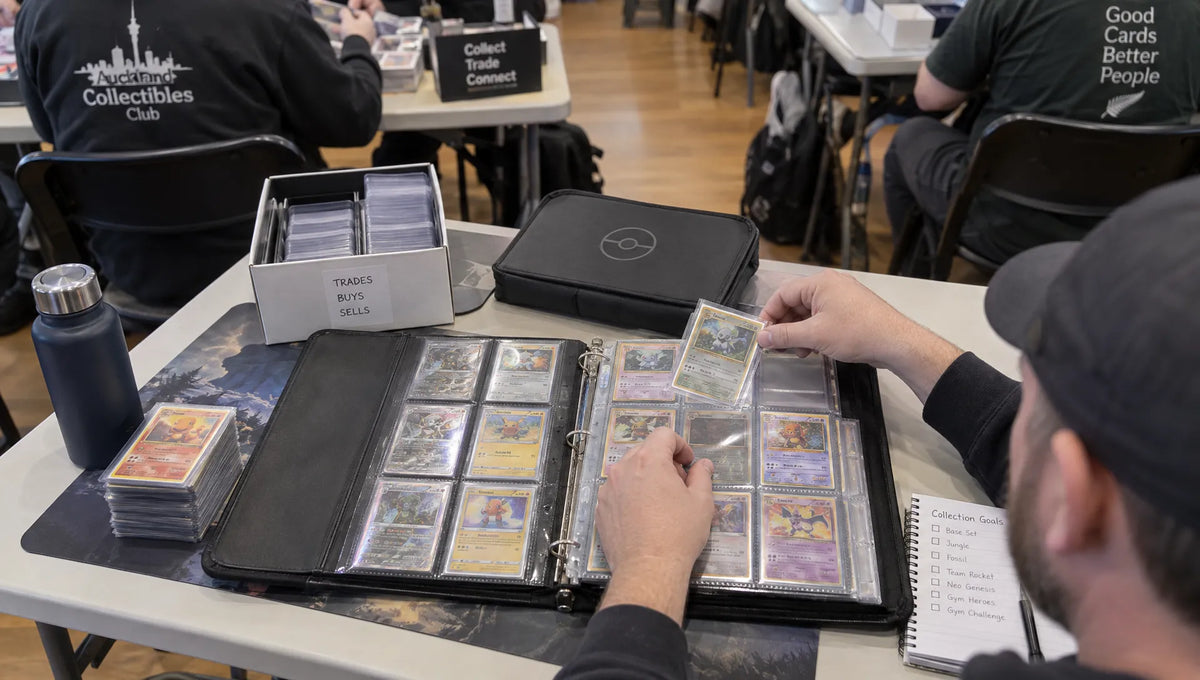
Match storage to the item. Cards intended for a binder should be sleeved and placed in pockets designed for trading cards. Avoid forcing too many cards into one pocket, and make sure the binder closes without pressure on the contents.
For individual cards you want to handle or display, use a suitable sleeve with a rigid holder. Keep them away from direct sunlight, damp areas and places where temperatures change sharply. A windowsill is a poor permanent display location, however good the artwork looks there.
Boxed products need care too. Store them where corners will not be crushed and where heavier objects cannot press down on them. If you rotate a display, photograph the packaging first so you can track changes in condition.
Grading is optional, not a requirement for a meaningful anniversary collection. Consider the fees, shipping arrangements and your reason for grading before sending anything away. A card you enjoy in a binder does not need a numerical grade to justify its place.

Plan one collecting session, not endless purchases
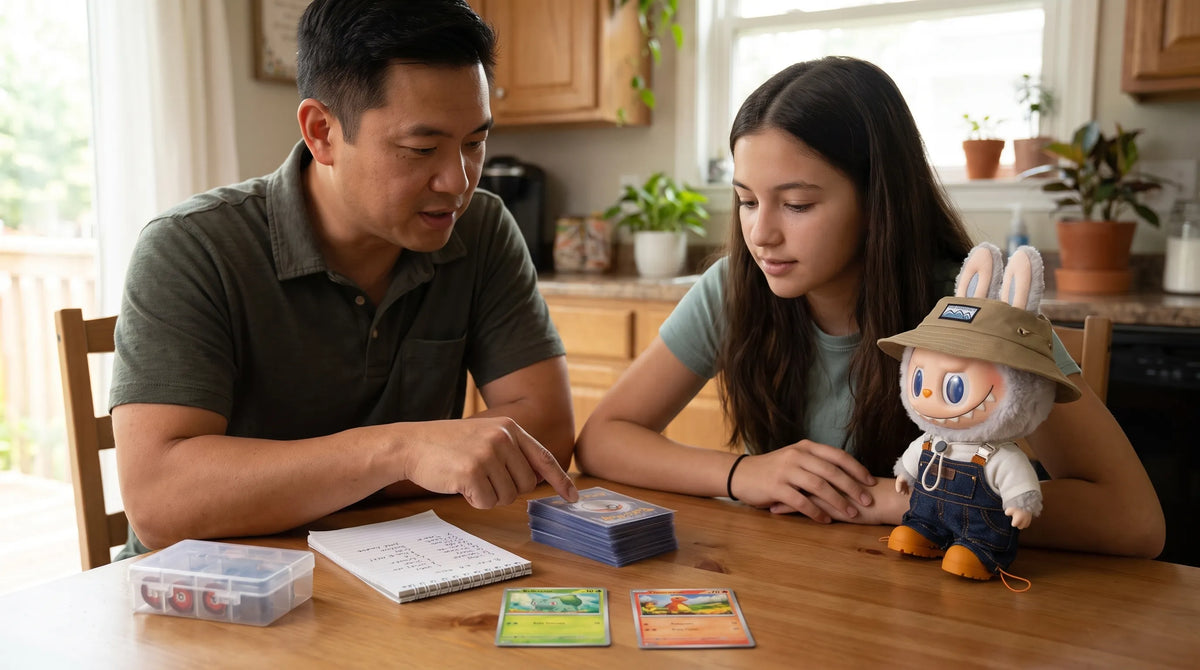
Give the anniversary an activity as well as an object. You might organise a binder with a friend, revisit an older game or open a product together and record the cards you receive.
Set a spending limit before the session, including any sleeves, storage and delivery costs. Separate money for planned purchases from money for opening packs. That makes it easier to stop when the opening budget is used, rather than treating an unsuccessful pull as a reason to keep spending.
If you are celebrating 30 years of Pokémon with younger collectors, agree in advance how shared purchases and notable pulls will be divided. This prevents a fun afternoon from becoming an argument over one card.
You can also finish without buying anything. Photograph your favourite pieces, replace unsuitable storage or write down the history of a childhood binder. Those tasks improve the collection you already own.
A useful finish line is one centrepiece, one organised binder section and a short collection record. You can expand later, but completing a small project gives the anniversary a clearer shape than accumulating unopened parcels.
Make a practical buying check in New Zealand
Before paying, check the details that affect the total cost and whether the product suits your plan. This matters particularly when comparing local listings with overseas offers.
- Currency and delivered cost: Confirm whether the price is in NZD and account for delivery, currency conversion and any applicable import charges.
- Product identity: Check the full name, language and edition rather than relying on a thumbnail image.
- Condition: Distinguish between a sealed product, an opened complete item and loose contents.
- Seller information: Look for clear contact details, purchase terms and a stated process for resolving problems.
- Availability: Establish whether the item is in stock, a preorder or subject to another fulfilment arrangement.
Authenticity and condition are separate questions. An authentic item can still have damaged packaging, while tidy-looking packaging alone does not establish authenticity. Keep photographs and purchase records, and raise discrepancies promptly with the seller.
For a closer comparison of buying formats, BigBoiSneakers’ guide to Pokémon 30th Celebration sets explores sealed items, singles and condition checks. Use those considerations to support your theme, not to replace it.
Frequently asked questions
Does every Pokémon product released in 2026 count as a 30th-anniversary edition? No. A release year alone does not establish anniversary branding. Verify the specific product name, description and official information. A regular release can still belong in your personal anniversary collection.
Should I open my anniversary purchases or keep them sealed? Choose based on what you want from the item. Keep it sealed if the intact packaging is central to your collection; open it if enjoying the contents is your goal. Neither approach guarantees a financial return.
Can I mark the anniversary on a small budget? Yes. Celebrating 30 years of Pokémon can mean choosing one affordable card featuring a favourite partner, organising an existing binder or documenting a childhood keepsake. A meaningful theme does not require rare cards.
Do Pokémon cards need grading to be collectible? No. Grading may suit particular authentication, protection or resale goals, but sleeved cards in suitable storage can form a rewarding personal collection without it.
Build a collection you will want to revisit
Start with the Pokémon memory you want to preserve, then choose the item that expresses it. Check the details, set a budget and leave room for the story behind the purchase.
If you are ready to add a centrepiece, explore BigBoiSneakers’ Pokémon products and collectibles with your collection theme in mind. The right addition is one you will still enjoy after the anniversary year ends.