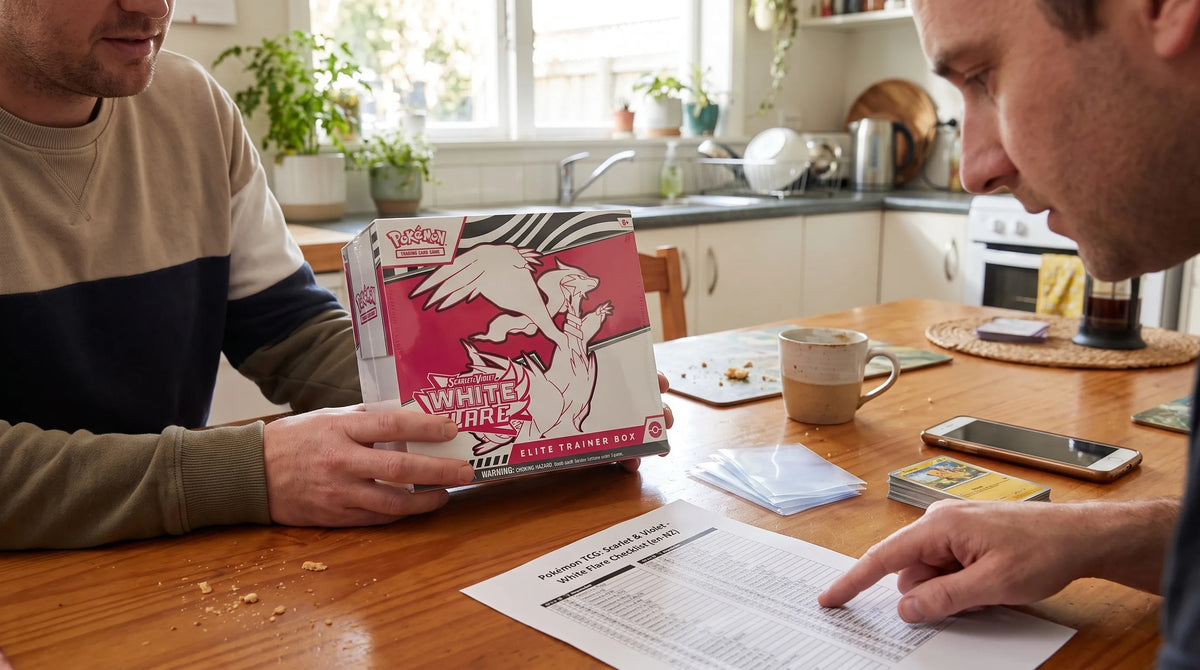
How to Build Your First Pokémon TCG Deck
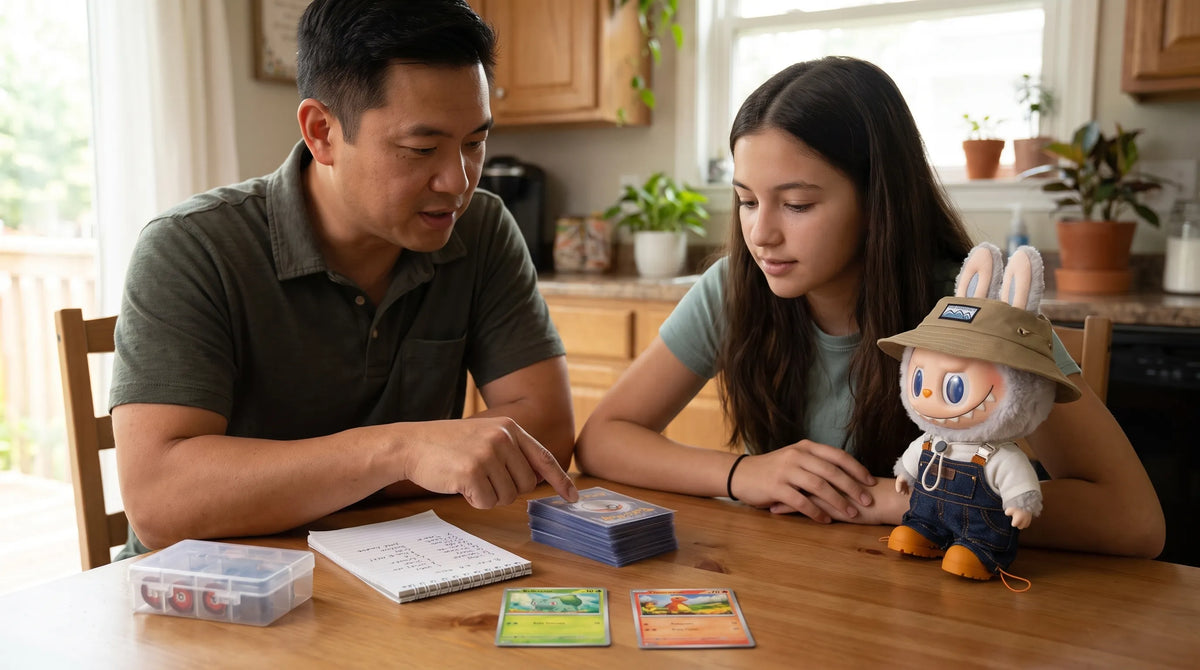
Building your first Pokémon TCG deck is easier when you stop thinking of it as 60 cool cards and start thinking of it as one clear game plan. A good beginner deck does not need to be expensive, rare or packed with ultra flashy cards. It needs to set up consistently, attack on time and recover when your opponent disrupts your board.
If you already collect Pokémon cards, sneakers, streetwear or vinyl figures, deck building uses the same discipline as any good collection: know your goal before you buy. This guide walks through the rules, card ratios, testing habits and buying decisions that help your first deck feel playable rather than random.
Start with the basic Pokémon TCG deck rules
A constructed Pokémon deck has exactly 60 cards. In most formats, you can include up to four copies of any card with the same name, except basic Energy cards. You also need at least one Basic Pokémon, because the game starts with each player placing a Basic Pokémon as their Active Pokémon.
The official rules are always the best reference if you plan to play at League events or tournaments. You can check the Pokémon TCG rules on Pokemon.com before building around older cards, special card types or format-specific legality.
For your first deck, keep the format simple:
- Casual play is best if you are learning with friends and do not want to worry too much about rotation.
- Standard format is best if you want to play at local events, because card legality changes over time.
- Expanded format includes a wider card pool, which can be fun but harder for a beginner to balance.
- Pre-built products can be a great shortcut if you want a playable base before customising.
A first deck should teach you how the game flows. Do not worry about mastering every format on day one.
Choose a simple win condition
Most Pokémon TCG games are won by taking all six Prize cards, although a player can also win if the opponent has no Pokémon in play or cannot draw at the start of their turn. Your deck should be built around the Prize-card plan first.
That means choosing one main attacker or one main evolution line. Beginners often pack a deck with every favourite Pokémon they own, then wonder why nothing sets up smoothly. The issue is not the favourite cards. The issue is that they all need different Energy, different support cards and different timing.
| Beginner deck style | What it means | Why it helps |
|---|---|---|
| One main attacker | Most games aim to power up the same attacking Pokémon | Easier to draw the right cards at the right time |
| One evolution line | You focus on getting a Stage 1 or Stage 2 Pokémon into play | Teaches sequencing and setup |
| One or two Energy types | Your attacks use compatible Energy costs | Reduces dead hands and awkward turns |
| Ready-built base | You start from a structured product like the Pokemon Mega Lucario EX League Battle Deck | Gives you a working list to test and upgrade |
A ready-built deck is not cheating. It is often the cleanest way to learn what a functional 60-card list feels like before you begin swapping cards in and out.
Build around your main attacker, not your binder
Once you choose your main attacker, read the card closely. Look at its attack cost, damage output, retreat cost, HP and whether it needs to evolve. A Basic Pokémon that attacks quickly needs a different deck structure from a Stage 2 Pokémon that requires several turns to set up.
Ask three questions before adding support cards:
- How quickly can this Pokémon attack? A fast attacker needs cards that find Energy and keep pressure on your opponent.
- What cards help me find it? Search cards are usually more valuable than extra random attackers.
- What happens if it gets Knocked Out? Your deck needs a second attacker or recovery plan so one bad turn does not end the game.
This is where deck building becomes more strategic than collecting. A rare card may look incredible in a binder, but it only belongs in your deck if it supports the plan.
Use a beginner deck ratio
There is no perfect ratio for every Pokémon TCG deck, but most beginner lists work better when Trainers do most of the heavy lifting. New players often add too many Pokémon and Energy because those cards feel more exciting. The result is a deck that cannot draw, search or switch reliably.
Use this as a starting point, then adjust after testing:
| Card type | Beginner range | Purpose |
|---|---|---|
| Pokémon | 14 to 18 cards | Main attackers, backup attackers and evolution lines |
| Trainer cards | 30 to 36 cards | Draw, search, switching, disruption and recovery |
| Energy | 8 to 12 cards | Fuel for attacks |
Trainer cards are what make the deck function. A strong draw Supporter can fix a slow hand. A search Item can find the missing evolution piece. A switching card can save your attacker from being stuck Active with a high retreat cost.
If you are buying cards online in NZ, it helps to know whether you need singles, sealed products or a ready-made deck. BigBoiSneakers has a useful Pokémon TCG online buying guide for NZ collectors that explains the difference before you start spending.
Pick Trainers before adding extra Pokémon
Trainer cards are split into categories such as Items, Supporters, Tools and Stadiums. You do not need to memorise every card type immediately, but you should understand the roles they play.
Supporters are powerful but limited, because you can usually play only one Supporter per turn. Items are often flexible and can be played more freely. Stadiums stay in play and affect both players until replaced or removed. Tools attach to Pokémon and can give them extra benefits.
For a first deck, prioritise these Trainer roles:
- Draw cards so you do not run out of options.
- Search cards so you can find the Pokémon or Energy you need.
- Switching cards so your best attacker is in the Active Spot.
- Recovery cards so important Pokémon or Energy can return from the discard pile.
A deck full of powerful attacks still loses if it cannot find its pieces. Trainers are the consistency engine.
Energy count: start lower than you think
Energy is essential, but too much Energy makes your deck clunky. If your hand is full of Energy and no draw cards, you are not really ahead. You are just waiting.
Most beginner decks can start with 10 to 12 Energy cards, then move lower if testing shows you draw too much. Fast decks with strong search and recovery may use fewer. Slower evolution decks may need a little more if attacks are Energy-hungry.
One-type decks are easier for a new player because every Energy works with the main attacker. Two-type decks can work, but only if the attack costs are realistic. Three or more Energy types usually create more problems than they solve unless the deck is built around a specific card interaction.
Special Energy can be useful, but it may have format restrictions or card-specific conditions. If you are unsure, start with basic Energy and learn the deck first.
Where to get cards without wasting money
Opening packs is fun, but packs are not the most reliable way to build a specific deck. If you need four copies of a search card or a particular evolution line, buying singles or choosing a structured product is usually more efficient.
Sealed products still have a place. Booster packs, Elite Trainer Boxes and booster boxes are great for collecting, trading and discovering new cards. They are just less predictable for deck construction. If you are deciding between sealed options, the BigBoiSneakers guide on Booster Box vs ETB can help you choose based on your goal.
Think of it like building a sneaker rotation. Mystery drops are exciting, but if you need a specific pair for daily wear, you do not rely only on luck.

Sleeve, sort and test the first version
Before playing, sleeve your full 60-card deck in matching sleeves. Matching sleeves are not just for looks. They keep cards protected and make sure no card is accidentally identifiable from the back. If you plan to shuffle often, decent sleeves are one of the best small upgrades you can make.
Sort the deck by role before sleeving it. Check how many attackers, draw cards, search cards, switching cards and Energy cards you have. If you cannot explain what a card does for the game plan, it may not deserve a slot yet.
Your first few games should be tests, not final judgments. Play at least three to five games before making big changes. One bad hand does not mean the deck is broken. Repeated problems do.
Watch for patterns such as opening without a Basic Pokémon too often, missing Energy for several turns, drawing too many evolution pieces without the Basic or getting stuck with the wrong Pokémon Active.
How to improve your deck after three games
After several games, make changes based on what actually happened. Beginners often remove cards after one unlucky turn, then weaken the deck by overreacting. Instead, write down the problem and fix the cause.
| Problem during testing | Likely cause | Beginner fix |
|---|---|---|
| You cannot find your main attacker | Too few search cards or too many different Pokémon | Add search cards and reduce random attackers |
| You draw Energy but no plays | Energy count is too high or draw is too low | Add draw Trainers and trim Energy slightly |
| Your attacker gets trapped Active | Not enough switching options | Add switch effects or lower-retreat backup Pokémon |
| You set up too slowly | Evolution line is inconsistent | Add more copies of the Basic and key evolution |
| You run out of cards in hand | Too few draw Supporters | Add reliable draw before adding more attackers |
Change three to five cards at a time, then test again. If you change 15 cards at once, you will not know which change helped.
Make your play space feel like yours
Pokémon TCG sits right between game, collection and personal style. If your desk or shelf already has sneakers, streetwear accessories or collectibles, your deck setup can fit that same vibe.
A display piece like the Pop Mart LABUBU The Monsters Fall In Wild Vinyl Plush Doll works well for collectors who like their play space to feel more like a curated shelf than a plain table. Its larger character format makes it better suited to display than to sit beside your Active Spot during a match.
For a lighter surprise element, the Pop Mart x Bikini Bottom Buddies Plush Single Blind Box fits the same collecting mindset as opening packs, with the fun of not knowing exactly which plush buddy is inside. It will not improve your deck, but it can make a trading night or display shelf feel more personal.
Keep the actual play area clear, though. Cards, dice, damage counters and sleeves need space. The collectibles can live just outside the game zone where they add personality without getting in the way.
Common first-deck mistakes to avoid
The biggest mistake is building a deck that tries to do too much. A Fire attacker, Water attacker and Psychic evolution line might all be cool cards, but they usually compete for deck space instead of helping each other.
Another common issue is treating every rare card as automatically playable. Some valuable cards are strong in the right strategy. Others are better kept safe in a binder. If the card does not help your main attacker set up, attack or survive, it may belong in the collection rather than the deck.
Avoid these first-deck traps:
- Too many one-of cards make your deck unpredictable.
- Too many Energy cards reduce your chances of drawing useful Trainers.
- Too many evolution lines make setup slow and inconsistent.
- No switching cards leaves heavy Pokémon stuck Active.
- No testing notes makes every change feel like guesswork.
The fix is almost always focus. Choose a plan, support that plan and cut cards that distract from it.
A simple first-deck building worksheet
Before you finalise your list, answer these prompts. If you cannot answer one, your deck probably needs more focus.
- My main attacker is:
- My backup attacker is:
- My main Energy type is:
- My deck usually attacks by turn:
- My best draw cards are:
- My best search cards are:
- My switching options are:
- My recovery plan is:
This worksheet also helps when asking for advice at a local League or from more experienced players. Instead of saying your deck does not work, you can explain which part is failing.
Frequently Asked Questions
How many Pokémon should be in my first deck? Most beginner decks work well with 14 to 18 Pokémon, depending on how many evolution lines you play. If your deck has too many different attackers, reduce the count and add more Trainer consistency.
How many Energy cards should a beginner use? Start with 10 to 12 Energy cards for a simple deck. After testing, lower the count if you keep drawing too much Energy or raise it slightly if you miss attacks too often.
Should I build from packs or buy singles? Packs are fun for collecting, but singles are better when you need specific cards. A pre-built deck can also give you a reliable base before you start upgrading.
Can I mix old Pokémon cards with new ones? For casual games, you can mix cards if everyone agrees. For organised play, check the current format rules because legality changes over time.
Do I need expensive cards to build a good first deck? No. Your first goal is consistency, not rarity. A focused budget deck usually teaches you more than a pile of expensive cards with no shared plan.
Build, play, adjust
Your first Pokémon TCG deck does not need to be perfect. It needs to be clear enough that you can play games, notice patterns and make better choices with each upgrade.
Start with one attacker, use Trainers to support it, keep Energy under control and test before buying more cards. Once the deck feels consistent, you can add stronger cards, refine matchups and personalise the list around your favourite Pokémon. That is where deck building becomes part strategy, part collecting and part self-expression.