How to Clean White Sneakers Without Yellowing Them
White sneakers are easy to love and annoyingly easy to stain. The real problem is not always getting the dirt off. It is cleaning them in a way that does not leave the leather, mesh, stitching or soles with that unwanted yellow tint a few hours later.
The good news: most yellowing is preventable. You do not need aggressive bleach, boiling water or a risky internet hack. You need the right cleaner, light pressure, careful rinsing and proper drying, especially in New Zealand's humid conditions.
This guide focuses on how to clean white sneakers without yellowing them, whether you are looking after white Jordans, Nike Dunks, Air Force 1s, Yeezys, New Balance pairs or everyday beaters.
Why white sneakers turn yellow after cleaning
Yellowing usually happens because the cleaning process leaves something behind or stresses the material. White sneakers show every mistake because there is no dark colour to hide residue, oxidised rubber or water marks.
The most common causes are cleaner residue, harsh whitening products, too much water, heat, sunlight, and old oxidation in the rubber or midsole. On leather pairs, yellowing can also come from stripping the finish or forcing water into seams and glue lines. On fabric pairs, it can come from dirty water drying back into the fibres.
That is why the safest method is not the strongest method. A gentle clean that is repeated carefully will usually look better than one heavy scrub with bleach or peroxide.
What you need before you start
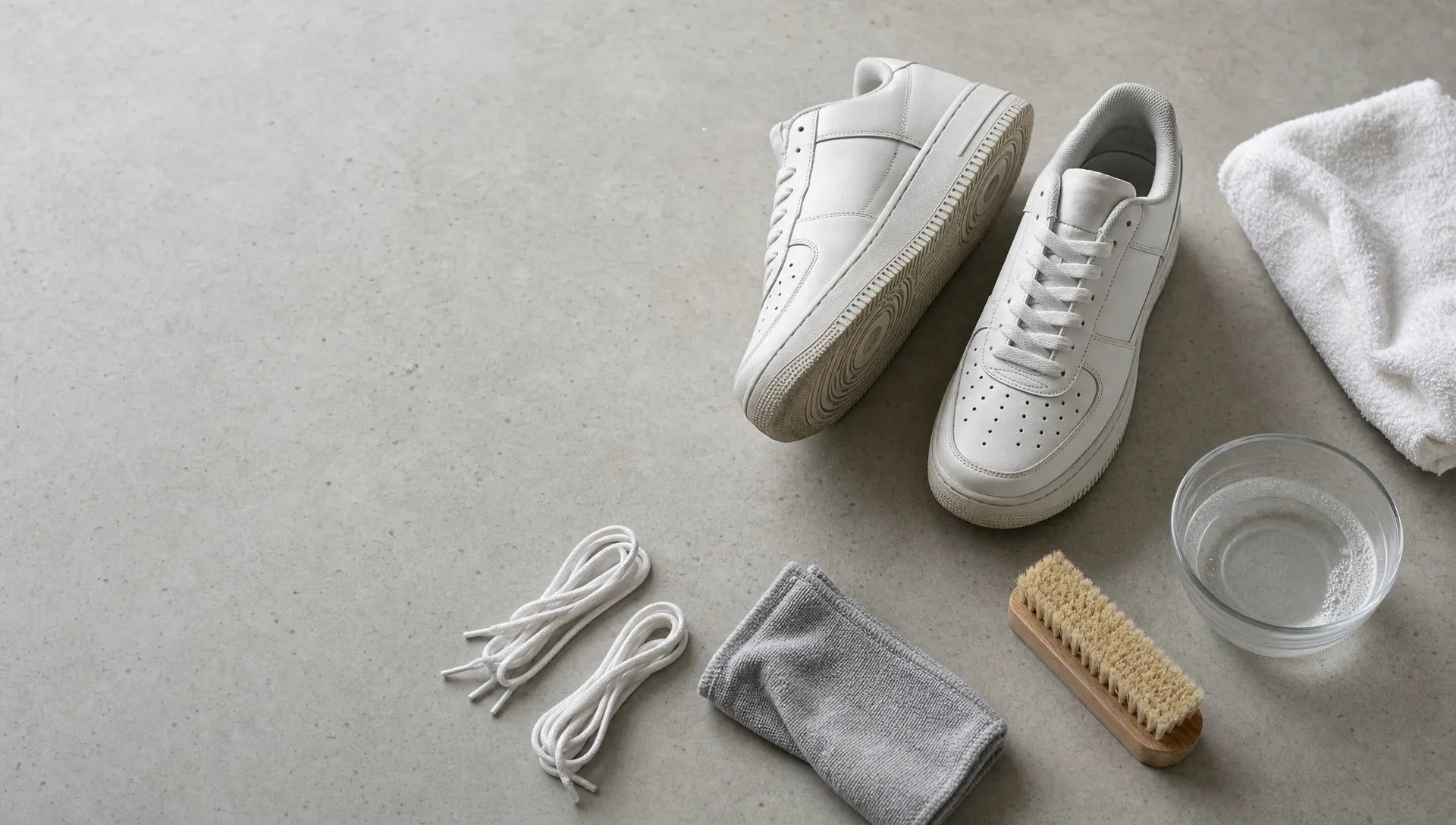
Keep your setup simple. A small amount of the right product is better than mixing several household cleaners together.
- A soft dry brush or clean toothbrush
- A microfibre cloth
- A bowl of cool or lukewarm water
- A pH-neutral sneaker cleaner or a tiny amount of clear mild dish soap
- A separate brush for soles
- White paper towel or a clean white cloth for drying
- Shoe trees, clean paper or soft packing paper to hold shape
Avoid coloured cloths, dyed sponges and printed newspaper. Dye and ink can transfer onto white uppers, especially when wet. Also avoid chlorine bleach unless the shoe manufacturer specifically says it is safe for that material, which is rare for sneakers.
For broader care across different sneaker materials, BigBoiSneakers has a separate guide on how to clean sneakers without damaging them, but the steps below are tuned specifically for keeping white pairs bright.
Match the cleaning method to the material
White sneakers are not all built the same. A white leather Jordan 1 can handle a different process from a white mesh runner or knit Yeezy-style upper. Before adding water, check the label, product description or material feel.
| Sneaker material | Best cleaning approach | What to avoid |
|---|---|---|
| Smooth white leather | Damp cloth, mild sneaker cleaner, light brushing | Bleach, soaking, abrasive scrubbing, hot air |
| Synthetic leather | Gentle soap solution, wipe clean, dry quickly | Strong solvents, heavy pressure, heat |
| Mesh or knit | Light foam, minimal water, blot instead of rub | Soaking, scrubbing hard, dirty rinse water |
| Canvas | Mild cleaner, careful rinsing, shaded drying | Chlorine bleach, thick baking soda residue, direct sun |
| Suede or nubuck | Dry brush, suede eraser, specialist suede cleaner | Normal wet cleaning, excess water, household soap |
| Rubber midsoles | Soft brush or melamine sponge used lightly | Scrubbing painted details, harsh chemicals |
| Icy or translucent soles | Gentle wipe only for normal care | Heat, strong oxidisers, DIY sole sauce if inexperienced |
If your pair has suede, nubuck, cracked leather, painted midsoles or fragile aged panels, treat it as delicate. A white sneaker can look cleaner while still losing value if the texture, paint or finish is damaged.
The golden rule: do not over-wet white sneakers
Over-wetting is one of the biggest reasons white sneakers yellow after cleaning. When too much water gets into seams, padding and glue lines, it can pull dirt, adhesive colour or old residue to the surface as it dries. This often shows up as yellow patches around stitching, toe boxes, tongues or collars.
Instead of soaking the shoe, work with a lightly damp cloth and controlled foam. If the cloth is dripping, it is too wet. If the upper stays wet for hours, you used too much water.
Nike's own shoe-cleaning advice also favours a mild cleaning solution, soft brushes and air-drying rather than machine washing or high heat. That is a smart baseline for most modern sneakers.

How to clean white sneakers without yellowing them
Step 1: Dry brush first
Start with completely dry sneakers. Use a soft brush to remove loose dust, mud and grit from the upper, tongue, seams and outsole edge. This step matters because wet dirt can turn into grey or yellowish slurry that spreads into white stitching and fabric.
Brush away from delicate materials. On leather, use light circular motions. On mesh, brush in one direction and do not force dirt deeper into the weave. On suede or nubuck, use a suede brush only and keep the nap moving naturally.
Step 2: Remove the laces and insoles
Take out the laces before cleaning. Laces trap dirt against the tongue and eyelets, and if you clean around them, you can leave shadowy yellow-grey marks.
Remove insoles if they come out easily. Do not force glued insoles. Cleaning the inside is optional, but letting removable insoles air out separately helps reduce odour and moisture.
Step 3: Mix a very mild cleaning solution
Use cool or lukewarm water with a small amount of sneaker cleaner. If you do not have sneaker cleaner, use one or two drops of clear mild dish soap in a small bowl of water. The solution should feel slippery, not thick or bubbly.
Too much soap leaves residue. Residue attracts dirt and can dry with a dull yellow cast, especially on fabric. If you see heavy suds, dilute the mixture.
Step 4: Clean the uppers in small sections
Dip your cloth or soft brush into the solution, then squeeze out excess water. Clean one small section at a time, starting with the least dirty areas and finishing with the dirtiest parts. This stops grime from being dragged across clean white panels.
For smooth leather, use a damp microfibre cloth first. If there are marks left behind, use a soft brush with very light pressure. Do not scrub the same spot until it becomes warm or shiny, as that can damage the finish.
For mesh and knit, blot and lift dirt instead of grinding it in. Work slowly around toe boxes and tongues because these areas hold water. If the material starts looking saturated, stop and blot with a dry white towel.
For canvas, a soft brush can help, but keep the motion gentle. Canvas can hold cleaner deep in the fibres, so rinsing by wiping is important.
Step 5: Clean the midsoles separately
Use a separate brush for rubber midsoles and outsoles. This prevents sole grime from moving onto the upper. A lightly damp melamine sponge can help on plain white rubber, but use it gently because it is mildly abrasive.
Be careful around painted midsoles, logos and coloured sections. White sneakers often have small contrast details, and over-scrubbing can fade or lift paint. If you are cleaning a pair like Jordan 4s with multiple materials and painted areas, follow a model-specific approach like this guide on cleaning Jordan 4s without damaging the materials.
Step 6: Wipe away all cleaner residue
This is the step many people skip. After cleaning, wipe the shoe with a fresh cloth lightly dampened with plain water. You are not rinsing under a tap. You are removing soap from the surface.
Then blot with a dry white cloth. Repeat until the surface no longer feels slippery and you cannot see foam in seams or mesh. Leaving cleaner behind is one of the easiest ways to make white sneakers look yellow or patchy once dry.
Step 7: Dry slowly in shade with airflow
Stuff the shoes lightly with clean white paper towel or soft packing paper to hold their shape and absorb moisture. Replace the paper if it becomes damp.
Let the sneakers dry at room temperature in a shaded, airy spot. Do not put them in direct sun, beside a heater, in a dryer or under a heat pump blast. Heat can yellow glue, warp materials, crack finishes and speed up oxidation on rubber.
In humid NZ weather, drying may take longer than expected. Give them 24 hours if needed. If moisture is a recurring issue at home, the storage tips in BigBoiSneakers' guide to storing sneakers properly in NZ's humid weather are worth following after each clean.
How to clean white laces without yellowing
White laces often make the whole shoe look dirtier than it really is. Remove them and wash them separately.
Soak laces in lukewarm water with a small amount of mild laundry detergent. Massage gently by hand, then rinse thoroughly until the water runs clear. Press out water with a towel and air-dry flat in shade.
Avoid chlorine bleach for routine lace cleaning. It can weaken fibres and may leave some synthetic laces with a yellow tint over time. If your laces are still stained after a gentle wash, replacing them is often safer than over-treating them.
Should you use baking soda, toothpaste or hydrogen peroxide?
These DIY methods are popular, but they are not always safe for white sneakers.
Toothpaste can contain abrasives, colours or whitening agents that were made for enamel, not sneaker finishes. It can leave chalky residue in stitching and mesh. Baking soda can help on some canvas stains, but if it is not fully removed, it can dry into seams and make the shoe look dull. Hydrogen peroxide can lighten some fabric stains, but it can also react unevenly, especially on aged materials, glue lines or mixed-material sneakers.
If your goal is to avoid yellowing, the safer choice is a proper sneaker cleaner, mild soap, controlled moisture and patient drying. Save stronger treatments for isolated fabric stains, and always test in a hidden spot first.
What if the soles are already yellow?
Yellowed soles are not always dirty. Rubber, foam and translucent materials can oxidise with age, UV exposure and storage conditions. Normal cleaning can remove surface grime, but it may not reverse deep yellowing.
Specialist sole restoration products exist, but they can be risky if used incorrectly. Some require UV exposure and careful masking to protect uppers, stitching and painted areas. On rare or expensive pairs, it is better to speak with a professional sneaker restorer than gamble on a harsh DIY treatment.
For everyday white midsoles, focus on prevention: wipe them after wear, avoid long sun exposure, clean dirt before it sets, and store pairs away from damp heat.
How to keep white sneakers white for longer
Cleaning matters, but prevention does most of the work. White sneakers stay brighter when dirt, moisture and stains are dealt with early.
Use a material-appropriate protector spray before heavy wear, especially on canvas, mesh and suede. Rotate your pairs so they can dry fully between wears. Wipe midsole marks after each outing rather than waiting until grime builds up. Store white sneakers in a cool, dry place, away from direct sunlight.
Small accessories can also help. Shoe trees reduce creasing and help pairs hold shape while drying, while silica packs can help manage moisture in storage. If you are building a care kit, this breakdown of the best sneaker accessories to protect your pairs covers the useful extras without overcomplicating it.
Frequently Asked Questions
Can I use bleach to clean white sneakers? It is best to avoid bleach for most white sneakers. Chlorine bleach can weaken fabrics, affect glue, damage finishes and sometimes leave yellowing behind. Use a mild sneaker cleaner or very diluted clear soap instead.
Why did my white sneakers turn yellow after washing? The most likely causes are leftover soap, too much water, heat drying, direct sunlight, or old oxidation being pulled to the surface. Clean with less water next time and wipe away all residue before drying in shade.
Can I put white sneakers in the washing machine? It is not recommended for most valuable sneakers, leather sneakers or mixed-material pairs. Machine washing can over-soak the shoe, stress glue, deform shape and increase the risk of yellowing.
How often should I clean white sneakers? Lightly wipe marks after each wear and do a deeper clean only when needed. Over-cleaning can wear down finishes, so aim for small, regular maintenance instead of aggressive scrubbing.
How do I dry white sneakers quickly without yellowing them? Use airflow, dry towels and clean paper inside the shoes. Do not use direct sun, a dryer, a heater or high heat. Faster is not better if it causes yellowing or material damage.
Can yellowed white soles be made white again? Surface dirt can usually be cleaned, but deep oxidation may not come out with normal cleaning. Specialist sole restoration may help, but it carries risk on valuable or delicate sneakers.
Keep your white pairs fresh from day one
White sneakers look best when they are cleaned gently, dried properly and protected before stains set in. The main thing to remember is simple: avoid harsh chemicals, avoid soaking, and never rush the drying process with heat.
If you are adding a fresh white pair to the rotation, browse authentic sneakers at BigBoiSneakers and keep this guide handy for the first clean. A little careful maintenance can make your Jordans, Dunks, Yeezys and everyday white sneakers look sharper for much longer.