How to Lace Jordans for Comfort and Style
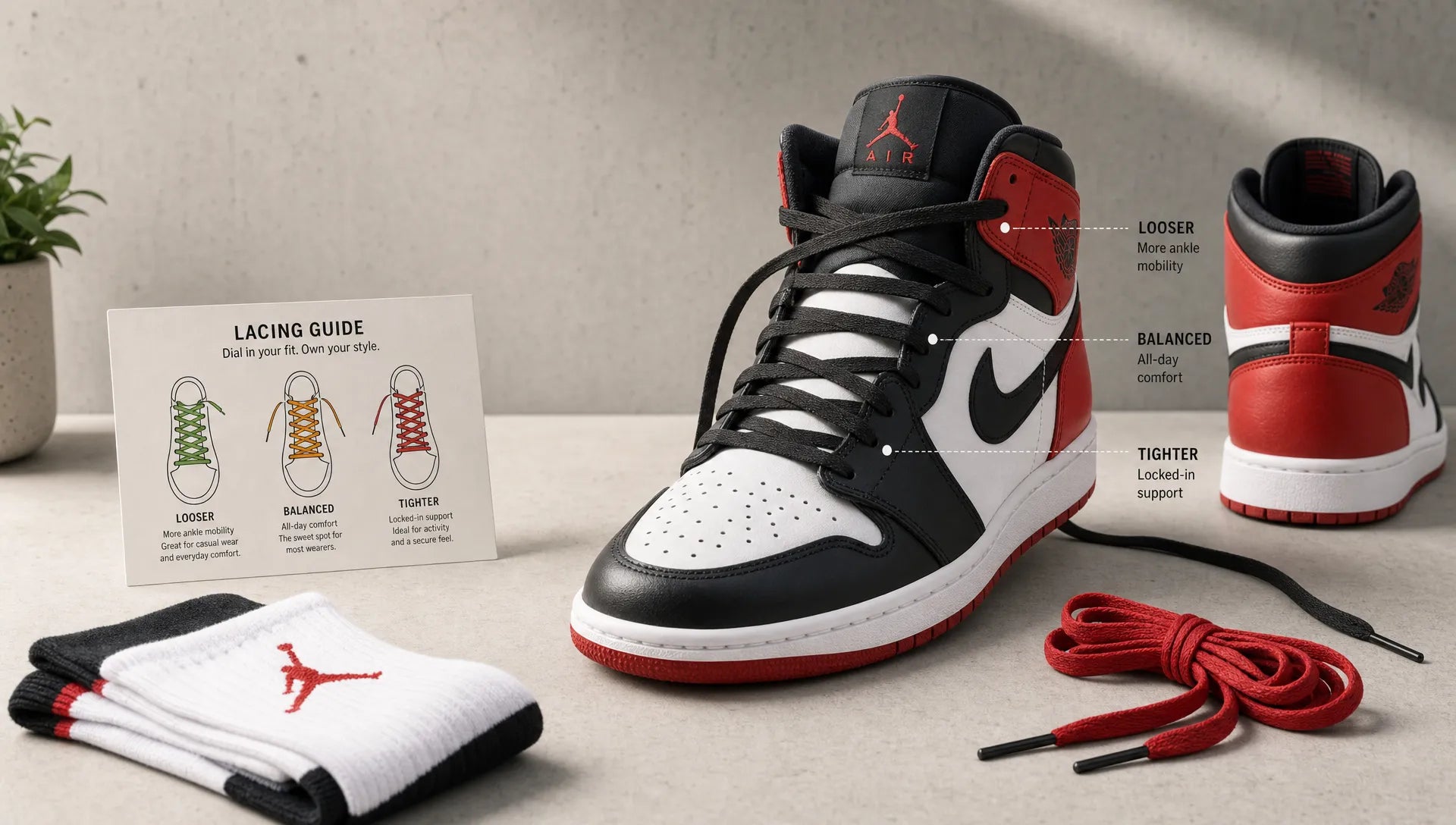
A good pair of Jordans can change the whole outfit, but the way you lace them can change the way they feel. Too tight across the top of the foot and they can pinch. Too loose through the midfoot and your heel starts slipping. Lace them badly and even a clean pair can look messy.
The best lacing method depends on three things: your Jordan model, your foot shape, and the look you want. A Jordan 1 High can handle a loose, relaxed streetwear lace. A Jordan 4 often feels better with a more secure midfoot. A Jordan 3 can look clean with straight lacing, especially if you wear it casually with denim, cargos, or shorts.
Below is a practical guide to lacing Jordans for comfort and style, with easy methods you can try at home without damaging the sneaker.
Start with fit before you change the laces
Lacing can improve comfort, but it cannot fully fix the wrong size. Before you relace your Jordans, check how the shoe fits with the socks you actually wear day to day. Your toes should have a little room, your heel should not lift excessively, and the upper should not feel like it is crushing the top of your foot.
If the pair is brand new, the materials may still feel firm. Leather, suede, nubuck, mesh, and synthetic overlays all break in differently, so avoid forcing the shoe with extreme tight lacing. If your pair feels stiff out of the box, use a gradual wear approach like the one in this guide to breaking in new Jordans without ruining them.
Also check the lace length. Factory laces are usually chosen to suit the model, but replacement laces can change the look and fit. If they are too short, you may struggle to use the top eyelets. If they are too long, you may end up with oversized loops or loose lace ends that drag on the ground.
Which Jordan lacing style should you choose?
Use this quick table as a starting point. You can always adjust the tension after a short walk.
| Goal | Best lacing method | Works especially well for | Comfort note |
|---|---|---|---|
| Clean everyday look | Factory-style criss-cross | Jordan 1, Jordan 3, Jordan 4 | Balanced support and easy to adjust |
| Relaxed streetwear look | Loose criss-cross | Jordan 1 High, Jordan 1 Mid, Jordan 5 | Looks casual, but avoid making it unsafe |
| Minimal, tidy finish | Straight bar lacing | Jordan 1 Low, Jordan 3, Jordan 11 | Can reduce visual clutter across the upper |
| Less heel slip | Heel-lock lacing | Some Jordan highs and mids with enough lace length | Useful if the shoe fits but the heel moves |
| Less pressure on top of foot | Window lacing | Jordan 4, Jordan 5, snug-fitting pairs | Helps relieve pressure over one area |
The most wearable choice for most people is a slightly relaxed criss-cross lace. It keeps the sneaker secure enough for walking while still giving that effortless Jordan shape.
How tight should Jordans be laced?
Jordans should feel secure, not strapped down. A simple rule is to keep the forefoot comfortable, the midfoot gently held, and the collar adjusted to your preference. If your foot goes numb, the laces are too tight. If your heel lifts every step, the laces are too loose or the fit may not be right.
For lifestyle wear, you usually do not need basketball-level lockdown. Most people wearing Jordans casually in New Zealand, whether around town, at uni, or out on the weekend, want enough support for walking without flattening the shoe shape.
Pay close attention to the top two eyelets. On high-top Jordans, lacing all the way to the top gives more ankle hold and a cleaner fitted look. Skipping the top eyelet gives a more relaxed silhouette, especially with wider trousers or stacked denim.
Method 1: Classic criss-cross lacing for everyday comfort
This is the easiest and most versatile way to lace Jordans. It looks natural because it is close to how many Jordans are laced from the box, and it works across most models.
- Start by threading the lace evenly through the bottom eyelets from the outside in.
- Pull both lace ends up and check they are the same length.
- Cross the right lace over to the next left eyelet, then cross the left lace over to the next right eyelet.
- Keep working upward, pulling gently after each cross rather than yanking hard at the end.
- Leave the top eyelet empty for a relaxed fit, or lace to the top for a more secure fit.
- Tie a small bow, tuck the lace ends inside, or let the ends hang if they are short enough to be safe.
For comfort, do not make every section the same tightness. Keep the lower eyelets slightly looser around the toes, then add a little more tension through the midfoot. This helps the shoe stay in place without squeezing the front of your foot.
This method is especially good for Jordan 1s because it keeps the panels visible and does not fight the shape of the sneaker. If you are choosing your next pair based on everyday wearability, this guide to Jordan high shoes that are easy to wear right now is a useful place to compare options.
Method 2: Loose lacing for a relaxed streetwear look
Loose lacing is popular because it makes Jordans look effortless. It works best with Jordan 1 Highs, Jordan 1 Mids, Jordan 5s, and some Jordan 6s, especially when the shoe already fits your foot well.
The key is controlled looseness. You want the laces to look relaxed, not sloppy. If the shoe feels like it is sliding around, tighten the middle section slightly and leave the top looser.
To do it, lace the shoe using the classic criss-cross method, but reduce the tension at every eyelet. Keep the tongue centred as you go. When you reach the top, either skip the final eyelet or thread it loosely and leave the lace ends untied. If you leave the laces untied, make sure the ends are not long enough to step on.
Loose lacing looks best when the rest of the outfit has some structure. Think straight-leg denim, cargos, relaxed shorts, or a heavyweight hoodie. If your whole fit is oversized, a slightly neater lace can stop the sneakers from looking lost.

Method 3: Straight bar lacing for a clean, minimal look
Straight bar lacing gives Jordans a tidy horizontal look across the tongue. It is a strong option for low-tops, cleaner colourways, and outfits where you want the sneaker to feel less busy.
This method suits Jordan 1 Lows, Jordan 3s, and some Jordan 11s. It can also look good on white or neutral pairs because the straight lines make the shoe feel sharper. If you like simple colourways, you may also enjoy these white Air Jordan 1 styles that are easy to wear.
To straight bar lace Jordans, start with the lace running horizontally across the bottom eyelets. Feed one lace end up the inside of the shoe and across the next available eyelet to create a bar. Repeat with the other lace end, alternating sides as you move upward. Keep each bar flat and even.
The main downside is adjustability. Straight bar lacing can be slower to loosen or tighten compared with criss-cross lacing. If you have a high instep or need more flexibility, keep the bars slightly relaxed rather than pulling them tight.
Method 4: Heel-lock lacing for less heel slip
If your Jordans fit in length but your heel moves, a heel lock can help. This technique is common in running shoes, but it can also work on some Jordans if the eyelet layout and lace length allow it.
Use heel-lock lacing when the shoe feels secure at the front but loose at the back. Do not use it to force a too-big shoe to fit. If there is too much extra length or width, your foot may still slide inside the sneaker.
Here is the basic version:
- Lace your Jordans normally until the second-to-last eyelet.
- Thread each lace end into the top eyelet on the same side to create a small loop.
- Cross each lace end through the opposite loop.
- Pull downward and back to tighten the loops around the ankle area.
- Tie the shoe normally, keeping the knot firm but not painful.
A heel lock is most useful when walking longer distances, travelling, or wearing a pair all day. For pure styling, many people prefer a looser top because it shows off the tongue and collar shape better.
Method 5: Window lacing to reduce pressure on the top of your foot
Some Jordans can feel tight over the top of the foot, especially if you have a higher instep or the model has firm overlays. Window lacing creates a gap in the pressure point while keeping the rest of the shoe secure.
To do it, lace normally until you reach the uncomfortable area. Instead of crossing the laces over that section, run each lace straight up on the same side to the next eyelet. Then continue criss-cross lacing above it.
This creates a small “window” where the laces do not press directly across the sore spot. It is a good trick for Jordan 4s in particular, since the upper structure can feel firm on some feet.
If the pressure is caused by swelling, injury, or sharp pain, do not rely on lacing alone. Take the shoes off and give your feet a break. Sneakers should not cause ongoing pain.
Model-specific lacing tips for popular Jordans
Different Jordan models respond better to different lace tension. Here is a practical breakdown for everyday wear.
| Jordan model | Best everyday lacing approach | Style tip | Comfort tip |
|---|---|---|---|
| Air Jordan 1 High | Relaxed criss-cross, often skipping the top eyelet | Let the tongue sit naturally for a classic streetwear look | Avoid overtightening the ankle collar |
| Air Jordan 1 Low | Straight bar or neat criss-cross | Keep lace loops smaller for a cleaner low-top profile | Secure the midfoot so the heel does not lift |
| Air Jordan 3 | Medium-tension criss-cross or straight bar | Works well with tidy, balanced lacing | Do not crush the tongue, which can affect comfort |
| Air Jordan 4 | Secure criss-cross or window lacing | Keep the cage area looking even | Adjust pressure carefully across the midfoot |
| Air Jordan 5 | Loose criss-cross with a centred tongue | Looks good with a relaxed lace and visible tongue | Make sure lace ends are not dragging |
| Air Jordan 11 | Neat criss-cross or straight bar | Cleaner lacing suits the patent leather shape | Keep tension even to avoid pressure points |
The goal is to work with the silhouette, not against it. Chunkier Jordans usually need cleaner lace management so they do not look bulky. Slimmer or simpler pairs can handle a more relaxed lace.
Should you tie Jordans or leave them untied?
Both can work, but it depends on how you wear them. Tied Jordans are better for walking, long days, and any situation where you need the shoe to stay secure. Untied Jordans are more about the look, especially with highs.
If you leave Jordans untied, keep the lace ends short, even, and controlled. You can tuck the ends inside the shoe, behind the tongue, or under the insole edge if it feels comfortable. Do not tuck them in a way that creates a lump under your foot.
For a clean compromise, tie the laces loosely behind the tongue. This keeps the front looking relaxed while preventing the laces from moving too much. It is a simple trick for Jordan 1s when you want that laid-back look without sacrificing all stability.
Lace colour and styling tips
Lace colour can completely change how a Jordan looks. White laces can freshen up dark pairs. Black laces can make a bright colourway easier to wear. Cream or sail laces can soften a vintage-style pair. Matching the lace to a key colour on the sneaker usually looks intentional without being too loud.
For most outfits, choose one of these safe lace approaches:
- Match the lace to the tongue for a cleaner, more uniform look.
- Match the lace to the midsole or outsole for balance.
- Use a contrast lace only if the sneaker already has that colour somewhere else.
- Keep loud laces for simple outfits so the shoes remain the focus.
If you are wearing bold Jordans, let them be the statement. Neutral streetwear, plain tees, washed denim, cargos, black pants, and simple hoodies usually work better than trying to match every colour exactly.
Common Jordan lacing mistakes to avoid
The biggest mistake is overtightening. Jordans are lifestyle sneakers for most buyers today, so they do not need to be pulled tight like performance sports shoes unless you are using them for active movement. Overtightening can create pressure marks, distort the tongue, and make the upper crease awkwardly.
Another mistake is ignoring lace symmetry. Uneven lace lengths make even a premium pair look rushed. Before you finish, pull both lace ends forward and check that they are close in length.
Also avoid dragging lace ends. Long, loose laces can get dirty, fray faster, or become a trip hazard. If your replacement laces are too long, switch to a shorter pair rather than wrapping them awkwardly around the ankle.
Finally, do not force thick replacement laces through delicate eyelets. Some Jordans can handle rope laces or wider flat laces, but others look and feel better with the original lace style.
How to keep your laces looking fresh
Clean laces can make older Jordans look much better. Remove the laces before cleaning so you can reach the tongue and eyelet area properly. Hand wash laces with mild soap and lukewarm water, then let them air dry. Avoid harsh bleach unless the laces are plain white and you are prepared for possible fibre damage.
If the laces are badly stained, frayed, or stretched, replacing them is often the easiest upgrade. Keep a few spare lace colours on hand if you rotate multiple pairs. White, black, cream, and grey cover most Jordan colourways.
When cleaning the full sneaker, treat the materials carefully. Leather, suede, nubuck, mesh, and painted midsoles do not all respond the same way to water and brushes. For material-specific advice, especially on a pair with multiple textures, use a guide like this one on cleaning Jordan 4s without damaging the materials.
Frequently Asked Questions
What is the best way to lace Jordan 1s? A relaxed criss-cross lace is the best all-round option for Jordan 1s. Skip the top eyelet for a casual streetwear look, or lace to the top if you want more ankle hold.
Should Jordans be laced tight or loose? Jordans should be snug through the midfoot but not tight across the toes or top of the foot. Loose lacing looks good, but the shoe should still feel safe and stable when you walk.
Can I use straight bar lacing on Jordans? Yes, straight bar lacing works well on many Jordans, especially Jordan 1 Lows, Jordan 3s, and clean colourways. It gives a minimal look, although it can be less adjustable than criss-cross lacing.
How do I stop my Jordans from slipping at the heel? Try tightening the midfoot first. If the heel still slips and the model has enough lace length, use heel-lock lacing through the top eyelets. If the shoe is too large overall, lacing may not solve the problem.
Is it okay to leave Jordans untied? Yes, if the shoes still fit securely and the lace ends are not long enough to trip on. For everyday walking, a loose hidden knot behind the tongue is often more practical than fully untied laces.
Find the right Jordans for your rotation
The right lacing method can make your Jordans feel better, look cleaner, and suit your personal style. Start with classic criss-cross lacing, adjust the tension for your foot, then experiment with loose, straight bar, heel-lock, or window lacing depending on the pair.
If you are building your rotation or looking for your next pair, explore authentic sneakers, streetwear, and collectibles at BigBoiSneakers. Whether you are after everyday Jordans, limited edition sneakers, or a fresh pair to style with your current fits, choosing the right sneaker and lacing it properly makes all the difference.