How to Waterproof Sneakers for NZ’s Wet Weather
Rain, puddles and damp footpaths are part of wearing sneakers in New Zealand. Whether you rotate Air Jordans, Nike Dunks, Yeezys, New Balance or everyday beaters, learning how to waterproof sneakers properly can help prevent stains, water marks, odours, mould and premature material damage. The key is using the right protector for the material, applying it correctly and knowing when a pair should stay inside.
Before you spray anything, remember one rule: most lifestyle sneakers can be made water-resistant, not fully waterproof. A good protector spray helps rain bead on the surface, but it will not turn suede Jordans or mesh runners into gumboots. Treat waterproofing as part of sneaker care, alongside cleaning, drying and smart storage.
Waterproof vs water-resistant: what sneaker owners need to know
“Waterproof” gets used casually, but it has a specific meaning. A truly waterproof shoe is built with sealed seams, waterproof membranes or rubberised construction that blocks water under sustained exposure. Most sneakers are not made like that.
A water-resistant sneaker can handle light rain, splashes and short walks through wet streets. That is usually what sneaker protector sprays are designed for. They create a thin barrier over leather, suede, nubuck, canvas or textile uppers so moisture sits on top instead of soaking straight in.
In NZ, that difference matters. Auckland drizzle, Wellington wind-driven rain, Christchurch winter mornings and damp post-gig footpaths can all hit your pair differently. If the forecast from MetService looks rough, save the rare suede or icy white pair for a drier day.
Check the material before you waterproof sneakers
Different sneaker materials react differently to water and protector sprays. Using the wrong product can darken suede, leave residue on patent leather or clog breathable mesh. If you are protecting limited edition sneakers, always treat the material first and the hype second.
| Sneaker material | Best approach | What to avoid | Extra note |
|---|---|---|---|
| Smooth leather | Light coats of sneaker-safe water repellent | Heavy waxes unless made for sneakers | Wipe clean before spraying |
| Suede | Suede or nubuck-specific protector | General silicone sprays that darken fibres | Brush nap before and after drying |
| Nubuck | Nubuck-safe water repellent | Over-saturating the surface | Test on a hidden area first |
| Mesh or knit | Fabric-safe protector spray | Thick coatings that reduce breathability | Use light, even coats |
| Canvas | Fabric protector | Soaking the shoe with spray | Allow longer drying time |
| Patent leather | Usually minimal spray, wipe care instead | Matte sprays or abrasive cleaners | Water can be wiped off quickly |
If you are unsure what your pair is made from, check the product tag, box label or brand listing. A Jordan 1 leather upper needs different care from a Yeezy knit upper or suede New Balance panel.
What you need before applying sneaker protector spray
You do not need a complicated setup to waterproof sneakers at home. You do need patience and a clean workspace. Protector sprays work best on clean, dry uppers, so rushing the process can trap dirt under the coating.
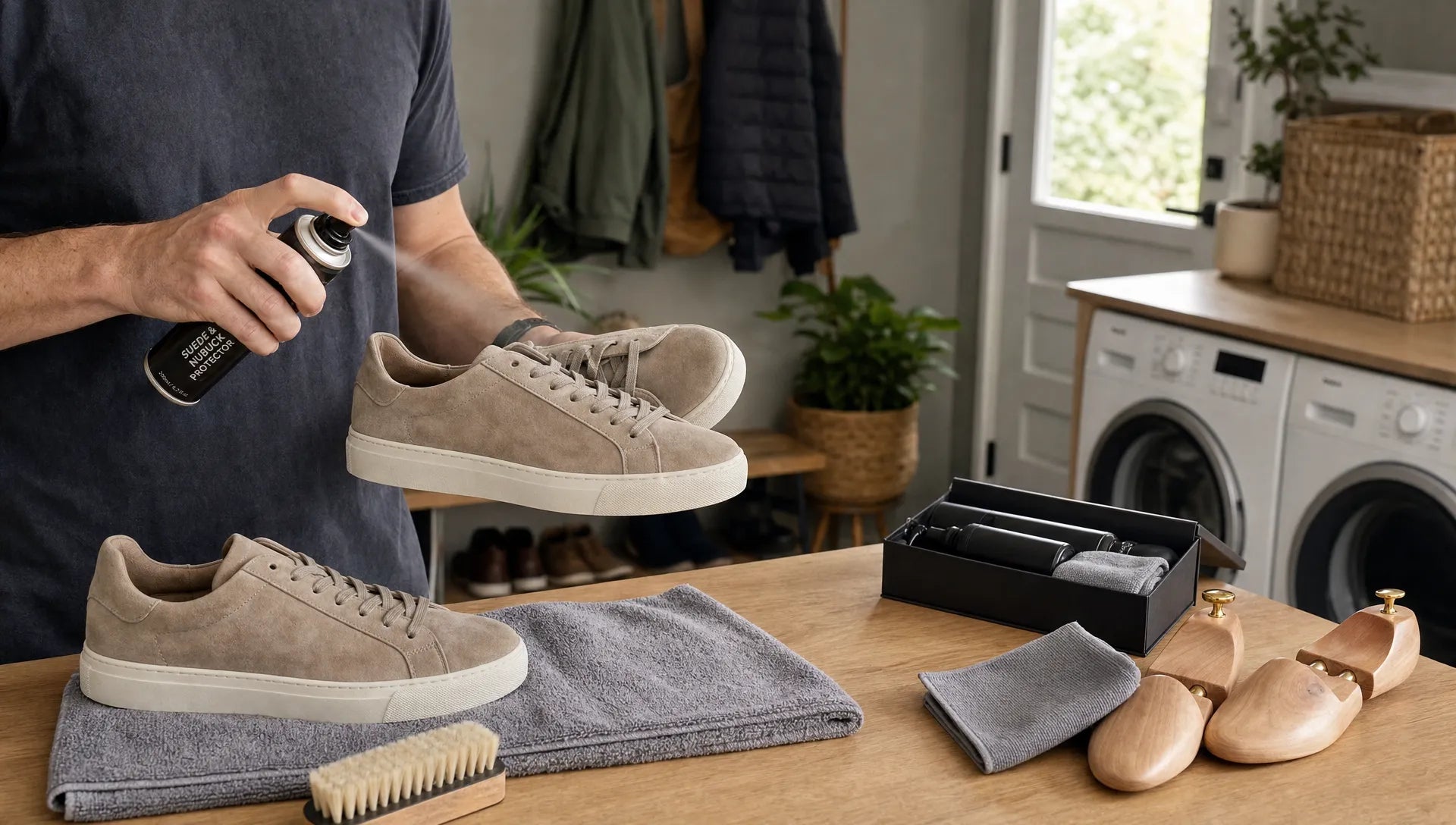
A basic kit usually includes a soft brush, microfibre cloth, sneaker cleaning solution, material-safe protector spray, shoe trees or paper stuffing and a ventilated drying space. For suede or nubuck, add a suede brush and eraser. For white sneakers, avoid coloured cloths or dirty brushes that could transfer marks.
If your care kit needs an upgrade, BigBoiSneakers has a helpful guide to the best sneaker accessories to protect your pairs, including protection and storage tools that make daily wear easier to manage.
How to waterproof sneakers for NZ’s wet weather, step by step
The method below works for most lifestyle sneakers, but always follow the instructions on your specific protector spray. Some formulas need longer drying times or different application distances.
1. Clean the sneakers first
Start by removing loose dirt with a dry brush. Take out the laces if they block the tongue or panels you want to protect. Wipe smooth leather with a slightly damp microfibre cloth, then dry it fully.
For suede and nubuck, avoid soaking the material. Use a suede brush to lift dirt and restore the nap. If there are existing marks, deal with them before spraying. Protector spray will not remove stains, it will only seal over what is already there.
If your pair needs a deeper clean before waterproofing, follow a material-safe process like the one in BigBoiSneakers’ guide on how to clean sneakers without damaging them.
2. Let the shoes dry completely
This step is easy to underestimate. A sneaker can feel dry on the outside but still hold moisture inside the lining, tongue or midsole stitching. Spraying over damp material can reduce protection and increase the chance of odour.
Leave the pair at room temperature with the tongues open. Stuffing the toe box with plain white paper or using shoe trees helps maintain shape. Do not put sneakers in direct sun, near a heater or in a clothes dryer, as heat can affect glue, shape and materials.
3. Patch test in a hidden area
Before coating the whole shoe, test the spray on a discreet spot such as the inner heel area or a small section near the collar. Let it dry and check for darkening, residue or texture changes.
This matters most with suede, nubuck, vintage pairs and light colours. Some protectors slightly deepen the shade of delicate materials. A patch test is slower, but it is better than finding out across the whole toe box.
4. Spray in light, even coats
Hold the can at the distance recommended on the label, usually around 15 to 30 cm from the shoe. Spray lightly and evenly across the upper. The material should look misted, not wet.
Work around the sneaker in sections so you do not miss the toe box, side panels, heel, tongue and lace area. Avoid spraying the outsole heavily, as grip patterns and rubber do not need the same treatment. If the spray pools or drips, you are applying too much.
5. Let the first coat cure
Drying time depends on the product, temperature and humidity. In New Zealand’s damp climate, give the pair more time than the minimum label instructions if the air feels humid. Overnight curing is a safe approach for pairs you care about.
Once dry, suede and nubuck may need a gentle brush to lift the fibres again. Smooth leather can be lightly buffed with a clean microfibre cloth if needed.
6. Add a second coat for better coverage
A second light coat is often better than one heavy coat. It improves coverage without soaking the upper. Apply it the same way, then let the sneakers dry fully before wearing them.
Do not test the coating by pouring water over your shoes. A few drops can show whether water beads, but deliberately soaking the pair defeats the purpose of careful protection.

Material-specific tips for popular sneaker styles
Not all pairs deserve the same rain plan. Some sneakers can handle a wet commute after protection. Others should be treated, stored and worn only when the weather is on your side.
Leather Jordans, Dunks and AF1s
Smooth leather is one of the easier materials to protect. A sneaker-safe water repellent can help rain bead off the surface, and light dirt usually wipes away more easily after treatment. This is useful for Air Jordan 1s, Nike Dunks and Air Force 1s that see regular wear.
Pay attention to stitching and panel edges, as water can sit in seams. After wet wear, wipe the pair down and let it dry naturally. Do not rely on protector spray alone if you are walking through deep puddles or long rain.
Suede and nubuck pairs
Suede looks great, but it is one of the riskier materials in NZ rain. Even with waterproofing, heavy moisture can flatten the nap, leave tide marks and change the feel of the upper.
Use a suede-specific protector and apply it before the first wear, not after the first accident. If suede gets wet, blot gently with a dry cloth, let it dry slowly and brush the nap once dry. Avoid rubbing wet suede aggressively because that can push dirt deeper into the fibres.
Mesh, knit and canvas sneakers
Mesh and knit uppers are breathable, but that also means water can move through them quickly. A fabric-safe protector may reduce light moisture and stains, but it will not block rain like a membrane shoe.
Canvas is similar. It can take protector spray well, but it absorbs water if exposed for long enough. For wet festival days, long walks or stormy commutes, keep canvas and knit pairs as secondary options rather than your first choice.
White sneakers and light colours
White sneakers show water stains, mud splatter and yellowing faster than darker pairs. Waterproofing helps, but cleaning and drying still matter. Use a clear protector spray that is safe for white leather or fabric, and avoid products that leave a visible film.
If your white pair already has marks, clean it first. Spraying over grime can lock in discolouration. For more detailed help, BigBoiSneakers covers safe cleaning in its guide to cleaning white sneakers without yellowing them.
What to do when sneakers get soaked anyway
Even careful sneakerheads get caught out. If your sneakers are soaked, act quickly but gently. Remove the laces and insoles if they come out easily, then blot surface moisture with a clean cloth.
Stuff the toe box with plain white paper to draw out moisture and help the shoe keep its shape. Replace the paper when it becomes damp. Let the pair dry in a shaded, ventilated room. A fan can help air movement, but avoid direct heat.
Once dry, inspect the upper. Brush suede or nubuck back into shape, wipe leather panels and check for odour. If the pair smells damp, it may need more drying time before returning to storage. Moisture trapped in a sneaker box can create bigger problems than the rain itself.
How often should you reapply waterproofing spray?
Reapplication depends on wear frequency, weather and material. A pair worn twice a week in winter rain will need more attention than a special pair worn once a month. As a general rule, reapply when water no longer beads on the surface or after a deeper clean.
High-friction areas such as toe boxes, heel counters and side panels can lose protection faster. Suede and canvas may also need more regular maintenance than smooth leather. If you rotate multiple pairs, note when each one was treated so you do not over-spray the same shoe while neglecting another.
For collectors, waterproofing is only one part of preservation. NZ humidity can affect sneakers even when they are not being worn, so storage matters just as much as rain protection. BigBoiSneakers’ guide to storing sneakers properly in NZ’s humid weather explains how to reduce mould, odours and material breakdown between wears.
Common mistakes that ruin waterproofing results
The biggest mistake is spraying dirty sneakers. Dirt, oils and old stains can block even coverage, which leaves weak spots in the protective layer. Clean first, dry fully, then spray.
Another common issue is over-spraying. More product does not always mean more protection. Heavy coats can darken delicate materials, reduce breathability and leave a sticky or cloudy finish. Light, even coats are safer.
Avoid using household waterproofing products unless they are clearly safe for footwear and the specific material. Outdoor gear sprays, leather oils and waxes may work on boots, but they can alter the look of collectible sneakers. Be especially cautious with suede, nubuck, icy soles, painted midsoles and vintage pairs.
Best wet-weather habits for sneaker buyers in NZ
Waterproofing helps, but your habits decide how long a pair stays fresh. Check the forecast before wearing suede or rare colourways. Keep a darker, easier-clean pair in your rotation for wet days. Give sneakers time to dry between wears, especially during winter.
If resale value matters, avoid wearing high-value limited edition sneakers in conditions that could cause permanent staining. Buyers look closely at toe boxes, heel drag, water marks, sock liner odour and suede texture. A protected pair still needs careful use.
For everyday wear, choose materials that match your lifestyle. Leather and darker colourways usually handle NZ’s wet weather better than pale suede or open mesh. If you are buying sneakers online in NZ, think about where you will actually wear the pair, not just how it looks in photos.
Frequently Asked Questions
Can you fully waterproof sneakers? Most lifestyle sneakers cannot be made fully waterproof with a spray. Protector sprays make them water-resistant, which helps with light rain and splashes but not deep puddles or long exposure.
Should I waterproof new sneakers before wearing them? Yes, if the material is suitable. Applying protector spray before the first wear helps reduce stains and moisture absorption from day one. Always patch test first.
Can I waterproof suede Jordans? You can apply a suede-safe water repellent to reduce moisture damage, but suede Jordans should still be kept out of heavy rain. Waterproofing lowers risk, it does not make suede weatherproof.
How long does sneaker waterproofing last? It depends on the spray, material and wear conditions. Reapply when water stops beading, after deep cleaning or after repeated wet-weather wears.
Is waterproofing spray safe for all sneakers? No. Some sprays can darken suede, leave residue or affect finishes. Read the label, match the product to the material and test in a hidden area first.
What should I do if my sneakers smell damp after rain? Remove insoles if possible, dry the shoes slowly in a ventilated space and avoid sealing them in a box while damp. Odour usually means moisture is still trapped inside.
Keep your rotation ready for wet days
NZ weather can change quickly, but your sneaker care does not need to be complicated. Clean the pair, choose the right protector, apply light coats, dry properly and store it away from trapped moisture. That routine will help your sneakers look better, last longer and stay easier to clean after rainy-day wear.
If you are building a rotation that can handle style and real-world weather, explore authentic sneakers, streetwear and collectibles at BigBoiSneakers. Choose the pairs you love, then protect them before the next wet forecast rolls in.