Used vs New Sneakers: Which Is Worth It?
Choosing between used and new sneakers is not just a question of saving money. It affects authenticity risk, comfort, hygiene, resale value and how much you will actually enjoy wearing the pair.
For many sneaker buyers in New Zealand, the decision comes down to this: new sneakers are usually worth it when you want certainty, clean condition and full wear life. Used sneakers are worth it when the discount is meaningful, the condition is clearly shown and the seller can prove authenticity.
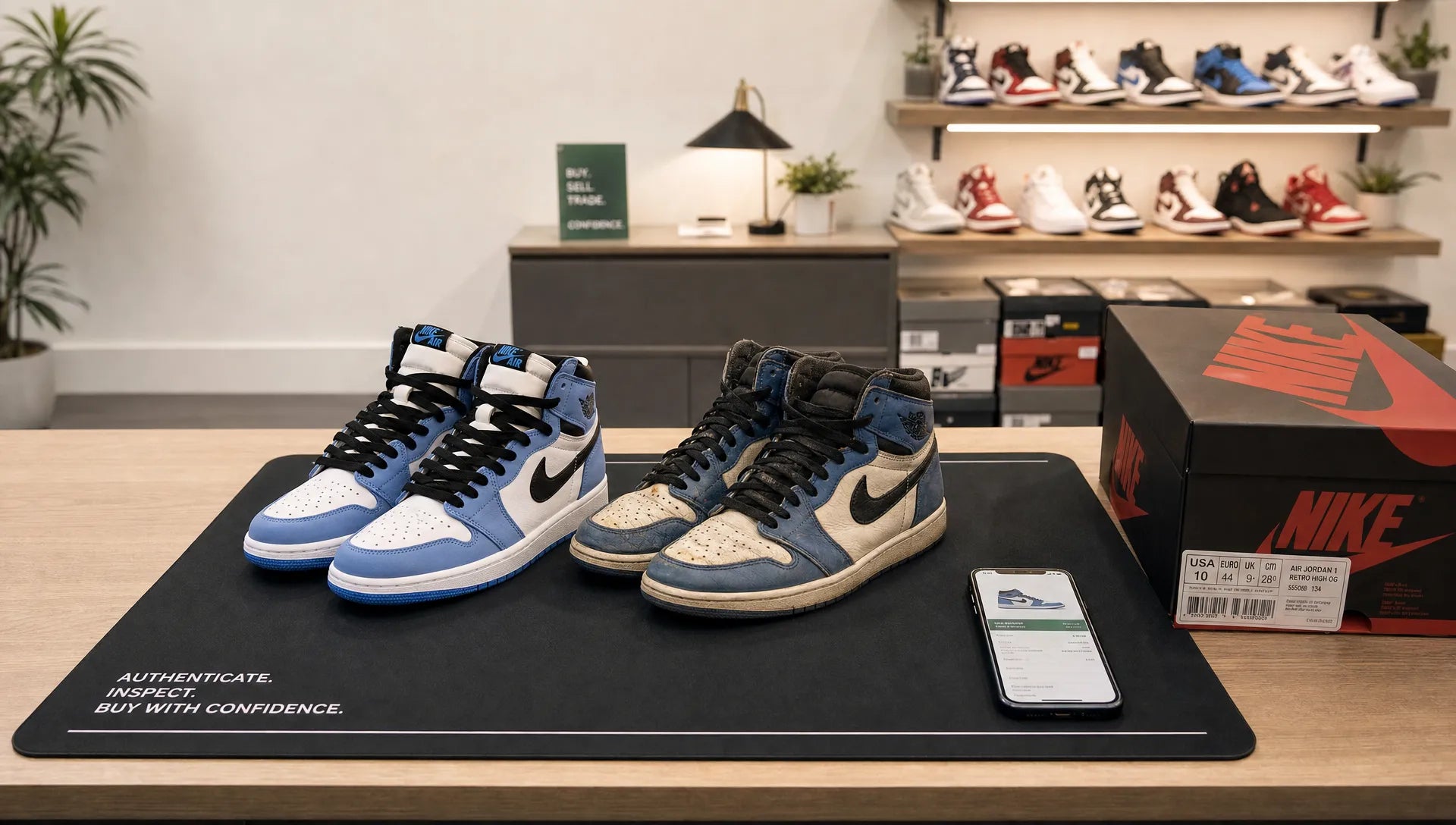
That sounds simple, but the details matter. A lightly worn Jordan 1 with original box and clean soles can be a smart buy. A cheaper pair with heel drag, missing insoles and vague photos can cost more than it saves. Here is how to compare both options before your next pickup.
Quick answer: which is better for you?
The better choice depends on your reason for buying. A collector, daily wearer, reseller and first-time sneaker buyer will not value the same things.
| Buyer type | Better choice | Why |
|---|---|---|
| First-time buyer | New | Lower risk, easier sizing and cleaner condition expectations |
| Daily wearer | New or lightly used | New gives full life, lightly used can be good value if condition is honest |
| Collector | New or deadstock | Box, tags and unworn condition usually matter more |
| Budget buyer | Used | Best chance of finding limited edition sneakers below market value |
| Gift buyer | New | Cleaner presentation and fewer awkward sizing or hygiene issues |
| Reseller | Depends on price | Profit depends on purchase cost, condition, demand and selling fees |
If you are buying a personal pair to wear often, do not focus only on the cheapest listing. Focus on cost per wear. A new pair worn 100 times can be better value than a used pair that looks cooked after 10 wears.
What “new” and “used” really mean in sneakers
In sneaker culture, condition terms carry weight. A pair described as new may be factory fresh, tried on indoors or technically unworn but poorly stored. A used pair may range from “worn once” to “needs a deep clean and sole repair”.
The most common terms you will see are:
- Brand new: Usually unworn, often with original box, laces and accessories.
- Deadstock: Traditionally means brand new, unworn and complete, though usage can vary by seller.
- VNDS: “Very near deadstock”, usually worn very lightly.
- Used: Worn, with condition depending heavily on photos, care and age.
- Beaters: Heavily worn sneakers, generally bought for low price or casual use.
If you are unsure about these terms, this guide to what deadstock means in sneakers explains the difference between DS, VNDS, NDS and used in more detail.
The main point is that labels are not enough. You should judge the pair itself, not just the word used in the listing.
When new sneakers are worth the extra money
New sneakers usually cost more, especially if they are sold out, hyped or limited. Still, there are plenty of situations where paying extra makes sense.
You want the lowest risk buying experience
A new pair from a trusted sneaker store gives you clearer expectations. You know the soles have not been dragged across concrete, the cushioning has not been compressed by someone else and the upper should arrive in unworn condition.
That matters even more when buying sneakers online in NZ, where private resale deals can involve limited buyer protection, unclear shipping costs or sellers who disappear after payment. Buying from a reputable seller does not mean you should stop checking details, but it reduces avoidable stress.
You care about full wear life
Every sneaker has a practical lifespan. Midsoles compress, outsoles wear down, suede picks up marks and white leather creases. A new pair gives you the full life of the shoe from the first wear.
This is especially important for sneakers you plan to wear regularly, such as Nike Dunks, Air Jordans or Yeezys. If a used pair is only 20 percent cheaper but already has visible heel drag and creasing, the saving may not be worth it.
You are buying a gift
New sneakers are almost always better for gifts. Presentation matters, and most people prefer receiving a clean, unworn pair with the original box. Used sneakers can work if the recipient specifically wants a rare pair and understands the condition, but for birthdays, graduations or Christmas gifts, new is safer.
You want a collectible pair
If you are buying to collect rather than wear, condition becomes part of the value. Original box, spare laces, tags and clean packaging can all matter. With certain Jordan releases and collaborations, even small condition issues may affect resale appeal later.
That does not mean every new pair will rise in value. Sneaker resale is driven by demand, scarcity, size, colourway and timing. If you are thinking about value growth, read this guide on whether sneakers are a good investment in 2026 before treating any pair like a guaranteed asset.
When used sneakers make more sense
Used sneakers can be an excellent buy when the condition and price line up. They are especially appealing if you want rare pairs, older releases or better value than current resale prices.
You can access pairs that are hard to find new
Many popular sneakers are no longer available at retail. If you want an older Jordan, a discontinued Yeezy colourway or a Nike collaboration from a past season, used listings may be the only realistic option.
In some cases, a lightly worn pair looks almost identical on foot to a new pair but costs noticeably less. For buyers who care more about wearing than collecting, that can be the sweet spot.
You are not precious about first wear
Some buyers love the ritual of unboxing a fresh pair. Others just want the sneaker. If you are going to wear them often, a clean used pair can remove the anxiety of the first crease.
This is especially true for everyday sneakers. Once a pair is on foot, minor creasing or sole marks often matter less than comfort, fit and how the sneaker works with your wardrobe.
Your budget goes further
A fixed budget can buy a basic new release or a more desirable used pair. For example, someone shopping for Jordan, Nike or Yeezy sneakers may find that the used market opens up colourways and silhouettes they would not consider at new resale prices.
The key is discipline. A used pair is not a good deal just because it is cheaper than new. It is a good deal only if the discount matches the wear, the condition is transparent and the pair is authentic.
The hidden costs of buying used sneakers
Used sneakers can look like a bargain until you factor in the extra risks. These do not make used pairs bad, but they should affect how much you are willing to pay.
| Risk | What to check | Why it matters |
|---|---|---|
| Authenticity | Receipts, detailed photos, seller history and platform protection | Fakes are common in popular Jordan, Nike and Yeezy models |
| Sole wear | Heel drag, outsole pattern and uneven wear | Heavy wear shortens lifespan and can affect comfort |
| Upper condition | Creasing, cracking, stains, cuts and colour fading | Some flaws cannot be cleaned or repaired well |
| Odour and hygiene | Insoles, sockliner and storage history | Odour can be hard to remove from used sneakers |
| Missing extras | Box, spare laces, tags and accessories | Missing items can reduce resale appeal |
| Return options | Seller policy, payment protection and proof of purchase | Private sales often give you little recourse |
Condition issues are not always obvious in one photo. Ask for clear images of the toe box, heel, outsole, size tag, stitching, insole, box label and any flaws. If the seller avoids basic requests, move on.

How condition changes value
A fair used sneaker price should reflect condition. This is where many buyers overpay. They compare a used listing to the new market price, but they do not subtract enough for wear, missing items or weak proof of authenticity.
Here is a practical way to think about it:
| Condition | Typical signs | Buyer takeaway |
|---|---|---|
| New or deadstock | Unworn soles, original box, complete extras | Best for collectors, gifts and buyers who want certainty |
| Tried on | No outdoor wear, maybe minor lace or paper changes | Often close to new, but should be priced slightly lower if not from a store |
| Lightly used | Minor creasing, clean soles, no major stains | Often the best value for personal wear |
| Moderately used | Visible creasing, sole wear, small marks or missing extras | Worth it only with a strong discount |
| Heavily used | Heel drag, odour, stains, cracking or structural wear | Usually only sensible for beaters or restoration projects |
For most buyers, lightly used is the only used condition category that consistently makes sense. Moderately used pairs can be fine if priced correctly, but once damage affects comfort or durability, the deal becomes much less attractive.
New vs used by sneaker type
Different sneaker categories age differently. A used pair of one model may be a safe buy, while another model in the same condition may be a headache.
Air Jordans
Air Jordans are often strong candidates for both new and used buying. Leather Jordan 1s can handle wear fairly well, and creasing is normal. However, check heel drag, ankle padding, toe box shape and leather cracking, especially on older pairs.
New Jordan releases are usually better if you care about complete packaging or long-term collectability. Used Jordans can be worth it when you want a wearable colourway and do not need museum-level condition.
Nike Dunks
Dunks are common daily wear sneakers, which means used pairs can vary heavily. Some are barely worn, while others have flattened soles and badly creased toe boxes. Because many Dunks are easy to style, lightly used pairs can be excellent value if the upper is clean and the outsole still has plenty of life.
Be careful with very cheap listings for popular colourways. Strong demand attracts fakes, especially online.
Yeezys
Yeezys are comfort-focused sneakers, so cushioning and shape matter. For Yeezy Boost models, check outsole wear, boost discolouration, heel shape and fabric stretching. A pair can look fine from above but be heavily worn underneath.
Used Yeezys can be worthwhile for personal wear, but hygiene and odour checks are more important because many models use knit uppers and soft interiors.
Limited edition sneakers
Limited edition sneakers are where the used vs new decision gets trickier. New pairs can carry a premium because supply is tight, but used pairs may still hold strong value if demand remains high.
For rare collaborations, condition and authenticity proof are everything. A small saving is not enough if the pair lacks a box, has poor photos or comes from an unknown seller.
Authenticity should decide the deal
No discount is worth buying a fake. Counterfeit sneakers have become more convincing, and popular models are the biggest targets. Jordan 1s, Travis Scott collaborations, Yeezys, Dunks and other hype releases require extra care.
When buying used, look for consistency across the whole pair. Stitching, shape, materials, size tag, box label, outsole pattern and accessories should all make sense together. One good-looking angle is not proof.
For NZ buyers, the safest approach is to buy through trusted sellers, specialist stores or platforms with clear authentication processes. If you want a broader overview of safe buying options, this guide on where NZ shoppers find authentic sneakers online breaks down official stores, local specialists, global resale platforms and peer-to-peer options.
The resale angle: does new hold value better?
New sneakers generally hold value better than used sneakers, all else being equal. Deadstock pairs appeal to collectors and buyers who want untouched condition, so they often command stronger prices.
Used sneakers can still resell well if they are desirable, clean and priced realistically. A worn but well-kept Jordan collaboration may attract more interest than a brand new general release with low demand. Demand still matters more than condition alone.
If you might resell later, protect the basics from day one. Keep the box, spare laces, tags and receipt if available. Clean the sneakers gently after wear, store them away from moisture and avoid heavy rain if the materials are delicate.
For personal pairs, do not obsess over resale so much that you stop enjoying the sneakers. A pair you love and wear often has already delivered value, even if the resale price drops.
A simple rule for deciding
Use this rule before buying: choose new if the used discount is small, the pair is easy to find or you need certainty. Choose used if the discount is strong, the condition is clearly documented and the model is hard to find new.
A useful threshold is to ask whether the used price leaves enough room for risk. If a used pair is only slightly cheaper than new, it should be near perfect and come with strong proof. If it has visible wear, missing accessories or limited seller protection, the price should reflect that.
Also consider your own habits. If you rotate sneakers carefully and clean them often, new pairs may last years. If you wear sneakers hard every day, lightly used pairs may suit your lifestyle better because you are not paying a premium for perfect condition that will not last long.
NZ buying checklist before you pay
Before buying either used or new sneakers, slow down and check the full picture. This is especially important when comparing local prices with overseas listings, where shipping, GST, duties, exchange rates and return difficulty can change the real cost.
Use this checklist before committing:
- Confirm the exact size, including US, UK and EU conversions where relevant.
- Check whether the pair includes the original box, laces and accessories.
- Ask for current, well-lit photos if buying used from a private seller.
- Compare the total landed cost, not just the listing price.
- Use secure payment methods and avoid pressure to pay instantly.
- Read the return policy before buying new sneakers online.
If you prefer a cleaner buying experience, shopping through a local sneaker store in NZ can reduce uncertainty around authenticity, delivery and sizing. You can also browse authentic sneakers and streetwear at BigBoiSneakers, including new arrivals, trending products and collectables.
So, which is worth it?
For most buyers, new sneakers are worth it when the price gap is reasonable and you want peace of mind. You get clean condition, full wear life and a better gifting or collecting experience.
Used sneakers are worth it when you are patient, know how to inspect condition and can avoid sketchy listings. The best used buys are usually lightly worn pairs from trustworthy sellers, especially when the model is sold out or too expensive new.
The worst choice is not used or new. It is rushing into a pair because the price looks good. Compare condition, authenticity, total cost and how you plan to wear the sneakers. That will tell you which option is actually worth it.
Frequently Asked Questions
Are used sneakers safe to buy? Used sneakers can be safe to buy if the seller is trustworthy, the photos are detailed and the authenticity proof is strong. Avoid listings with blurry images, missing size tag photos or pressure to pay outside secure methods.
Are new sneakers always better than used sneakers? Not always. New sneakers are better for certainty, gifting and collecting, but lightly used sneakers can offer better value for personal wear if the condition is excellent and the discount is meaningful.
How much cheaper should used sneakers be? There is no single rule because demand varies by model, size and colourway. As a general principle, the discount should increase with visible wear, missing accessories, weak proof of purchase and lack of return protection.
Do used Jordans hold value? Some used Jordans hold value well, especially desirable collaborations, classic colourways and pairs kept in clean condition with original packaging. General releases with heavy wear usually lose value faster.
Is it better to buy sneakers online or in store in NZ? Buying sneakers online gives you more choice, but you need to check authenticity, shipping costs, sizing and return policies. Buying from a trusted NZ sneaker store can make the process easier, especially for first-time buyers.