How to Buy Used Jordans Without Regret
Buying used Jordans can be a smart move. You can land a discontinued colourway, save money on a pair you plan to wear or find a grail that no longer appears at retail. The problem is that second-hand Jordan buying also attracts fakes, vague condition claims, inflated prices and sellers who know just enough to sound convincing.
Regret usually comes from rushing. A pair looks clean in three photos, the price feels urgent and the seller says someone else is ready to pay. Two days later you notice heel drag, a cracked midsole, a mismatched box or stitching that does not line up.
The safer approach is simple: decide what you want, verify the pair, judge the wear honestly, price it against real sales and protect the payment. This guide is written for NZ sneaker buyers, but the same checks apply whether you are buying locally, from an overseas marketplace or through a private seller.
Start with the pair you actually need
Before looking at listings, decide what kind of used Jordans you are willing to buy. A pair for weekly wear should be judged differently from a display pair, a restoration project or a collector-grade release. If you skip this step, every shiny photo starts to look like a good deal.
For everyday wear, prioritise comfort, structural condition and clean materials over tiny cosmetic flaws. Light creasing on an Air Jordan 1 toe box is normal. Deep heel drag, sole separation, strong odour or crumbling foam is not normal if you expect to wear the pair often.
For collecting, the box, spare laces, hangtags, receipts and overall completeness matter more. A collector may accept a less comfortable pair if it is rare, but missing accessories should still reduce the price.
Set a maximum all-in budget, not just a shoe price. Include shipping within New Zealand, international shipping, currency conversion, cleaning supplies, replacement laces, replacement insoles and any authentication cost you choose to use. A used pair that needs work can quickly stop being cheap.
Use this simple filter before you message a seller:
- Wear pair: You can accept light creasing, minor outsole wear and small marks if the structure is solid.
- Collection pair: You should care about the box, label, original accessories and how the pair has been stored.
- Project pair: You should only buy if the discount is large enough to justify cleaning, repainting or repair.
- Gift pair: Avoid risky used listings unless you are very sure about authenticity, sizing and condition.
Decode condition terms before trusting them
Used sneaker sellers often use shorthand like VNDS, lightly worn or good condition. These terms are not regulated, so one seller's lightly worn pair may be another buyer's beaters. Treat condition words as a starting point, not proof.
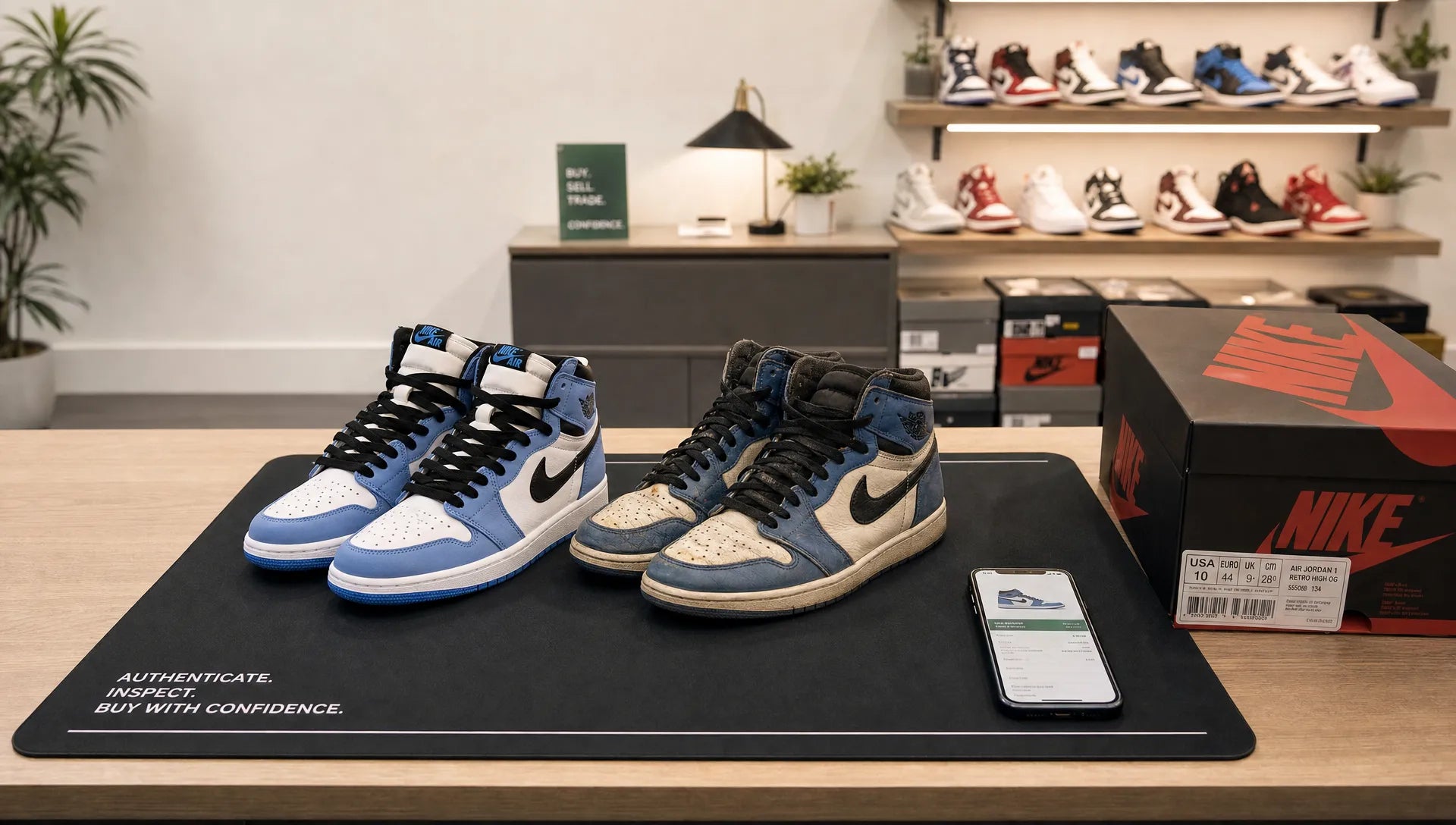
A reliable seller should be able to explain exactly where the wear is. If the listing only says worn once but the outsole is dirty, the insole print is fading and the heel has drag, trust the evidence rather than the wording.
| Seller term | What it usually suggests | What you still need to check |
|---|---|---|
| DS or deadstock | Unworn, often with original box | Authenticity, storage damage, yellowing and whether it was tried on |
| VNDS | Very near deadstock, minimal wear | Outsole dirt, sockliner marks, toe creasing and missing accessories |
| Lightly worn | Worn a few times, still clean | Heel drag, insole wear, odour and scuffs hidden by angles |
| Good used condition | Clearly worn but still wearable | Sole separation, midsole cracking, collar damage and deep stains |
| Project pair | Needs cleaning or repair | Whether repairs cost more than the pair is worth |
Photos should confirm the condition claim. If the seller avoids close-ups or only posts glamour shots, ask for more before discussing price.
Authenticate the pair before judging the price
A fake pair at a bargain price is not a bargain. Authentication should come before negotiation, especially with high-demand Jordan models, collaborations and older releases with active resale markets.
Start with the exact model. You need the silhouette, colourway, release year and SKU. The SKU on the box label should match the size tag inside the shoe and the known product details for that release. If the seller cannot provide those photos, pause the purchase.
For a deeper authentication process, the checks in BigBoiSneakers' guide to smart checks for authentic Jordans for sale are worth using before money changes hands.
Ask for clear photos in natural light. You want to see the pair, not a filtered version of it. At minimum, request images of the box label, size tag, tongue tag, toe box shape, side profile, heel, outsole, insole print, stitching and any accessories. For expensive pairs, ask for a photo with the seller's name and the current date beside the shoes.
Red flags do not always prove a pair is fake, but they should slow you down. Be cautious if the seller uses stock images, refuses new photos, hides the size tag, has no selling history, offers a price far below market or pushes you to pay by bank transfer before you inspect anything.
Receipts can help, but they are not enough by themselves. Receipts can be faked, reused or paired with the wrong shoes. Treat them as supporting evidence alongside the physical details of the pair.
Read the wear, not just the photos
Condition is where many used Jordan purchases go wrong. A pair can be authentic and still be a bad buy if the materials are tired, the sole is separating or the photos hide damage.
Look first at the outsole. Heel drag tells you how heavily the pair has been worn and whether the previous owner walked unevenly. Some dirt is fine, but worn-down traction changes the value and can affect grip.
Next, inspect the midsole. Check for cracking, paint chipping, yellowing and separation between the upper and sole. Light cosmetic marks are common on used Jordans, but gaps or lifting glue are more serious. Repairs can be possible, but they are not always cheap or long-lasting.
The upper tells another story. Leather creasing is expected, especially on Air Jordan 1s and 4s. Deep cuts, peeling, flaking, water stains and warped panels are harder to fix. On suede or nubuck pairs, look for bald patches, dark staining and uneven texture.
Do not ignore the inside. Sockliner wear, heel collar tearing, heavy insole imprinting and odour all affect comfort. A seller may clean the outside and leave the inside untouched, so ask for photos of the collar and insoles.
| Area to inspect | Acceptable on many used pairs | Walk-away warning |
|---|---|---|
| Outsole | Light dirt and minor heel wear | Heavy heel drag, smooth traction or uneven wear |
| Midsole | Small marks or light paint wear | Separation, cracking or soft crumbling foam |
| Upper | Normal creasing and tiny scuffs | Peeling, deep cuts, water damage or warped panels |
| Sockliner | Minor lint or light rubbing | Tears, heavy staining or strong odour |
| Box and extras | Some storage wear | Wrong box, missing labels or accessories priced as complete |

Price used Jordans against sold pairs, not hype
A seller can ask anything. Your job is to find what similar pairs have actually sold for in the same size and condition. This matters because Jordan prices can swing heavily by size, colourway, release timing and local availability.
Compare the used pair against recent sold listings, not active listings. Active listings show ambition. Sold listings show the market. When comparing, match the condition as closely as possible. A clean pair with box and spare laces is not the same as a pair with heel drag and no box.
For Air Jordan 1 buyers, the same pricing logic used in BigBoiSneakers' guide to buying the Air Jordan 1 Retro High OG without overpaying applies strongly to used pairs: confirm the exact model, compare real sale data and avoid paying a premium for vague hype.
A fair used price usually reflects five things: authenticity confidence, condition, completeness, size demand and how easy the pair is to replace. If a used pair is only slightly cheaper than a new or fully verified pair, the used option may not be worth the risk.
Be careful with rare pairs that look suspiciously affordable. Private sellers sometimes price low for a fast sale, but a steep discount on a hyped Jordan should make you check harder, not faster.
Protect the transaction
The safest used Jordan purchase is not only about the shoe. It is also about the seller, the payment method and the record you keep.
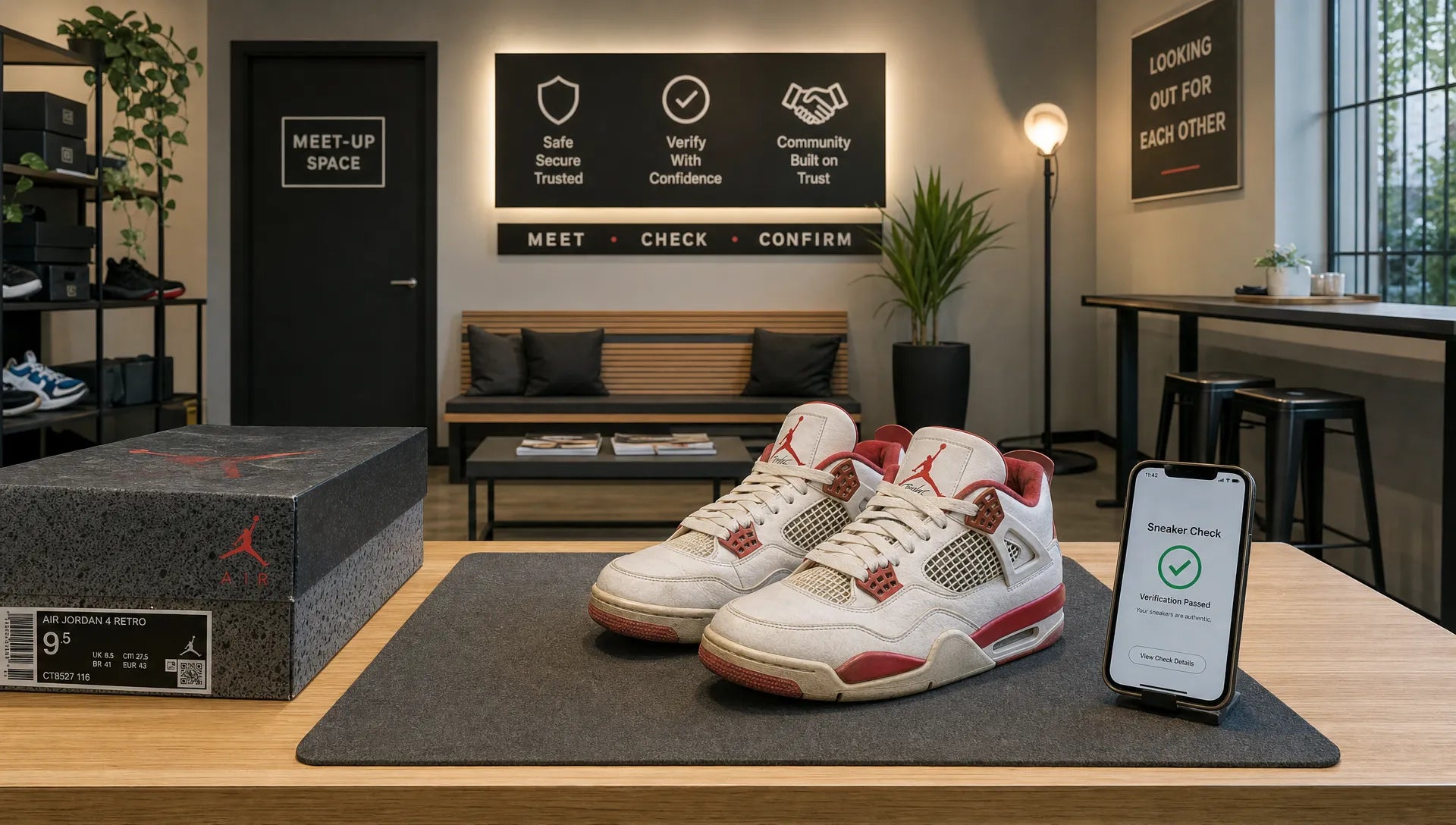
If you are buying locally in NZ, meet in a public place with good lighting. Take time to inspect both shoes, not just one. Check the size tag, box label, outsole, stitching and condition before paying. If the seller pressures you, leave.
For online purchases, use a payment method with buyer protection where possible. Avoid bank transfers to unknown private sellers, especially for high-value Jordans. Keep screenshots of the listing, photos, messages, tracking details and payment confirmation until the pair arrives and you have inspected it.
Shipping matters too. Ask the seller to pack the box properly, not just wrap the sneaker box in tape. Tracked shipping is worth the extra cost because it creates a record if the parcel goes missing or arrives damaged.
If you buy from a marketplace that offers authentication or dispute support, read the terms before relying on it. Some protections depend on location, item value, shipping route or whether the transaction stayed on platform.
Factor in fit, comfort and previous wear
Used Jordans can fit differently from new pairs. Insoles compress, collars soften and leather may stretch around the previous owner's foot shape. That can be good if the pair is gently broken in, but it can also mean less support.
If you already own the same Jordan model, compare sizing from that pair first. If not, try on the same silhouette in-store where possible or check reliable size guides. Air Jordan models do not all feel the same. An Air Jordan 1, Air Jordan 3, Air Jordan 4 and Jordan 11 can differ in width, stiffness and lockdown.
Ask whether the original insoles are included. Replacement insoles can be fine for wear, but missing originals reduce collector value. If the seller says the pair fits tight or has been stretched, take that seriously.
Comfort should match your plan. If you want a daily pair, do not buy something that already has collar collapse, hard creasing in painful spots or uneven outsole wear. A used pair should save money, not punish your feet.
Know what cleaning can and cannot fix
Cleaning can make used Jordans look much better, but it cannot reverse every problem. Dirt, surface marks and light midsole grime are usually manageable. Cracked leather, peeling synthetic panels, deep dye transfer, sole separation and crumbling foam are different issues.
Nike's own shoe cleaning guidance recommends removing loose dirt first, using a mild cleaning solution and air drying. That kind of gentle approach is safer than soaking the shoe or attacking delicate materials with harsh chemicals.
Material matters. Smooth leather is usually more forgiving than suede, nubuck or satin. White midsoles may clean up well, but yellowed translucent soles rarely return to perfect clarity without specialised work. If a seller says a flaw will clean out, ask for close-up photos and assume only modest improvement unless you have restoration experience.
Vintage Jordans need extra caution. Older pairs can look wearable in photos but fail once worn, especially if foam or glue has aged. If you want vintage for display, that may be acceptable. If you want to wear them regularly, buy only when you are confident the pair is structurally sound.
Use a pre-purchase checklist
A checklist slows the process down in a useful way. Before you pay for used Jordans, make sure every point below has a clear answer.
- Confirm the exact model, colourway, size and SKU.
- Compare the box label with the shoe size tag.
- Ask for current photos in natural light.
- Check outsole wear, midsole condition, uppers, sockliners and insoles.
- Confirm what is included, such as box, spare laces, tags and receipt.
- Compare recent sold prices in the same size and condition.
- Check seller history, reviews or references where available.
- Use a protected payment method for online purchases.
- Save screenshots of the listing and conversation.
- Walk away if the seller refuses reasonable checks.
This process may feel slow when a pair is popular, but good sellers understand careful buyers. If someone selling expensive Jordans cannot answer basic questions, that is useful information.
When buying used Jordans does not make sense
Used is not always the best value. If the pair is a current release, a restock is expected or the used price sits close to new pricing, buying new or from a trusted retailer may be smarter.
Used also makes less sense for gifts, first-time buyers or anyone who is unsure about Jordan sizing. The savings can disappear if the pair does not fit, smells bad or arrives in worse condition than expected.
Private-sale risk is highest when you cannot verify the seller, inspect the shoes properly or use buyer protection. In those cases, paying more for certainty can be the better deal.
If you prefer to avoid private-sale uncertainty, you can browse current authentic sneakers at BigBoiSneakers, including Jordan styles when available, alongside streetwear and collectibles with secure payment options and NZ shipping.
Frequently Asked Questions
Is it worth buying used Jordans? Yes, used Jordans can be worth buying if the pair is authentic, fairly priced and in wearable condition. They make the most sense for discontinued colourways, lightly worn pairs or shoes you plan to wear rather than keep deadstock.
How can I tell if used Jordans are fake? Check the SKU, box label, size tag, shape, stitching, materials, insole details and outsole pattern against trusted references. Ask for current photos and be cautious of stock images, vague receipts or sellers who refuse close-ups.
How much cheaper should used Jordans be? There is no fixed discount. The price should reflect condition, size demand, accessories, rarity and recent sold prices. If the used pair is close to the price of a new verified pair, the risk may not be worth it.
What damage should I avoid on used Jordans? Avoid sole separation, crumbling midsoles, heavy heel drag, strong odour, deep cuts, peeling materials and major water damage unless you are buying a project pair at a project price.
Should I buy used Jordans without the box? You can if you only want a wear pair and the price reflects the missing box. For collectors, the original box and label matter because they help with value, storage and authenticity checks.
Buy with patience, not pressure
The best used Jordan deals rarely require panic. If a pair is real, clean and fairly priced, the seller should be able to provide photos, answer questions and use a sensible payment method. If the deal depends on you ignoring red flags, it is not a deal.
Decide your purpose, inspect the pair properly, compare real prices and protect the transaction. That is how you buy used Jordans without regret, whether you are chasing a grail or just adding a reliable pair to your rotation.