How to Store Pokémon Cards to Keep Them Mint
If you care about Pokémon cards, condition is not a small detail. A tiny white nick on a corner, a faint holo scratch or a bend from poor storage can change how a card looks, grades and sells. The good news is that most storage damage is preventable with a simple system.
Keeping cards mint comes down to five things: reduce handling, prevent pressure, control moisture, avoid heat and block direct light. This matters even more in New Zealand, where humid homes, coastal air and temperature swings between rooms can slowly affect cardboard collectibles.
Before you invest in expensive supplies, it helps to understand what you are protecting. If you are unsure how condition affects value, BigBoiSneakers has a helpful guide to Pokémon card price factors like condition, rarity and demand. Once you know what graders and buyers look for, storage decisions become much easier.
What mint condition actually means
Collectors often use mint casually, but in card collecting it points to very specific condition traits. Professional grading companies such as PSA assess factors like corners, edges, surface and centering. Storage will not fix factory centering or printing defects, but it can stop a clean card from becoming scratched, dented or warped after you own it.
For raw Pokémon cards, the main goal is to preserve the card exactly as it is today. That means no new whitening on the edges, no binder dents, no surface clouding, no pressure marks and no curling from moisture.
| Card area | What can go wrong | Storage goal |
|---|---|---|
| Corners | Dings, bends and crushed tips | Use sleeves and rigid protection before handling often |
| Edges | Whitening, chips and friction wear | Avoid loose stacks and rough binder pages |
| Surface | Scratches, fingerprints and holo scuffs | Handle by the edges and keep dust away |
| Card body | Warping, creasing and dents | Store in a stable room without heavy pressure |
| Sealed product | Crushed boxes, torn wrap and sun fading | Use display protectors and avoid direct light |
The biggest mistake is thinking a sleeve alone makes a valuable card safe. A sleeve protects from light friction, but it does not stop bending, crushing or humidity. For cards you care about, sleeves are only the first layer.
The best storage setup for raw Pokémon cards
A good storage system does not need to be complicated. Start with soft sleeves, then add a rigid layer for valuable cards and a safe container for the group. The right setup depends on whether you are storing bulk, binder sets, chase cards, graded slabs or sealed product.
| Collection type | Recommended storage | What to avoid |
|---|---|---|
| Bulk commons and uncommons | Trading card storage box in a dry cupboard | Rubber bands, loose drawers and damp garages |
| Favourite binder set | Side-loading zip binder with quality pages | Old ring binders that can dent cards |
| Valuable raw singles | Penny sleeve plus top loader or semi-rigid holder | Putting an unsleeved card straight into a top loader |
| Cards for grading | Penny sleeve plus semi-rigid card saver | Tight sleeves that risk corner damage during removal |
| Graded cards | Slab sleeve plus graded card storage box | Stacking heavy slabs unevenly |
| Sealed booster boxes | Clear display protector or acrylic-style case | Direct sunlight, heat and shelf pressure |
Choose sleeves that are designed for trading cards and avoid anything with PVC. PVC can become cloudy or tacky over time, which is the last thing you want near a holo card. Standard penny sleeves are fine for most cards, while perfect-fit inner sleeves can work well if you insert the card carefully and avoid forcing tight corners.
For binders, side-loading pages are usually safer than top-loading pages because cards are less likely to slide out when the binder is moved. A zip binder adds another layer of protection against dust and accidents. If you still use an old school ring binder, make sure cards never sit near the metal rings under pressure. Ring dents are a painful and avoidable way to damage a collection.
How to store a raw Pokémon card safely
When you pull, buy or trade for a card worth protecting, store it before you admire it for too long. Most surface marks happen during casual handling, not long-term storage.
- Wash and dry your hands first: Clean hands reduce oil transfer, and fully dry hands prevent moisture from touching the card.
- Hold the card by the edges: Avoid touching the front or back surface, especially on holofoil cards.
- Inspect it under soft light: Check corners, edges and surface before storage so you know its starting condition.
- Slide it into a sleeve slowly: Open the sleeve slightly and guide the card in without pushing on one corner.
- Add rigid protection for valuable cards: Place the sleeved card into a top loader or semi-rigid holder, never directly into rigid plastic without a sleeve.
- Use a team bag if needed: A resealable team bag helps keep dust out and stops the card from sliding out of the top loader.
- Store upright with light support: Keep protected cards in a box where they stand straight without being squeezed tightly.
- Record the card: A quick photo and note of condition helps with insurance, resale and future grading decisions.
Do not over-clean cards. Wiping a holo surface, using water or trying to polish a mark can turn a minor issue into permanent damage. If a card is valuable enough to grade or sell, leave the surface alone unless you know exactly what you are doing.
Control humidity, heat and sunlight in NZ homes
Pokémon cards are cardboard, so they react to their environment. Moisture can cause waviness, heat can accelerate ageing and sunlight can fade colours. You do not need a museum-grade vault, but you should avoid storage locations with big changes in temperature or humidity.
In many NZ homes, the worst places are garages, sheds, roof spaces, laundry cupboards and window-facing shelves. These spots can be damp in winter, hot in summer or exposed to condensation. A bedroom wardrobe, hallway cupboard or interior room is usually safer, provided it stays dry and does not receive direct sun.
Many collectors aim for a steady indoor humidity range around normal living comfort, often roughly 40% to 55% relative humidity. The exact number matters less than stability. A room that swings from damp and cold to hot and dry can encourage curling and warping over time.
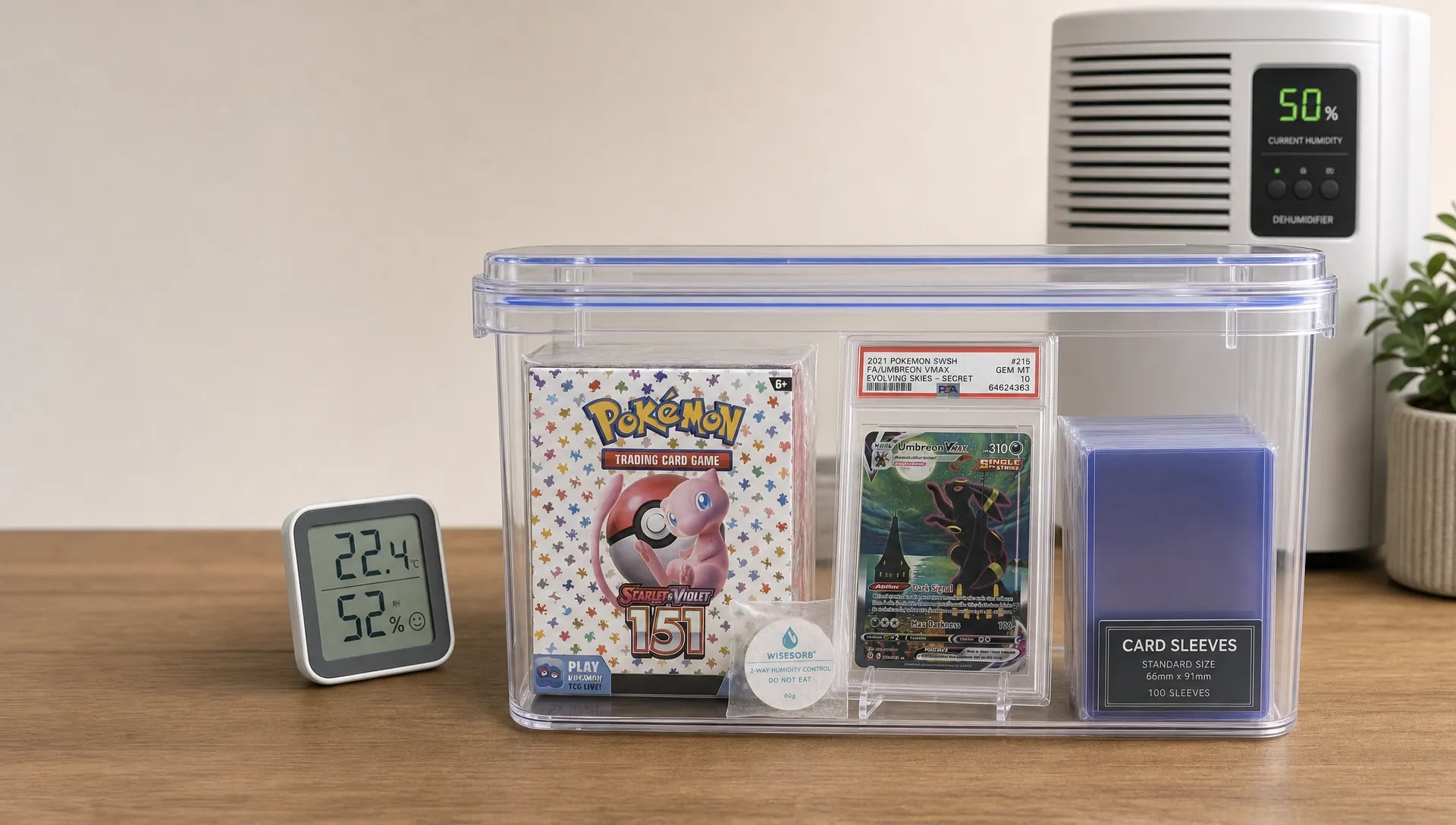
If your home gets humid, use silica gel packets inside storage tubs or boxes, but do not let packets touch cards directly. Recharge or replace them as directed by the packet instructions. For larger collections, a small digital hygrometer is inexpensive and useful because it tells you whether the storage space is actually stable.
Avoid sealing cards in plastic bags without any structure. A soft bag can trap moisture and bend cards if it is squeezed. If you want an extra barrier, use a rigid plastic tub with a secure lid, then keep the cards inside proper sleeves, boxes or binders within that tub.
How to store sealed Pokémon products
Sealed Pokémon products need different protection because the packaging is part of the collectible. Booster boxes, Elite Trainer Boxes and special collection boxes can lose appeal if the shrink wrap tears, corners crush or the front window gets scratched.
If you are building a sealed collection, keep products upright on a strong shelf where they are not leaning under their own weight. Do not stack heavy boxes on top of lighter display boxes. For booster boxes, a clear protector can help prevent shelf wear and accidental knocks, especially if the box is part of a display. BigBoiSneakers stocks a clear plastic display protector for Pokémon booster boxes, which is useful when you want protection without hiding the artwork.
Sealed collectors should also be careful with shrink wrap. Do not tape loose wrap, heat it, rewrap it or try to make it look cleaner. Any tampering can make a future buyer suspicious, even if your intention was only to protect the box. If you are starting from scratch, this guide on building a Pokémon sealed collection in NZ covers how to choose sealed products with a clearer collecting goal.

Displaying cards without damaging them
Displaying Pokémon cards is part of the fun, but display setups can be risky if they expose cards to light, heat or pressure. Direct sunlight is the main enemy. Even if a card sits behind plastic, UV exposure can fade colours and make packaging look tired.
For raw cards, avoid displaying them in basic top loaders on a windowsill or desk that gets afternoon sun. If you want a card visible, use a quality frame or case designed for trading cards, keep it away from windows and rotate displayed cards so the same item is not exposed all year.
Graded slabs are more display-friendly than raw cards because the card is sealed inside a hard holder, but they are not invincible. Slabs can scratch, crack or heat up if left in a bad spot. A slab sleeve helps prevent scuffs, and a shaded shelf is safer than a bright display cabinet near glass.
LED lighting is usually better than sunlight, but heat still matters. If a display cabinet gets warm when lights are on, move the cards or reduce the time the lights run. The best display is one that lets you enjoy the collection without changing the condition of the cards inside it.
Common storage mistakes that ruin mint cards
Most card damage comes from small habits repeated over time. A card might survive one bad binder page or one afternoon in a warm car, but repeated exposure adds up.
| Mistake | Why it damages cards | Better habit |
|---|---|---|
| Storing cards with rubber bands | Bands crush edges and corners | Use card boxes or team bags |
| Putting raw cards into top loaders | Hard plastic can scratch the surface | Sleeve every card first |
| Overfilling binder pockets | Pressure can dent corners and edges | Leave pockets comfortably fitted |
| Using damp storage areas | Moisture can cause curling and mould risk | Store in a dry interior room |
| Displaying in direct sun | UV light can fade card art and packaging | Use shaded shelves or UV-conscious displays |
| Stacking heavy sealed boxes | Weight can crush lower boxes | Store heavier products separately |
| Constantly removing cards | Handling increases scratch and ding risk | Photograph cards and inspect only when needed |
A less obvious mistake is checking valuable cards too often. It is natural to want to look at your favourites, but every removal from a sleeve or binder adds risk. If you love viewing your cards regularly, keep lower-value display copies in a binder and leave your best-condition copies protected.
Maintaining your collection over time
Good storage is not a one-time job. Materials age, sleeves get cloudy and boxes can be moved without you noticing pressure has changed. A quick collection check every few months is enough for most collectors.
Look for warped cards, moisture smells, cracked top loaders, dusty binder pages and shelf pressure on sealed boxes. If a sleeve looks cloudy, dirty or tight, replace it carefully. If a binder page starts to ripple, move the cards into a better binder before the page transfers pressure marks.
Keep a simple inventory for cards and sealed products that matter. Record the set, language, condition notes, purchase date and where the item is stored. Photos are useful because they show whether a card has changed over time. For rare cards, photograph the front, back, corners and any existing flaws before placing the card into long-term storage.
Insurance is worth considering for high-value collections. Even a basic inventory makes it easier to discuss cover, prove ownership or recover information after theft, water damage or fire. Store a digital copy of your inventory somewhere separate from the cards.
Transporting Pokémon cards safely
Storage does not stop at home. Cards often get damaged when travelling to trades, grading submissions, meetups or a friend’s house. Treat transport as temporary storage with extra shock protection.
For valuable raw cards, use a penny sleeve, top loader or semi-rigid holder, team bag and a rigid cardboard sandwich. Put that inside a bubble mailer or small box so the card cannot bend. If rain is possible, add a waterproof outer layer, but do not let the card sit in a soft plastic bag with no rigid support.
For binders, carry them flat in a bag where nothing heavy presses into the cover. Do not leave cards in a car, even briefly, because heat and humidity can build quickly. Sealed boxes should be packed so corners cannot hit the sides of the shipping box, with enough padding to stop movement.
Frequently Asked Questions
Are binders safe for mint Pokémon cards? Yes, good binders are safe when they use trading-card pages, side-loading pockets and a zip closure. Avoid overfilled pockets and old ring binders that can press metal rings into cards.
Should I double-sleeve Pokémon cards? Double-sleeving can be safe if both sleeves fit properly and you insert the card slowly. If the inner sleeve feels tight or catches corners, use a standard penny sleeve instead.
Is a top loader enough for valuable cards? A top loader is useful, but only when the card is sleeved first. For extra dust protection, place the top-loaded card inside a team bag.
Can humidity ruin Pokémon cards? Yes. Humidity can cause curling, waviness and in severe cases mould risk. Store cards in a dry, stable room and consider silica gel packets or a dehumidifier if your home is damp.
Should I grade cards to keep them mint? Grading can protect a card inside a slab and may help with resale, but it is not required for every card. Store raw cards well first, then grade only if the card value, condition and your collecting goal justify the cost.
How should I store Pokémon booster boxes? Keep booster boxes upright, away from sunlight and protected from crushing. A clear display protector helps reduce shelf wear while keeping the box visible.
Build a cleaner, safer Pokémon collection
Keeping Pokémon cards mint is mostly about consistency. Sleeve cards before rigid storage, keep them out of damp rooms, protect sealed boxes from pressure and avoid unnecessary handling. Small habits make a big difference over years of collecting.
If you are adding to your collection, buy from a store that takes authenticity and collectability seriously. You can browse authentic Pokémon cards, sealed products, streetwear and collectibles at BigBoiSneakers, with new arrivals and trending items available for NZ collectors.