Why Sneaker Soles Crumble Even When You Never Wear Them
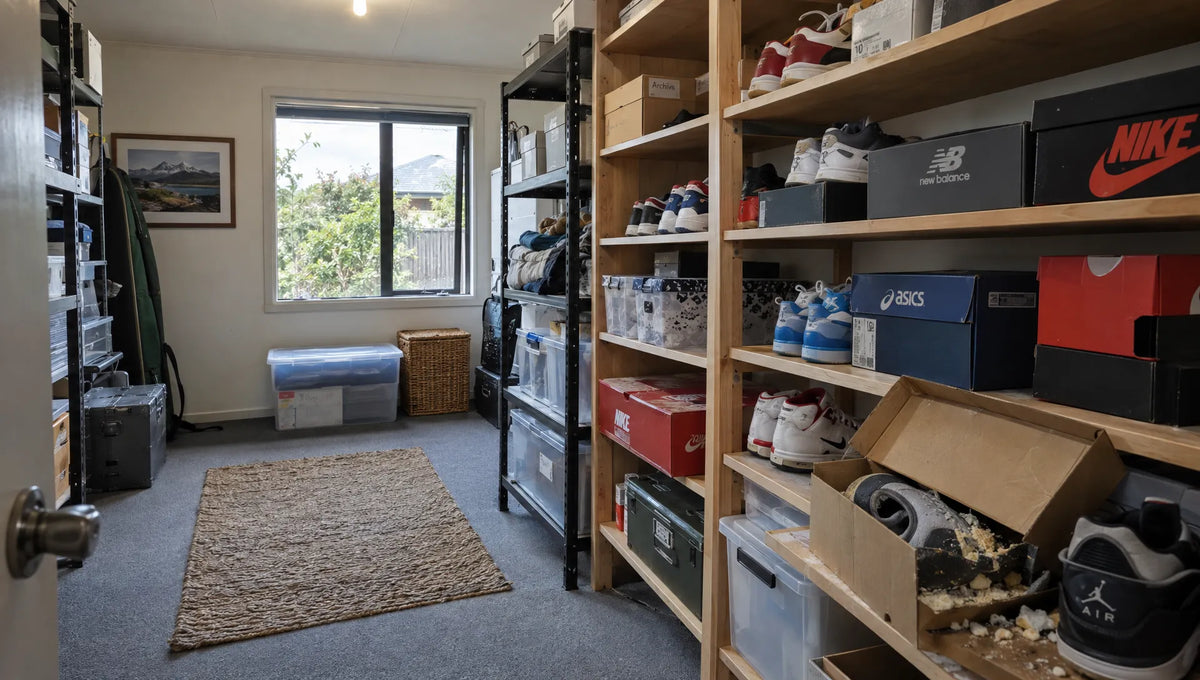
You lift a barely worn pair out of its box, press the midsole and watch it shed crumbs. The uppers still look fresh, so the damage seems impossible. Understanding why sneaker soles crumble starts with one distinction: not wearing a shoe prevents wear, but it does not stop its materials ageing.
For certain polyurethane midsoles, moisture can gradually weaken the material through a chemical process called hydrolysis. Other soles fail through different mechanisms, including oxidation, repeated compression or deteriorating adhesive. Knowing which problem you have helps you decide whether a pair needs better storage, professional assessment or retirement from wear.
Why sneaker soles crumble even in storage
A sneaker sole is usually a combination of components. The outsole contacts the ground, the midsole provides cushioning and adhesive or other construction methods hold the assembly together. Those parts do not necessarily age at the same rate.
Hydrolysis can weaken polyurethane foam
Some footwear midsoles contain polyurethane, often shortened to PU. Certain formulations, particularly polyester-based PU, are vulnerable to hydrolysis: water breaks chemical bonds within the material, gradually reducing its strength.
The moisture does not have to come from a puddle. Water vapour in the air can contribute, and warm, humid conditions accelerate the process. Over time, affected foam can lose cohesion and become crumbly, sometimes without obvious damage to the upper or outsole.
That explains how an unworn shoe can fail on its first outing years later. Walking may reveal deterioration that already existed rather than cause all the damage in that moment.
Other materials age differently
Not every foam is polyurethane, and not every polyurethane formulation has the same resistance to moisture. EVA, rubber and other sole materials have different ageing characteristics.
The Canadian Conservation Institute’s guidance on caring for plastics and rubbers explains how material composition and environmental exposure influence deterioration. Heat, light and oxygen can matter alongside moisture.
The practical lesson is to identify the actual sole construction rather than assume every Nike, Jordan or chunky sneaker will deteriorate in the same way.
Crumbling, cracking and sole separation are different problems
Collectors sometimes use “sole rot” for several kinds of damage. That shorthand can hide an important distinction: a failed bond may be repairable, while disintegrating foam cannot simply be glued back into sound material.
| What you notice | Possible explanation | What it means for wear |
|---|---|---|
| Midsole sheds powder, flakes or chunks | Deteriorating foam, potentially hydrolysis in susceptible PU | Stop wearing it and seek assessment |
| Outsole lifts away but surrounding material remains intact | Adhesive failure or separation between components | A repair may be possible after inspection |
| Cushioning feels flattened and no longer rebounds | Compression damage or other foam ageing | Assess comfort, support and stability |
| Rubber becomes stiff or develops cracks | Ageing involving oxidation, environmental exposure or flexing | Check whether cracks affect traction or structural integrity |
| Midsole changes colour without losing strength | Discolouration, which may be cosmetic | Colour alone cannot establish safety |
These are clues, not a reliable diagnosis from appearance alone. A shoe can also have more than one problem, such as weakened foam beneath an outsole that is starting to detach.
If the material is intact and only the bond has failed, the guide to fixing sole separation safely covers that separate repair decision.
Does wearing your sneakers prevent crumbling?
Wearing sneakers does not reliably prevent hydrolysis. Flexing the sole does not reverse broken chemical bonds or restore degraded foam.
The advice to “wear them so they don’t crumble” confuses observation with prevention. A regularly worn pair gets inspected more often, so its owner may notice changes earlier. An untouched pair can deteriorate unnoticed until someone finally puts weight through it.
Wear also introduces sweat, rain, compression and abrasion. Whether a regularly worn shoe lasts longer than a stored one depends on its materials, environment and care, not simply whether it leaves the box.
Wear sound pairs because you enjoy them, but do not use a long walk as a test for an uncertain vintage pair. An already compromised midsole may fail abruptly under load, making the shoe unstable.
How long can an unworn pair last?
There is no dependable expiry date that applies to all sneakers. A fixed rule such as “every pair crumbles after five years” ignores differences in foam chemistry, manufacturing, storage and previous use.
The production date is more relevant than the purchase date when considering material age. A pair bought recently may have spent years in storage before reaching its current owner.
“Deadstock” or “unworn” describes wear history, not structural health. Likewise, authentic sneakers can still deteriorate. Crumbling alone does not prove a pair is counterfeit, and pristine uppers do not prove the soles are wearable.
For older Air Jordans or Nike runners, research the specific release and construction. A silhouette’s name does not guarantee identical materials across every version or retro release.
Warning signs to check before wearing an older pair
Inspect shoes in good light before putting them on. Look around the heel, sidewalls and the junction between the upper and sole. Check underneath for cracking, loose sections or uneven deformation.
Use only light fingertip pressure on accessible midsole areas. Stop if the surface flakes, collapses or leaves a lasting indentation. Do not aggressively bend, twist or squeeze a valuable pair to prove it is safe, as testing can damage already weakened material.
Warning signs include:
- Powder, crumbs or small foam fragments inside the box.
- Cracks that open under very light handling.
- Localised collapse, unusual softness or a brittle surface.
- A sole that sits unevenly or separates from adjacent components.
Compare the left and right shoes, but remember that matching appearance is not a guarantee. Surface inspection cannot reveal every internal defect.
Yellowing, an old-shoe smell or mould may justify further investigation, but none independently confirms hydrolysis. Mould is a separate moisture-related concern, and discolouration can occur without structural failure.
Can a crumbling sole be repaired?
If foam is breaking apart, stop wearing the pair. Glue needs a sound surface to bond to; sticking loose pieces together does not restore the original material’s strength.
Coatings, fillers and cosmetic touch-ups can conceal deterioration without making the sole dependable. Avoid treating a tidy-looking repair as proof that a damaged midsole can safely carry your weight.
A specialist may consider a midsole replacement or sole swap, depending on the shoe’s construction and the availability of compatible parts. That is different from a straightforward reglue. A donor sole also needs assessment, because another old sole may have its own ageing problems.
For collectable pairs, discuss likely costs, changes to originality and realistic wearability before authorising work. Sometimes the sensible outcome is to keep a pair for display rather than attempt to return it to regular use.

How to slow deterioration without chasing storage myths
Storage can reduce damaging exposure, but it cannot make a susceptible material last indefinitely or reverse existing deterioration.
Keep conditions cool, dry and reasonably stable
Avoid hot cars, sunny windowsills, damp garages and cupboards against persistently wet walls. Heat can accelerate deterioration, while sustained humidity increases moisture exposure.
For an NZ collection, pay attention to the room as well as the shoebox. A hygrometer can help you identify persistent humidity rather than guess from how the room feels. If dampness is ongoing, address ventilation or dehumidification instead of relying only on small desiccant sachets.
The guide to storing sneakers in NZ’s humid weather covers the wider storage setup, including moisture and mould prevention.
Dry pairs before putting them away
Let shoes dry naturally after wear or cleaning, away from direct heaters. Do not seal a damp pair into an airtight container.
Silica gel can help manage moisture in an enclosed space if there is enough of it and it is maintained according to its instructions. It is not a permanent shield against hydrolysis. A saturated sachet cannot keep absorbing water indefinitely.
Inspect stored pairs periodically
Check for new crumbs, cracks, deformation and separation, especially before wearing an older pair. Photographs can help you compare visible changes over time.
Shrink wrap, a sealed bag or an untouched original box does not automatically create a safe environment. Packaging can protect against dust, but its moisture conditions and the shoe’s existing state still matter. Inspection helps you catch failure; it does not stop the underlying chemistry.
Choose everyday footwear by construction, not appearance
If an older collectable pair is no longer suitable for wear, choosing a separate everyday option removes the pressure to keep using it. Compare stated materials and intended use rather than assume a thick sole means durable foam.
That applies beyond sneakers. The Dr. Martens Voss II Sandal for women is listed with a vulcanised sole and adjustable straps. Its stated construction is a useful starting point for comparison, although it does not identify the material of every internal component or establish an indefinite lifespan.
For a casual slide option, the Nike Mind 001 Slide Sail (Women’s) offers a different silhouette. The same buying principle applies: check the available material information and care guidance rather than assume an open design makes footwear immune to ageing.
Neither the brand name nor the shape of a sole replaces checking its condition as it gets older.
Frequently asked questions
Can brand-new sneakers crumble? A pair can be unworn but still be old. Older stock may have experienced years of material ageing before its first wear. If a recently purchased pair sheds foam or shows structural damage, stop wearing it and contact the retailer with photographs and purchase details.
Is yellowing a sign that a sole will crumble? Not necessarily. Yellowing and structural deterioration are different changes. A yellowed sole may remain intact, while a relatively clean-looking sole can be weakened. Check material condition rather than colour alone.
Can you reverse hydrolysis by drying the shoes? Drying can reduce further moisture exposure, but it does not rebuild chemical bonds that have already broken. A dry, crumbling midsole is still a damaged midsole.
Do all Jordan soles eventually crumble? No single failure pattern applies to every Jordan release. Sole materials and construction vary. Some older pairs have susceptible PU components, but you need release-specific information and a condition assessment rather than a blanket rule.
Is it safe to wear an old pair if it looks fine? Appearance alone is not enough. Inspect it gently and consider its age, construction and storage history. If you find crumbling, collapse or significant cracking, do not wear it.
Check condition before chasing the next wear
The safest rule is simple: treat unworn as a description, not a guarantee. Keep sound pairs in suitable conditions and retire structurally damaged ones from wear. When browsing BigBoiSneakers, consider construction and care needs alongside the colourway, especially if you plan to keep a pair for years.